Hi-Tech

Fast Neutron Reactors
Hi-Tech Science New Discoveries

Fast Neutron Reactors

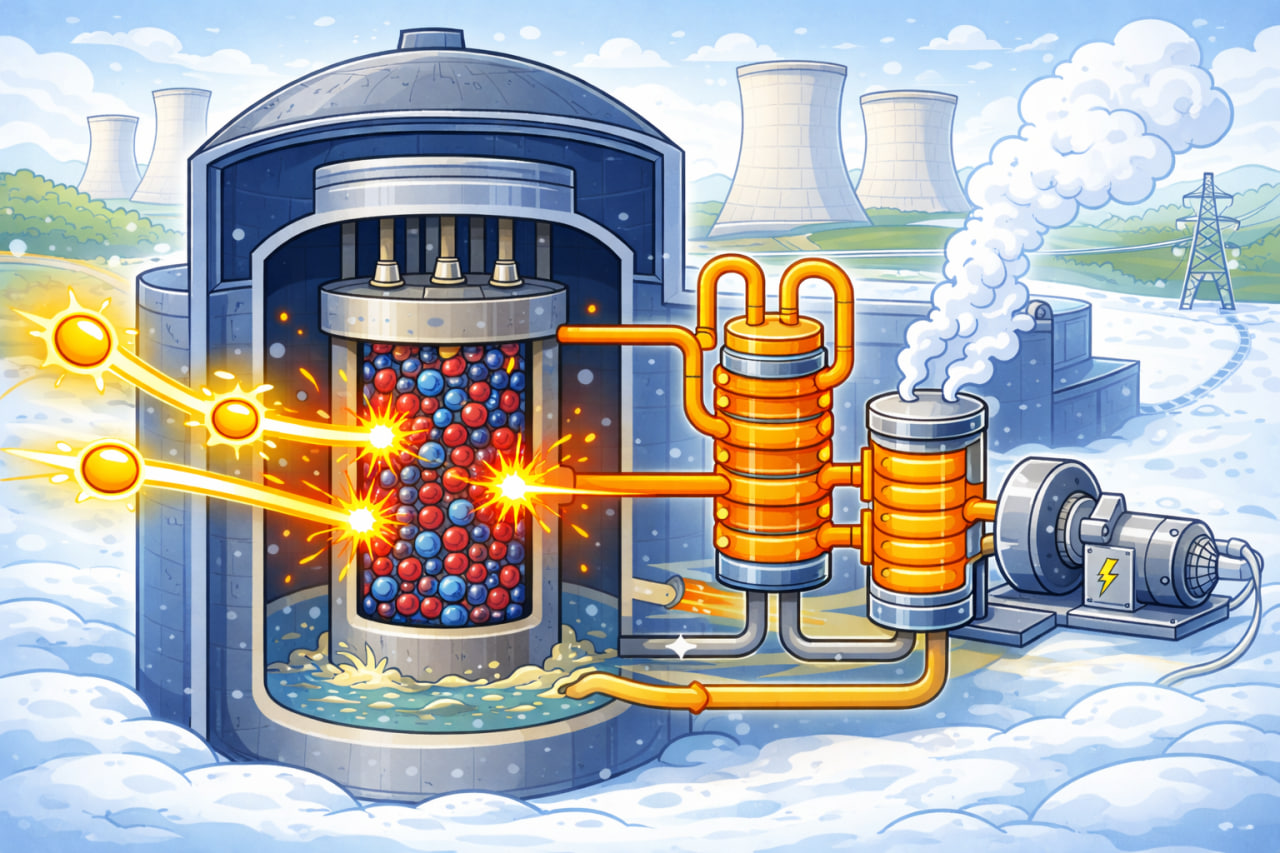
Fast neutron reactors are one of the most advanced and conceptually important technologies in nuclear energy. Unlike conventional nuclear reactors, they operate using fast (high-energy) neutrons rather than slowed, or thermal, neutrons. This fundamental difference allows them to use nuclear fuel more efficiently and opens possibilities that traditional reactors cannot achieve. Fast reactors are often discussed in the context of long-term energy sustainability, nuclear waste reduction, and advanced fuel cycles. Although technologically complex, they represent a significant step in the evolution of nuclear power. Understanding how fast neutron reactors work helps explain why they attract both scientific interest and public debate.

Nanocellulose: A Tiny Material With Huge Potential
Hi-Tech Science New Discoveries

Nanocellulose: A Tiny Material With Huge Potential

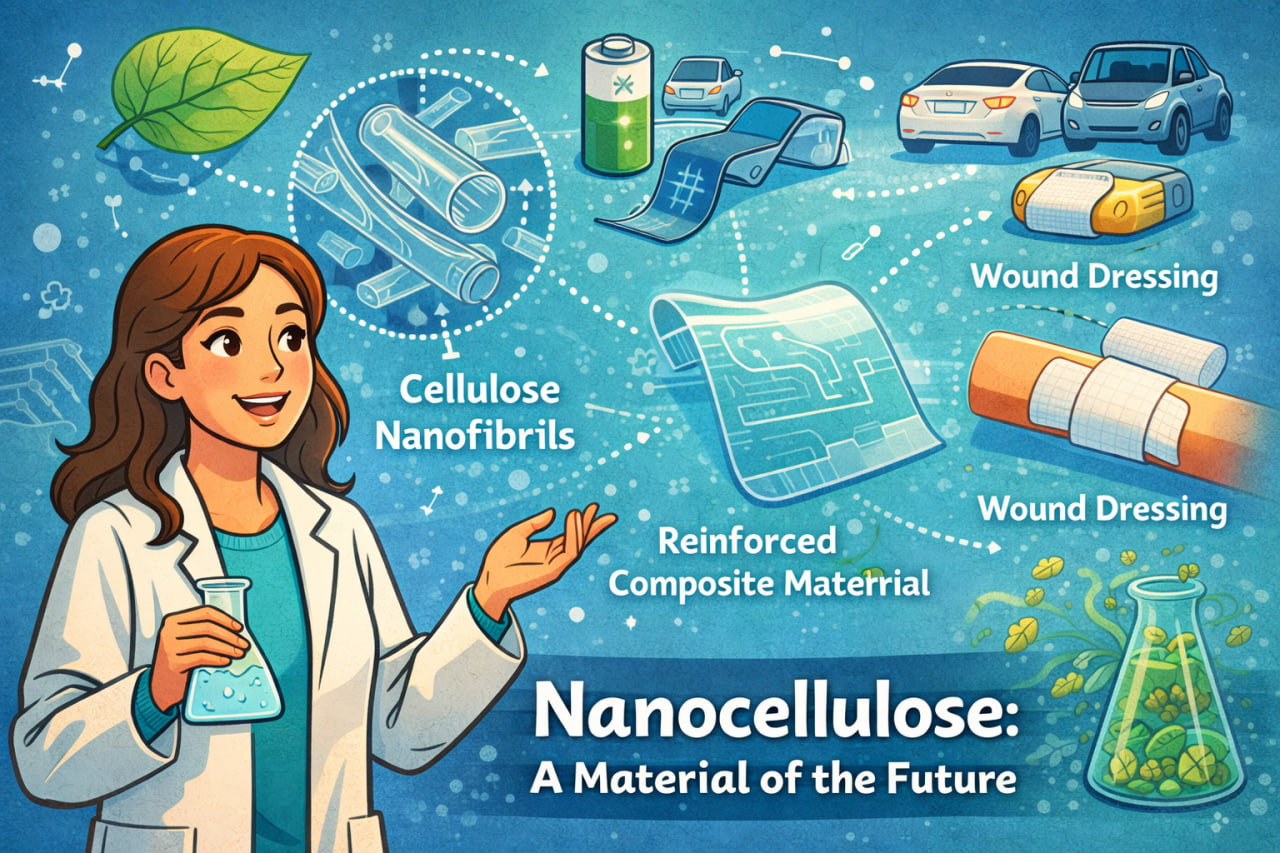
Nanocellulose is an advanced material derived from one of the most common natural substances on Earth — cellulose. Despite its natural origin, nanocellulose exhibits exceptional mechanical strength, low weight, and remarkable versatility at the nanoscale. These properties make it a promising solution for challenges in materials science, medicine, energy, and sustainability. As industries seek alternatives to plastics and carbon-intensive materials, nanocellulose has emerged as a strong candidate due to its renewable nature and low environmental footprint. Scientists continue to explore how manipulating cellulose fibers at the nanometer level unlocks entirely new behaviors not seen in bulk materials. Understanding nanocellulose is key to understanding the future of sustainable high-performance materials.

The James Webb Space Telescope: How It Changed Our View of Exoplanets
Space Stories Cosmic Innovations Hi-Tech

The James Webb Space Telescope: How It Changed Our View of Exoplanets

The launch of the James Webb Space Telescope marked a turning point in the study of exoplanets. Before Webb, astronomers could detect many distant worlds, but understanding their true nature remained limited. Most observations focused on size, mass, and orbit, leaving atmospheres and surface conditions largely unknown. With its unprecedented sensitivity and infrared capabilities, Webb transformed exoplanets from distant points of data into complex, character-rich worlds. It allowed scientists to study their atmospheres in detail and investigate their potential habitability. As a result, our understanding of planets beyond the Solar System has become deeper, more precise, and far more nuanced.

Atmospheric Spectroscopy: How Scientists Read the Chemistry of Distant Worlds
Space Stories Hi-Tech Universe

Atmospheric Spectroscopy: How Scientists Read the Chemistry of Distant Worlds

Atmospheric spectroscopy is one of the most powerful tools in modern astronomy and planetary science. It allows scientists to study the composition, structure, and physical properties of planetary atmospheres without direct contact. By analyzing how light interacts with gases surrounding a planet, researchers can identify specific chemical elements and molecules. This method has transformed planets from distant points of light into complex environments with measurable characteristics. Atmospheric spectroscopy is central to the study of exoplanets, climate systems, and the search for life beyond Earth. In essence, it enables scientists to “read” atmospheres across vast distances of space.

Interferometer: Measuring the Invisible with Extreme Precision
Hi-Tech Smart Technology Inventions

Interferometer: Measuring the Invisible with Extreme Precision

An interferometer is one of the most precise scientific instruments ever created, designed to measure incredibly small changes in distance, light, or waves. It allows scientists to observe phenomena that are otherwise completely invisible, from tiny vibrations in materials to distortions of spacetime itself. Interferometers play a crucial role in modern physics, astronomy, engineering, and metrology, forming the backbone of some of the most important discoveries of the last century. By exploiting the wave nature of light or other signals, these instruments turn minute differences into measurable patterns. Their sensitivity is so extreme that they can detect changes smaller than the diameter of an атом, making them indispensable in cutting-edge research. Understanding how interferometers work reveals how humanity measures reality at its most fundamental level.

Cryo-Electron Microscopy: Seeing Life at Near-Atomic Resolution
Hi-Tech Bioengineering New Discoveries

Cryo-Electron Microscopy: Seeing Life at Near-Atomic Resolution

Cryo-electron microscopy, often called cryo-EM, is one of the most powerful imaging technologies in modern science, allowing researchers to visualize biological structures in extraordinary detail. Unlike traditional microscopy techniques, cryo-EM makes it possible to study molecules in a state that is extremely close to their natural environment. By rapidly freezing samples, scientists can preserve delicate biological structures without the need for chemical fixation or staining. This breakthrough has transformed structural biology, enabling discoveries that were impossible just a few decades ago. Cryo-EM plays a crucial role in understanding viruses, proteins, and cellular machinery at near-atomic resolution. Its impact on medicine, biology, and chemistry continues to grow rapidly.

Artificial Photosynthesis: Creating Clean Energy Inspired by Nature
Hi-Tech Bioengineering New Discoveries

Artificial Photosynthesis: Creating Clean Energy Inspired by Nature

Artificial photosynthesis is a cutting-edge scientific concept that seeks to replicate one of nature’s most powerful processes: the conversion of sunlight, water, and carbon dioxide into usable energy. In natural photosynthesis, plants transform solar energy into chemical bonds that sustain life on Earth. Scientists aim to imitate and improve this process using advanced materials, catalysts, and engineering systems. The goal is to produce clean fuels and valuable chemicals while reducing carbon emissions. Artificial photosynthesis represents a bridge between renewable energy, chemistry, and environmental sustainability. Understanding this technology reveals why it is considered a potential cornerstone of a future low-carbon economy.

Batteries of the Future: Powering the Next Technological Era
Hi-Tech New Discoveries Inventions

Batteries of the Future: Powering the Next Technological Era

Batteries of the future are set to play a decisive role in shaping global energy systems, transportation, and digital technologies. As societies transition toward renewable energy and electrification, the limitations of current battery technologies become increasingly apparent. Modern research focuses on improving energy density, safety, charging speed, lifespan, and environmental sustainability. Scientists are exploring new materials and chemical principles to overcome the constraints of traditional lithium-ion batteries. These innovations aim not only to store more energy, but to do so more reliably and responsibly. Understanding future battery technologies helps explain how energy storage will support a low-carbon and technologically advanced world.

Metal–Organic Frameworks: Programmable Materials at the Atomic Scale
Hi-Tech Bioengineering Science

Metal–Organic Frameworks: Programmable Materials at the Atomic Scale

Metal–organic frameworks, often abbreviated as MOFs, are one of the most exciting classes of materials developed in modern chemistry and materials science. These structures are built from metal ions linked together by organic molecules, forming highly ordered, porous networks at the molecular level. What makes MOFs extraordinary is their extreme surface area, tunable structure, and chemical versatility. Scientists can design them almost like molecular construction kits, adjusting their properties for specific tasks. As a result, metal–organic frameworks are being explored for applications ranging from clean energy to medicine and environmental protection. Understanding MOFs helps explain why they are considered a cornerstone of next-generation materials.

What Are Quantum Computing Technologies?
Hi-Tech Smart Technology Science

What Are Quantum Computing Technologies?

Quantum computing is one of the most revolutionary fields in modern science, promising to transform how humanity processes information. Unlike classical computers, which rely on binary bits that represent either 0 or 1, quantum computers operate using the principles of quantum physics. These machines are designed to solve specific types of problems far beyond the practical reach of today’s most powerful supercomputers. Although quantum computing is still in an early stage of development, it has already reshaped scientific thinking in physics, cryptography, chemistry, and artificial intelligence. Understanding how quantum computers work helps clarify why they are considered both powerful and challenging to build. Rather than replacing classical computers, quantum systems are expected to complement them in highly specialized tasks.