Hi-Tech

How a Computer Works: A Beginner-Friendly Explanation
Hi-Tech Smart Technology Smart Home

How a Computer Works: A Beginner-Friendly Explanation

A computer may look complex, but at its core it is a logical machine designed to process information. Whether it is a laptop, desktop, or tablet, every computer follows the same basic principles: it receives input, processes data, stores information, and produces output. Understanding how a computer works does not require technical training—only a clear explanation of its main components and their roles. Once these basics are understood, computers stop feeling mysterious and become practical, predictable tools. This guide explains computer structure in simple terms, making it accessible even for complete beginners.

Quantum Entanglement and Its Practical Applications
Hi-Tech Smart Technology Science

Quantum Entanglement and Its Practical Applications

Quantum entanglement is one of the most fascinating and counterintuitive phenomena in modern physics, challenging classical ideas about space, time, and causality. It describes a situation in which two or more particles become so deeply connected that the state of one instantly influences the state of the other, no matter how far apart they are. What once seemed like a purely theoretical curiosity has now become a cornerstone of emerging technologies. Today, quantum entanglement is not only a subject of philosophical debate but also a practical resource for communication, computing, and measurement. Understanding how entanglement works opens a window into the future of technology shaped by the laws of quantum mechanics.

How the Large Hadron Collider Was Created
History Hi-Tech Smart Technology

How the Large Hadron Collider Was Created

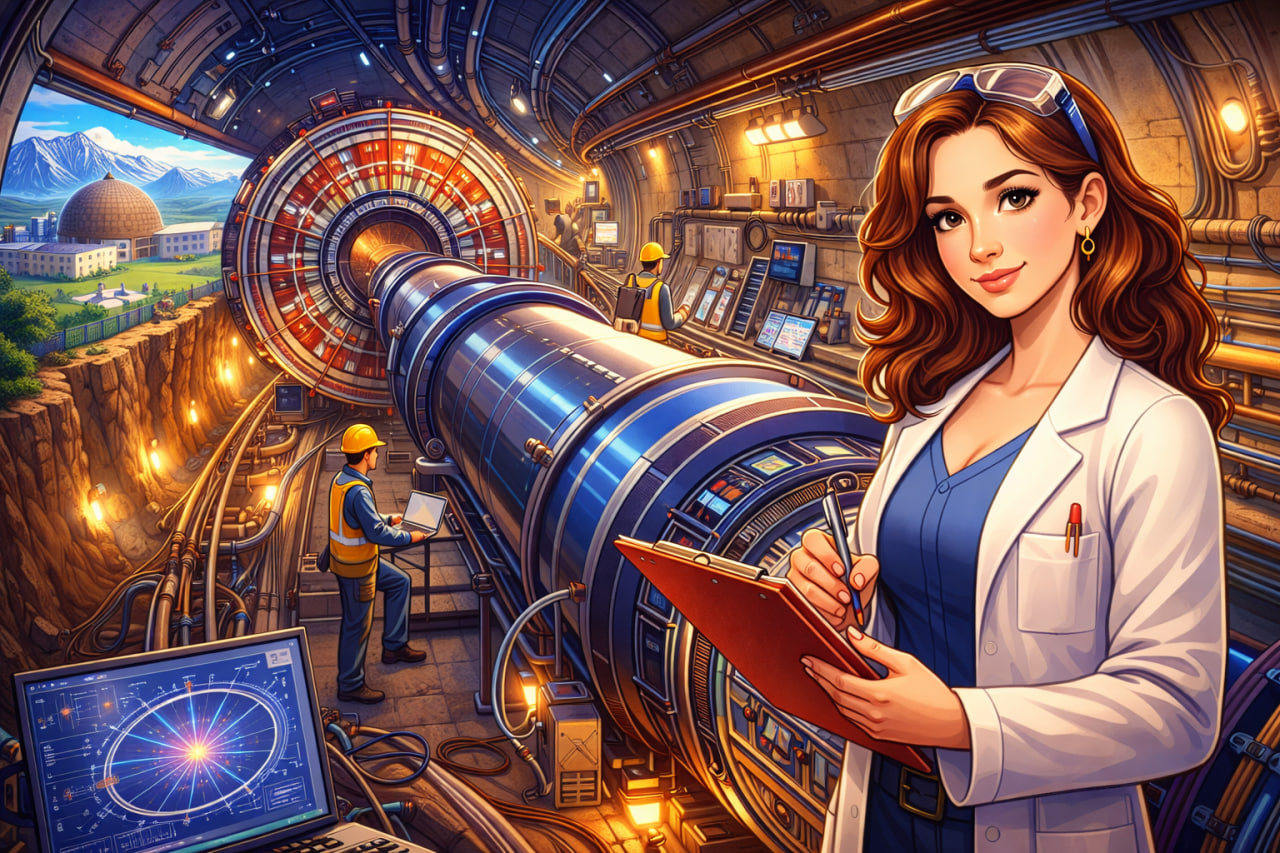
The Large Hadron Collider (LHC) is the most powerful particle accelerator ever built and one of the most complex scientific instruments in human history. Its creation was not a single engineering project, but a multi-decade international effort combining physics, engineering, computing, and diplomacy. Designed to explore the fundamental structure of matter, the LHC ensures collisions at energies never before achieved in a laboratory. The path from early ideas to a functioning collider involved theoretical debates, technological breakthroughs, and unprecedented global collaboration. Understanding how the LHC was created reveals how modern “big science” operates at the limits of human capability. It is a story of patience, precision, and collective ambition.

How Wireless Phone Charging Works
Hi-Tech Smart Technology Science

How Wireless Phone Charging Works

Wireless phone charging may look like a simple and almost magical process, but behind it lies well-understood physics and carefully engineered technology. Instead of transferring electricity through a cable, wireless charging relies on electromagnetic fields to deliver energy from a charging pad to a phone’s battery. This method reduces mechanical wear on connectors and allows for more convenient daily use. Although wireless charging is generally slower than wired charging, its ease and durability have made it increasingly popular. Understanding how it works helps explain both its advantages and its limitations.

Interferometers: Measuring the Invisible with Waves
Cosmic Innovations Hi-Tech Science

Interferometers: Measuring the Invisible with Waves

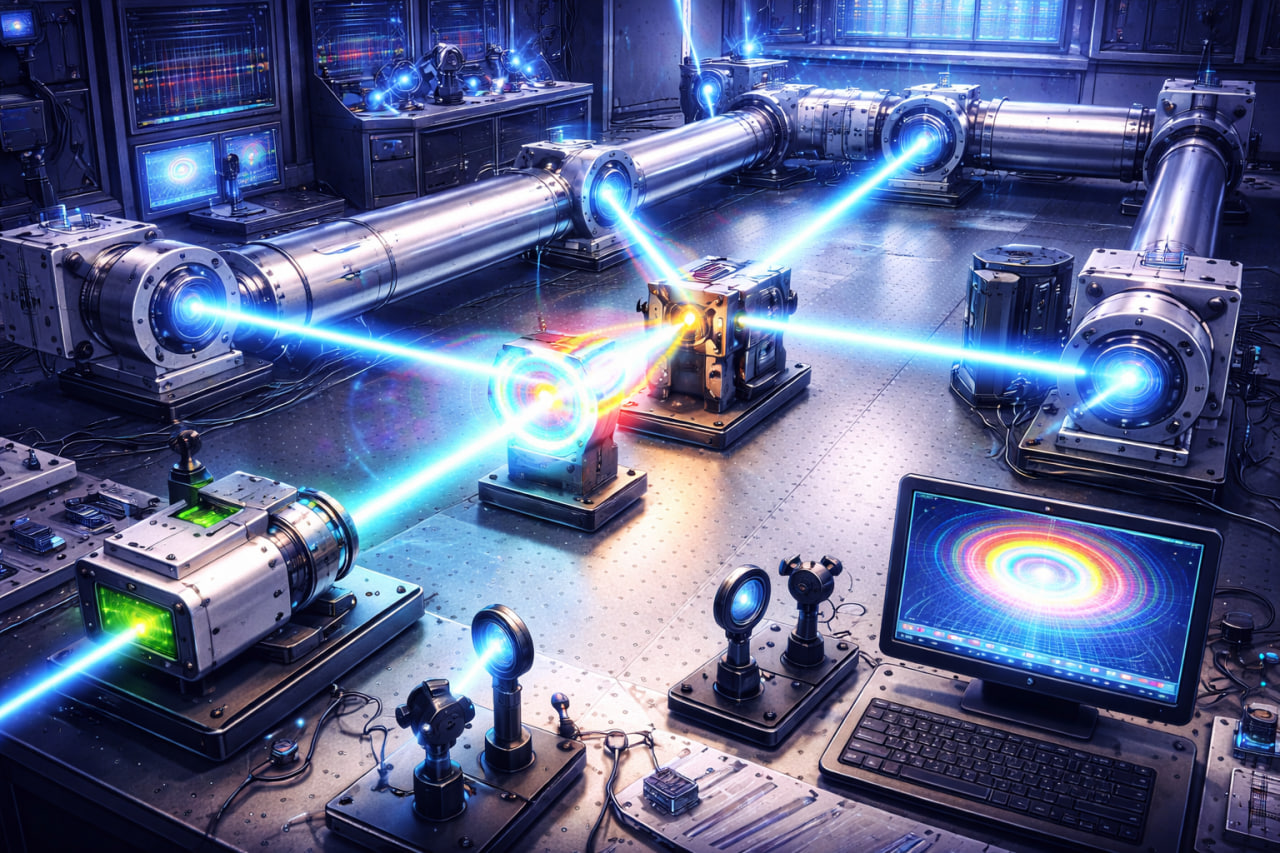
Interferometers are among the most precise scientific instruments ever created, designed to detect changes so small they are almost impossible to imagine. They work by comparing waves—most commonly light or radio waves—to measure extremely tiny differences in distance, motion, or time. Thanks to interferometers, scientists can observe phenomena that would otherwise remain completely hidden, from atomic-scale shifts to cosmic events billions of light-years away. These instruments play a central role in modern physics, astronomy, and engineering, transforming abstract wave behavior into measurable data. Although the underlying concept is elegant, interferometers are capable of extraordinary sensitivity. Understanding how interferometers work reveals how humanity measures reality at its most subtle levels.

Uhuru: The First X-Ray Astronomy Laboratory in Space
Cosmic Innovations History Hi-Tech

Uhuru: The First X-Ray Astronomy Laboratory in Space

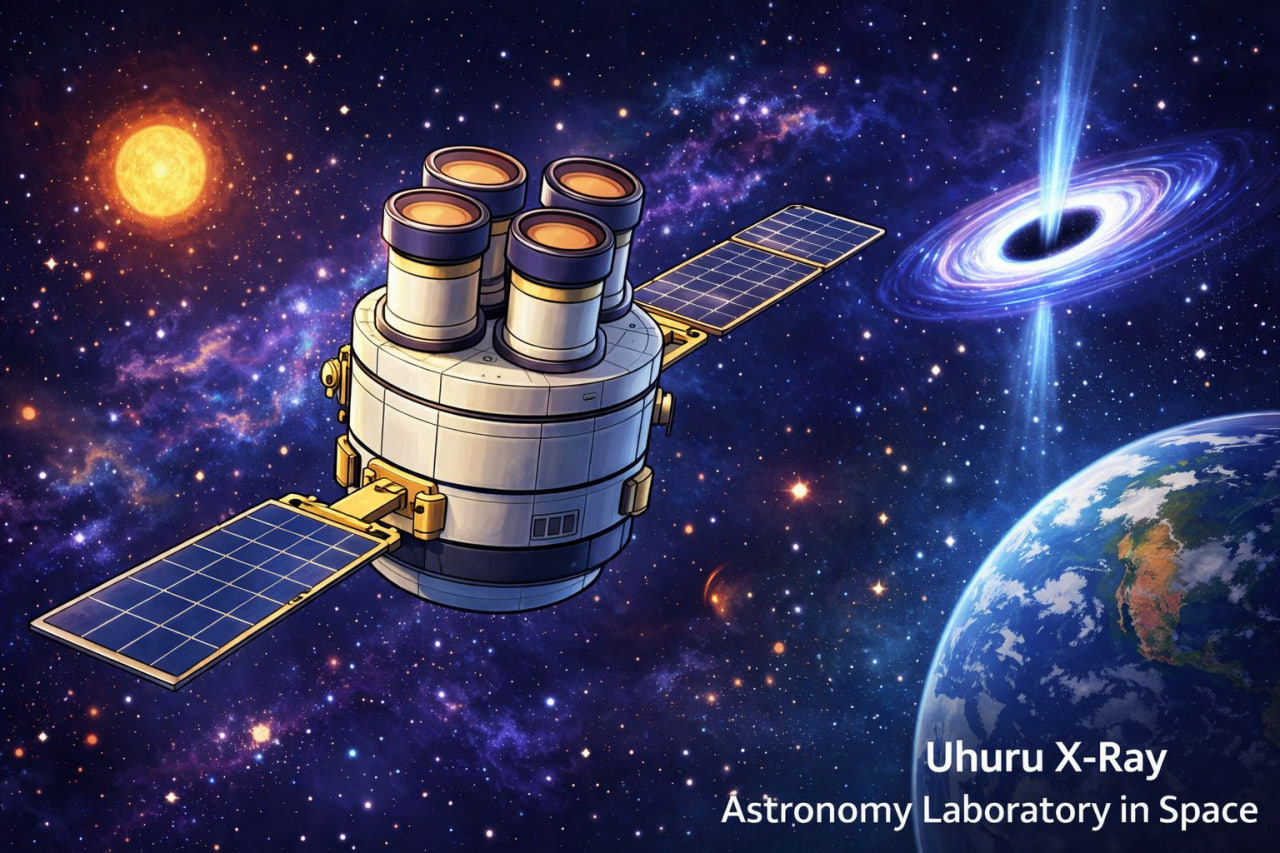
The Uhuru X-ray laboratory marked a turning point in humanity’s exploration of the universe by opening an entirely new window on the cosmos. Launched in 1970, Uhuru became the first satellite dedicated exclusively to X-ray astronomy, allowing scientists to observe high-energy phenomena invisible to optical telescopes. Before Uhuru, astronomers could only guess at the intensity and distribution of cosmic X-ray sources. This pioneering mission transformed those guesses into precise measurements, revealing a universe filled with extreme objects such as black holes, neutron stars, and supernova remnants. Uhuru did not merely collect data; it fundamentally changed how scientists understood the energetic processes shaping galaxies. Its legacy continues to influence modern space observatories and high-energy astrophysics research.

Flying Trains: The Future of High-Speed Transportation
Hi-Tech Smart Technology New Discoveries

Flying Trains: The Future of High-Speed Transportation

The idea of flying trains has fascinated engineers, futurists, and the public for decades, appearing in science fiction long before becoming a serious subject of scientific research. Today, this concept refers not to traditional trains with wings, but to advanced transportation systems that eliminate physical contact with rails by using magnetic fields, air pressure, or enclosed vacuum tubes. Flying trains promise extreme speeds, reduced friction, and quieter operation compared to conventional railways. As global cities grow and the demand for fast, sustainable transport increases, these technologies are gaining renewed attention. While fully airborne trains remain theoretical, several real-world systems already operate on principles that closely resemble “flight.” Understanding these technologies helps clarify what is realistic today and what may become possible in the future.

Airships: History and Modern Revival
History Hi-Tech Science

Airships: History and Modern Revival

Airships, often called dirigibles, represent one of the most fascinating chapters in the history of aviation. Long before airplanes dominated the skies, airships promised controlled, long-distance flight with unmatched endurance and efficiency. Their graceful movement and massive silhouettes symbolized technological optimism at the dawn of the 20th century. Although their role diminished after dramatic accidents and rapid advances in airplanes, airships never fully disappeared. Today, renewed interest in sustainability, surveillance, and heavy transport has brought airships back into scientific and industrial discussion. Understanding their past and present helps explain why this technology continues to capture human imagination.

The Future of Airship Construction
Hi-Tech Smart Technology Science

The Future of Airship Construction

The future of airship construction is increasingly discussed as the world searches for sustainable, efficient, and flexible transportation solutions. Once considered a relic of early aviation, airships are now being re-evaluated through the lens of modern materials, digital control systems, and environmental priorities. Unlike conventional aircraft, airships offer unique advantages such as long endurance, low fuel consumption, and the ability to operate without extensive infrastructure. These qualities position them as a promising complement to existing transport technologies rather than a replacement. Advances in engineering have fundamentally changed what airships can be, opening possibilities that were unattainable in the past. The future of airship construction reflects a broader trend of revisiting historical concepts with modern scientific understanding.

Fiber Optics: How Light Carries Information
Neuro-Tech Hi-Tech Science

Fiber Optics: How Light Carries Information

Fiber optic technology is one of the most important foundations of the modern digital world. It enables the rapid transmission of information using light rather than electricity, making global communication faster, more stable, and more efficient. Every day, fiber optic networks carry internet traffic, phone calls, video streams, and data between continents in fractions of a second. Although the technology itself is invisible to most users, it quietly supports nearly all aspects of modern life. The principle behind fiber optics is elegant, relying on fundamental laws of physics rather than complex mechanical systems. Understanding how fiber optics work reveals why light has become the preferred carrier of information in the 21st century.