New Discoveries

New Materials: Graphene, Aerogel, and Other Wonders
Science New Discoveries

New Materials: Graphene, Aerogel, and Other Wonders

In the last two decades, scientists have created and perfected materials with extraordinary properties, opening the door to new technologies and applications. Among the most fascinating are graphene, aerogel, and other advanced substances that seem almost futuristic. These materials combine remarkable strength, lightness, conductivity, and adaptability, and they are already influencing industries from electronics to aerospace.
The Strangest Scientific Discoveries of the Last Decade
Cosmic Innovations Science New Discoveries

The Strangest Scientific Discoveries of the Last Decade

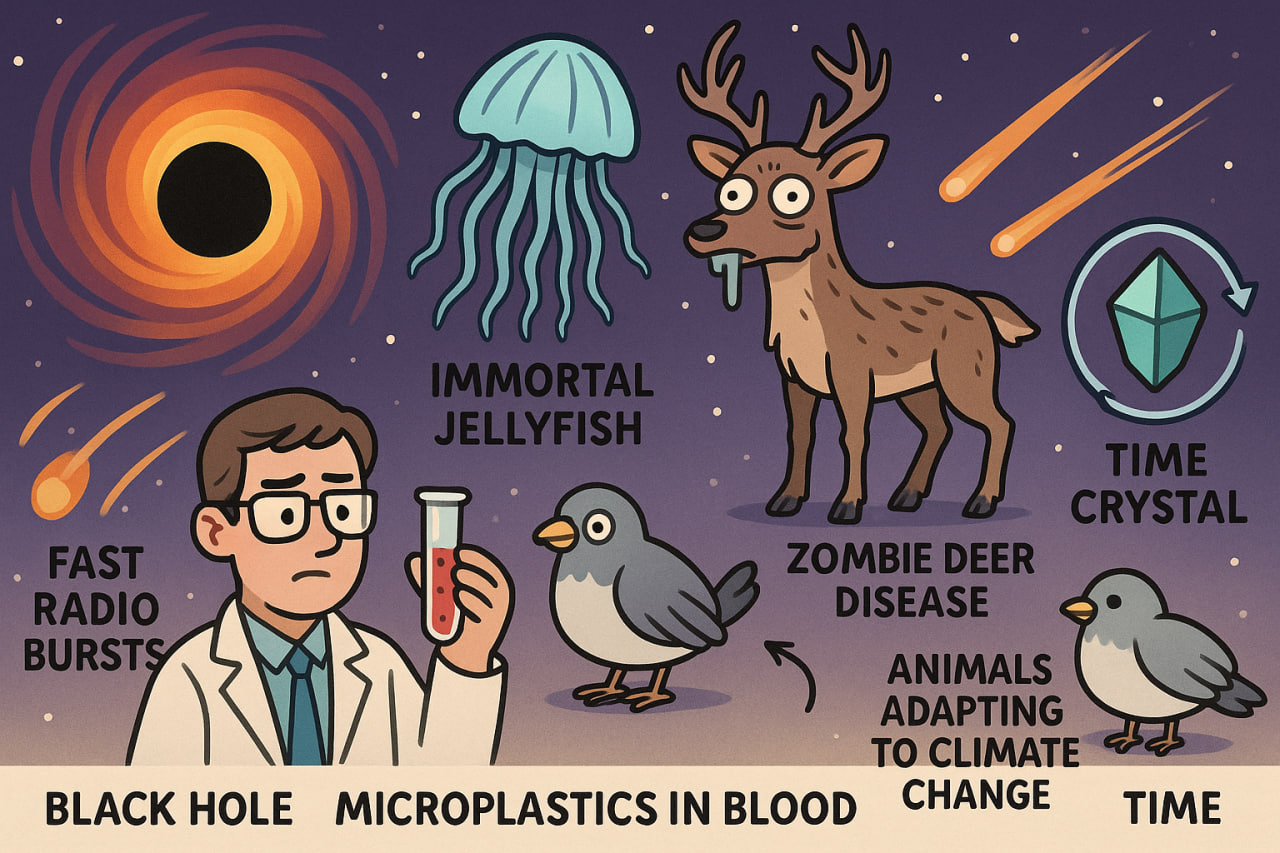
Over the past ten years, science has delivered breakthroughs that are not only groundbreaking but also deeply unusual. These discoveries challenge our understanding of the world and often seem more like science fiction than reality. From mysterious cosmic phenomena to bizarre biological behaviors, here are some of the strangest findings of recent years.

Neutrinos and Ghost Particles: Why Scientists Study Them
Space Stories Science New Discoveries

Neutrinos and Ghost Particles: Why Scientists Study Them

Neutrinos are subatomic particles with no electric charge and an extremely small mass. They interact so weakly with matter that trillions pass through your body every second without leaving a trace. Because of this elusive nature, they are often called "ghost particles". Studying them helps scientists understand the most fundamental processes in the universe.

How Space Suits Are Made
Cosmic Innovations Hi-Tech New Discoveries

How Space Suits Are Made

A space suit — or extravehicular mobility unit (EMU) — is more than just clothing. It’s a self-contained life support system, acting as a miniature spacecraft that protects astronauts from the harsh conditions of space. A properly designed suit maintains pressure, supplies oxygen, removes CO₂, shields from radiation and micrometeoroids, and allows mobility in zero gravity. Creating a space suit involves advanced materials science, engineering, biology, and astronaut feedback, and is one of the most complex aspects of human spaceflight.

Latest Space Technologies
Cosmic Innovations Hi-Tech Smart Technology

Latest Space Technologies

We are living in a revolutionary era of space technology. Once dominated by government agencies and Cold War politics, modern space activity now includes private companies, global collaboration, robotics, and AI. From reusable rockets to lunar habitats, cutting-edge innovations are redefining what is possible in space exploration. These new technologies aim not only to return us to the Moon and reach Mars but to build a sustainable human presence beyond Earth.

What Is Nuclear Fusion?
Hi-Tech Science New Discoveries

What Is Nuclear Fusion?

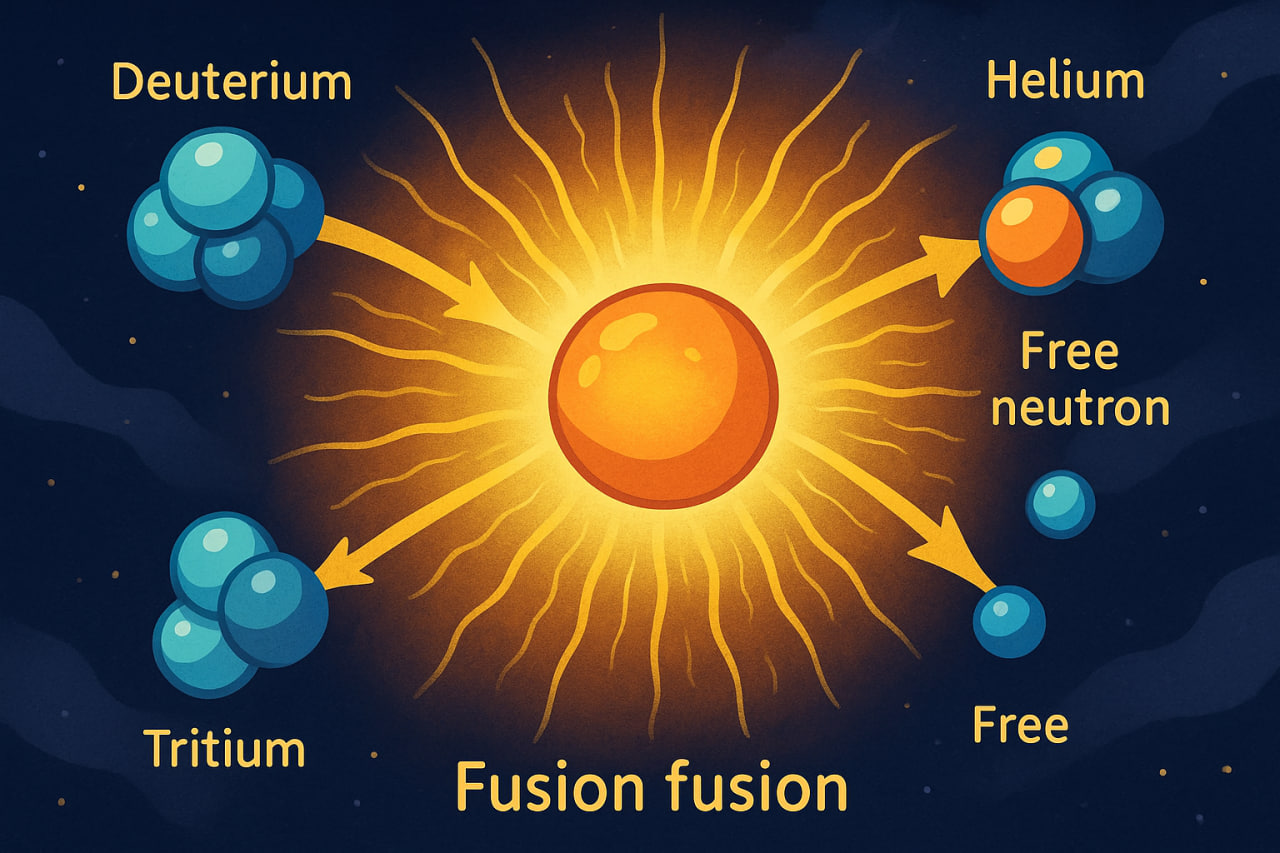
Nuclear fusion is the process by which two light atomic nuclei combine to form a heavier nucleus, releasing an enormous amount of energy in the process. It is the same reaction that powers the Sun and other stars. Unlike nuclear fission, which splits atoms and is used in current nuclear power plants, fusion combines atoms — and produces less radioactive waste, no greenhouse gases, and offers a virtually limitless source of clean energy. For decades, scientists have pursued controlled nuclear fusion on Earth as a potential energy revolution.

How Lasers Work and the Latest Advances
Hi-Tech Smart Technology Science

How Lasers Work and the Latest Advances

A laser (Light Amplification by Stimulated Emission of Radiation) is a device that emits a beam of coherent, monochromatic light — meaning all light waves have the same wavelength and move in unison. Unlike ordinary light from a bulb, laser light is extremely focused and powerful. Lasers are used in everything from barcode scanners and fiber-optic communication to medical surgeries and space exploration. The basic principle of a laser relies on quantum physics, specifically the controlled behavior of photons in a medium that can be excited to emit light in a synchronized way.

Why We Need Large Hadron Colliders
Hi-Tech Smart Technology New Discoveries

Why We Need Large Hadron Colliders

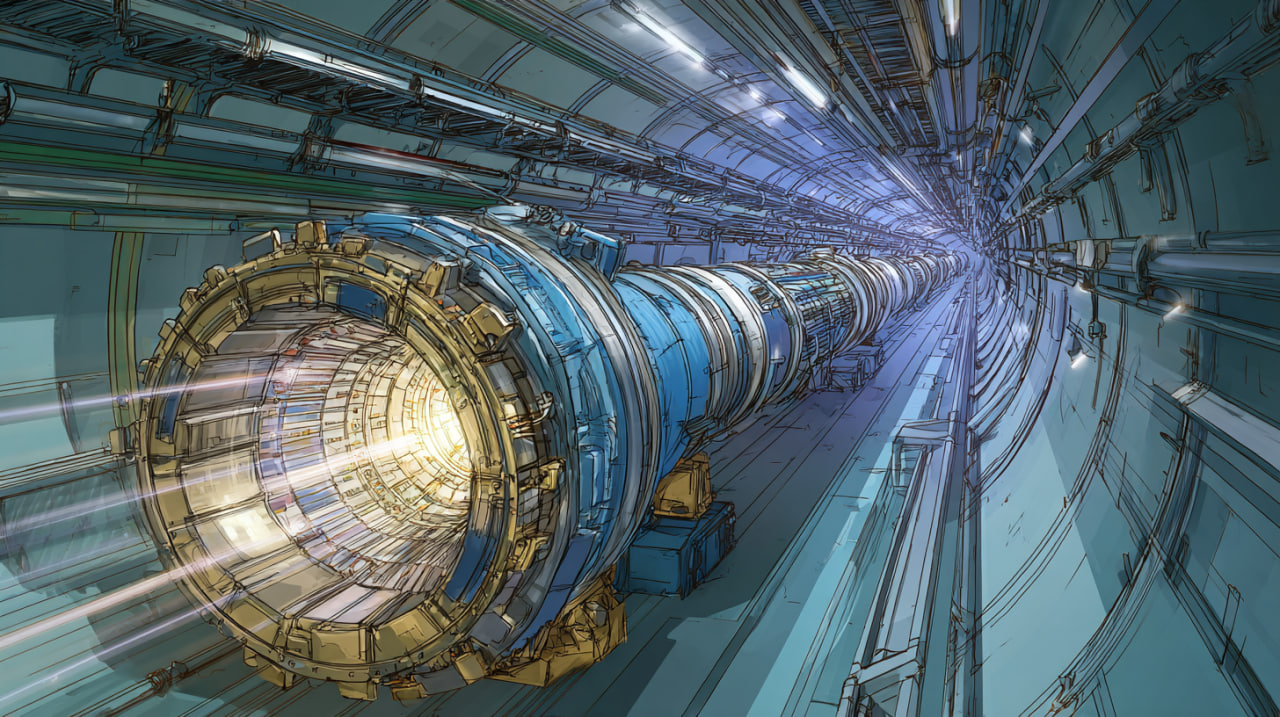
Large Hadron Colliders (LHCs) are among the most complex and ambitious scientific instruments ever built. Their main purpose is to study the fundamental particles that constitute matter and the forces that govern their interactions. These giant underground machines use superconducting magnets to accelerate particles—usually protons—to near-light speeds and smash them together under controlled conditions. The resulting collisions allow physicists to observe phenomena that existed only moments after the Big Bang. The most famous of these machines is the CERN Large Hadron Collider, located on the border of France and Switzerland.

Resistance of Materials at −270°C
Hi-Tech New Discoveries

Resistance of Materials at −270°C

−270°C is a temperature close to absolute zero (0 K), where atomic motion nearly ceases. Studying how materials behave in these extreme cryogenic conditions is crucial for space exploration, quantum computing, and superconductivity research. Most conventional materials become brittle, unstable, or lose their structural integrity at such low temperatures. However, specialized materials such as certain metal alloys, ceramics, and composites can retain strength, flexibility, or even gain remarkable properties like superconductivity. Understanding the response of materials under these conditions requires deep knowledge of thermodynamics, quantum effects, and crystal structure behavior.

Plants in Orbit: Agricultural Technologies in Microgravity
Space Stories Cosmic Innovations New Discoveries

Plants in Orbit: Agricultural Technologies in Microgravity

Growing plants in space has become a crucial component of long-term space exploration. As humanity prepares for extended missions to the Moon, Mars, and beyond, sustainable food production in microgravity is no longer a theoretical challenge — it is a pressing engineering and biological frontier. The ability to grow crops in orbit supports crew nutrition, psychological well-being, oxygen regeneration, and closed-loop life support systems.