Science

Enzymes: Biological Nanorobots That Outlive Molecules
Bioengineering Science Be Smart

Enzymes: Biological Nanorobots That Outlive Molecules

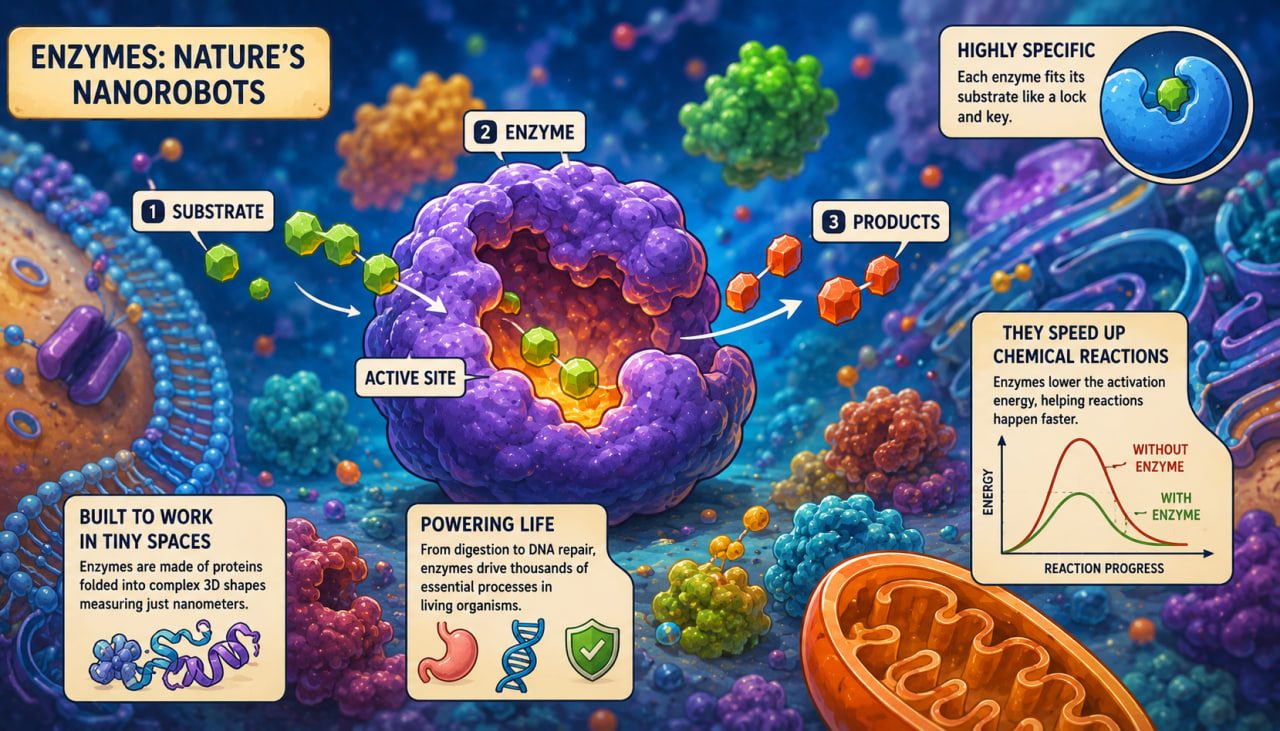
Life as we know it would be impossible without enzymes. Every heartbeat, every breath, every thought, and every movement depends on these remarkable biological molecules. Although invisible to the naked eye, enzymes perform trillions of chemical operations inside living organisms every second. Scientists often compare enzymes to molecular machines because of their extraordinary precision and efficiency. Some researchers even describe them as biological nanorobots—tiny structures capable of recognizing specific molecules, carrying out complex tasks, and repeating those tasks thousands or even millions of times. What makes enzymes particularly fascinating is that they often survive long after the molecules they process have disappeared. While the substances they act upon are transformed into entirely new compounds, the enzyme itself frequently remains unchanged and ready for another cycle of work.

Symmetry in the Universe: The Hidden Principle That Shapes Reality
Space Stories Universe Science

Symmetry in the Universe: The Hidden Principle That Shapes Reality

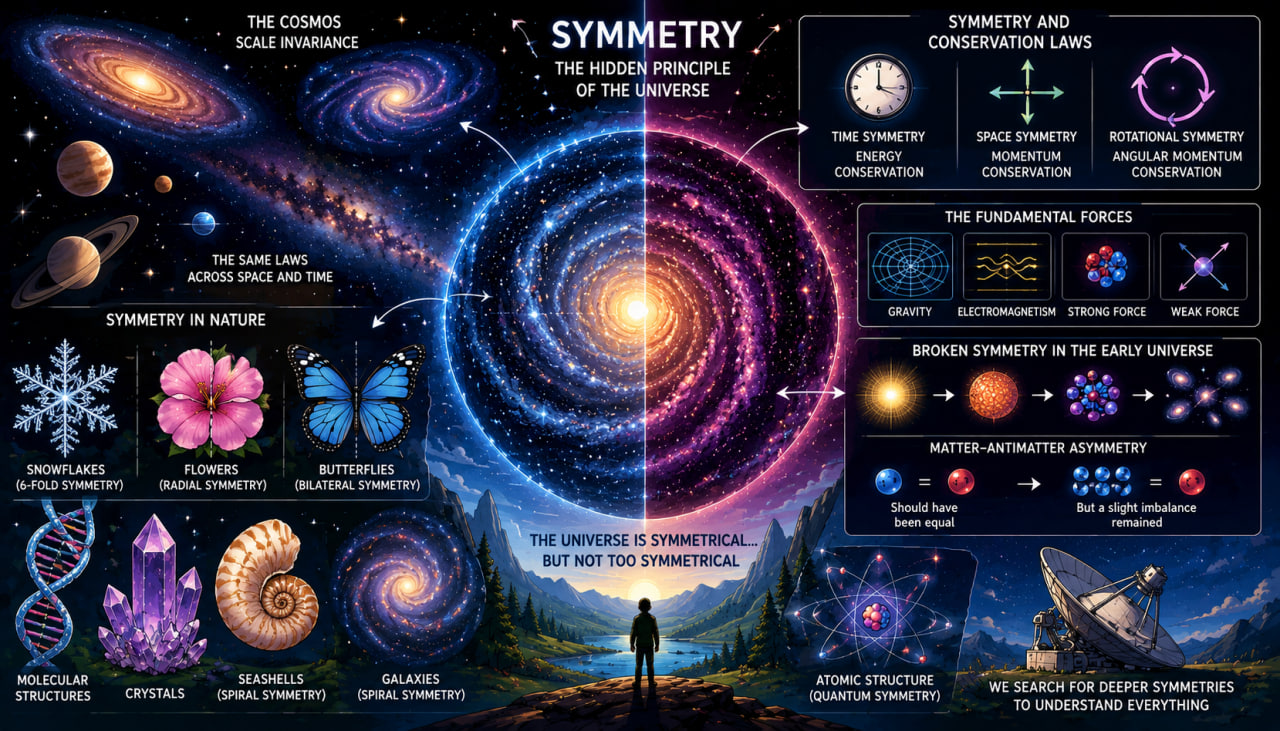
Symmetry is one of the most powerful and fascinating concepts in science. It appears everywhere—from the structure of snowflakes and flowers to the laws that govern stars, galaxies, and the fundamental particles of matter. To many physicists, symmetry is more than just visual balance; it is one of the deepest principles underlying the universe itself. In modern physics, symmetry helps explain why the laws of nature remain consistent across space and time. It plays a crucial role in theories describing gravity, electromagnetism, quantum mechanics, and the structure of the cosmos. Without symmetry, the universe as we know it might not exist. But what exactly is symmetry, and why do scientists consider it so important?

Catalysis: How One Tiny Particle Can Make a Reaction Run Trillions of Times Faster
Science Be Smart Inventions

Catalysis: How One Tiny Particle Can Make a Reaction Run Trillions of Times Faster

Catalysis is one of the most powerful and important phenomena in chemistry. Without catalysts, many chemical reactions that sustain modern civilization would occur far too slowly to be useful. From producing fuels and fertilizers to manufacturing medicines and cleaning vehicle exhaust, catalysts quietly accelerate countless processes that affect daily life. Perhaps the most astonishing aspect of catalysis is that an extremely small amount of catalyst can dramatically increase reaction speed. In some cases, reactions proceed millions, billions, or even trillions of times faster than they would otherwise. This remarkable ability has fascinated scientists for more than a century and continues to drive advances in chemistry, biology, energy production, and environmental protection. Understanding catalysis reveals how nature and technology accomplish seemingly impossible chemical transformations with extraordinary efficiency.

What Is Glue and How Do You Choose the Right One?
Science Be Smart Inventions

What Is Glue and How Do You Choose the Right One?

Glue is one of the most useful inventions in human history. From ancient civilizations using natural adhesives made from animal products and plant resins to modern industrial super glues capable of holding aircraft components together, adhesives have become an essential part of everyday life. Whether repairing a broken mug, assembling furniture, building models, or constructing spacecraft, choosing the correct adhesive can make the difference between success and failure. Many people assume that all glues work in roughly the same way. In reality, adhesives are highly specialized materials designed for specific surfaces, environmental conditions, and mechanical stresses. Understanding how glue works and how to select the appropriate type can save time, money, and frustration.

Oxygen-Free Aging: How Materials Degrade in the Vacuum of Space
Space Stories Science Physics

Oxygen-Free Aging: How Materials Degrade in the Vacuum of Space

When people think about material aging, they often imagine rust, corrosion, moisture damage, or chemical reactions involving oxygen. On Earth, oxygen plays a major role in the breakdown of metals, plastics, rubber, paints, and countless other materials. But what happens in space, where there is almost no atmosphere and virtually no oxygen? At first glance, it might seem that materials placed in the vacuum of space would last forever because traditional oxidation cannot occur. Surprisingly, the reality is far more complex. Space presents a unique set of environmental challenges that can degrade materials in ways rarely encountered on Earth. Scientists and engineers have spent decades studying how spacecraft, satellites, space stations, and scientific instruments age in the harsh environment beyond our planet. Their findings reveal that the vacuum of space creates its own form of aging, often called vacuum degradation or oxygen-free aging.

The Role of the Sun and Moon: Biological Rhythms Governed by Celestial Bodies
Science Be Smart Earth & Moon

The Role of the Sun and Moon: Biological Rhythms Governed by Celestial Bodies

Life on Earth evolved under the constant influence of two dominant celestial bodies: the Sun and the Moon. Long before clocks, calendars, or modern technology existed, living organisms synchronized their behavior with the cycles of daylight, darkness, seasons, and lunar phases. Even today, from microscopic plankton to humans, biological processes continue to follow rhythms shaped by these astronomical influences. Scientists have discovered that many organisms possess internal biological clocks that help them anticipate environmental changes rather than merely react to them. These rhythms regulate sleep, reproduction, migration, feeding, growth, and countless other functions. Understanding how the Sun and Moon influence biological rhythms reveals one of the most fascinating connections between life and the cosmos.

Plastic Fuel: Can Waste Plastic Become High-Octane Fuel for Transportation?
Science Inventions Challenges

Plastic Fuel: Can Waste Plastic Become High-Octane Fuel for Transportation?

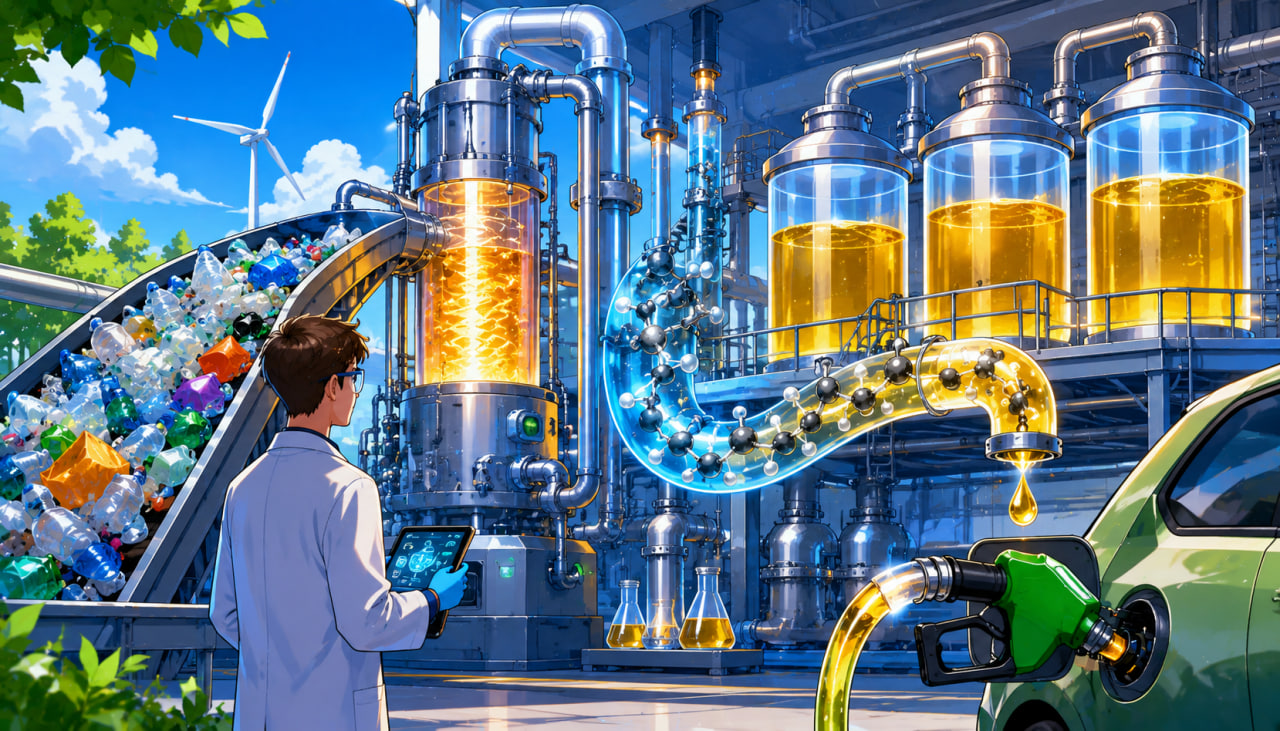
Plastic waste is one of the most pressing environmental challenges of the modern world. Millions of tons of plastic enter landfills, rivers, and oceans every year, creating long-term pollution problems. At the same time, society continues to depend heavily on liquid fuels for transportation. These two issues have inspired scientists and engineers to explore an intriguing solution: converting waste plastic into fuel. Over the past several decades, researchers have developed technologies capable of transforming certain plastics into liquid hydrocarbons that can be used as fuel or refined into fuel components. Some experimental and commercial processes have produced fuels with properties similar to gasoline, diesel, or jet fuel. In certain cases, the resulting fuel fractions can exhibit very high octane ratings, sometimes exceeding 100, depending on feedstock composition and refining methods. This article explores the science behind plastic-to-fuel technologies, their advantages, limitations, and their potential role in future energy systems.

Air Ionization: How Charged Particles Shape the Air Around Us
Smart Technology Science Smart Home

Air Ionization: How Charged Particles Shape the Air Around Us

Air is often thought of as a simple mixture of gases, but in reality it contains a variety of microscopic particles, including ions. Air ionization is a natural and technological process that changes the electrical properties of the atmosphere by creating charged particles. These ions can influence air quality, weather phenomena, industrial processes, and even the operation of electronic devices. Interest in air ionization has grown significantly in recent decades due to the popularity of air purifiers, wellness products, and scientific research into indoor environments. While many claims have been made about the health effects of ionized air, understanding the actual science behind ionization is essential for separating fact from fiction. This article explores what air ionization is, how it occurs, where it is used, and what researchers currently know about its effects.

Michael Faraday: The Self-Taught Genius Who Electrified the World
History Science Tesla&Co

Michael Faraday: The Self-Taught Genius Who Electrified the World

Few scientists have influenced modern civilization as profoundly as Michael Faraday. Although he received little formal education and began life in poverty, Faraday became one of the greatest experimental scientists in history. His discoveries laid the foundations of modern electricity, electromagnetism, and electrical engineering. Today, almost every electrical device—from power stations and electric motors to smartphones and computers—relies on principles that Faraday helped uncover. His work transformed humanity's understanding of nature and helped make the technological world we know possible. Faraday's life is also an inspiring story of curiosity, perseverance, and scientific creativity.

Fullerenes and Nanotubes: The Sporting Shapes of Pure Carbon
Hi-Tech Science New Discoveries

Fullerenes and Nanotubes: The Sporting Shapes of Pure Carbon

Carbon is one of the most remarkable elements in the universe. It forms the basis of all known life and exists in a surprising variety of structures. Most people are familiar with carbon as graphite in pencils or as diamond in jewelry. However, during the late twentieth century, scientists discovered entirely new forms of carbon that revolutionized materials science and nanotechnology. Among the most fascinating are fullerenes and carbon nanotubes. These structures consist entirely of carbon atoms, yet their shapes resemble soccer balls, tubes, and futuristic engineering components. Their discovery revealed that carbon is capable of forming geometries far more complex than previously imagined. Today, fullerenes and nanotubes are at the center of research into advanced electronics, medicine, energy storage, and next-generation materials.