Science

Sol-Gel Technology: How Can Glass or Ceramics Be Grown Like a Flower?
Science New Discoveries News

Sol-Gel Technology: How Can Glass or Ceramics Be Grown Like a Flower?

When most people think of glass or ceramics, they imagine materials created in blazing furnaces at extremely high temperatures. Traditional manufacturing often requires melting raw materials at temperatures exceeding 1,000°C. However, modern materials science has developed a surprisingly elegant alternative known as sol-gel technology. This method allows scientists to create advanced glass, ceramics, coatings, and even nanomaterials through chemical processes that occur at relatively low temperatures. Instead of shaping molten material, researchers can "grow" complex structures from liquid solutions, much like crystals forming in nature or flowers developing from seeds. Today, sol-gel technology plays a vital role in fields ranging from electronics and medicine to aerospace engineering and renewable energy.


Chirality: Why One Form of a Drug Can Heal While the Other Can Harm
Science Be Smart What if?

Chirality: Why One Form of a Drug Can Heal While the Other Can Harm

Modern medicine often appears straightforward: a drug contains a specific molecule that produces a desired effect in the body. However, chemistry reveals a fascinating complication. Sometimes two molecules can contain exactly the same atoms arranged in exactly the same order, yet one may act as a life-saving medicine while the other may be ineffective or even dangerous. This phenomenon is known as chirality, one of the most important concepts in chemistry, pharmacology, and biology. Understanding chirality has transformed drug development and helped scientists create safer and more effective medications. The story of chirality demonstrates how tiny differences at the molecular level can have enormous consequences for human health.

Ionic Liquids: The Salts That Remain Liquid at Room Temperature
Science New Discoveries Be Smart

Ionic Liquids: The Salts That Remain Liquid at Room Temperature

When most people think of salt, they imagine a white crystalline solid such as table salt. Traditional salts are known for their high melting points and stable crystal structures. However, chemistry contains a fascinating exception: ionic liquids. These unusual substances are salts composed entirely of ions, yet they remain liquid at or near room temperature. For decades, ionic liquids have attracted intense scientific interest because they combine the properties of salts with the fluidity of liquids. Their unique characteristics have led researchers to explore applications ranging from green chemistry and energy storage to advanced manufacturing and carbon capture technologies. Often called "designer solvents," ionic liquids represent one of the most exciting developments in modern chemistry.

Hydrophilic and Hydrophobic Elements: How Chemistry Creates Cell Membranes
Hi-Tech Bioengineering Science

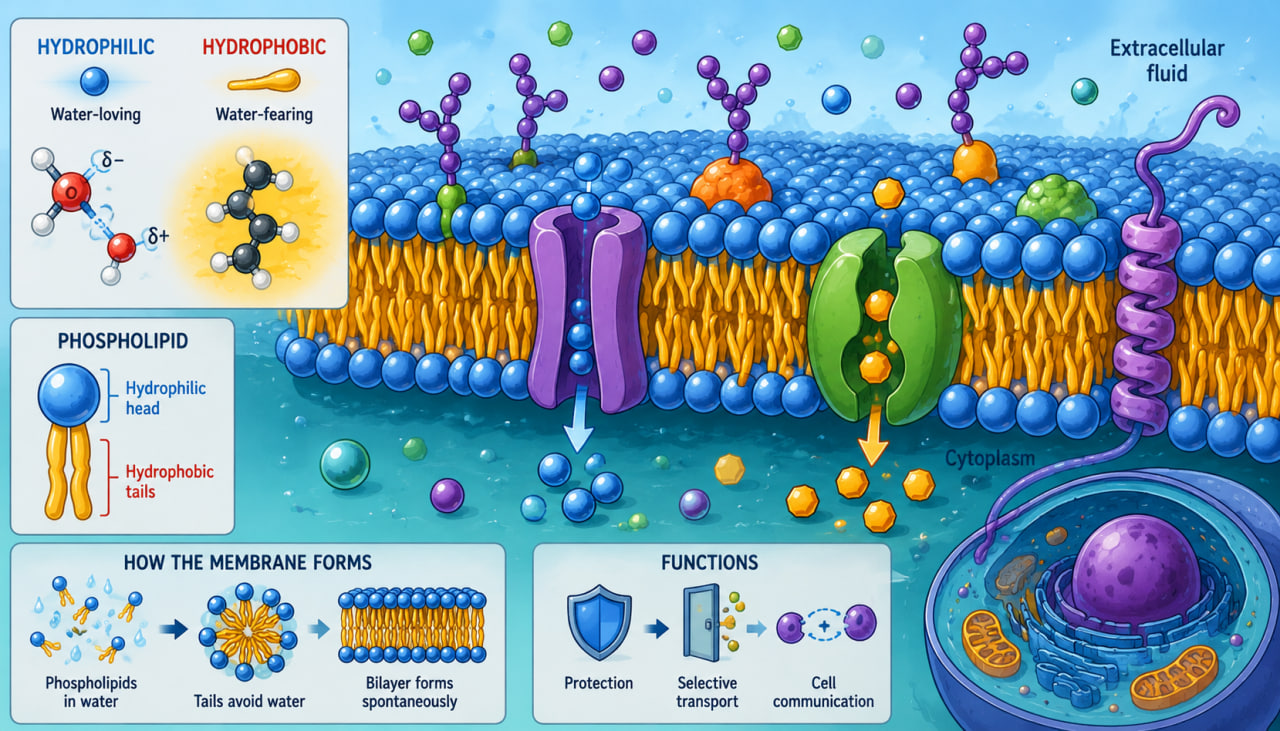
Hydrophilic and Hydrophobic Elements: How Chemistry Creates Cell Membranes

Every living organism, from the smallest bacterium to the largest whale, depends on cell membranes. These incredibly thin structures separate the inside of a cell from its surroundings, regulate the movement of substances, and help maintain the conditions necessary for life. What makes cell membranes especially fascinating is that they assemble themselves almost automatically. This remarkable phenomenon is possible because of two fundamental chemical properties: hydrophilicity and hydrophobicity. The interaction between water-loving and water-repelling molecules creates one of biology's most important structures—the cell membrane. Understanding how hydrophilic and hydrophobic elements work provides insight into the chemistry behind life itself.

The de Broglie–Bohm Theory: Is the Universe a Giant Deterministic Machine Without Randomness?
Science What if? Physics

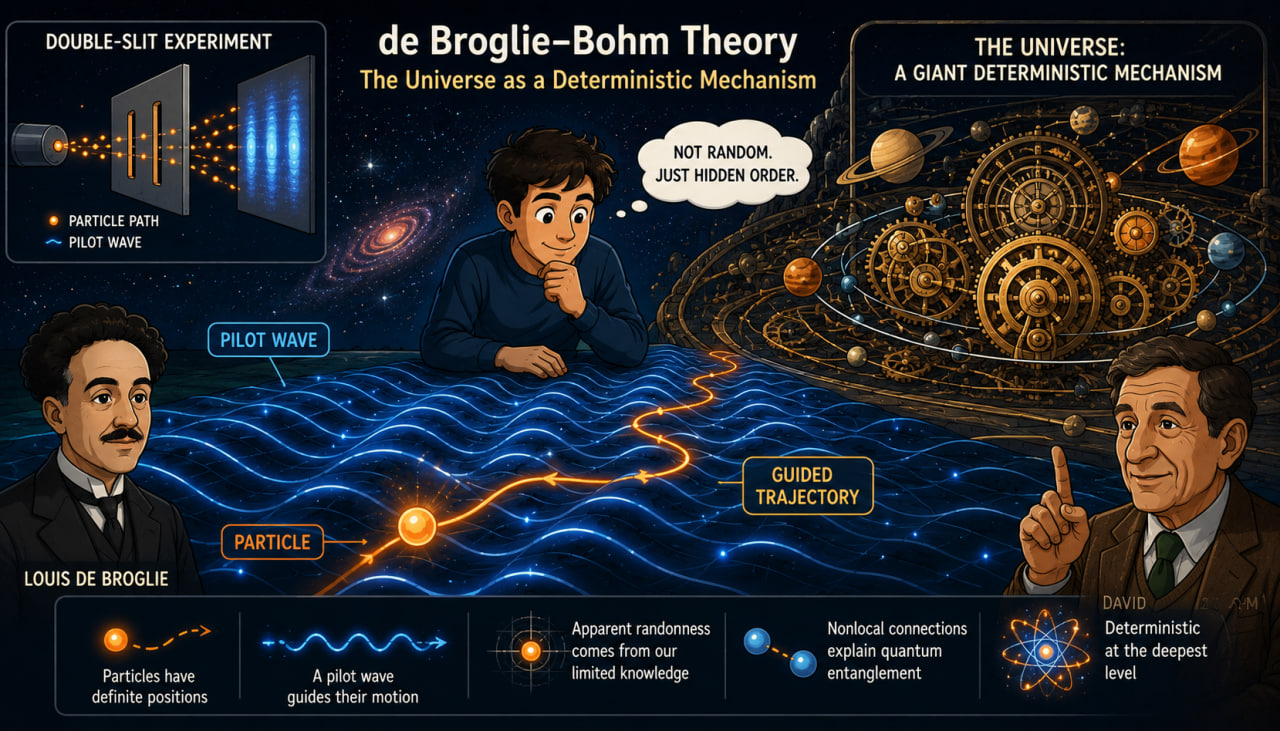
The de Broglie–Bohm Theory: Is the Universe a Giant Deterministic Machine Without Randomness?

Quantum mechanics is famous for introducing uncertainty into physics. According to the standard interpretation, many events at the quantum level are fundamentally random. Particles do not have definite positions until measured, and probabilities seem to play a central role in the behavior of nature. However, not all physicists have accepted this view. One of the most intriguing alternatives is the de Broglie–Bohm theory, also known as Bohmian mechanics or the pilot-wave theory. This interpretation suggests that the universe may actually be completely deterministic, with particles following precise trajectories guided by an invisible quantum wave. If correct, randomness may not be a fundamental feature of reality at all. Instead, the universe could operate like a vast cosmic mechanism whose future is determined by hidden underlying laws.

The Unruh Effect: Why an Accelerating Observer Sees Heat Where None Exists
Science New Discoveries Physics

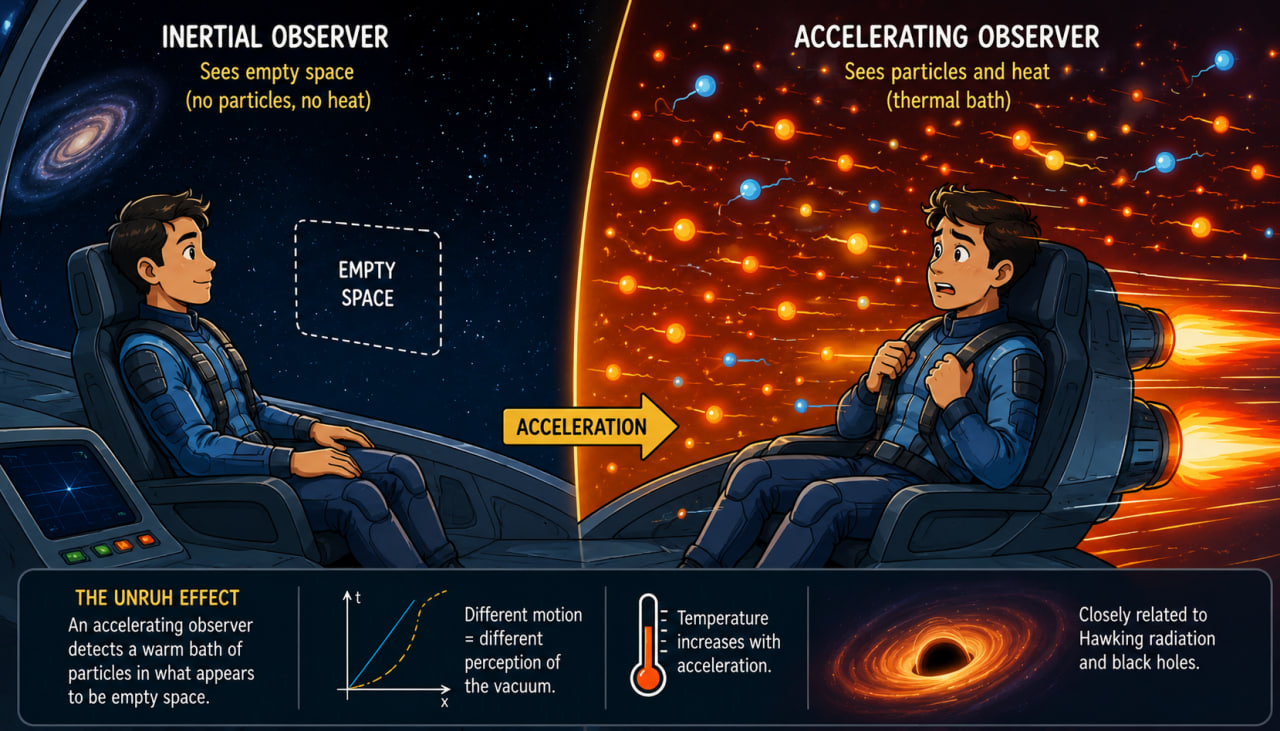
The Unruh Effect: Why an Accelerating Observer Sees Heat Where None Exists

Modern physics often reveals ideas that seem impossible at first glance. One of the most fascinating examples is the Unruh Effect, a theoretical prediction suggesting that an observer undergoing constant acceleration would detect heat in what appears to be empty space. Meanwhile, another observer moving at a constant speed through the same region would see nothing unusual at all. This remarkable concept sits at the intersection of quantum physics, relativity, and thermodynamics. Although the effect has not yet been directly observed in experiments, it is widely accepted by physicists as a consequence of some of the most successful theories in science.

Exotic Matter: The Hypothetical Substance with Negative Mass
Science What if? News

Exotic Matter: The Hypothetical Substance with Negative Mass

Among the strangest ideas in modern physics is the concept of exotic matter—a hypothetical form of matter that behaves in ways completely unlike anything we encounter in everyday life. Ordinary matter has: Positive mass Positive energy density Normal gravitational behavior Exotic matter, in some theoretical models, may possess: Negative mass Negative energy density Unusual gravitational properties If such matter exists, it could potentially make possible some of the most extraordinary concepts ever proposed by physicists, including: Wormholes Warp drives Time machines Antigravity-like effects At present, exotic matter remains largely theoretical. However, the mathematics of modern physics continues to suggest that nature may allow phenomena far stranger than our everyday experience. Understanding exotic matter takes us to the frontier where: Quantum mechanics Relativity Cosmology meet some of the biggest mysteries of the universe.

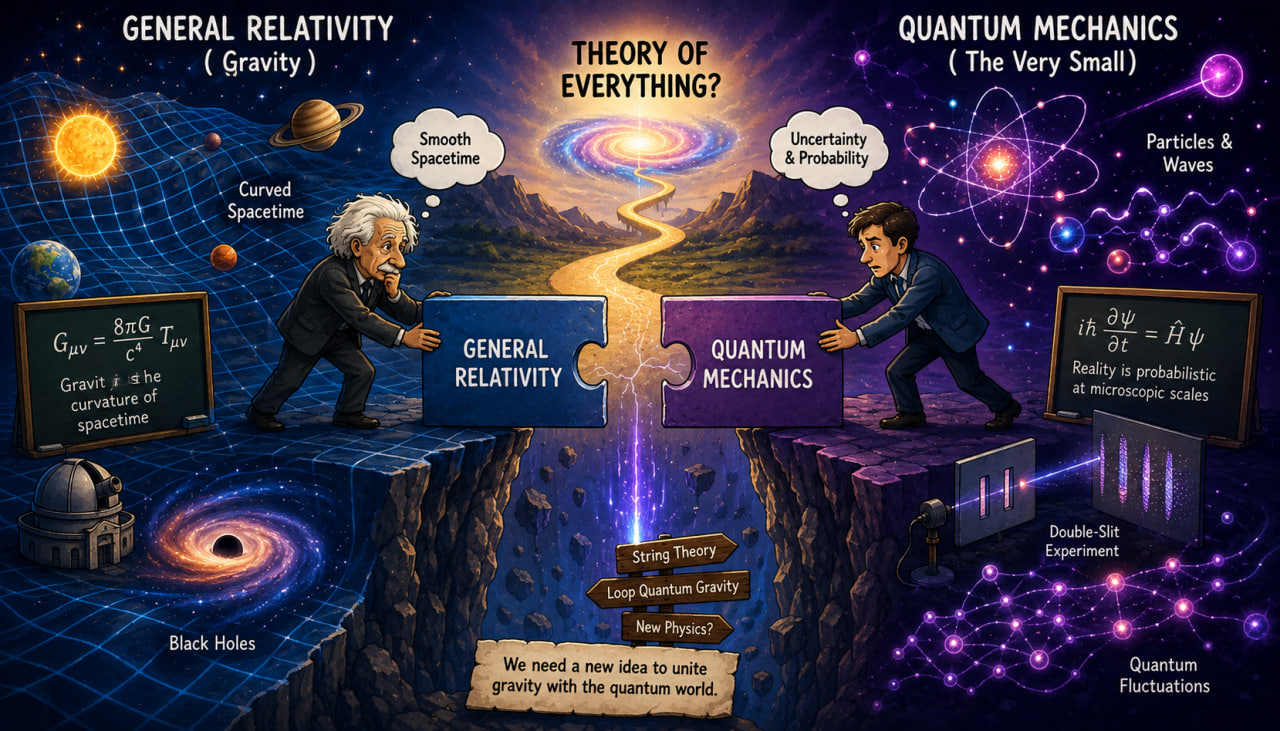
Theory of Everything: Why Gravity Refuses to Get Along with Quantum Physics
Universe Science What if?

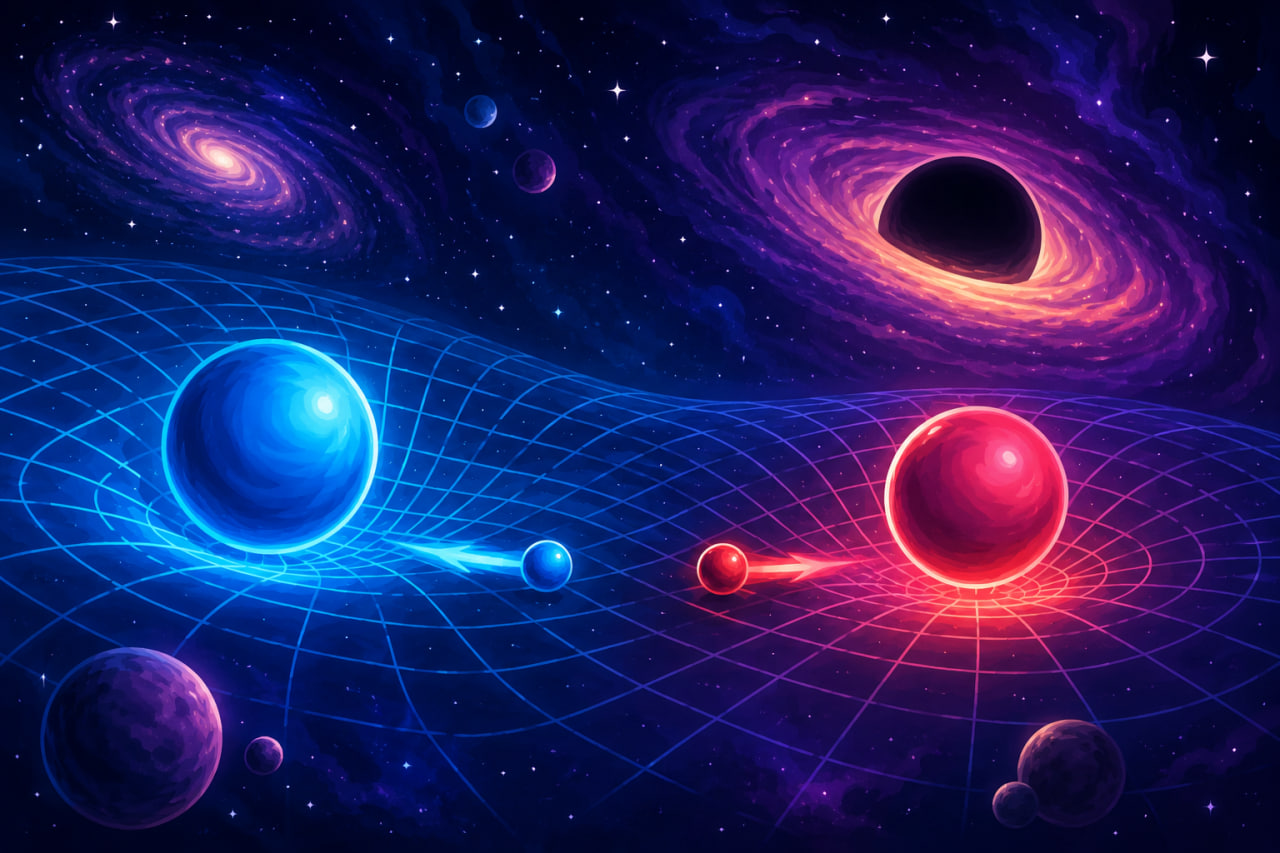
Theory of Everything: Why Gravity Refuses to Get Along with Quantum Physics

Modern physics is built upon two extraordinarily successful theories. The first is: Quantum Mechanics which describes the behavior of: Atoms Electrons Photons Subatomic particles The second is: General Relativity developed by Albert Einstein to explain: Gravity Space Time The structure of the universe Both theories have passed countless experimental tests and are among the greatest achievements in scientific history. Yet there is a major problem: The two theories do not work well together. When physicists try to combine gravity with quantum mechanics, the mathematics often breaks down. This conflict has inspired one of the most ambitious goals in science: The Theory of Everything a single framework capable of explaining all fundamental forces and particles in the universe. Finding such a theory would represent one of humanity's greatest intellectual achievements.

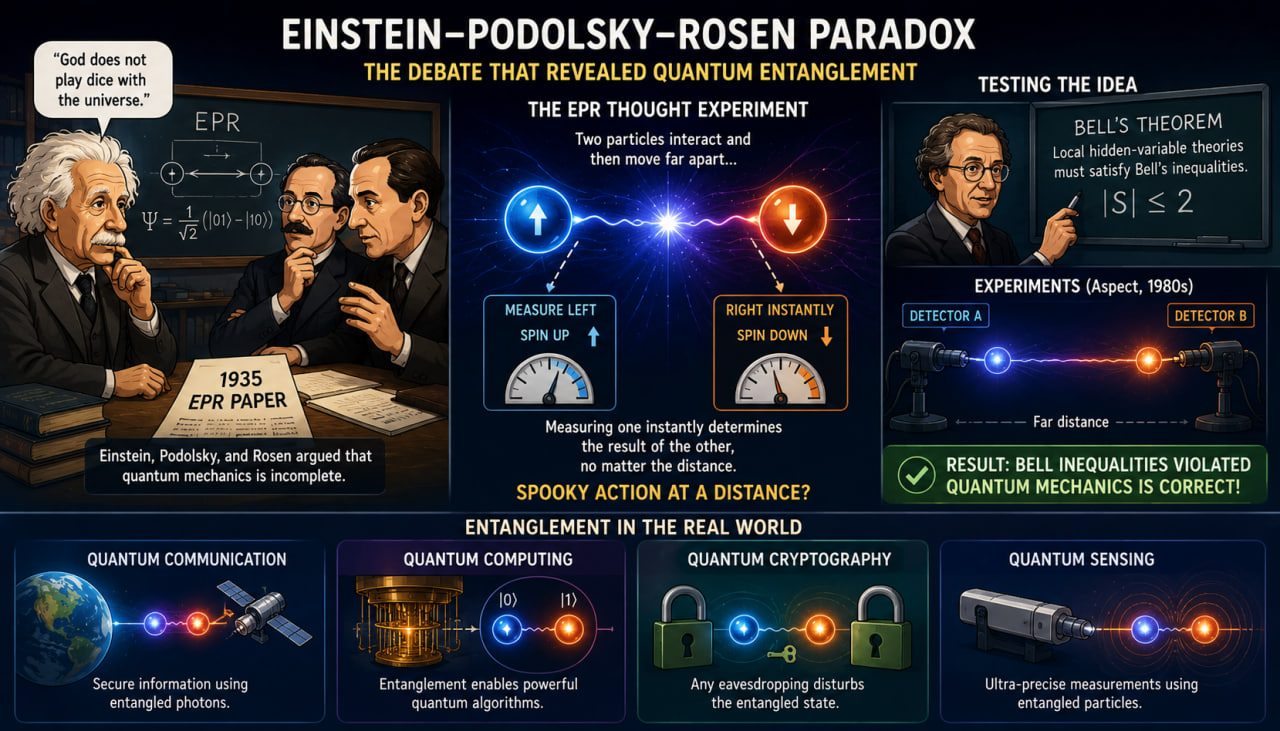
The Einstein–Podolsky–Rosen Paradox: The Debate That Led to the Discovery of Quantum Entanglement
History Science Physics

The Einstein–Podolsky–Rosen Paradox: The Debate That Led to the Discovery of Quantum Entanglement

Few scientific arguments have had a greater impact on modern physics than the famous debate between: Albert Einstein Boris Podolsky Nathan Rosen In 1935, these three physicists published a paper that challenged one of the most successful scientific theories ever developed: Quantum Mechanics Their goal was simple: They wanted to show that quantum theory was incomplete. Instead, their argument unintentionally helped inspire one of the strangest and most important discoveries in science: Quantum Entanglement Today, entanglement lies at the heart of: Quantum computing Quantum cryptography Quantum teleportation research Modern quantum information science Ironically, Einstein hoped to expose a weakness in quantum mechanics, but the debate eventually strengthened confidence in the theory. The Einstein–Podolsky–Rosen paradox, usually called: The EPR Paradox remains one of the most fascinating stories in the history of physics.

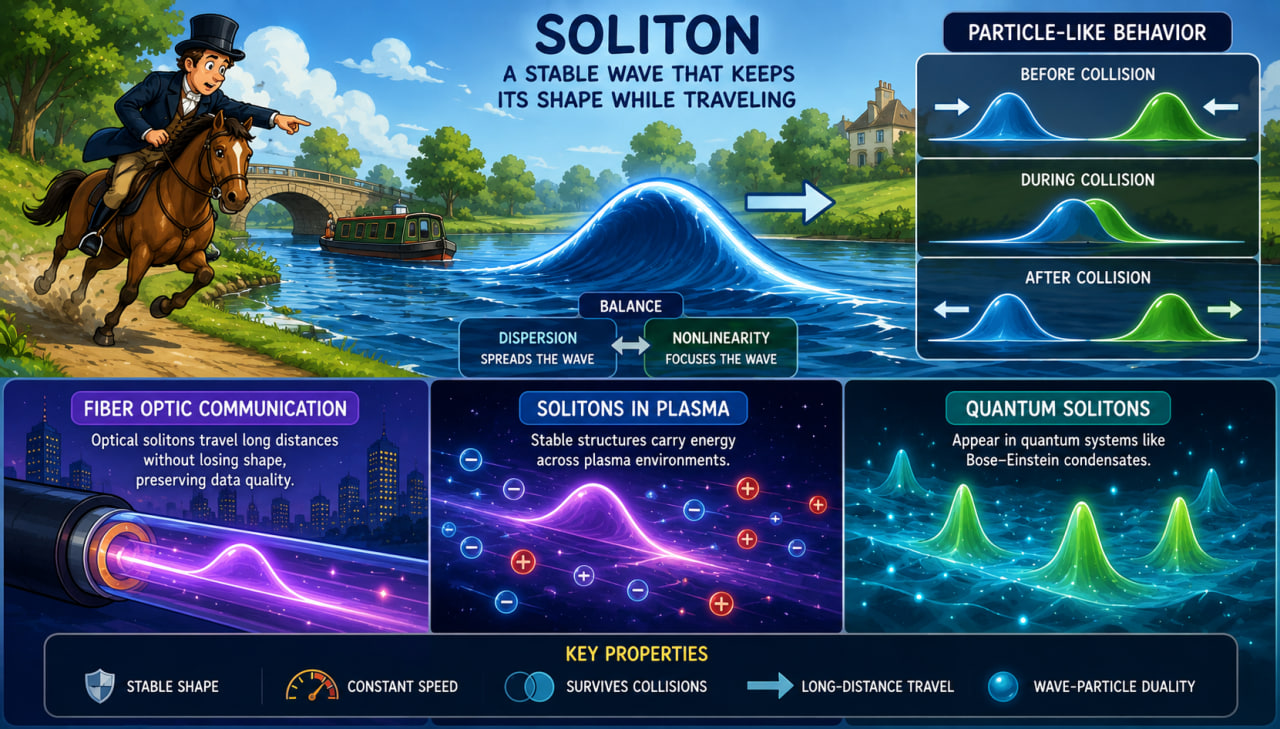
Solitons: The Remarkable Waves That Behave Like Particles
Science New Discoveries Physics

Solitons: The Remarkable Waves That Behave Like Particles

Most waves in nature eventually: Spread out Lose their shape Dissipate their energy A ripple on a pond gradually disappears. Sound waves weaken as they travel. Ocean waves eventually break apart. However, there exists a special class of waves that behave very differently. These unusual waves can: Travel long distances Maintain their shape Survive collisions with other waves as if they were actual physical objects. Scientists call these extraordinary phenomena: Solitons Solitons are often described as: "Particle-like waves" because they combine characteristics of both: Waves Particles Since their discovery, solitons have become important in: Physics Oceanography Fiber-optic communications Plasma physics Quantum theory Some researchers even believe soliton-like behavior may help explain phenomena ranging from: Rogue ocean waves Electrical signals Fundamental particle interactions Understanding solitons reveals one of the strangest and most beautiful behaviors found in nature.