Science

Gravitational Lensing: Einstein’s Natural Cosmic Magnifying Glass
Space Stories Universe Science

Gravitational Lensing: Einstein’s Natural Cosmic Magnifying Glass

Gravitational lensing is one of the most elegant and visually striking predictions of modern physics, revealing how massive objects can bend light itself. First described by Albert Einstein in his theory of general relativity, this phenomenon shows that space and time are not rigid frameworks, but flexible structures shaped by mass and energy. When light from a distant galaxy passes near a massive object such as a galaxy cluster or black hole, its path curves, producing distorted, magnified, or even duplicated images. What appears at first glance to be a visual illusion is, in fact, a powerful scientific tool that allows astronomers to study objects far beyond the reach of conventional telescopes. Gravitational lensing has transformed how we explore the deep universe, turning gravity into a natural cosmic telescope.


The History of Geometry
History Science Be Smart

The History of Geometry

The history of geometry reflects humanity’s long effort to understand space, shape, and order in the world around us. From the earliest markings on stone and sand to abstract mathematical systems, geometry has evolved alongside civilization itself. Initially driven by practical needs such as land measurement, construction, and astronomy, geometry gradually became a theoretical science concerned with logic and proof. Over thousands of years, different cultures contributed ideas that expanded geometric thinking far beyond simple shapes. Geometry not only shaped mathematics but also influenced art, architecture, engineering, and philosophy. Tracing its history reveals how humans learned to move from visual intuition to abstract reasoning.

Omar Khayyam and Science
History Science Be Smart

Omar Khayyam and Science

Omar Khayyam is widely known to the modern world as a poet, yet his scientific legacy is just as remarkable as his literary one. Living during the Islamic Golden Age, Khayyam worked at the intersection of mathematics, astronomy, philosophy, and logic. His scientific contributions were rooted in rigorous reasoning, careful observation, and a deep respect for knowledge inherited from earlier civilizations. At a time when poetry and science were not seen as separate domains, Khayyam embodied the ideal of the universal scholar. Understanding his role in science reveals a thinker whose influence extended far beyond verse and metaphor.

Loop Quantum Gravity Theory
Science New Discoveries Be Smart

Loop Quantum Gravity Theory

Loop quantum gravity is one of the leading theoretical attempts to unify quantum mechanics with general relativity. Unlike approaches that add extra dimensions or rely on unobserved entities, this theory focuses on quantizing spacetime itself. It proposes that space is not smooth and continuous, but instead has a discrete, granular structure at the smallest possible scales. These fundamental “loops” form a network that gives rise to geometry, distance, and volume. By rethinking the nature of space and time, loop quantum gravity challenges deeply rooted assumptions about the fabric of reality.

How Wireless Phone Charging Works
Hi-Tech Smart Technology Science

How Wireless Phone Charging Works

Wireless phone charging may look like a simple and almost magical process, but behind it lies well-understood physics and carefully engineered technology. Instead of transferring electricity through a cable, wireless charging relies on electromagnetic fields to deliver energy from a charging pad to a phone’s battery. This method reduces mechanical wear on connectors and allows for more convenient daily use. Although wireless charging is generally slower than wired charging, its ease and durability have made it increasingly popular. Understanding how it works helps explain both its advantages and its limitations.

Interferometers: Measuring the Invisible with Waves
Cosmic Innovations Hi-Tech Science

Interferometers: Measuring the Invisible with Waves

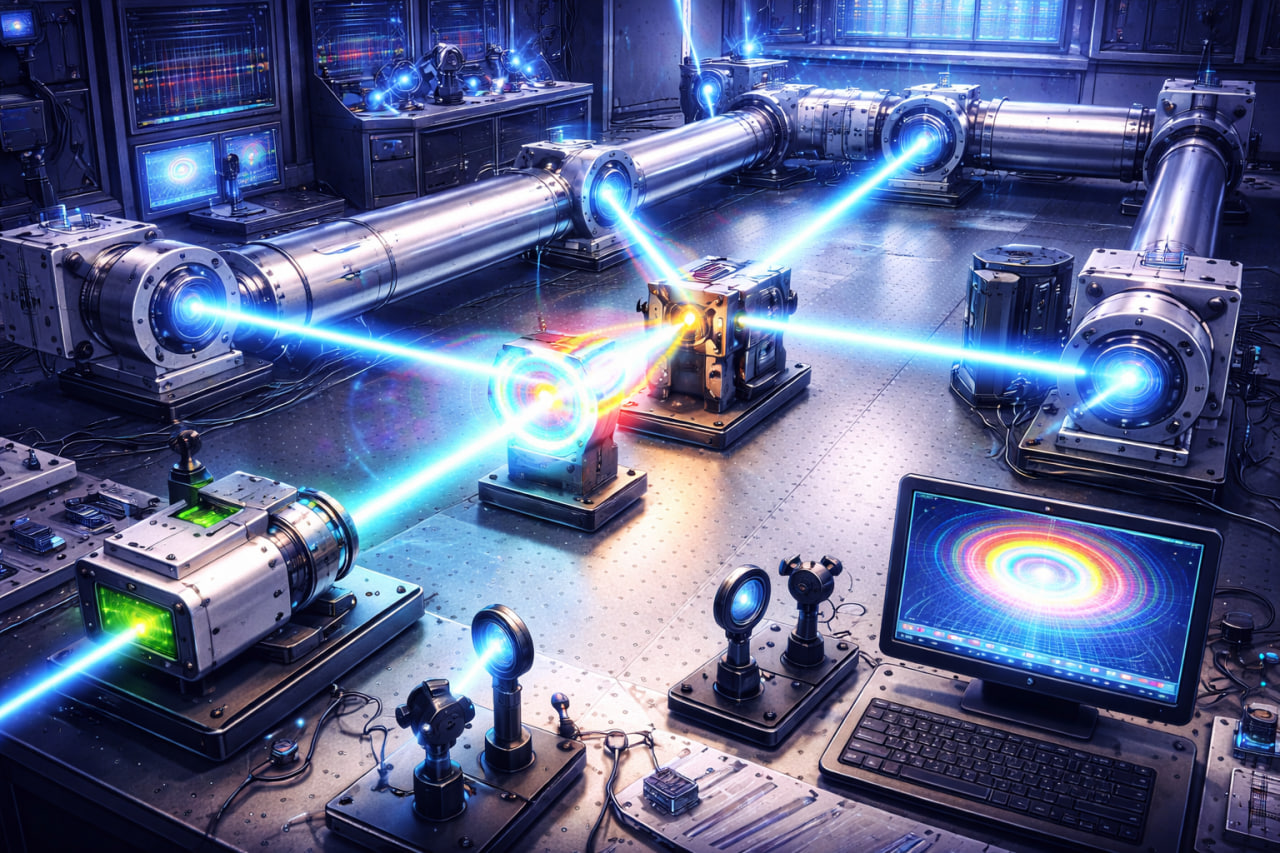
Interferometers are among the most precise scientific instruments ever created, designed to detect changes so small they are almost impossible to imagine. They work by comparing waves—most commonly light or radio waves—to measure extremely tiny differences in distance, motion, or time. Thanks to interferometers, scientists can observe phenomena that would otherwise remain completely hidden, from atomic-scale shifts to cosmic events billions of light-years away. These instruments play a central role in modern physics, astronomy, and engineering, transforming abstract wave behavior into measurable data. Although the underlying concept is elegant, interferometers are capable of extraordinary sensitivity. Understanding how interferometers work reveals how humanity measures reality at its most subtle levels.

The Holographic Principle
Cosmic Innovations Universe Science

The Holographic Principle

The holographic principle is one of the most radical ideas in modern theoretical physics, proposing that all the information contained within a volume of space can be fully described by data encoded on its boundary. In simple terms, this means that a three-dimensional reality may emerge from information stored on a two-dimensional surface. What sounds like science fiction arises directly from attempts to reconcile gravity, quantum mechanics, and thermodynamics. The principle challenges everyday intuition about space, depth, and locality, forcing physicists to rethink what “inside” and “outside” truly mean. Over the past decades, the holographic principle has become a powerful conceptual tool in the search for a unified description of nature. Understanding it offers a glimpse into how reality itself may be structured at the deepest level.

Uhuru: The First X-Ray Astronomy Laboratory in Space
Cosmic Innovations History Hi-Tech

Uhuru: The First X-Ray Astronomy Laboratory in Space

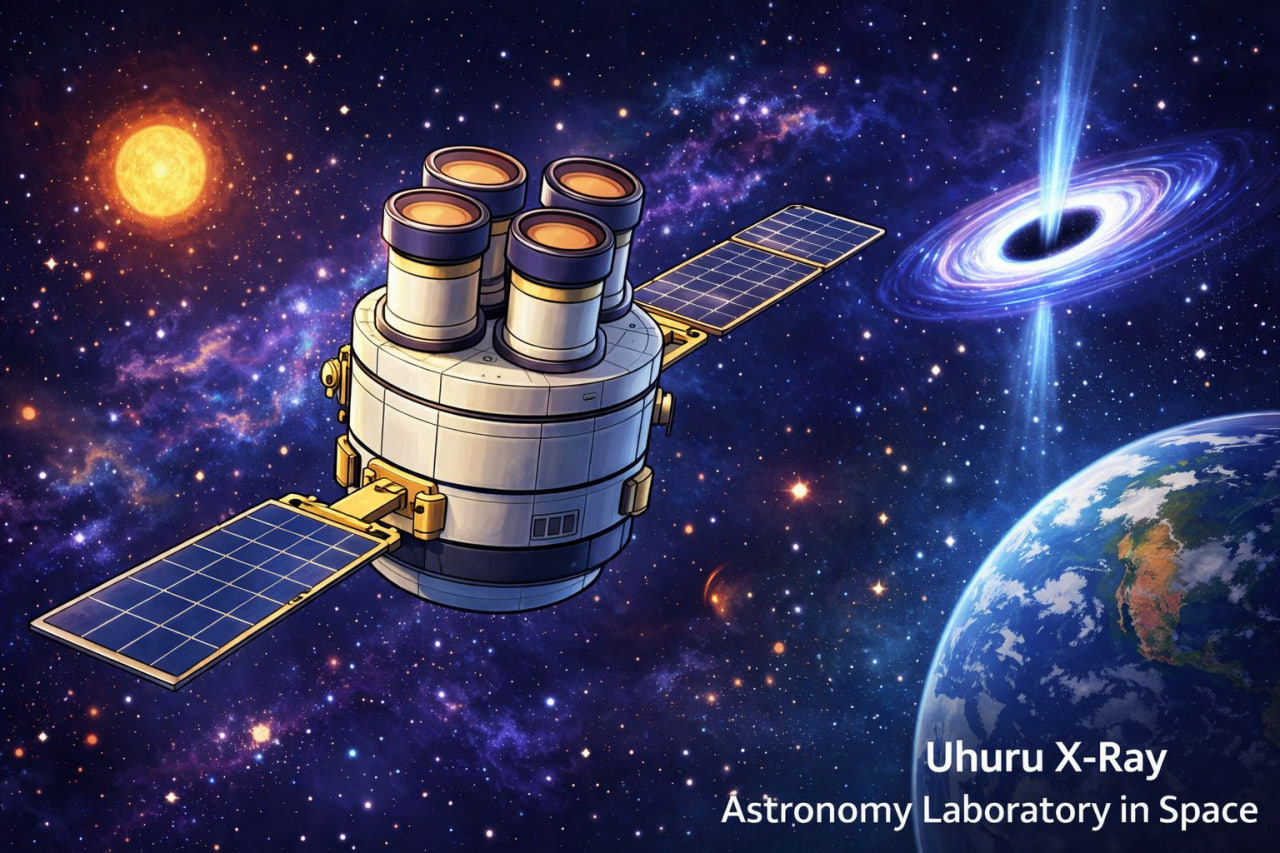
The Uhuru X-ray laboratory marked a turning point in humanity’s exploration of the universe by opening an entirely new window on the cosmos. Launched in 1970, Uhuru became the first satellite dedicated exclusively to X-ray astronomy, allowing scientists to observe high-energy phenomena invisible to optical telescopes. Before Uhuru, astronomers could only guess at the intensity and distribution of cosmic X-ray sources. This pioneering mission transformed those guesses into precise measurements, revealing a universe filled with extreme objects such as black holes, neutron stars, and supernova remnants. Uhuru did not merely collect data; it fundamentally changed how scientists understood the energetic processes shaping galaxies. Its legacy continues to influence modern space observatories and high-energy astrophysics research.

Airships: History and Modern Revival
History Hi-Tech Science

Airships: History and Modern Revival

Airships, often called dirigibles, represent one of the most fascinating chapters in the history of aviation. Long before airplanes dominated the skies, airships promised controlled, long-distance flight with unmatched endurance and efficiency. Their graceful movement and massive silhouettes symbolized technological optimism at the dawn of the 20th century. Although their role diminished after dramatic accidents and rapid advances in airplanes, airships never fully disappeared. Today, renewed interest in sustainability, surveillance, and heavy transport has brought airships back into scientific and industrial discussion. Understanding their past and present helps explain why this technology continues to capture human imagination.

The Future of Airship Construction
Hi-Tech Smart Technology Science

The Future of Airship Construction

The future of airship construction is increasingly discussed as the world searches for sustainable, efficient, and flexible transportation solutions. Once considered a relic of early aviation, airships are now being re-evaluated through the lens of modern materials, digital control systems, and environmental priorities. Unlike conventional aircraft, airships offer unique advantages such as long endurance, low fuel consumption, and the ability to operate without extensive infrastructure. These qualities position them as a promising complement to existing transport technologies rather than a replacement. Advances in engineering have fundamentally changed what airships can be, opening possibilities that were unattainable in the past. The future of airship construction reflects a broader trend of revisiting historical concepts with modern scientific understanding.