Smart Technology

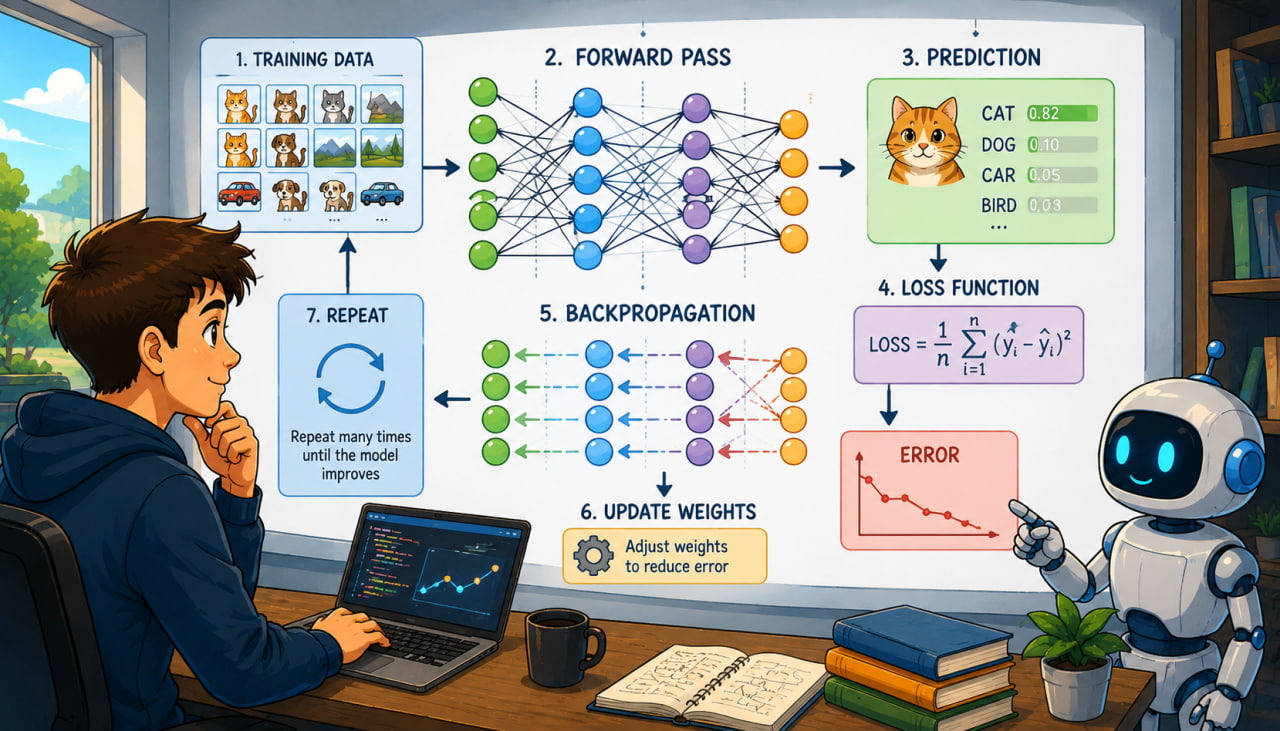
How Neural Networks Learn: A Simple Guide to Artificial Intelligence Training
Smart Technology AI & Ethics AI

How Neural Networks Learn: A Simple Guide to Artificial Intelligence Training

Neural networks are at the core of modern artificial intelligence, powering everything from voice assistants to self-driving cars. But how do these systems actually learn? Unlike traditional programming, neural networks improve their performance by analyzing data and adjusting internal parameters. This process allows them to recognize patterns, make predictions, and solve complex problems. Understanding this concept reveals how machines can learn from experience, much like humans do.

Self-Driving Cars: How Autonomous Vehicles Are Transforming Transportation
Hi-Tech Smart Technology Tesla&Co

Self-Driving Cars: How Autonomous Vehicles Are Transforming Transportation

Self-driving cars, also known as autonomous vehicles, represent one of the most exciting technological advancements of the 21st century. These vehicles are designed to navigate and operate without human intervention, using advanced sensors, artificial intelligence, and real-time data processing. As the technology continues to evolve, self-driving cars have the potential to revolutionize transportation, improve safety, and reshape cities.

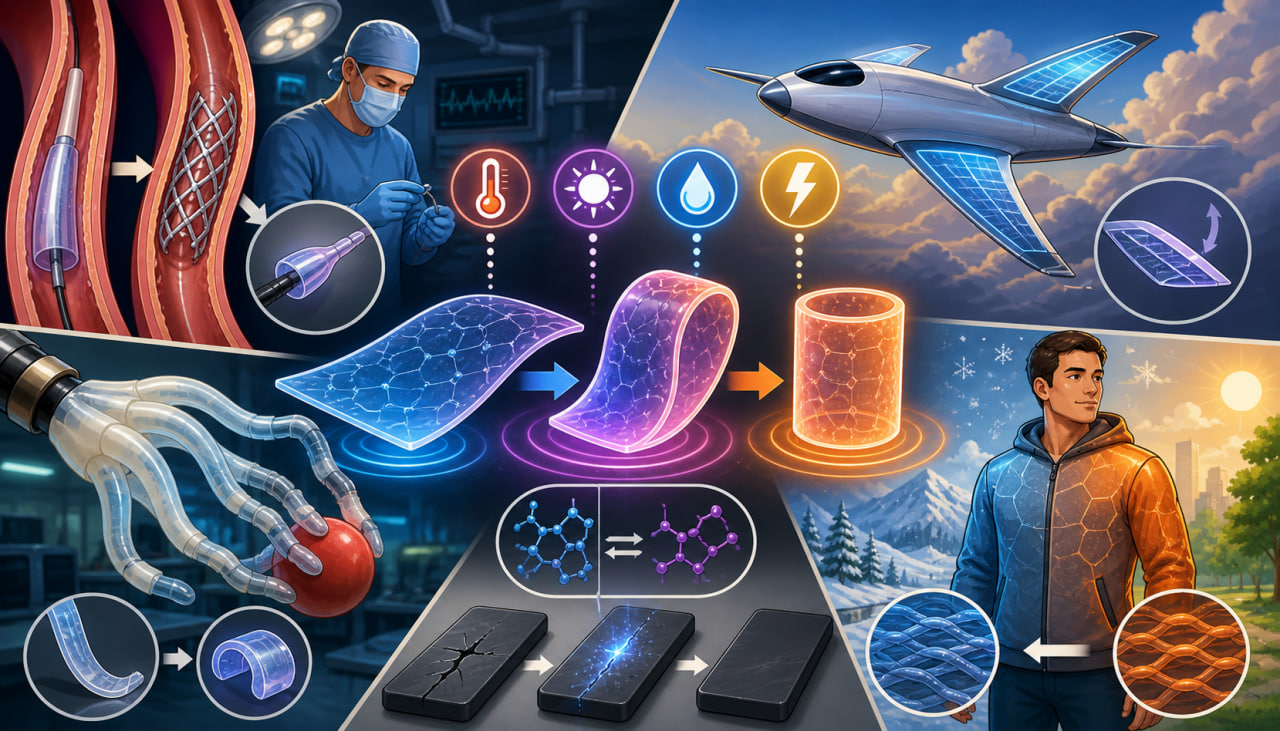
Future Polymers: Materials That Can Change Their Shape
Hi-Tech Smart Technology Science

Future Polymers: Materials That Can Change Their Shape

Materials that can change shape on their own sound like science fiction, but they are already becoming a reality. Known as shape-changing polymers or smart polymers, these advanced materials respond to external stimuli such as heat, light, moisture, or electric fields. They have the potential to transform industries ranging from medicine to aerospace. Understanding how these materials work reveals a new generation of adaptive technologies that can respond to the environment in real time.

Kozyrev Mirrors: Exploring the Idea of Time, Consciousness, and Space
Smart Technology New Discoveries Inventions

Kozyrev Mirrors: Exploring the Idea of Time, Consciousness, and Space

Kozyrev mirrors are one of the most mysterious and unconventional concepts associated with experimental physics and consciousness research. They are named after the Russian astrophysicist Nikolai Kozyrev, who proposed that time is not just a passive dimension but an active force that can influence physical processes. Supporters of this idea believe that specially designed reflective structures—called Kozyrev mirrors—can interact with this “flow of time” and potentially enhance human perception.

Atomic Force Microscopy: Seeing Atoms Through Touch
Smart Technology New Discoveries Inventions

Atomic Force Microscopy: Seeing Atoms Through Touch

Modern science has given humanity the ability to observe structures far smaller than what the human eye can perceive. Among the most remarkable tools is the atomic force microscope (AFM)—a device that allows scientists to “see” atoms not with light, but through physical interaction. In a sense, it lets researchers feel the surface of matter at the atomic scale. This revolutionary technology has transformed nanotechnology, materials science, biology, and physics by enabling direct exploration of the nanoscale world.

Supersonic Aircraft: How They Work and Why They Matter
Hi-Tech Smart Technology Science

Supersonic Aircraft: How They Work and Why They Matter

Supersonic aircraft represent one of the most advanced achievements in aviation. These planes are capable of flying faster than the speed of sound, dramatically reducing travel time and pushing the boundaries of engineering and physics. From military jets to the iconic Concorde, supersonic flight has fascinated scientists and travelers alike. Today, renewed interest in supersonic travel is driving innovation, with new technologies aiming to make faster-than-sound flight more efficient, quieter, and accessible.

The Observer Effect in Quantum Physics: Do Particles Change When We Look at Them?
Smart Technology Science Physics

The Observer Effect in Quantum Physics: Do Particles Change When We Look at Them?

The idea that simply observing a particle can change its behavior is one of the most fascinating and misunderstood concepts in modern science. Often popularized in movies and online discussions, the observer effect in quantum mechanics raises a profound question: does reality depend on observation? While the answer is more complex than it may seem, understanding this phenomenon reveals how strange and counterintuitive the quantum world truly is.

Radio Communication: How Walkie-Talkies Work and Where They Are Used
History Smart Technology Inventions

Radio Communication: How Walkie-Talkies Work and Where They Are Used

Radio communication devices, commonly known as walkie-talkies, are portable tools that allow people to communicate over distance without the need for cellular networks or the internet. These devices use radio waves to transmit voice signals instantly between users. Despite the development of smartphones and modern communication systems, radios remain essential in many fields due to their reliability, simplicity, and independence from infrastructure. From emergency services to outdoor activities, radios provide a fast and effective way to stay connected. Understanding how they work and where they are used helps explain why they are still widely relevant today.

Telescopes of the Future: Extremely Large Telescopes and Lunar Observatories
Cosmic Innovations Hi-Tech Smart Technology

Telescopes of the Future: Extremely Large Telescopes and Lunar Observatories

Humanity has always sought to explore the universe, and telescopes have been the primary tools enabling us to look deeper into space. Today, a new generation of instruments is being developed that promises to revolutionize our understanding of the cosmos. Among them are Extremely Large Telescopes (ELTs) on Earth and the concept of observatories on the Moon, both designed to overcome the limitations of current technology. These advanced systems aim to capture more light, produce sharper images, and observe distant objects that were previously beyond reach. As astronomy enters a new era, these innovations may help answer some of the biggest questions about the origin of the universe, dark matter, and the possibility of life beyond Earth. Understanding how these technologies work reveals why they are considered the future of astronomical discovery.

China vs NASA: The New Space Race
Space Stories Cosmic Innovations Smart Technology

China vs NASA: The New Space Race

A new era of space exploration is unfolding, often described as a modern space race between China and the United States. Unlike the Cold War competition, today’s rivalry is more complex, combining elements of competition, technological advancement, and strategic influence. Both China and NASA are pursuing ambitious goals, including Moon bases, Mars exploration, and deep space missions. This new race is not only about prestige but also about leadership in science, innovation, and future space infrastructure. As both sides push forward, the outcome could shape humanity’s presence beyond Earth for decades to come.