Smart Technology

The Hidden Costs of AI: How Much Energy and Water Does One ChatGPT Query Use?
Smart Technology AI & Ethics AI

The Hidden Costs of AI: How Much Energy and Water Does One ChatGPT Query Use?

Artificial intelligence systems like ChatGPT may feel invisible and effortless to use, but behind every response lies a vast physical infrastructure of data centers, servers, cooling systems, and electrical grids. Each AI query triggers complex computations performed by powerful processors that require electricity and generate heat. While a single request may seem insignificant, the global scale of AI usage transforms small energy demands into substantial environmental impacts. Researchers are now examining how much electricity, water, and computing power are consumed per AI interaction to better understand the sustainability challenges of modern digital services. As AI becomes more integrated into daily life, evaluating its hidden resource costs becomes increasingly important for policymakers, engineers, and users alike. Understanding these invisible inputs allows society to balance innovation with environmental responsibility.


Interstellar Travel: The Breakthrough Starshot Project and Other Concepts
Space Stories Cosmic Innovations Hi-Tech

Interstellar Travel: The Breakthrough Starshot Project and Other Concepts

Interstellar travel—the journey beyond our solar system to other stars—has long been a dream of scientists and science fiction writers alike. Unlike missions to Mars or Jupiter, traveling to another star involves distances so vast that conventional spacecraft would require tens of thousands of years to arrive. However, in recent decades, serious scientific initiatives have begun exploring whether interstellar missions could become technically feasible. Among these efforts, Breakthrough Starshot stands out as one of the most ambitious and innovative concepts. While practical interstellar travel remains far beyond current human capability, research and theoretical engineering continue to push the boundaries of what might be possible in the future.

Space Medicine: How Long-Term Exposure to Microgravity Changes the Human Body
Space Stories Cosmic Innovations Hi-Tech

Space Medicine: How Long-Term Exposure to Microgravity Changes the Human Body

Space medicine studies how the human body responds to the extreme conditions of space, especially prolonged exposure to microgravity, radiation, and isolation. While astronauts appear to float effortlessly in orbit, the absence of gravity triggers profound physiological changes. The human body evolved under constant gravitational pull, and when that force disappears, multiple systems begin to adapt—sometimes in harmful ways. Missions lasting months aboard space stations have revealed patterns of bone loss, muscle atrophy, cardiovascular shifts, and neurological changes. As space agencies plan missions to Mars and beyond, understanding these effects has become a central priority. Protecting astronaut health during long-duration missions is one of the most complex challenges in modern aerospace science.

Neuromorphic Chips: Computers That Work Like the Brain
Neuro-Tech Hi-Tech Smart Technology

Neuromorphic Chips: Computers That Work Like the Brain

Neuromorphic chips are a new generation of processors designed to mimic the structure and function of the human brain. Unlike traditional computers that process information sequentially using rigid architectures, neuromorphic systems are inspired by biological neural networks. They attempt to replicate how neurons and synapses communicate, allowing machines to process information in parallel and adapt over time. This approach promises dramatic improvements in energy efficiency, pattern recognition, and real-time decision-making. As artificial intelligence becomes more integrated into daily life, neuromorphic computing may represent the next major shift in hardware design. Understanding how these chips work reveals why they are considered a potential revolution in computing.

Small Language Models: Compact AI With Practical Power
Smart Technology AI & Ethics AI

Small Language Models: Compact AI With Practical Power

Small language models (SLMs) are artificial intelligence systems designed to process and generate text like large language models, but with significantly fewer parameters and lower computational requirements. While large models dominate headlines due to their scale, smaller models offer important advantages in efficiency, speed, and accessibility. They are particularly valuable in environments where computing resources are limited, such as mobile devices, embedded systems, or private enterprise servers. Instead of competing purely on size, small language models focus on optimization, specialization, and deployment flexibility. As AI adoption expands globally, compact models are becoming increasingly relevant in real-world applications.

How a Computer Works: A Beginner-Friendly Explanation
Hi-Tech Smart Technology Smart Home

How a Computer Works: A Beginner-Friendly Explanation

A computer may look complex, but at its core it is a logical machine designed to process information. Whether it is a laptop, desktop, or tablet, every computer follows the same basic principles: it receives input, processes data, stores information, and produces output. Understanding how a computer works does not require technical training—only a clear explanation of its main components and their roles. Once these basics are understood, computers stop feeling mysterious and become practical, predictable tools. This guide explains computer structure in simple terms, making it accessible even for complete beginners.

Quantum Entanglement and Its Practical Applications
Hi-Tech Smart Technology Science

Quantum Entanglement and Its Practical Applications

Quantum entanglement is one of the most fascinating and counterintuitive phenomena in modern physics, challenging classical ideas about space, time, and causality. It describes a situation in which two or more particles become so deeply connected that the state of one instantly influences the state of the other, no matter how far apart they are. What once seemed like a purely theoretical curiosity has now become a cornerstone of emerging technologies. Today, quantum entanglement is not only a subject of philosophical debate but also a practical resource for communication, computing, and measurement. Understanding how entanglement works opens a window into the future of technology shaped by the laws of quantum mechanics.

How the Large Hadron Collider Was Created
History Hi-Tech Smart Technology

How the Large Hadron Collider Was Created

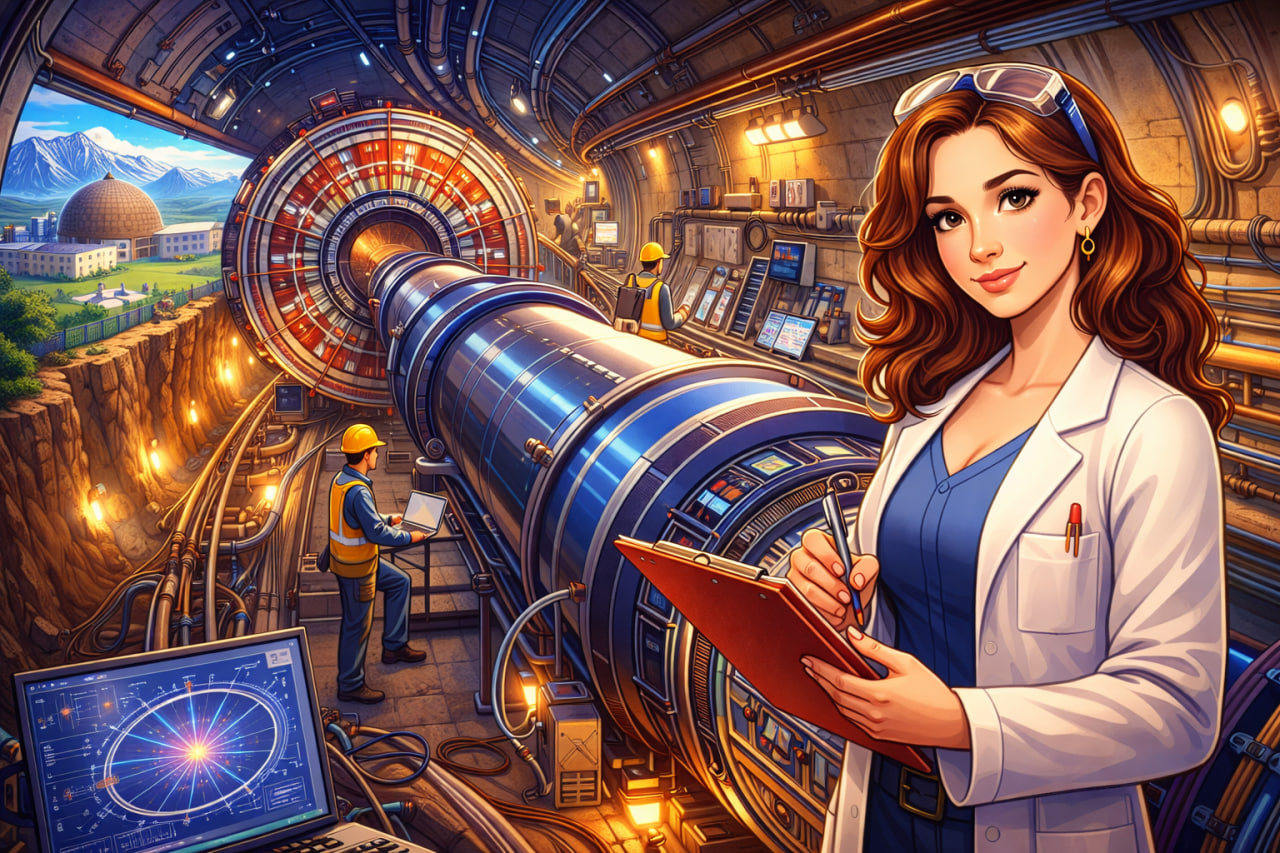
The Large Hadron Collider (LHC) is the most powerful particle accelerator ever built and one of the most complex scientific instruments in human history. Its creation was not a single engineering project, but a multi-decade international effort combining physics, engineering, computing, and diplomacy. Designed to explore the fundamental structure of matter, the LHC ensures collisions at energies never before achieved in a laboratory. The path from early ideas to a functioning collider involved theoretical debates, technological breakthroughs, and unprecedented global collaboration. Understanding how the LHC was created reveals how modern “big science” operates at the limits of human capability. It is a story of patience, precision, and collective ambition.

How Wireless Phone Charging Works
Hi-Tech Smart Technology Science

How Wireless Phone Charging Works

Wireless phone charging may look like a simple and almost magical process, but behind it lies well-understood physics and carefully engineered technology. Instead of transferring electricity through a cable, wireless charging relies on electromagnetic fields to deliver energy from a charging pad to a phone’s battery. This method reduces mechanical wear on connectors and allows for more convenient daily use. Although wireless charging is generally slower than wired charging, its ease and durability have made it increasingly popular. Understanding how it works helps explain both its advantages and its limitations.

Flying Trains: The Future of High-Speed Transportation
Hi-Tech Smart Technology New Discoveries

Flying Trains: The Future of High-Speed Transportation

The idea of flying trains has fascinated engineers, futurists, and the public for decades, appearing in science fiction long before becoming a serious subject of scientific research. Today, this concept refers not to traditional trains with wings, but to advanced transportation systems that eliminate physical contact with rails by using magnetic fields, air pressure, or enclosed vacuum tubes. Flying trains promise extreme speeds, reduced friction, and quieter operation compared to conventional railways. As global cities grow and the demand for fast, sustainable transport increases, these technologies are gaining renewed attention. While fully airborne trains remain theoretical, several real-world systems already operate on principles that closely resemble “flight.” Understanding these technologies helps clarify what is realistic today and what may become possible in the future.