Smart Technology

The Future of Airship Construction
Hi-Tech Smart Technology Science

The Future of Airship Construction

The future of airship construction is increasingly discussed as the world searches for sustainable, efficient, and flexible transportation solutions. Once considered a relic of early aviation, airships are now being re-evaluated through the lens of modern materials, digital control systems, and environmental priorities. Unlike conventional aircraft, airships offer unique advantages such as long endurance, low fuel consumption, and the ability to operate without extensive infrastructure. These qualities position them as a promising complement to existing transport technologies rather than a replacement. Advances in engineering have fundamentally changed what airships can be, opening possibilities that were unattainable in the past. The future of airship construction reflects a broader trend of revisiting historical concepts with modern scientific understanding.

Interferometer: Measuring the Invisible with Extreme Precision
Hi-Tech Smart Technology Inventions

Interferometer: Measuring the Invisible with Extreme Precision

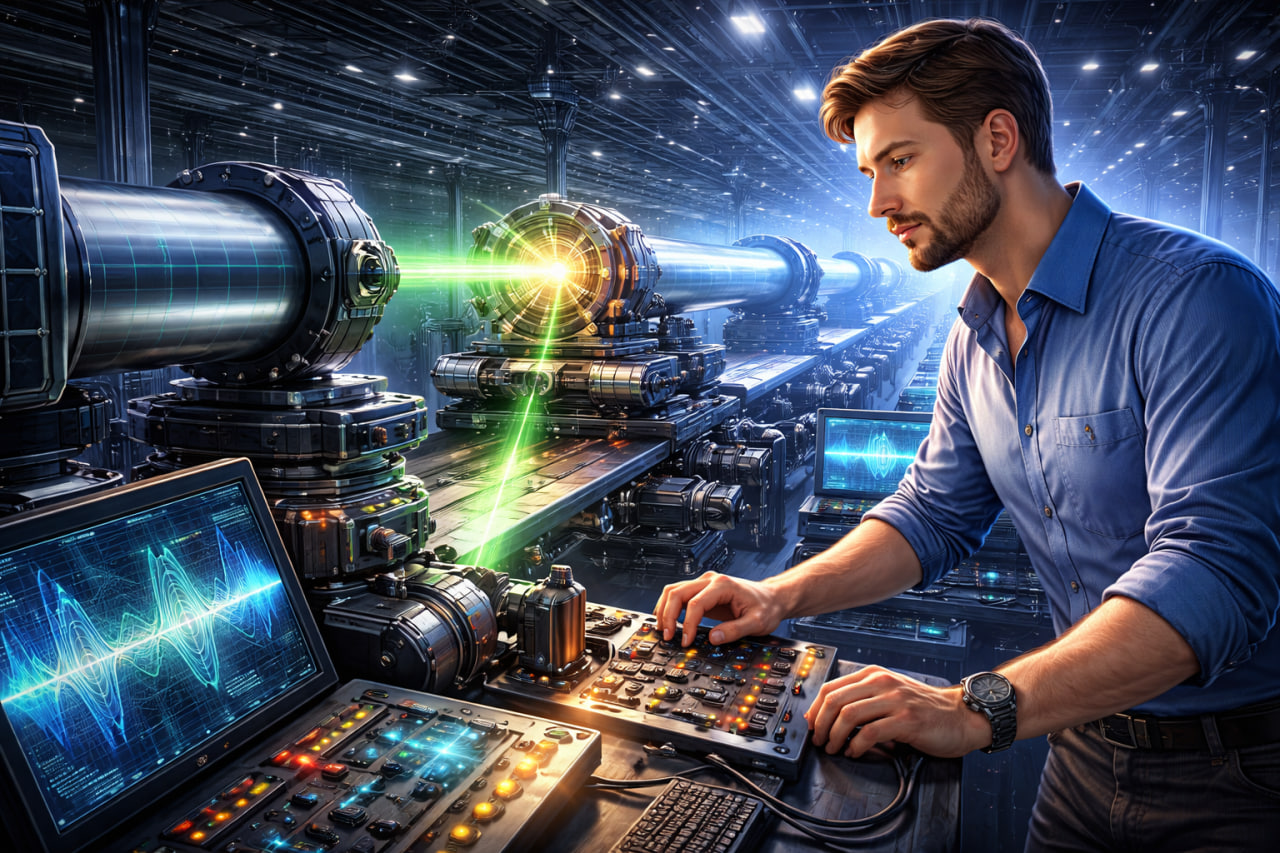
An interferometer is one of the most precise scientific instruments ever created, designed to measure incredibly small changes in distance, light, or waves. It allows scientists to observe phenomena that are otherwise completely invisible, from tiny vibrations in materials to distortions of spacetime itself. Interferometers play a crucial role in modern physics, astronomy, engineering, and metrology, forming the backbone of some of the most important discoveries of the last century. By exploiting the wave nature of light or other signals, these instruments turn minute differences into measurable patterns. Their sensitivity is so extreme that they can detect changes smaller than the diameter of an атом, making them indispensable in cutting-edge research. Understanding how interferometers work reveals how humanity measures reality at its most fundamental level.

What Are Quantum Computing Technologies?
Hi-Tech Smart Technology Science

What Are Quantum Computing Technologies?

Quantum computing is one of the most revolutionary fields in modern science, promising to transform how humanity processes information. Unlike classical computers, which rely on binary bits that represent either 0 or 1, quantum computers operate using the principles of quantum physics. These machines are designed to solve specific types of problems far beyond the practical reach of today’s most powerful supercomputers. Although quantum computing is still in an early stage of development, it has already reshaped scientific thinking in physics, cryptography, chemistry, and artificial intelligence. Understanding how quantum computers work helps clarify why they are considered both powerful and challenging to build. Rather than replacing classical computers, quantum systems are expected to complement them in highly specialized tasks.

Haptic Displays: How Touch Becomes Part of Digital Interaction
Hi-Tech Smart Technology Inventions

Haptic Displays: How Touch Becomes Part of Digital Interaction

Haptic displays, also known as tactile displays, represent one of the most transformative directions in modern human–computer interaction. Unlike traditional screens that rely only on visual and auditory signals, haptic displays allow users to feel digital objects through vibrations, pressure, texture simulation, or even temperature cues. By activating touch receptors in the skin, these technologies create the illusion of physical contact with virtual elements. As a result, digital interaction becomes more intuitive, immersive, and realistic. Haptic technologies are already reshaping gaming, medicine, robotics, education, and remote work — and their potential continues to grow as engineering and neuroscience advance.

Humanoid Robots: The Future of Human-Machine Interaction
Hi-Tech Smart Technology AI

Humanoid Robots: The Future of Human-Machine Interaction

Humanoid robots are machines designed to resemble the human body in shape, movement, and sometimes behavior. Their purpose is not only to perform tasks, but also to interact naturally with people, environments, and tools originally created for humans. The development of humanoid robots represents one of the most ambitious frontiers in robotics, combining engineering, artificial intelligence, biomechanics, and materials science. As these robots become more advanced, they are increasingly capable of working alongside humans in industry, healthcare, education, space exploration, and service environments. Understanding how humanoid robots function helps us imagine how they may shape the future of society.

Where Does Mobile Internet Work Best? Understanding Coverage, Technology, and Connectivity
Hi-Tech Smart Technology Be Smart

Where Does Mobile Internet Work Best? Understanding Coverage, Technology, and Connectivity

Mobile internet has become an essential part of modern life, powering communication, navigation, streaming, remote work, and everyday digital tasks. But the quality of mobile internet varies widely depending on geography, infrastructure, network technology, and user density. Some places offer fast and stable mobile connections, while others struggle with weak signals or slow speeds. Understanding where mobile internet works best helps explain why coverage is uneven and what factors shape the performance of modern networks. It also highlights how new generations of mobile technology — especially 5G — are transforming global connectivity.

How Terrain Shapes Mobile Connectivity: Why Location Matters
Smart Technology Be Smart

How Terrain Shapes Mobile Connectivity: Why Location Matters

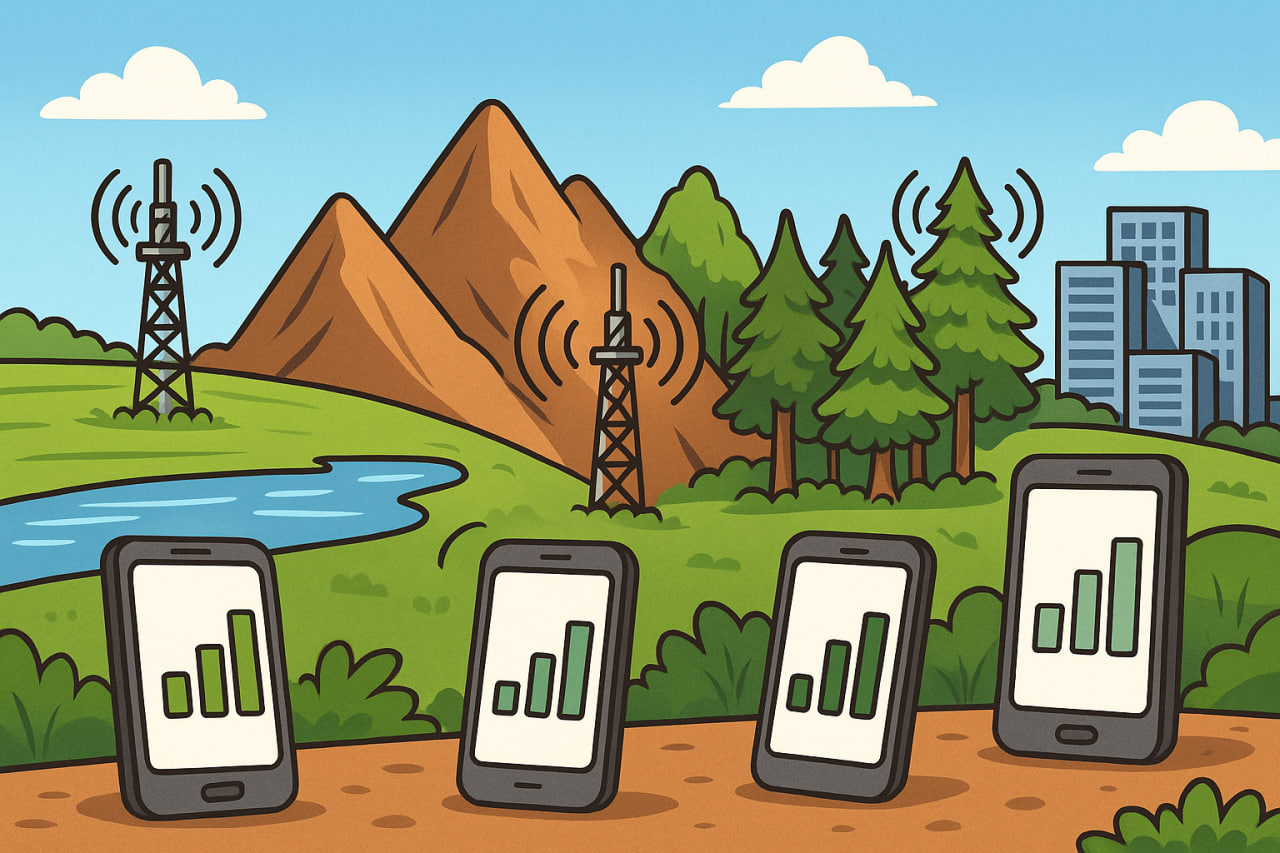
Mobile communication may feel wireless and effortless, but its quality strongly depends on the physical environment. Terrain — the natural shape and features of the land — affects how radio waves travel between cell towers and mobile devices. Hills, mountains, forests, water bodies, and even urban structures can strengthen or weaken the signal. Understanding how terrain influences mobile connectivity helps explain why some regions have excellent coverage while others struggle with dropped calls, low speeds, or unstable connections. Terrain-based challenges shape network design, tower placement, and the technologies used to deliver reliable mobile internet across diverse landscapes.

Artificial Satellites: What They Are and How They Shape Modern Life
Space Stories Cosmic Innovations Hi-Tech

Artificial Satellites: What They Are and How They Shape Modern Life

Artificial satellites are human-made objects launched into space to orbit the Earth or other celestial bodies. They have become essential tools for communication, navigation, weather forecasting, science, defense, and global connectivity. Today thousands of satellites operate above us, forming invisible networks that support everything from smartphone GPS signals to climate monitoring and international broadcasting. Although they vary widely in size and function, all satellites rely on the same basic principle: moving fast enough sideways so that they continuously fall around Earth rather than down to its surface. Understanding how satellites work and why they are so important explains much of the technology powering our modern world.

Flying Motorcycles: The Future of Personal Air Mobility
Hi-Tech Smart Technology Inventions

Flying Motorcycles: The Future of Personal Air Mobility

Flying motorcycles — once a fantasy of science fiction — are rapidly becoming a realistic form of personal transportation. These innovative vehicles combine the agility of motorcycles with the vertical takeoff capabilities of drones or small aircraft. Engineers around the world are experimenting with lightweight materials, electric propulsion, autonomous stabilization systems, and compact aerodynamic designs to create safe and efficient flying machines. As cities face increasing congestion and the need for cleaner mobility solutions grows, flying motorcycles may eventually offer a new way to travel above busy streets. Although still in early development, these technologies represent a major step toward the future of urban mobility, emergency response, and recreational aviation.

Quantum Internet: The Future of Ultra-Secure Communication
Hi-Tech Smart Technology Inventions

Quantum Internet: The Future of Ultra-Secure Communication

The quantum internet represents a revolutionary step forward in communication technology, promising levels of security and performance far beyond what classical networks can achieve. Unlike traditional internet systems, which transmit information using electrical signals or light pulses that can be intercepted or copied, the quantum internet uses the laws of quantum physics to protect data. At its core is the principle that quantum states — such as the position or spin of particles — cannot be observed without being altered. This makes eavesdropping not only detectable but fundamentally impossible without leaving a trace. As global reliance on digital communication grows, the quantum internet is seen as a critical innovation for cybersecurity, scientific research, and next-generation computing. Although still in development, it is expected to transform everything from banking and government security to cloud computing and global information exchange.