Space Stories

The Most Exotic Stars in the Universe: Exploring the Strangest Stellar Objects Ever Discovered
Space Stories Universe News

The Most Exotic Stars in the Universe: Exploring the Strangest Stellar Objects Ever Discovered

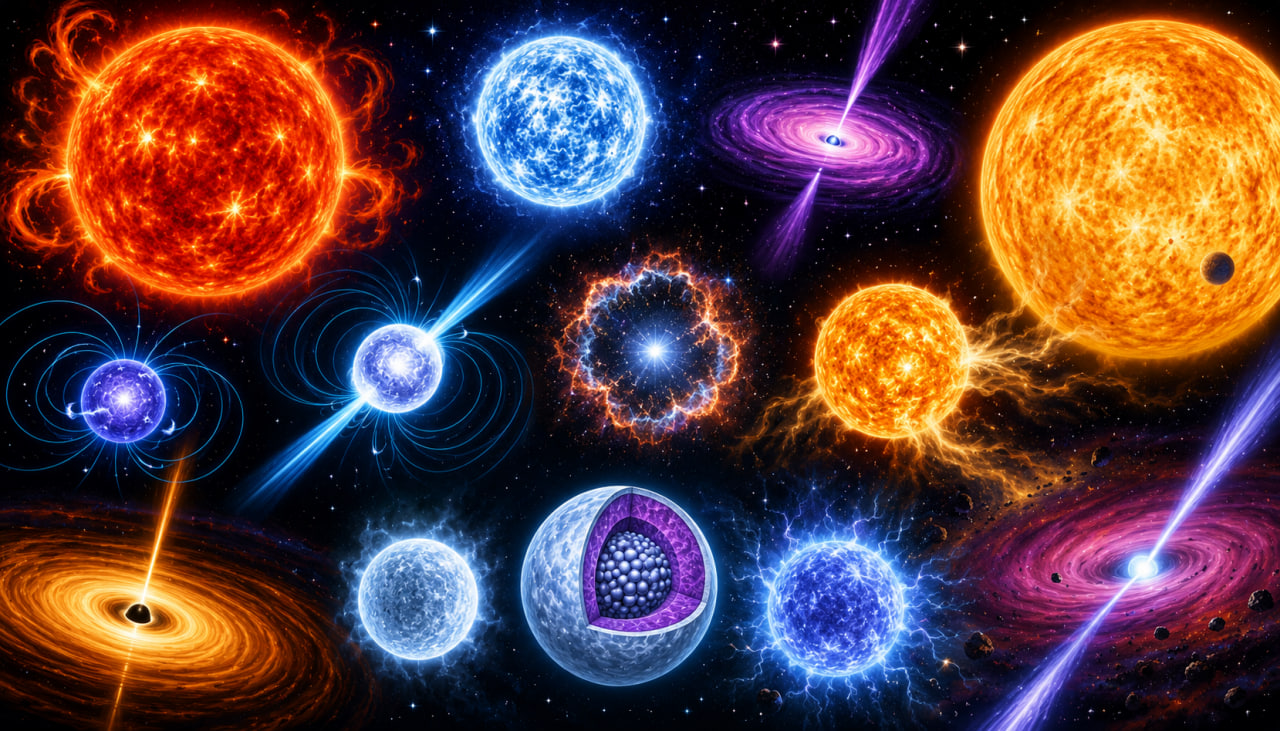
When people imagine stars, they often think of glowing yellow suns like our own. In reality, the Universe contains an astonishing variety of stellar objects that challenge our understanding of physics. Some stars spin hundreds of times every second, while others possess magnetic fields trillions of times stronger than Earth's. There are stars made almost entirely of exotic matter, stars that pulse like cosmic lighthouses, and giant stars so large they could engulf the orbit of Jupiter. These extraordinary objects help astronomers understand how stars evolve, how matter behaves under extreme conditions, and how the Universe itself changes over billions of years. Modern observatories continue to discover increasingly unusual stars, proving that the cosmos is far more diverse than scientists once imagined.
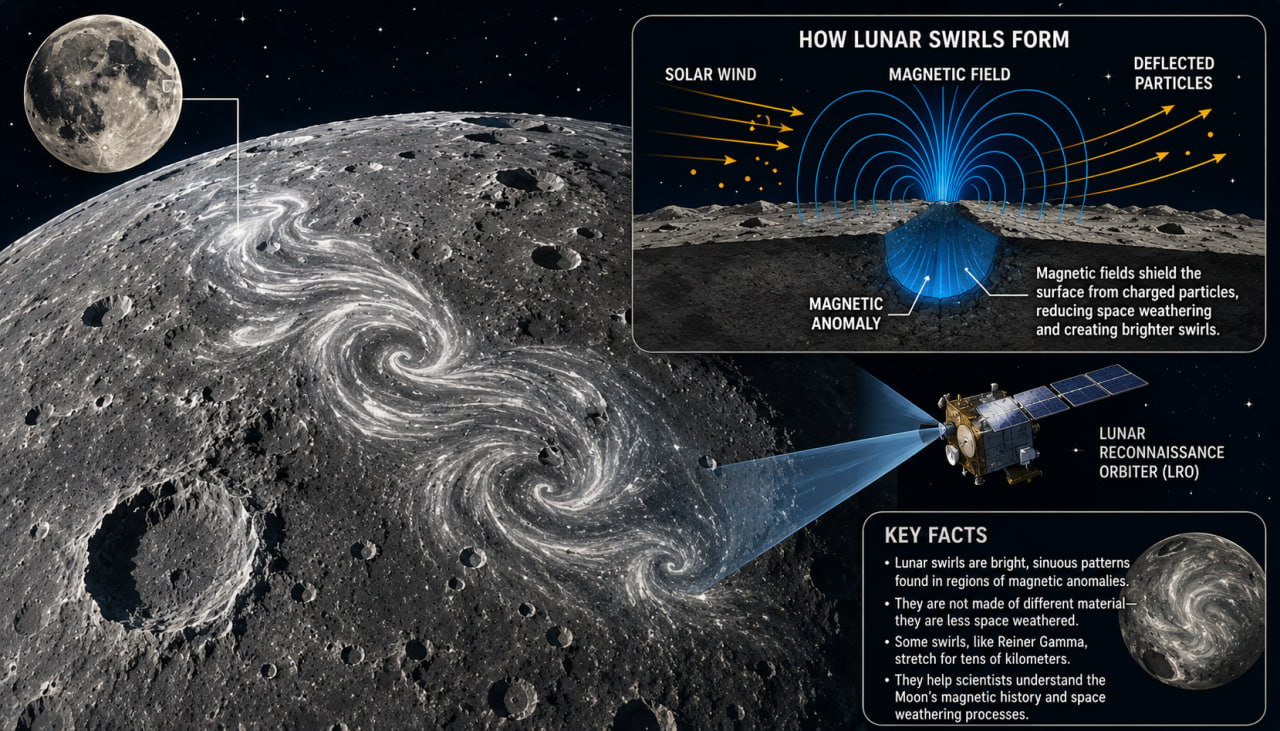
Lunar Swirls: The Mysterious Bright Patterns on the Moon Linked to Magnetic Fields
Space Stories Solar System Earth & Moon

Lunar Swirls: The Mysterious Bright Patterns on the Moon Linked to Magnetic Fields

For centuries, the Moon appeared to be a simple gray world covered with craters and volcanic plains. However, modern spacecraft have revealed that its surface is far more complex than early astronomers imagined. Among the Moon's most fascinating features are lunar swirls—bright, sinuous markings that stretch across the surface in elegant looping patterns unlike any other known geological formation. These enigmatic structures puzzled scientists for decades because they do not correspond to mountains, valleys, lava flows, or impact craters. Instead, research has shown that lunar swirls are closely associated with localized magnetic fields, making them one of the most intriguing examples of planetary physics in the Solar System. Studying lunar swirls not only helps scientists understand the Moon's history but also provides valuable insights into space weathering, planetary magnetism, and the interaction between the solar wind and airless worlds.

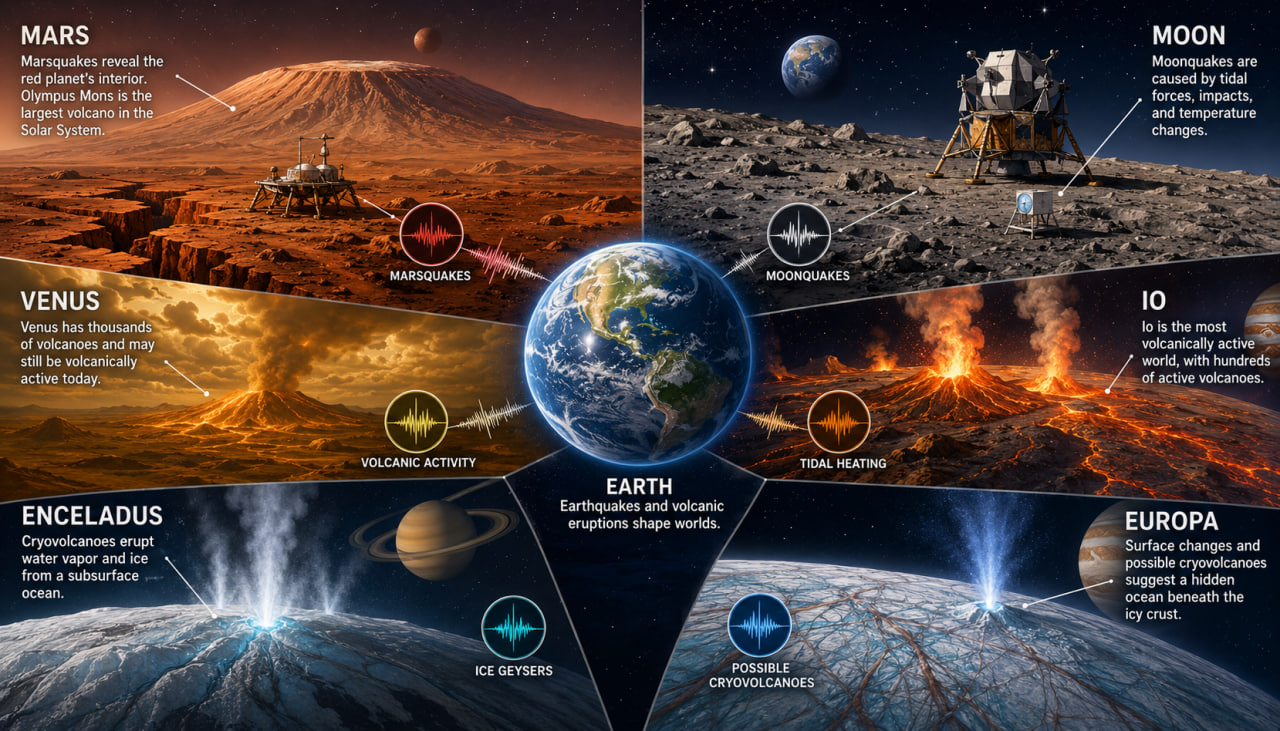
Earthquakes and Volcanic Eruptions on Other Planets: Alien Geology in Action
Space Stories Universe Solar System

Earthquakes and Volcanic Eruptions on Other Planets: Alien Geology in Action

When people think about earthquakes and volcanoes, they usually imagine dramatic events on Earth. However, our planet is not the only world with geological activity. Modern space missions have revealed that earthquakes, volcanic eruptions, and tectonic processes occur—or have occurred—on several other planets and moons throughout the Solar System. These discoveries have transformed planetary science. What once seemed like lifeless rocky worlds are now understood as dynamic environments shaped by powerful internal forces. By studying extraterrestrial geology, scientists gain valuable insights into planetary evolution, interior structure, and even the potential for life beyond Earth. The search for "alien earthquakes" and volcanic activity has become one of the most exciting areas of modern space exploration.

Ecology and Space: The Growing Problem of Space Debris and Planetary Contamination
Space Stories Earth & Moon Challenges

Ecology and Space: The Growing Problem of Space Debris and Planetary Contamination

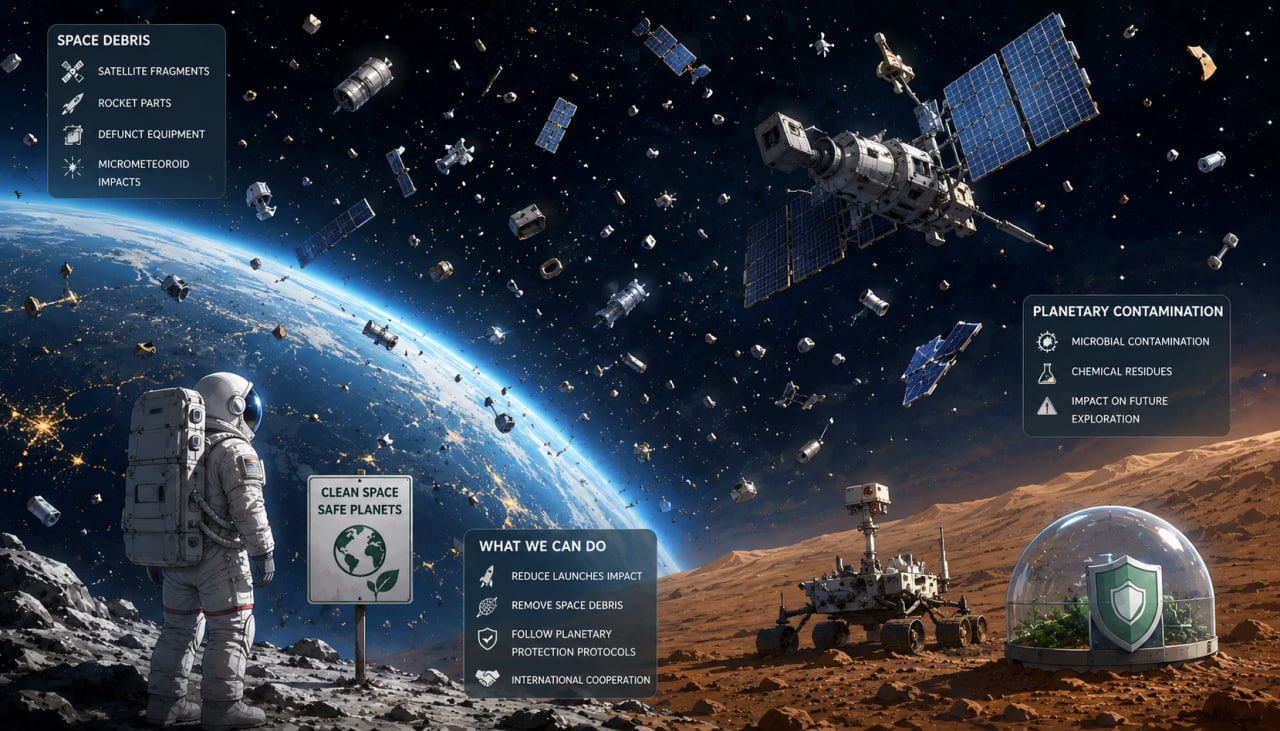
When people think about environmental protection, they usually imagine forests, oceans, rivers, air pollution, or climate change. However, human activity is no longer limited to Earth. Since the beginning of the Space Age in 1957, humanity has launched thousands of satellites, probes, rockets, and spacecraft into space. As a result, environmental concerns now extend far beyond our planet. Today, scientists face two major ecological challenges in space: space debris orbiting Earth and the risk of contaminating other worlds with terrestrial microorganisms and human-made pollutants. These issues have become increasingly important as commercial spaceflight, satellite constellations, lunar missions, and future Mars expeditions continue to expand.

Digestion in Space: How Does the Stomach Process Food Without Gravity?
Space Stories Bioengineering What if?

Digestion in Space: How Does the Stomach Process Food Without Gravity?

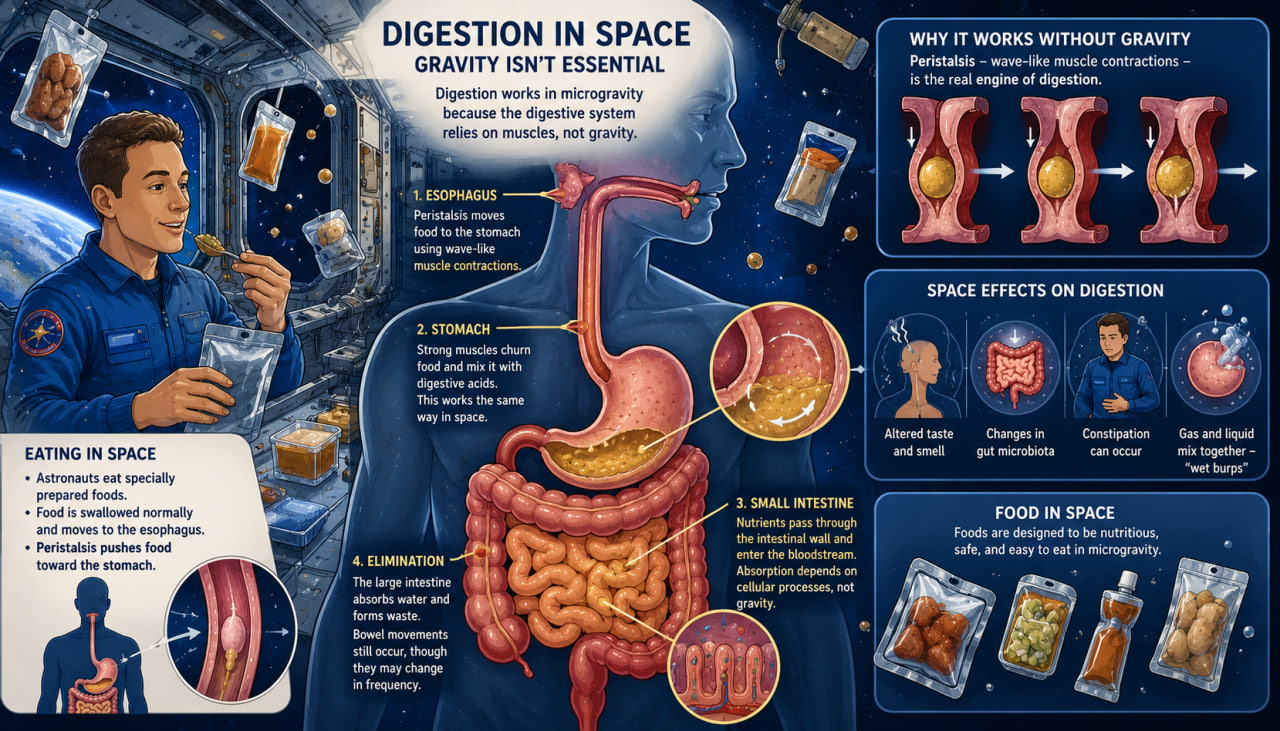
When most people imagine life in space, they think about floating astronauts, breathtaking views of Earth, and advanced spacecraft. However, one surprisingly common question is: how do astronauts digest food when gravity is almost absent? On Earth, gravity influences many aspects of daily life, from walking and drinking to the movement of fluids inside the body. Since digestion involves moving food through the digestive system, it might seem logical to assume that gravity plays a crucial role. Surprisingly, the human digestive system is far less dependent on gravity than many people realize. In fact, astronauts aboard space stations have been eating, digesting, and absorbing nutrients successfully for decades. The secret lies in the remarkable design of the digestive tract itself.

Rogue Stars: The Cosmic Wanderers Ejected from Galaxies
Space Stories Universe Be Smart

Rogue Stars: The Cosmic Wanderers Ejected from Galaxies

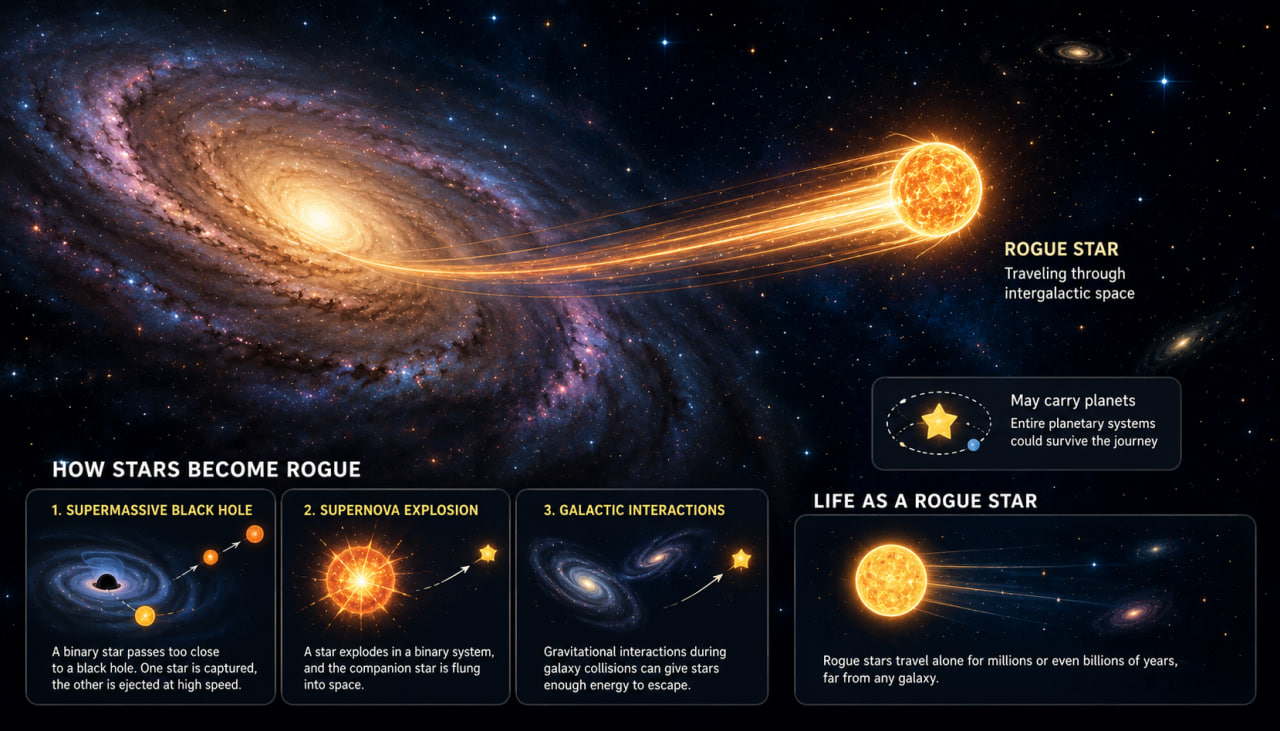
The universe is filled with billions of stars bound together by the gravity of galaxies. Most stars spend their entire lives orbiting within their galactic homes, moving around their galactic centers in predictable paths. However, not all stars remain where they were born. Some are violently expelled from their galaxies and sent hurtling into intergalactic space at extraordinary speeds. These objects, known as rogue stars or hypervelocity stars, are among the most fascinating travelers in the cosmos. Once ejected, they may spend millions or even billions of years crossing the immense voids between galaxies, isolated from the stellar neighborhoods where they originated. Their existence demonstrates that the universe is far more dynamic and chaotic than it may appear.

Symmetry in the Universe: The Hidden Principle That Shapes Reality
Space Stories Universe Science

Symmetry in the Universe: The Hidden Principle That Shapes Reality

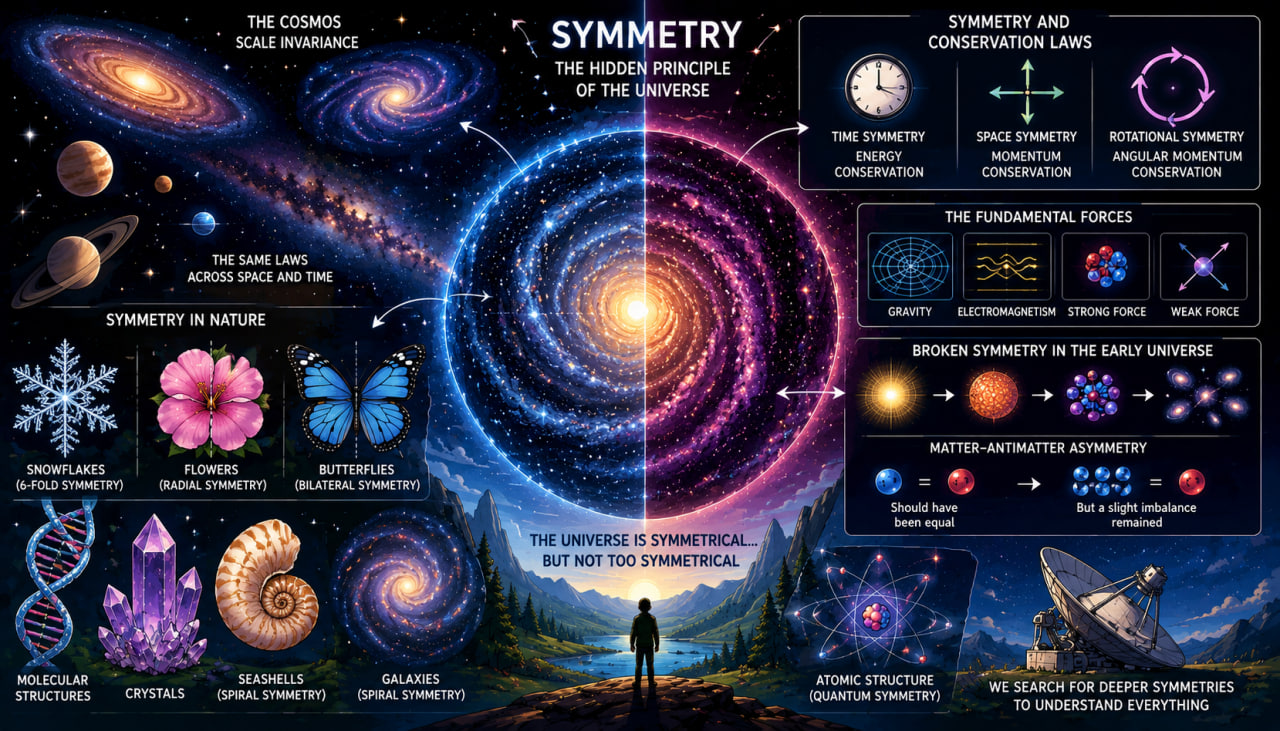
Symmetry is one of the most powerful and fascinating concepts in science. It appears everywhere—from the structure of snowflakes and flowers to the laws that govern stars, galaxies, and the fundamental particles of matter. To many physicists, symmetry is more than just visual balance; it is one of the deepest principles underlying the universe itself. In modern physics, symmetry helps explain why the laws of nature remain consistent across space and time. It plays a crucial role in theories describing gravity, electromagnetism, quantum mechanics, and the structure of the cosmos. Without symmetry, the universe as we know it might not exist. But what exactly is symmetry, and why do scientists consider it so important?

Oxygen-Free Aging: How Materials Degrade in the Vacuum of Space
Space Stories Science Physics

Oxygen-Free Aging: How Materials Degrade in the Vacuum of Space

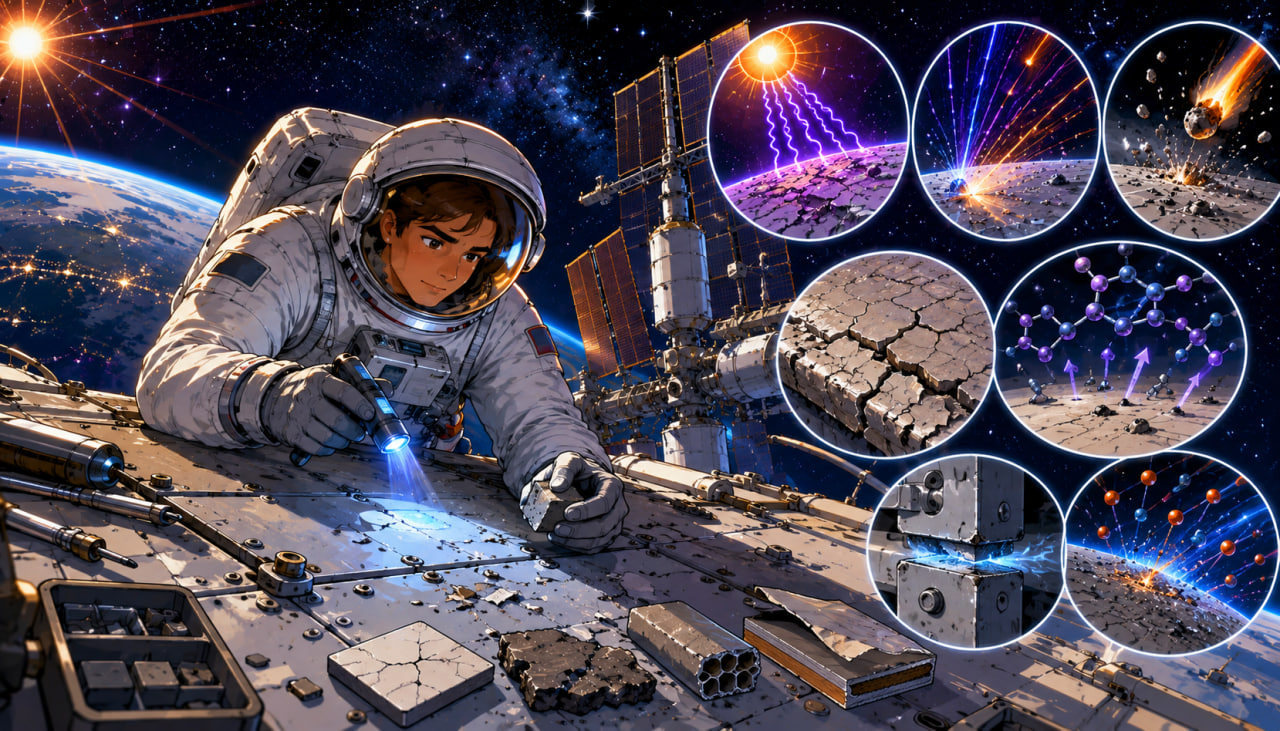
When people think about material aging, they often imagine rust, corrosion, moisture damage, or chemical reactions involving oxygen. On Earth, oxygen plays a major role in the breakdown of metals, plastics, rubber, paints, and countless other materials. But what happens in space, where there is almost no atmosphere and virtually no oxygen? At first glance, it might seem that materials placed in the vacuum of space would last forever because traditional oxidation cannot occur. Surprisingly, the reality is far more complex. Space presents a unique set of environmental challenges that can degrade materials in ways rarely encountered on Earth. Scientists and engineers have spent decades studying how spacecraft, satellites, space stations, and scientific instruments age in the harsh environment beyond our planet. Their findings reveal that the vacuum of space creates its own form of aging, often called vacuum degradation or oxygen-free aging.

How Did Our Solar System Form?
Space Stories History Solar System

How Did Our Solar System Form?

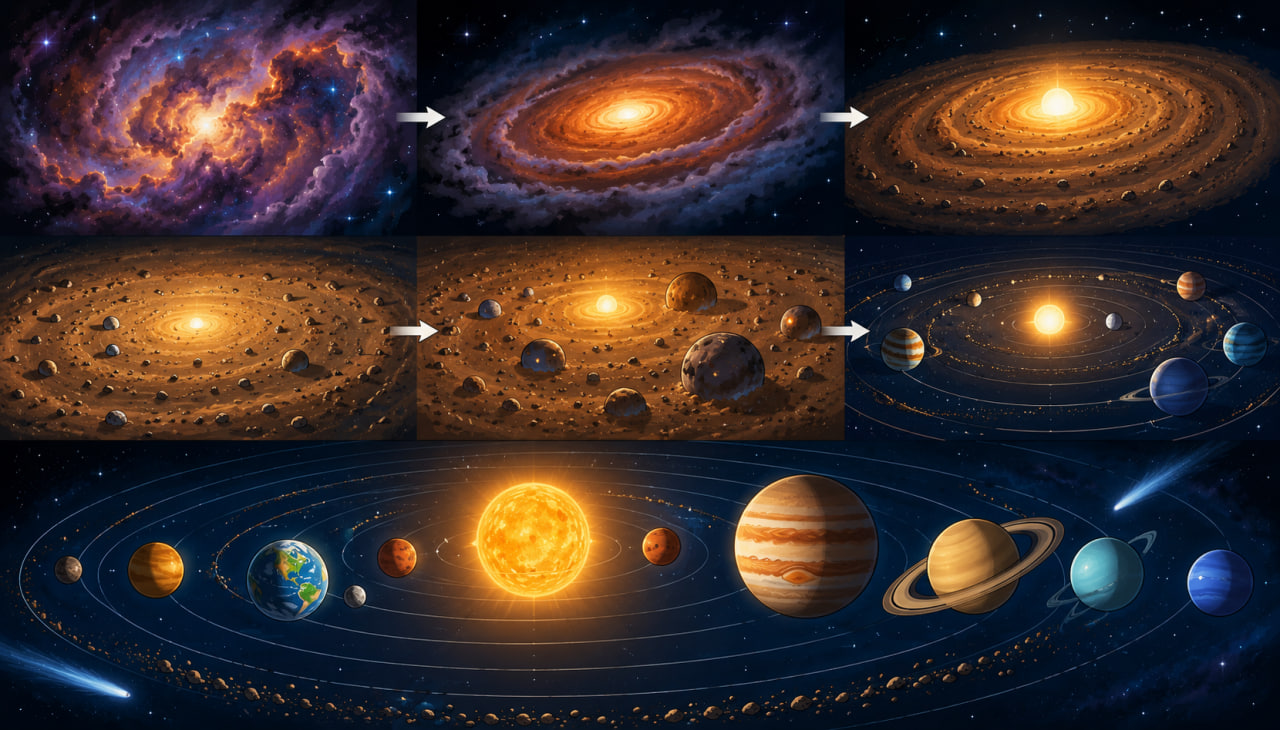
The Solar System may look stable and peaceful today, but its origin was violent, chaotic, and filled with cosmic collisions. Billions of years ago, before Earth, the Sun, or the planets existed, our region of space contained only: Gas Dust Heavy elements from ancient stars Over time, gravity transformed this enormous cloud into: The Sun Eight planets Moons Asteroids Comets Entire planetary systems Understanding how the Solar System formed helps scientists answer major questions about: Earth’s origin Planet formation The possibility of alien worlds The history of life itself Modern astronomy, physics, and space exploration continue uncovering clues about the incredible events that shaped our cosmic neighborhood roughly: 4.6 billion years ago. The story of the Solar System is ultimately the story of how chaos in deep space became an organized planetary system capable of supporting life.

Eclipses: The Spectacular Celestial Alignments That Fascinated Humanity for Millennia
Space Stories Solar System Earth & Moon

Eclipses: The Spectacular Celestial Alignments That Fascinated Humanity for Millennia

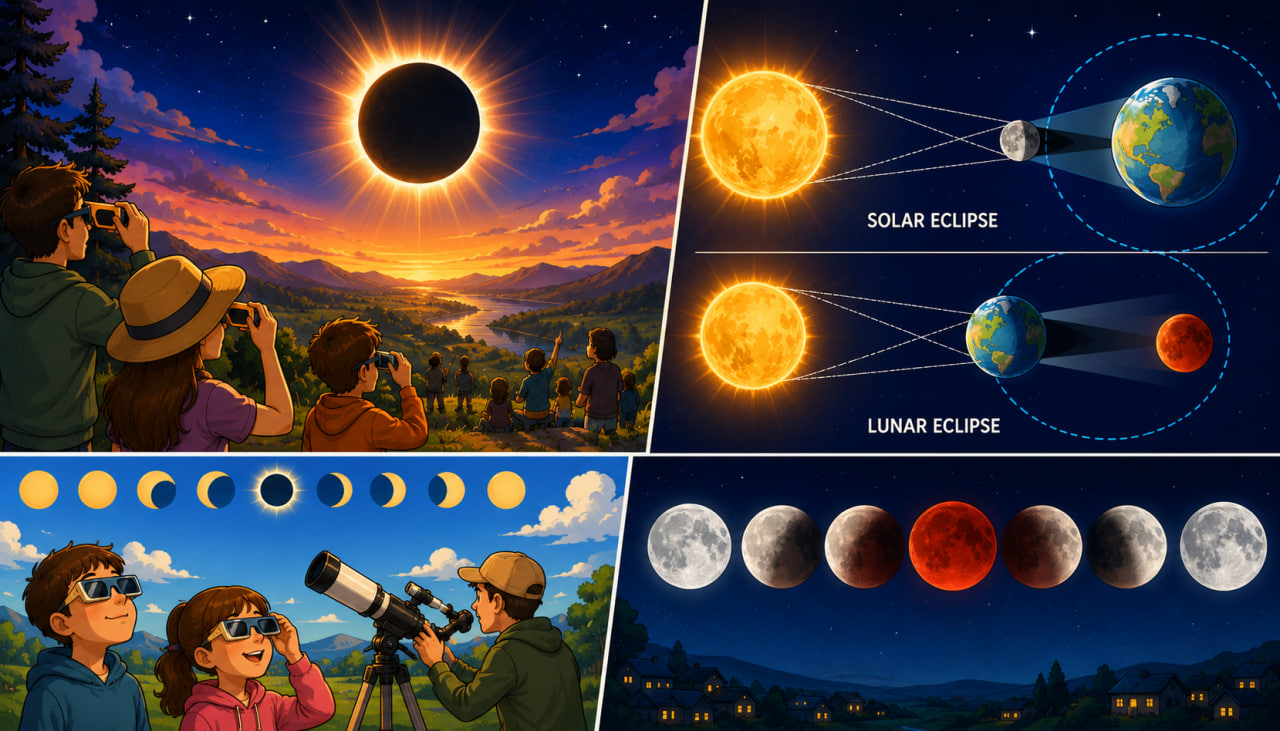
Few astronomical events capture human attention as powerfully as eclipses. For thousands of years, people viewed eclipses with fear, wonder, and curiosity. Ancient civilizations often considered them supernatural signs, while modern science explains them as predictable alignments between celestial bodies. Despite their scientific explanation, eclipses remain among the most breathtaking natural phenomena visible from Earth. Whether it is the dramatic darkening of the sky during a solar eclipse or the mysterious reddish glow of a lunar eclipse, these events remind humanity of the immense cosmic mechanics governing our Solar System. Today, eclipses continue to fascinate astronomers, photographers, travelers, and millions of ordinary observers around the world.