What We Know About Black Holes: Mysteries, Physics, and Modern Discoveries
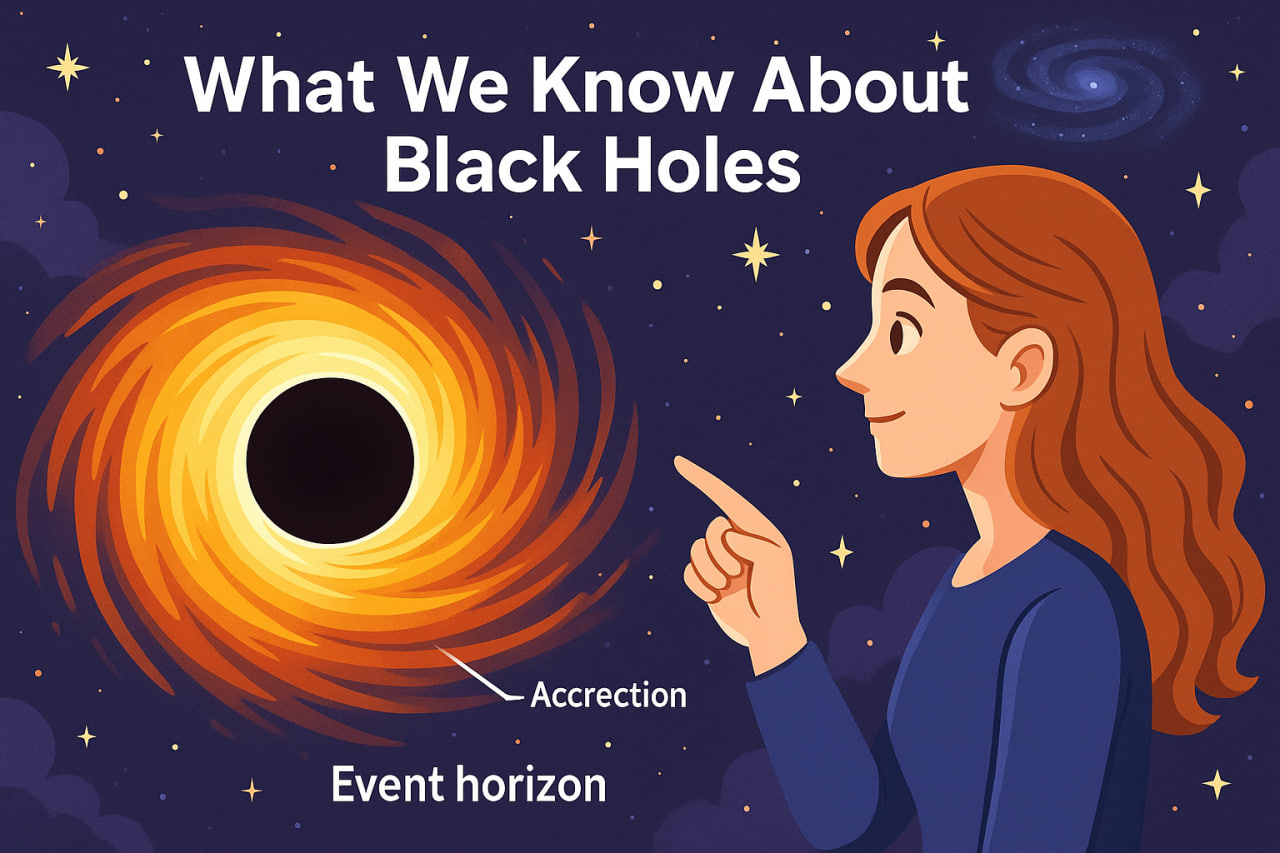
Black holes are among the most mysterious and fascinating objects in the universe. Formed from the collapse of massive stars or through the gradual accumulation of matter, black holes possess gravitational forces so strong that nothing — not even light — can escape once it crosses the event horizon. Although they cannot be observed directly, their presence is detected through the way they interact with surrounding matter, distort spacetime, and emit powerful radiation through accretion processes. Advances in astrophysics, gravitational-wave detection, and high-resolution imaging have transformed black holes from theoretical concepts into observable cosmic realities. Studying black holes helps scientists test fundamental physics, understand galaxy evolution, and explore the limits of space, time, and gravity.