Universe

Do All Moving Objects in the Universe Follow a Left-Handed or Right-Handed Spiral?
Space Stories Universe Science

Do All Moving Objects in the Universe Follow a Left-Handed or Right-Handed Spiral?

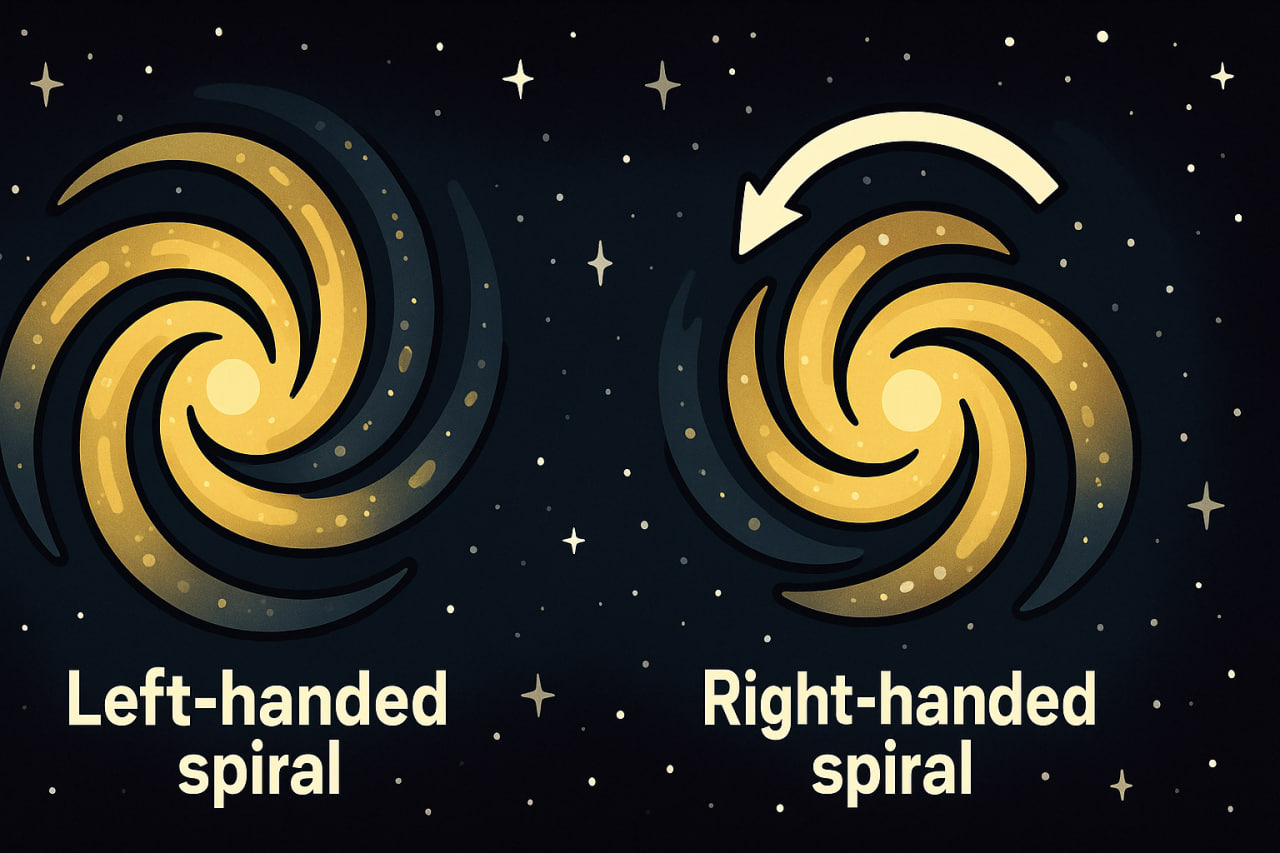
The motion of objects in the universe is a subject that fascinates astronomers and physicists. Many people notice spiral shapes in galaxies, hurricanes, or even water vortices and wonder if there is a universal “handedness” — whether objects move in a left-handed (counterclockwise) or right-handed (clockwise) spiral. While spiral patterns are indeed widespread, the truth is more complex: not all motion follows a single spiral direction, and handedness often depends on perspective and local forces.

How Planets and Galaxies Move in the Universe
Space Stories Universe

How Planets and Galaxies Move in the Universe

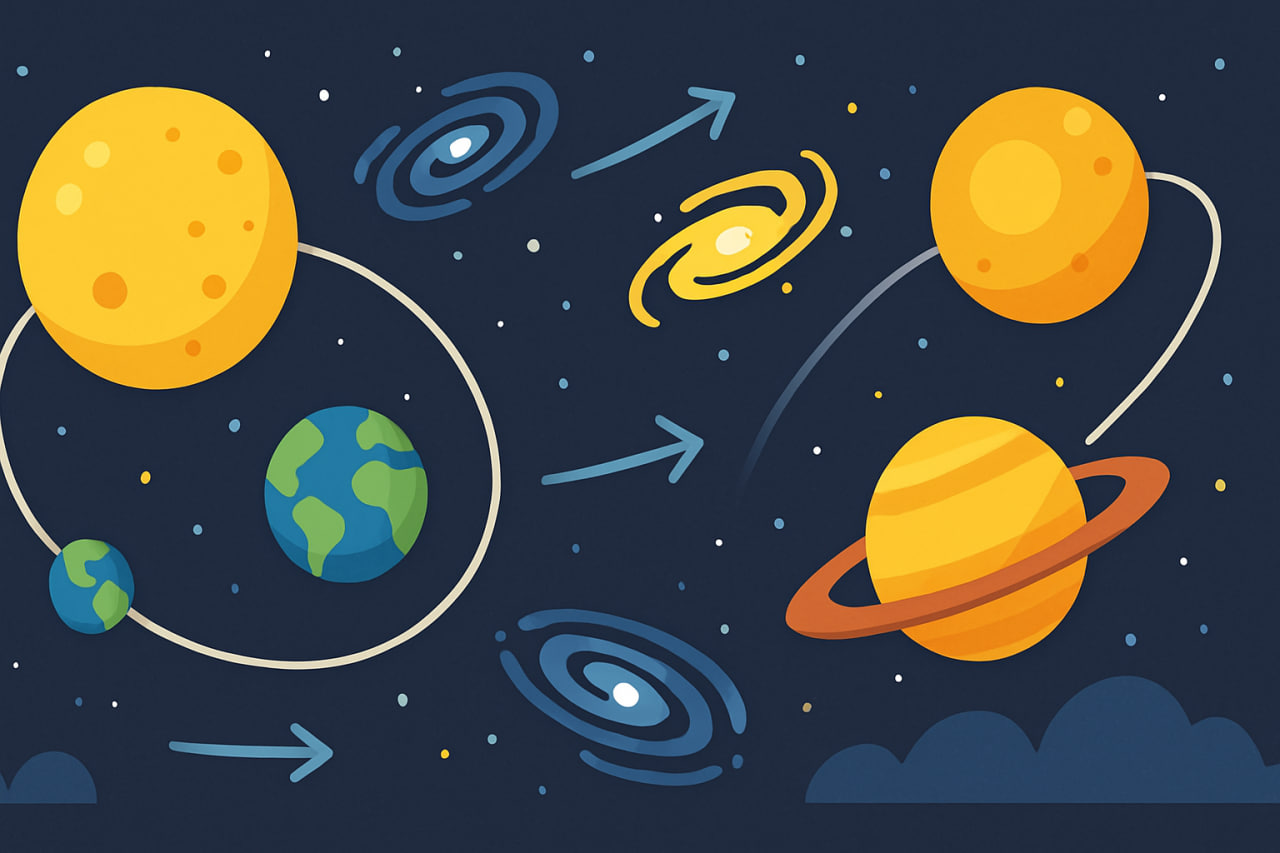
The motion of planets and galaxies is one of the most fascinating aspects of astronomy. While the forces that drive these movements may seem invisible, they are governed by fundamental laws of physics, primarily gravity. Understanding how planets orbit their stars and how galaxies travel through the cosmos provides us with insight into the large-scale dynamics of the universe.

Why Are Planets and Stars Spherical in Shape?
Space Stories Universe

Why Are Planets and Stars Spherical in Shape?

When we look at the night sky or study our Solar System, one striking feature is that planets and stars are spherical. Unlike asteroids or comets, which often have irregular shapes, massive celestial bodies take on a rounded form. This happens because of the fundamental forces of physics that act on matter in space.

Astronomy: Exploring the Universe
Universe Science

Astronomy: Exploring the Universe

Astronomy is the science that studies celestial objects, space, and the universe as a whole. It examines stars, planets, galaxies, and cosmic phenomena, seeking to understand their origins, structures, and evolution. Unlike astrology, which is based on belief, astronomy is rooted in observation, measurement, and the scientific method. It is one of the oldest sciences, yet it remains central to modern exploration of the cosmos.

What Is the Mathematical Probability That We Are Alone in the Universe?
Space Stories Universe

What Is the Mathematical Probability That We Are Alone in the Universe?

The question of whether humanity is alone in the universe is one of the most profound scientific and philosophical debates. While direct evidence of extraterrestrial life has not yet been found, mathematics and probability offer tools to estimate the likelihood of life beyond Earth. Scientists often use models and equations to address this mystery, the most famous being the Drake Equation.

What Is a Nebula in Space?
Space Stories Universe

What Is a Nebula in Space?

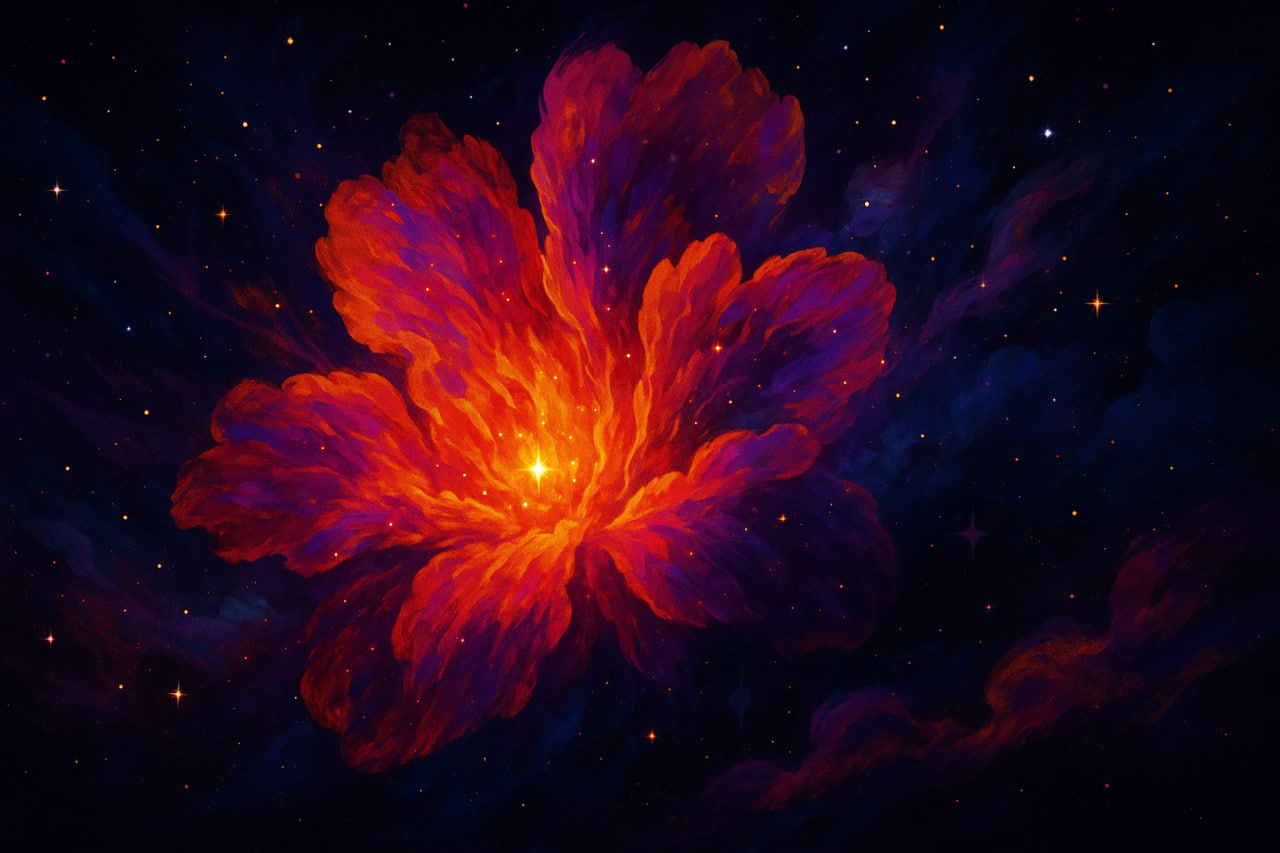
A nebula is a vast cloud of gas and dust in space, often spanning dozens or even hundreds of light-years. Nebulae are among the most beautiful and fascinating structures in the universe, appearing in a variety of shapes and colors. They are not just cosmic decorations: nebulae play a crucial role in the life cycle of stars, serving as stellar nurseries, remnants of stellar deaths, and building blocks of galaxies.

What Is a Gas Giant?
Space Stories Universe

What Is a Gas Giant?

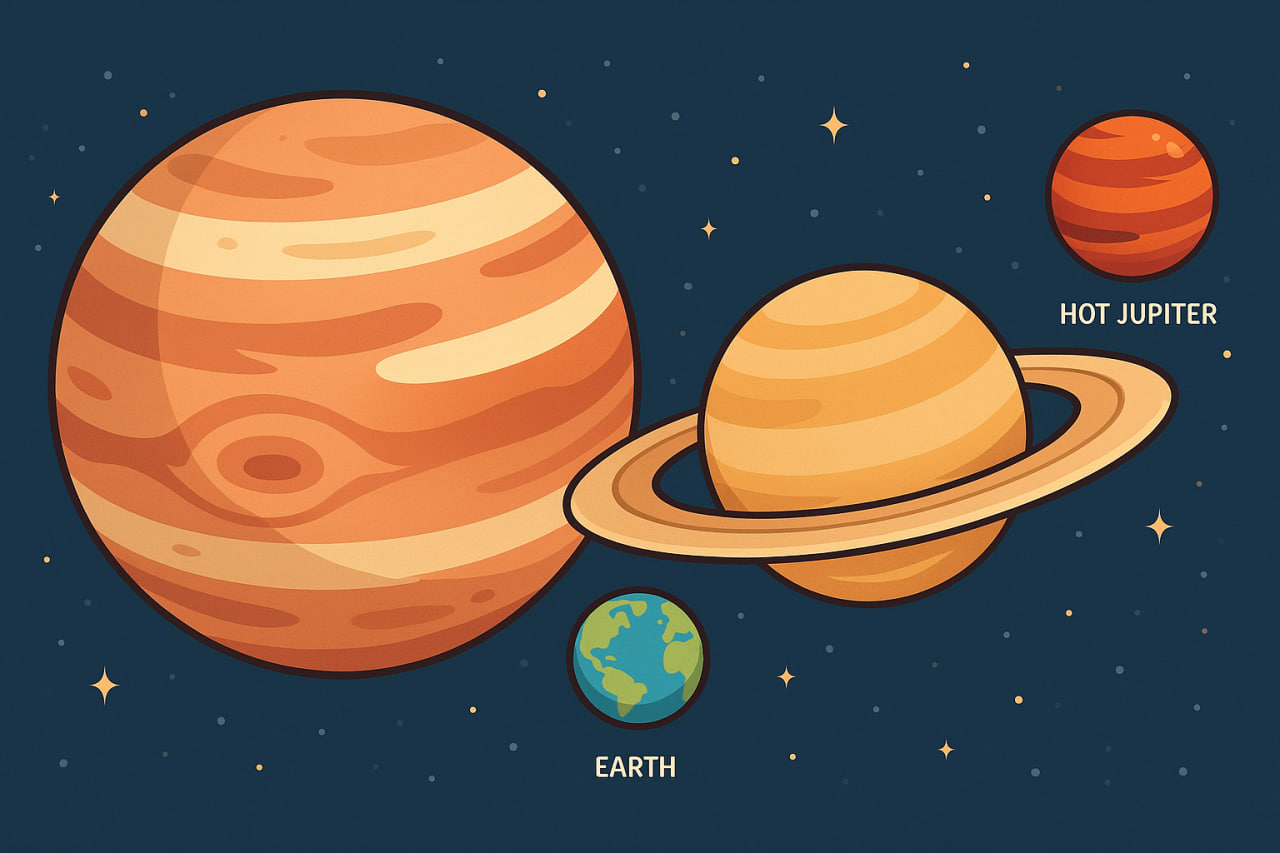
A gas giant is a type of planet that is much larger than Earth and composed mostly of hydrogen and helium, rather than solid rock or metal. These planets do not have a well-defined solid surface like Earth; instead, they have thick atmospheres and deep layers of gas and liquid surrounding a possible small rocky or metallic core. Gas giants are among the most massive and spectacular objects in planetary systems.

Cosmic Radiation: The Invisible Threat from Space
Space Stories Universe New Discoveries

Cosmic Radiation: The Invisible Threat from Space

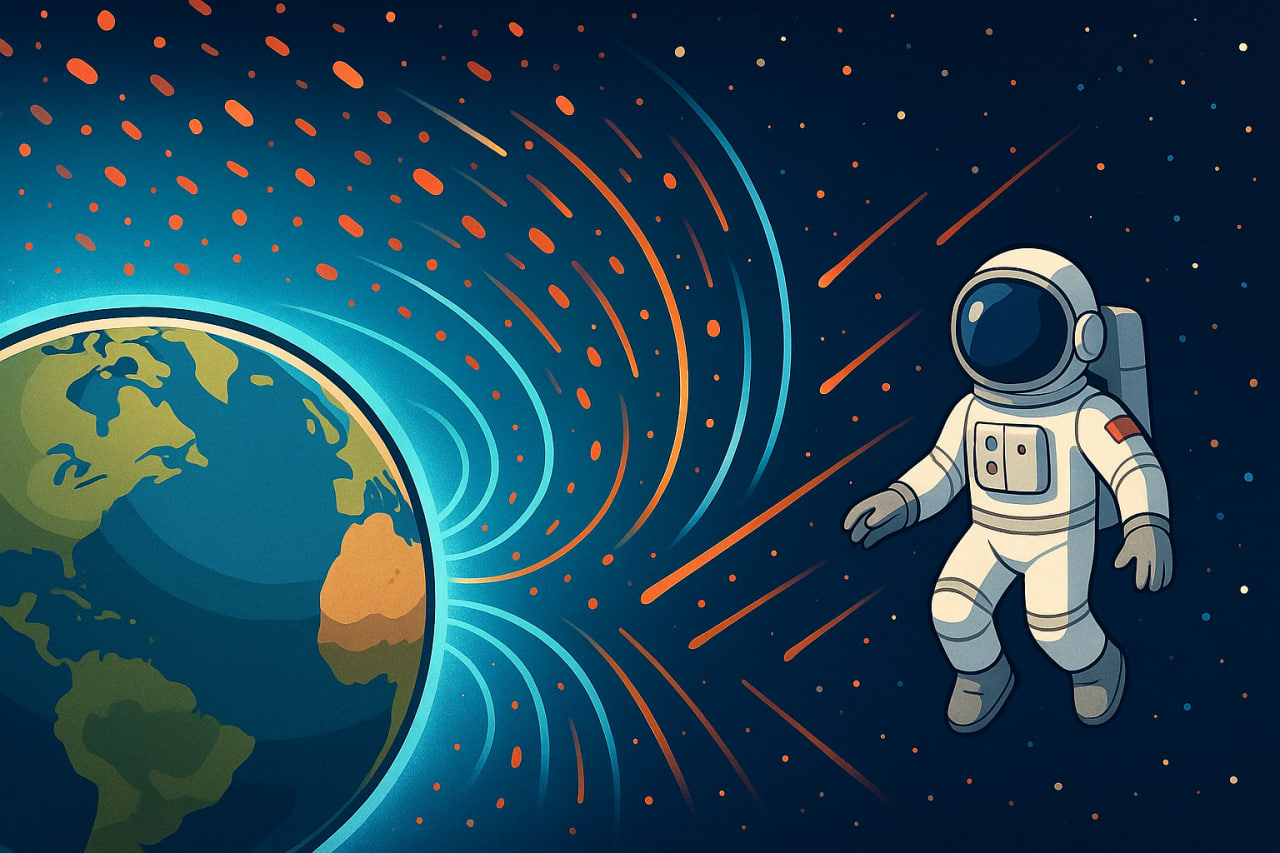
Cosmic radiation is a stream of high-energy particles that constantly bombard Earth from space. It consists mainly of protons, electrons, and atomic nuclei traveling at nearly the speed of light. Some originate from our Sun, while others come from distant galaxies and violent cosmic events such as supernova explosions. Although most radiation is blocked by Earth’s atmosphere and magnetic field, it remains a critical factor for space exploration, satellite technology, and human health.

Interstellar Vacuum: The Empty Space Between Stars
Space Stories Universe Science

Interstellar Vacuum: The Empty Space Between Stars

The interstellar vacuum is the vast region of space that lies between stars within galaxies. At first glance, it may seem completely empty, but in reality, it contains extremely low-density matter, radiation, and magnetic fields. Studying this environment helps astronomers understand the structure and evolution of galaxies, as well as the journey of light and cosmic rays across the universe.