What if?

Why Do Many Important Institutions Still Keep Paper Archives?
History Be Smart What if?

Why Do Many Important Institutions Still Keep Paper Archives?

In an era of cloud computing, artificial intelligence, and digital records, it may seem surprising that governments, courts, hospitals, banks, museums, and national archives around the world continue to store enormous collections of paper documents. After all, digital files are easier to search, duplicate, and share. Yet despite rapid technological progress, paper remains one of the most trusted and durable methods of preserving critical information. Many organizations rely on both physical and digital records because each format has unique advantages and limitations. Rather than being outdated, paper archives continue to play an essential role in protecting history, legal rights, scientific research, and national security.

Immortality: What Does Science Really Say?
Bioengineering Science What if?

Immortality: What Does Science Really Say?

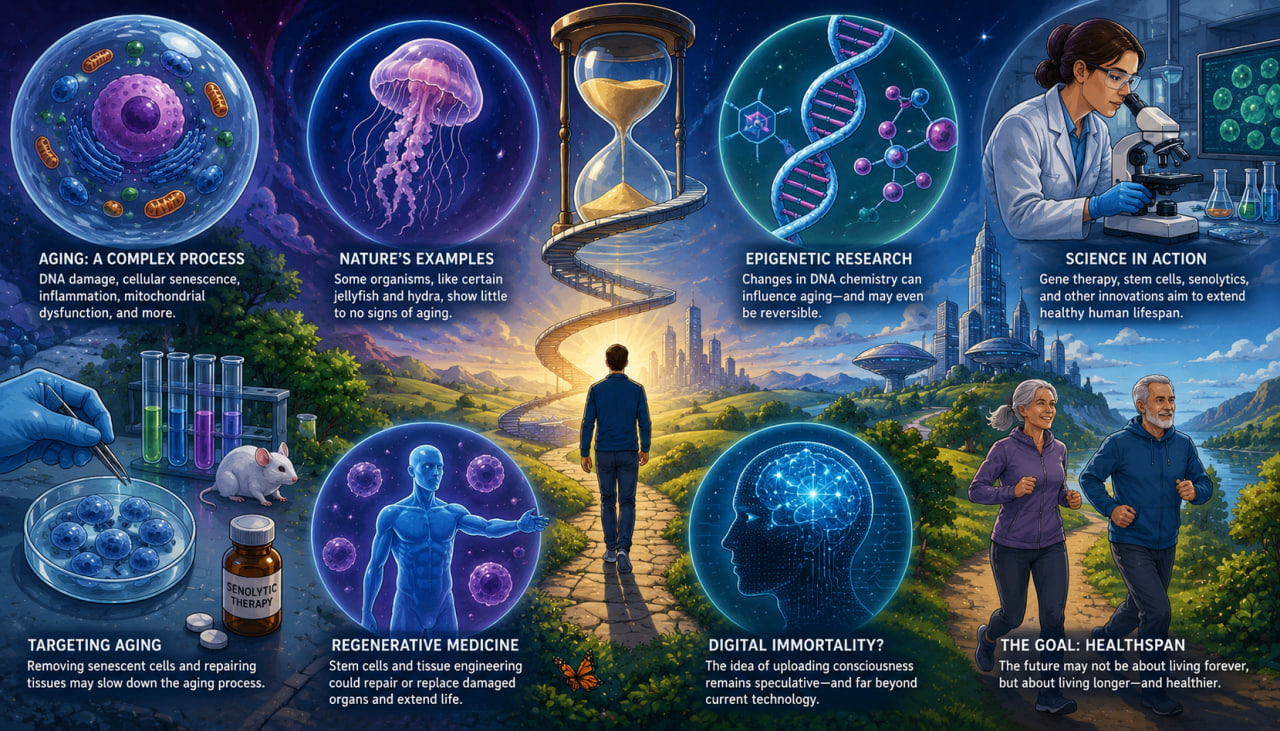
For thousands of years, humanity has dreamed of immortality. Ancient myths spoke of magical elixirs, sacred springs, and divine powers capable of granting eternal life. Today, science has replaced mythology, but the question remains remarkably similar: can humans ever become immortal? Modern biology, genetics, and medicine have dramatically increased life expectancy compared to previous centuries. Diseases that once killed millions can now be prevented or treated. Researchers are actively studying aging, cellular repair, gene therapy, and regenerative medicine. Yet despite these advances, true biological immortality remains one of the greatest scientific challenges. The reality is both more hopeful and more complicated than science fiction often suggests.

Digestion in Space: How Does the Stomach Process Food Without Gravity?
Space Stories Bioengineering What if?

Digestion in Space: How Does the Stomach Process Food Without Gravity?

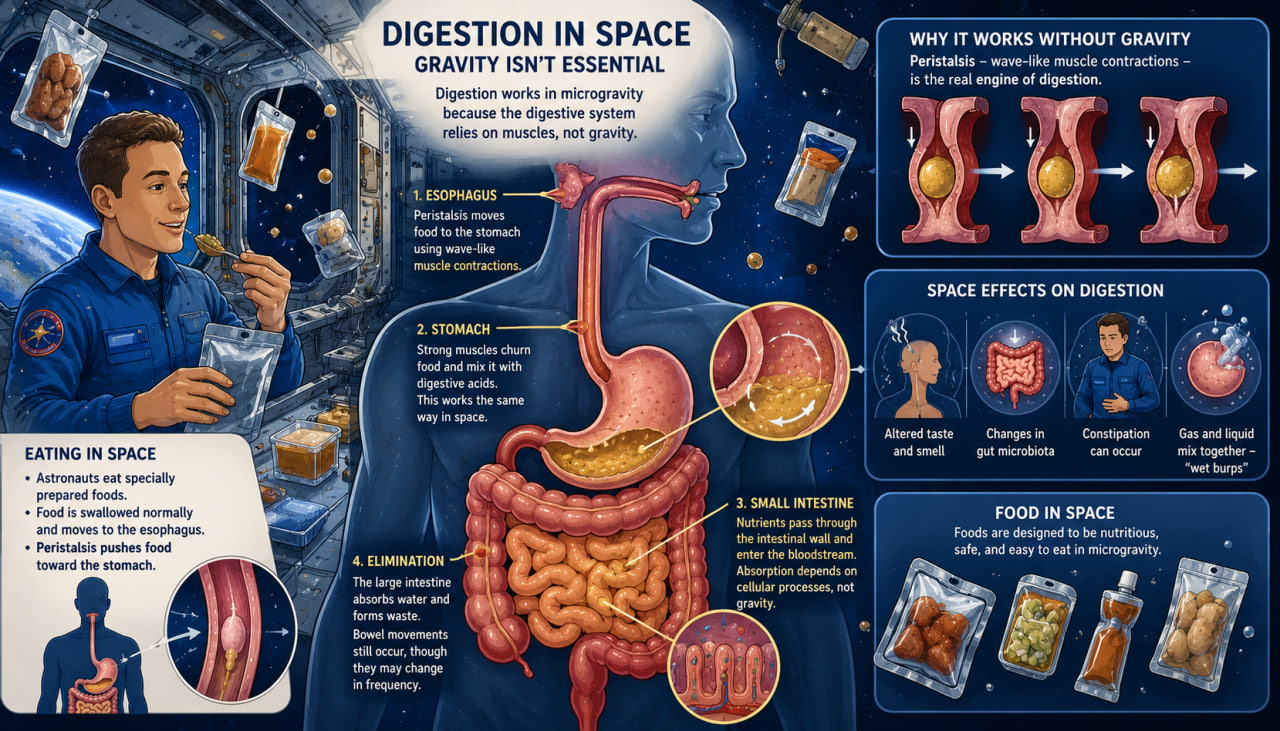
When most people imagine life in space, they think about floating astronauts, breathtaking views of Earth, and advanced spacecraft. However, one surprisingly common question is: how do astronauts digest food when gravity is almost absent? On Earth, gravity influences many aspects of daily life, from walking and drinking to the movement of fluids inside the body. Since digestion involves moving food through the digestive system, it might seem logical to assume that gravity plays a crucial role. Surprisingly, the human digestive system is far less dependent on gravity than many people realize. In fact, astronauts aboard space stations have been eating, digesting, and absorbing nutrients successfully for decades. The secret lies in the remarkable design of the digestive tract itself.

Coffee Machines: Are They Really Worth It?
Smart Technology Smart Home What if?

Coffee Machines: Are They Really Worth It?

Coffee is one of the most popular beverages on Earth. Every day, billions of cups are consumed worldwide, fueling morning routines, social gatherings, and workdays. For many coffee lovers, a coffee machine seems like the logical next step toward enjoying café-quality drinks at home. Yet coffee machines range from simple drip brewers to advanced fully automatic espresso systems costing hundreds or even thousands of dollars. This raises an important question: Does buying a coffee machine actually make sense? The answer depends on drinking habits, budget, convenience preferences, and expectations regarding coffee quality. For some households, a coffee machine becomes one of the most frequently used appliances in the kitchen. For others, it may end up collecting dust on a countertop. Understanding the advantages and disadvantages can help determine whether investing in a coffee machine is worthwhile.

Chirality: Why One Form of a Drug Can Heal While the Other Can Harm
Science Be Smart What if?

Chirality: Why One Form of a Drug Can Heal While the Other Can Harm

Modern medicine often appears straightforward: a drug contains a specific molecule that produces a desired effect in the body. However, chemistry reveals a fascinating complication. Sometimes two molecules can contain exactly the same atoms arranged in exactly the same order, yet one may act as a life-saving medicine while the other may be ineffective or even dangerous. This phenomenon is known as chirality, one of the most important concepts in chemistry, pharmacology, and biology. Understanding chirality has transformed drug development and helped scientists create safer and more effective medications. The story of chirality demonstrates how tiny differences at the molecular level can have enormous consequences for human health.

The de Broglie–Bohm Theory: Is the Universe a Giant Deterministic Machine Without Randomness?
Science What if? Physics

The de Broglie–Bohm Theory: Is the Universe a Giant Deterministic Machine Without Randomness?

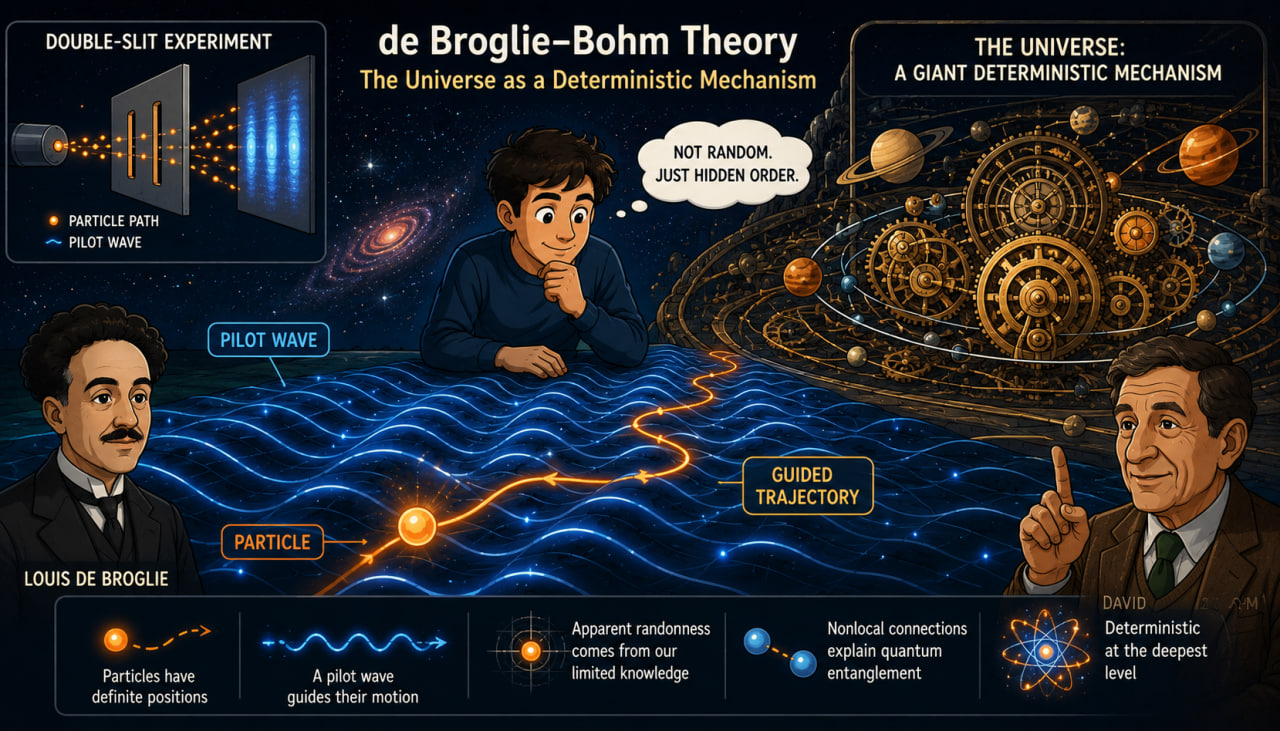
Quantum mechanics is famous for introducing uncertainty into physics. According to the standard interpretation, many events at the quantum level are fundamentally random. Particles do not have definite positions until measured, and probabilities seem to play a central role in the behavior of nature. However, not all physicists have accepted this view. One of the most intriguing alternatives is the de Broglie–Bohm theory, also known as Bohmian mechanics or the pilot-wave theory. This interpretation suggests that the universe may actually be completely deterministic, with particles following precise trajectories guided by an invisible quantum wave. If correct, randomness may not be a fundamental feature of reality at all. Instead, the universe could operate like a vast cosmic mechanism whose future is determined by hidden underlying laws.

Exotic Matter: The Hypothetical Substance with Negative Mass
Science What if? News

Exotic Matter: The Hypothetical Substance with Negative Mass

Among the strangest ideas in modern physics is the concept of exotic matter—a hypothetical form of matter that behaves in ways completely unlike anything we encounter in everyday life. Ordinary matter has: Positive mass Positive energy density Normal gravitational behavior Exotic matter, in some theoretical models, may possess: Negative mass Negative energy density Unusual gravitational properties If such matter exists, it could potentially make possible some of the most extraordinary concepts ever proposed by physicists, including: Wormholes Warp drives Time machines Antigravity-like effects At present, exotic matter remains largely theoretical. However, the mathematics of modern physics continues to suggest that nature may allow phenomena far stranger than our everyday experience. Understanding exotic matter takes us to the frontier where: Quantum mechanics Relativity Cosmology meet some of the biggest mysteries of the universe.

Theory of Everything: Why Gravity Refuses to Get Along with Quantum Physics
Universe Science What if?

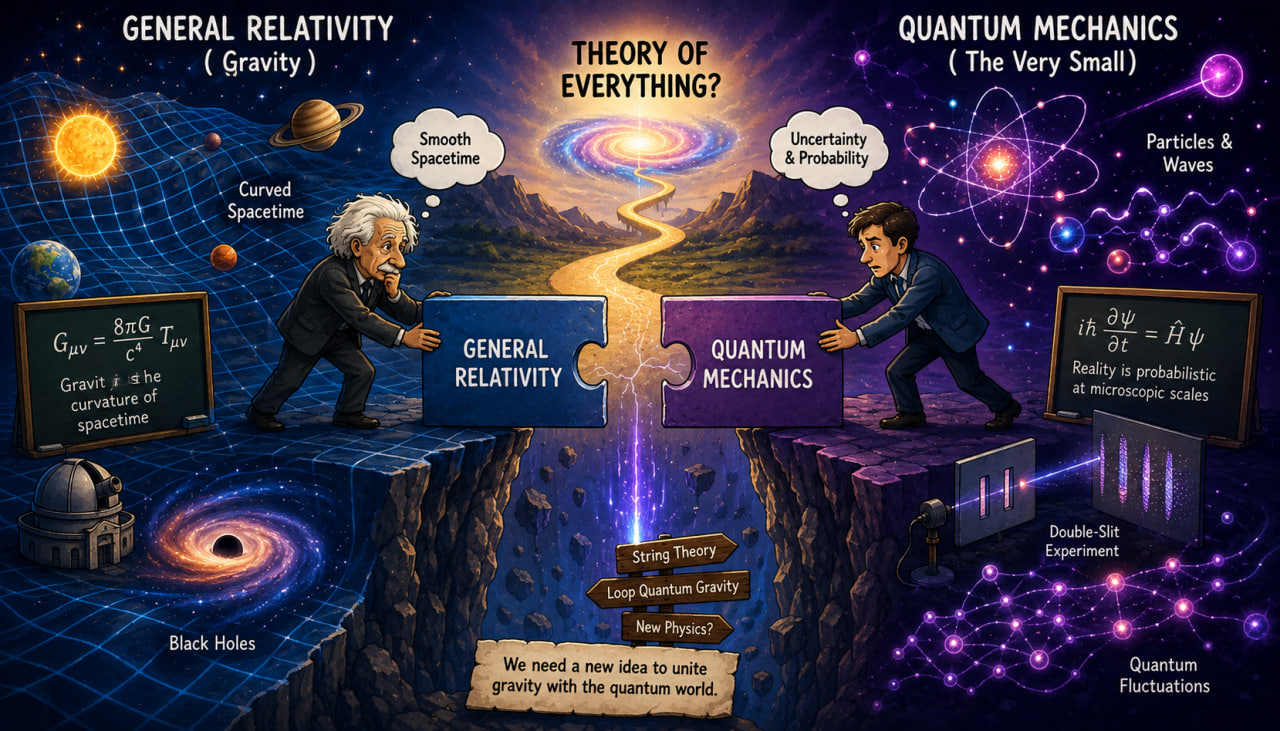
Theory of Everything: Why Gravity Refuses to Get Along with Quantum Physics

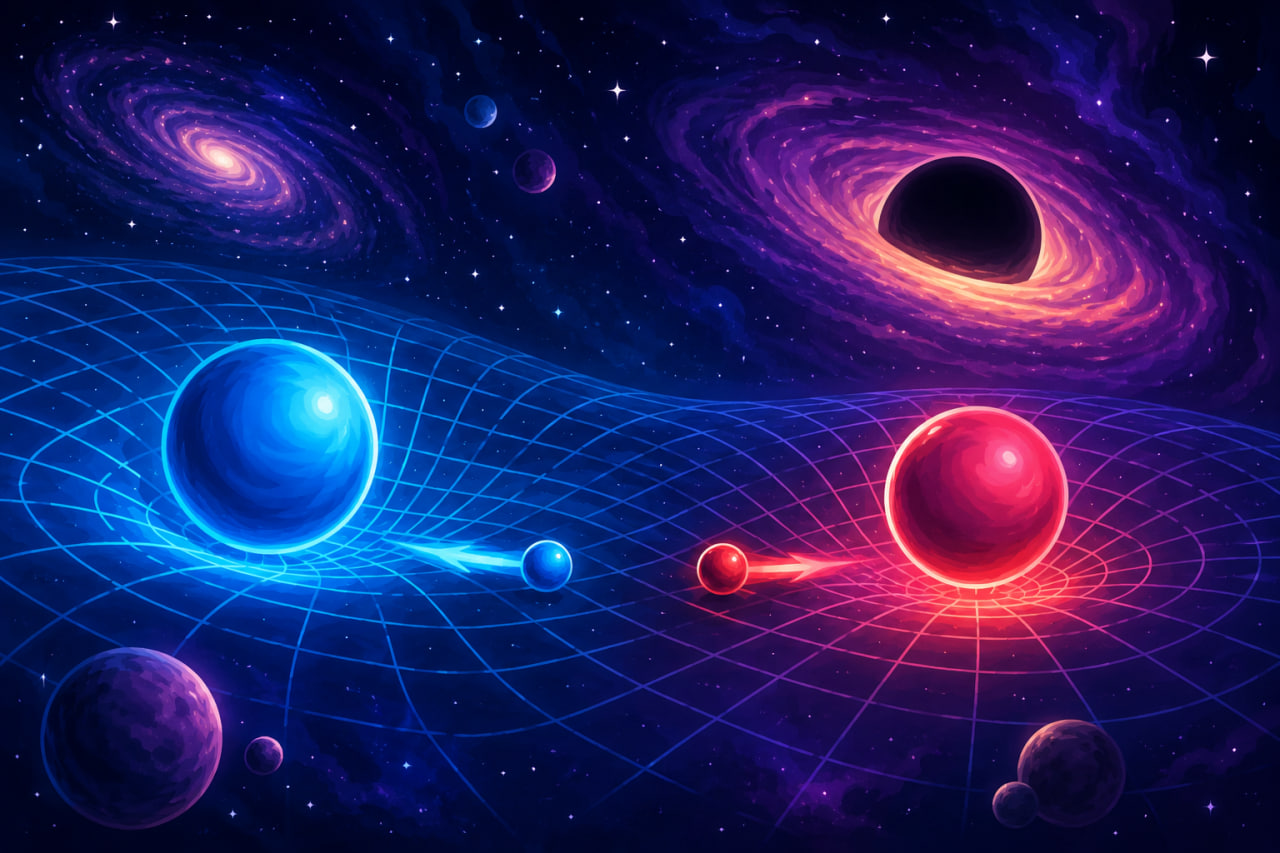
Modern physics is built upon two extraordinarily successful theories. The first is: Quantum Mechanics which describes the behavior of: Atoms Electrons Photons Subatomic particles The second is: General Relativity developed by Albert Einstein to explain: Gravity Space Time The structure of the universe Both theories have passed countless experimental tests and are among the greatest achievements in scientific history. Yet there is a major problem: The two theories do not work well together. When physicists try to combine gravity with quantum mechanics, the mathematics often breaks down. This conflict has inspired one of the most ambitious goals in science: The Theory of Everything a single framework capable of explaining all fundamental forces and particles in the universe. Finding such a theory would represent one of humanity's greatest intellectual achievements.

Time Dilation in GPS: Why Navigation Would Break Within a Day Without Relativity
Science Be Smart What if?

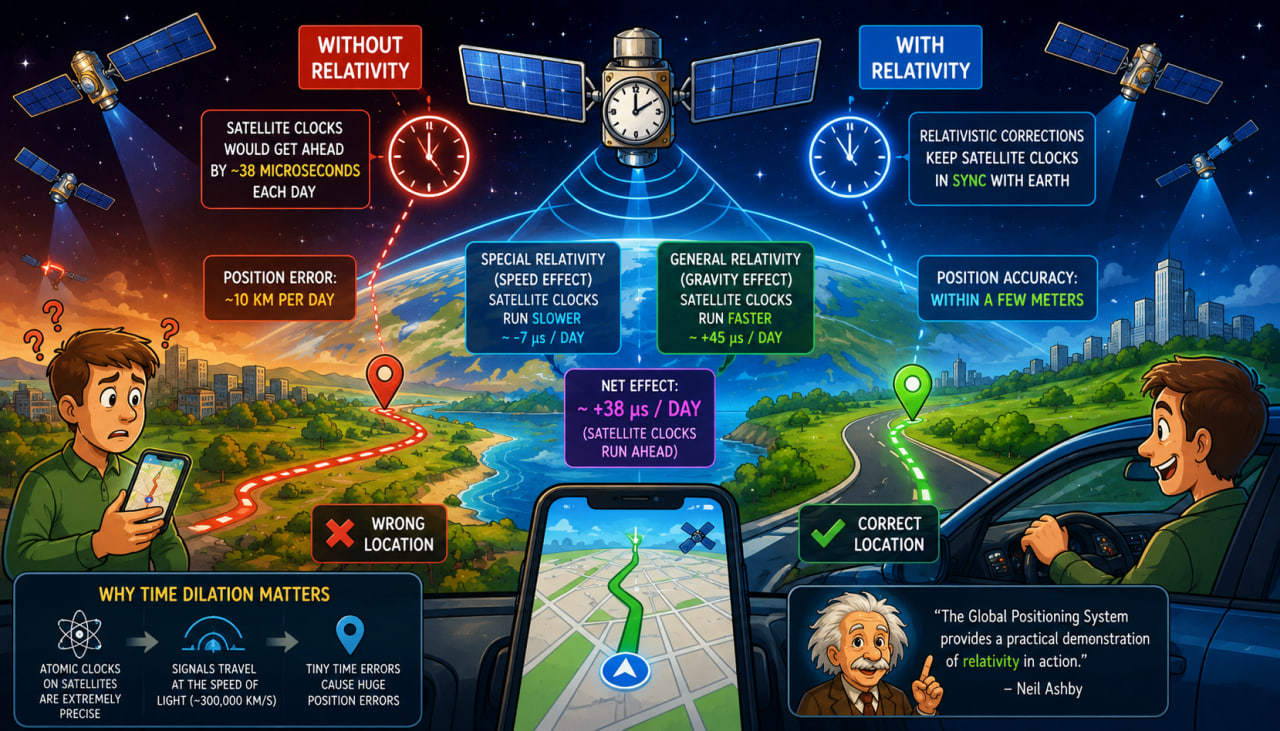
Time Dilation in GPS: Why Navigation Would Break Within a Day Without Relativity

Every day, billions of people use: GPS navigation Smartphone maps Vehicle navigation systems Aircraft guidance systems Most users assume GPS works because of: Satellites Radio signals Computers While this is true, there is another crucial ingredient behind GPS accuracy: Albert Einstein's theory of relativity. Without relativistic corrections, GPS positioning errors would accumulate so rapidly that navigation systems would become: Unreliable Inaccurate Potentially dangerous within a surprisingly short time. In fact, if engineers ignored Einstein's equations, GPS errors would grow by approximately: 10 kilometers (6 miles) per day making modern navigation practically useless. This remarkable fact represents one of the clearest examples of how abstract theoretical physics directly affects everyday life. The GPS system serves as a real-world demonstration that: Time does not flow equally everywhere. Motion and gravity influence the passage of time. Einstein's predictions accurately describe reality. Understanding why GPS requires relativity reveals one of the most fascinating intersections between: Physics Space technology Engineering Everyday life