What if?

What Would Happen If a Neutron Star Passed Near the Solar System?
Space Stories Universe What if?

What Would Happen If a Neutron Star Passed Near the Solar System?

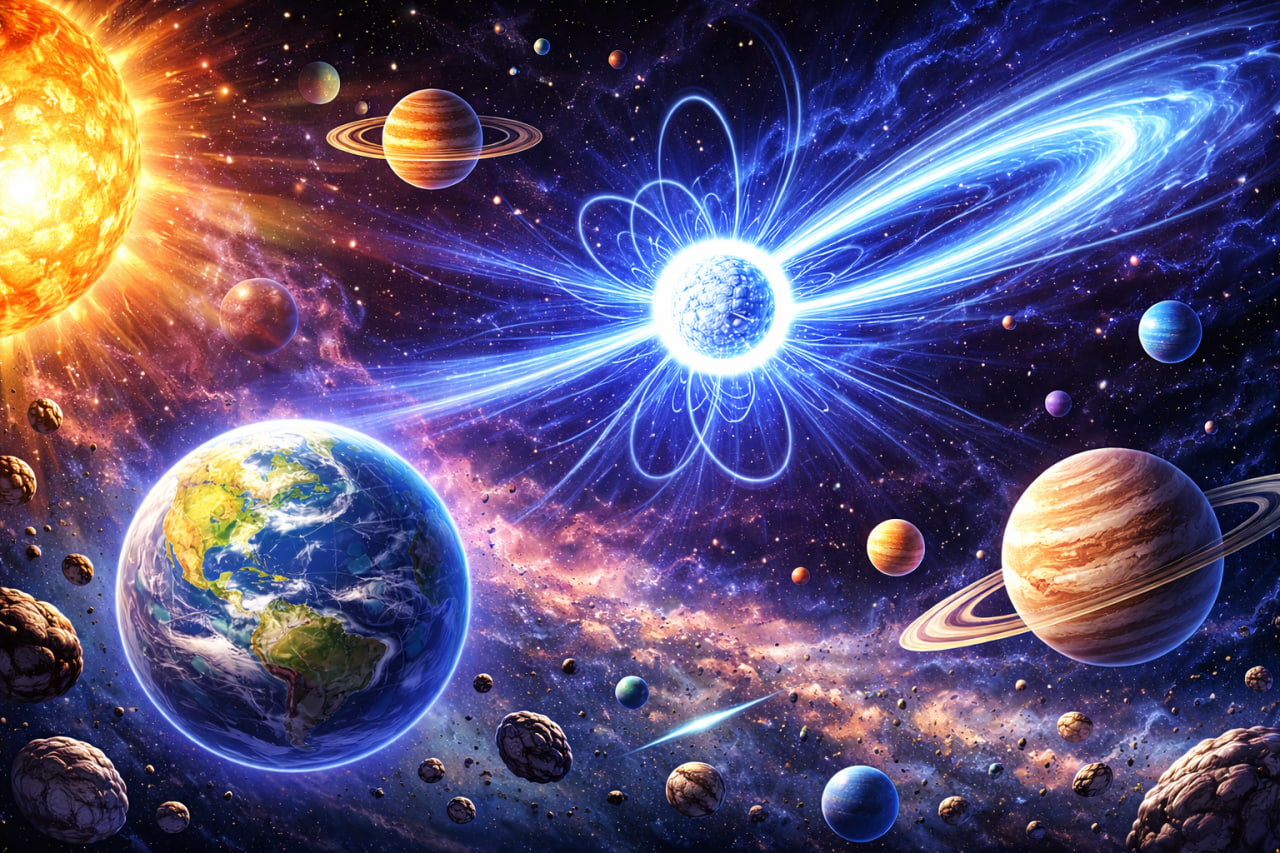
A neutron star passing close to the Solar System would be one of the most extreme astrophysical encounters imaginable. Neutron stars are remnants of massive stars that collapsed after supernova explosions, concentrating enormous mass into an incredibly small volume. Despite their compact size, their gravitational and electromagnetic influence is immense. Such an event is extraordinarily unlikely, but examining it allows scientists to understand how fragile—or resilient—planetary systems are in a dynamic galaxy. This scenario highlights the balance between cosmic forces and the stability of our Solar System.
Loop Quantum Gravity Theory
Science New Discoveries Be Smart

Loop Quantum Gravity Theory

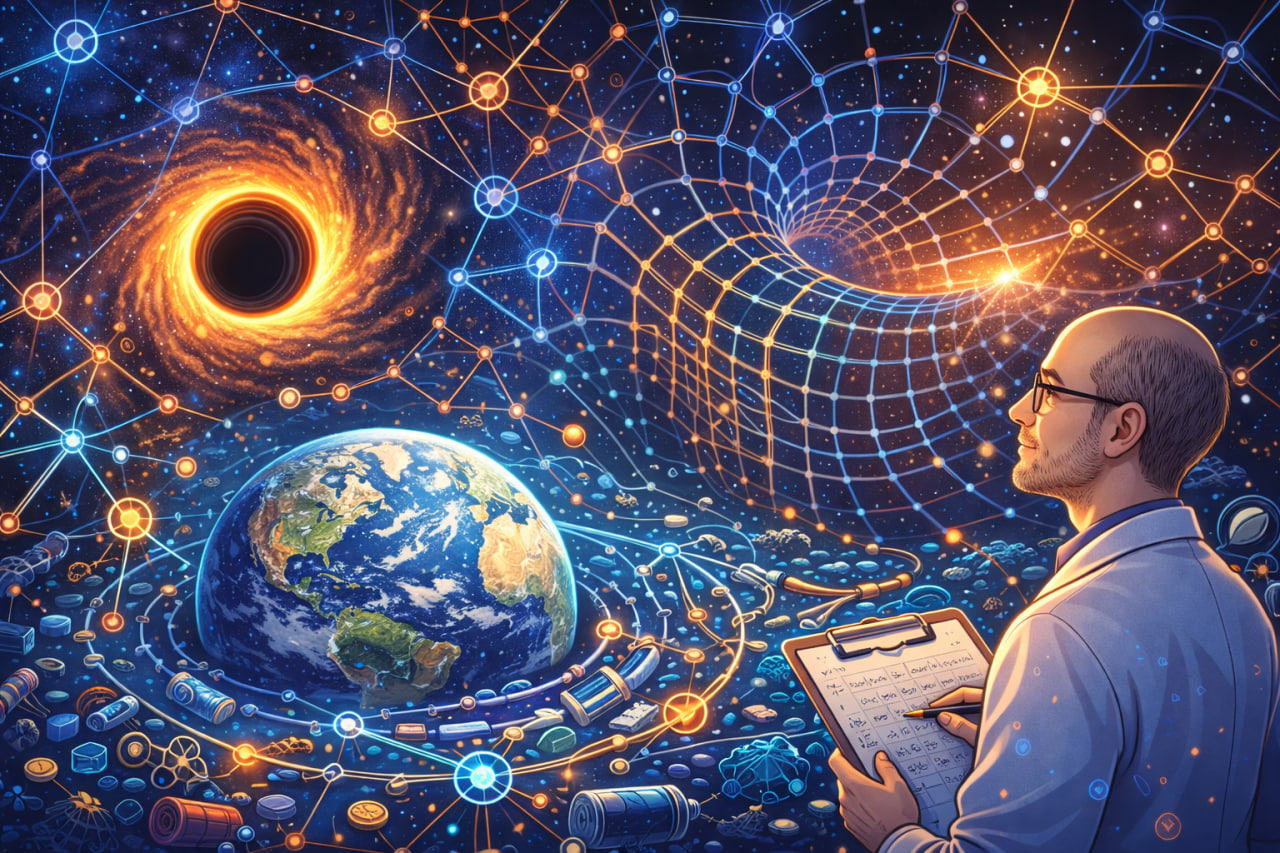
Loop quantum gravity is one of the leading theoretical attempts to unify quantum mechanics with general relativity. Unlike approaches that add extra dimensions or rely on unobserved entities, this theory focuses on quantizing spacetime itself. It proposes that space is not smooth and continuous, but instead has a discrete, granular structure at the smallest possible scales. These fundamental “loops” form a network that gives rise to geometry, distance, and volume. By rethinking the nature of space and time, loop quantum gravity challenges deeply rooted assumptions about the fabric of reality.

White Holes: Theoretical Opposites of Black Holes
Space Stories Universe What if?

White Holes: Theoretical Opposites of Black Holes

White holes are one of the most intriguing and speculative concepts in modern theoretical physics. Unlike black holes, which trap everything that crosses their event horizon, white holes are imagined as regions of space where matter and energy can only escape, never enter. They emerge not from direct observation, but from mathematical solutions to Einstein’s equations of general relativity. While black holes are now well-documented astronomical objects, white holes remain hypothetical, challenging scientists to rethink the nature of time, gravity, and the structure of the universe. The idea of white holes pushes physics to its conceptual limits, blending rigorous mathematics with deep philosophical questions. Understanding white holes helps illuminate how much we still do not know about spacetime.

Will the Development of Artificial Intelligence Take Jobs Away from People?
AI & Ethics AI Be Smart

Will the Development of Artificial Intelligence Take Jobs Away from People?

The rapid development of artificial intelligence has sparked widespread debate about the future of human work. As algorithms become capable of performing tasks once reserved for skilled professionals, concerns about mass unemployment grow stronger. From automated customer support to self-driving vehicles, AI systems are already reshaping entire industries. However, history shows that technological progress rarely eliminates work altogether; instead, it transforms the nature of jobs and the skills required to perform them. Understanding whether AI will truly take jobs away requires a deeper look at how technology changes economies, workplaces, and human roles. The real question is not whether jobs will disappear, but which jobs will change and how society will adapt.

Planetary Collisions with Cosmic Objects
Space Stories Universe What if?

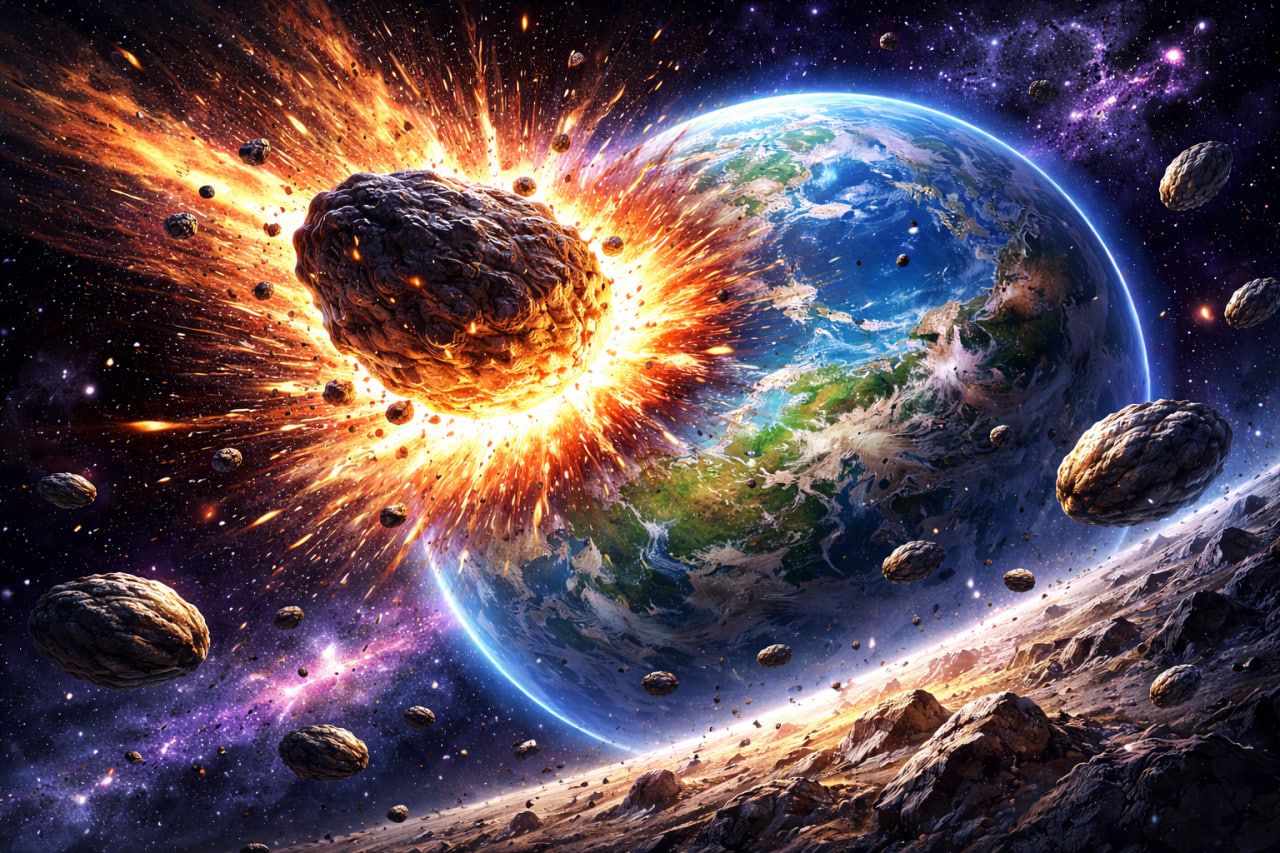
Planetary Collisions with Cosmic Objects

Collisions between planets and cosmic objects are among the most powerful and transformative events in the universe. Asteroids, comets, and even protoplanets have repeatedly reshaped planetary surfaces, atmospheres, and evolutionary paths since the birth of the solar system. Although such impacts are rare on human timescales, they play a fundamental role in shaping worlds over millions and billions of years. From the formation of moons to mass extinctions and the delivery of water and organic compounds, planetary collisions are deeply connected to the history of life and geology. Modern astronomy studies these events not as distant catastrophes, but as key mechanisms of planetary evolution. Understanding how and why planets collide with cosmic objects reveals how dynamic and interconnected the universe truly is.

The Holographic Principle
Cosmic Innovations Universe Science

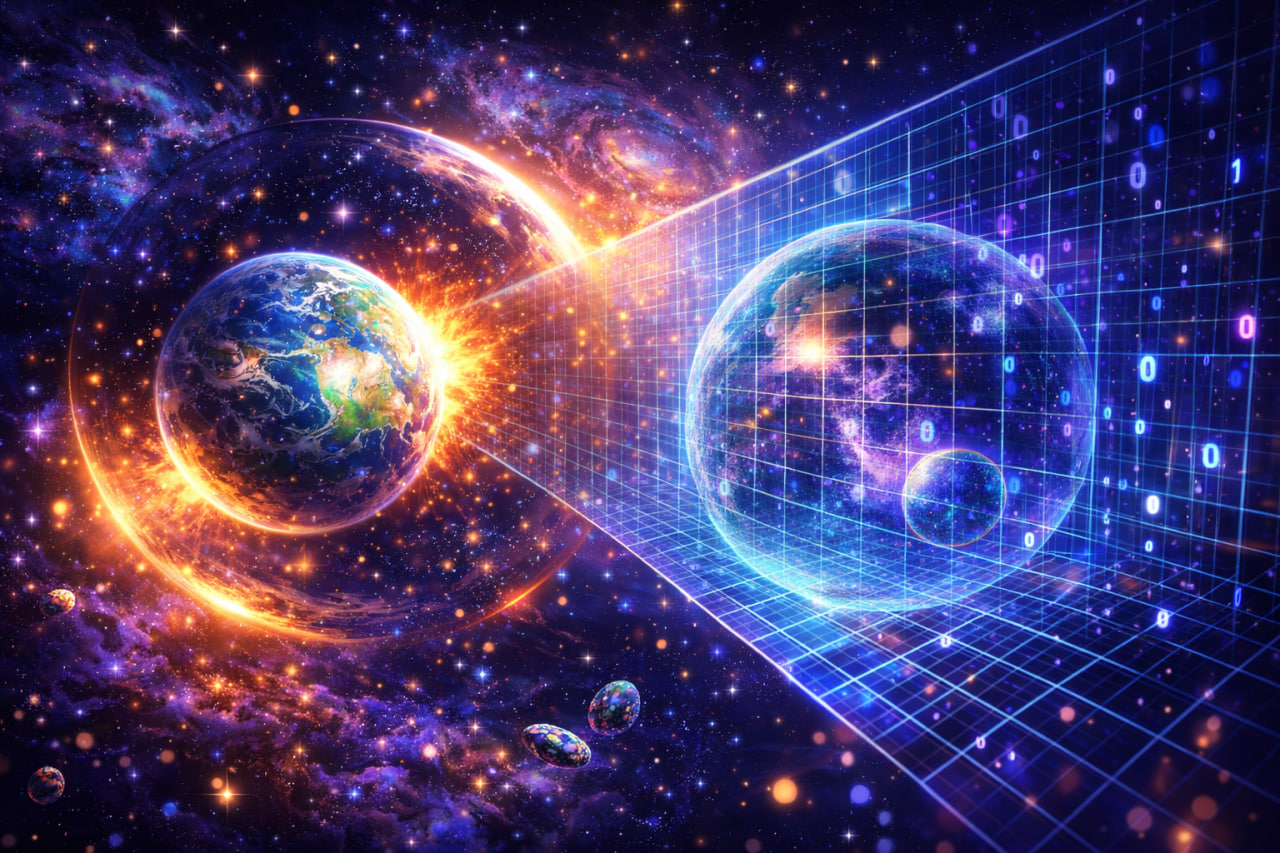
The Holographic Principle

The holographic principle is one of the most radical ideas in modern theoretical physics, proposing that all the information contained within a volume of space can be fully described by data encoded on its boundary. In simple terms, this means that a three-dimensional reality may emerge from information stored on a two-dimensional surface. What sounds like science fiction arises directly from attempts to reconcile gravity, quantum mechanics, and thermodynamics. The principle challenges everyday intuition about space, depth, and locality, forcing physicists to rethink what “inside” and “outside” truly mean. Over the past decades, the holographic principle has become a powerful conceptual tool in the search for a unified description of nature. Understanding it offers a glimpse into how reality itself may be structured at the deepest level.

Time Machines: Myths and Facts
History Science Be Smart

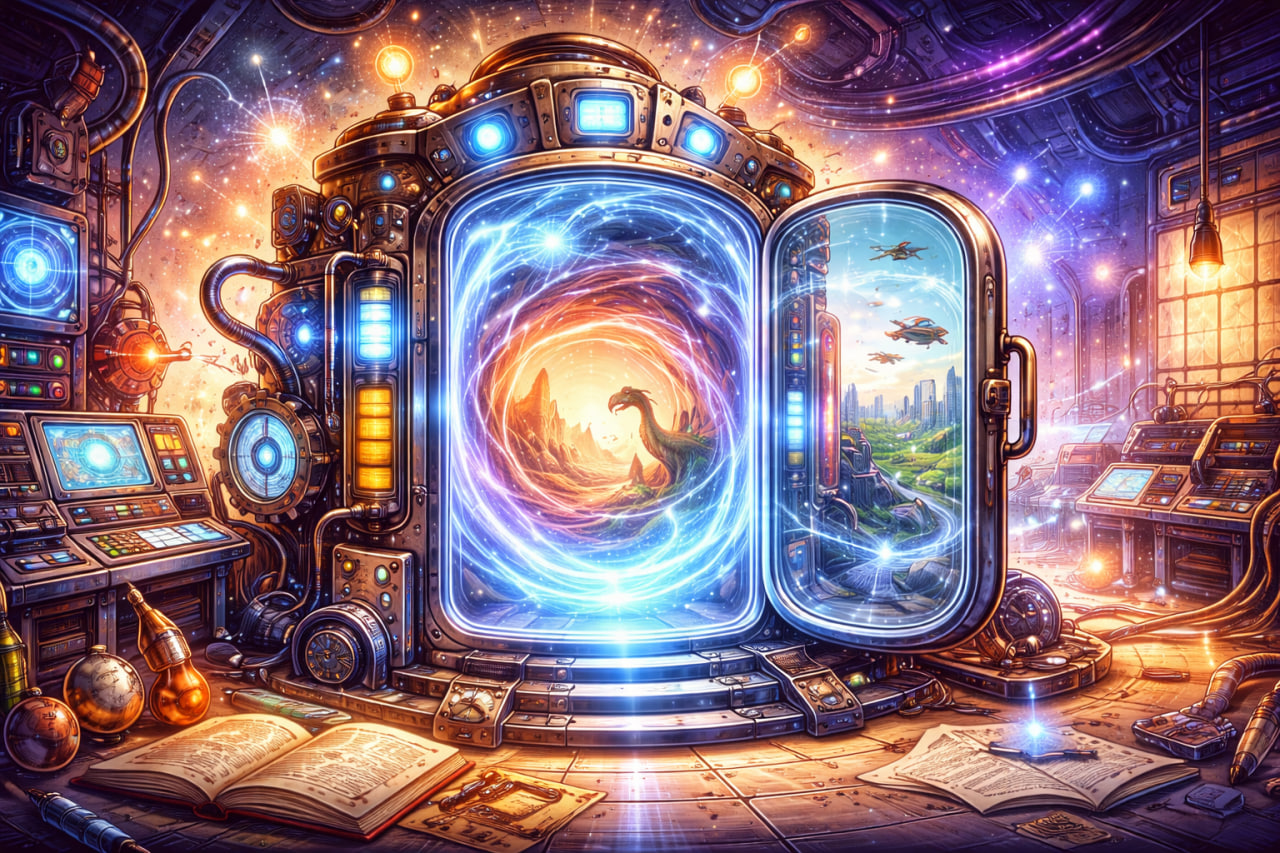
Time Machines: Myths and Facts

The idea of a time machine has fascinated humanity for centuries, appearing in myths, literature, and modern science fiction. The possibility of traveling into the past or future challenges our understanding of time, causality, and the laws of physics. While popular culture often presents time travel as a mechanical device with buttons and levers, real science treats time as a fundamental dimension governed by strict physical rules. Some concepts associated with time travel are rooted in legitimate physics, while others remain pure speculation. Distinguishing between what science actually allows and what belongs to imagination helps clarify why time machines remain elusive. Exploring these ideas reveals as much about human curiosity as it does about the structure of the universe.

Do We Know What Happens Inside a Black Hole — and Why Not?
Space Stories Universe New Discoveries

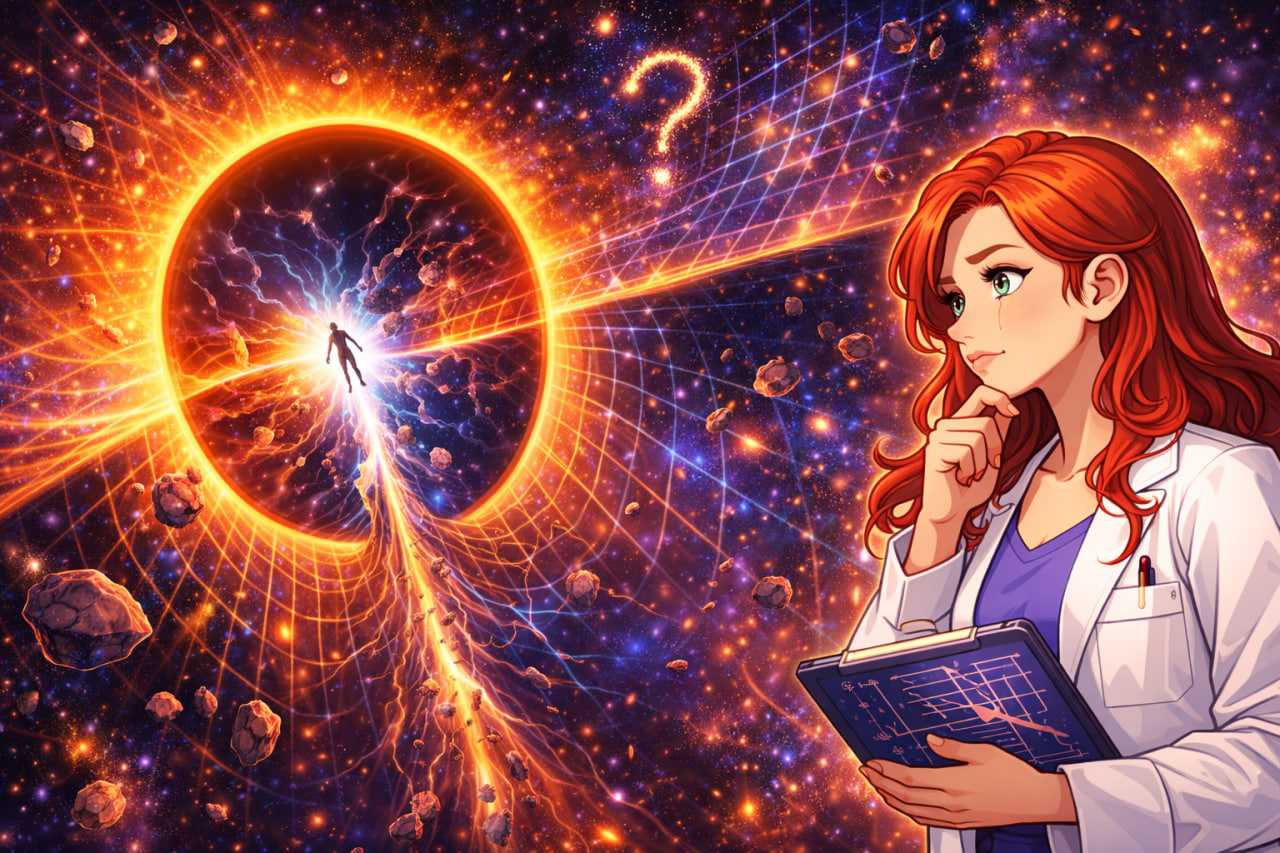
Do We Know What Happens Inside a Black Hole — and Why Not?

Black holes are among the most extreme objects in the universe, yet what happens inside them remains one of the greatest unanswered questions in physics. While modern science can describe black holes with remarkable precision from the outside, their interiors lie beyond direct observation and experimental testing. This limitation is not due to technological weakness alone, but to the fundamental structure of spacetime itself. The question is therefore not only what happens inside a black hole, but also why physics struggles to answer it. Understanding this distinction is crucial for separating knowledge from speculation.

Can Candy Be Useful Without Being Eaten?
Be Smart What if?

Can Candy Be Useful Without Being Eaten?

Candy is usually associated with taste, pleasure, and nutrition-free indulgence, but its usefulness does not end with consumption. Because candies are made from sugar, colorants, flavor compounds, and packaging materials, they can be repurposed in creative, educational, and practical ways. Throughout history, sugary substances have been used not only as food but also as tools, materials, and signals. When viewed from a non-culinary perspective, candy becomes a surprisingly versatile object. Exploring these alternative uses highlights how everyday items can serve functions beyond their original intent.

Conditions for Life: Can Life Not Be Carbon-Based?
Science Be Smart What if?

Conditions for Life: Can Life Not Be Carbon-Based?

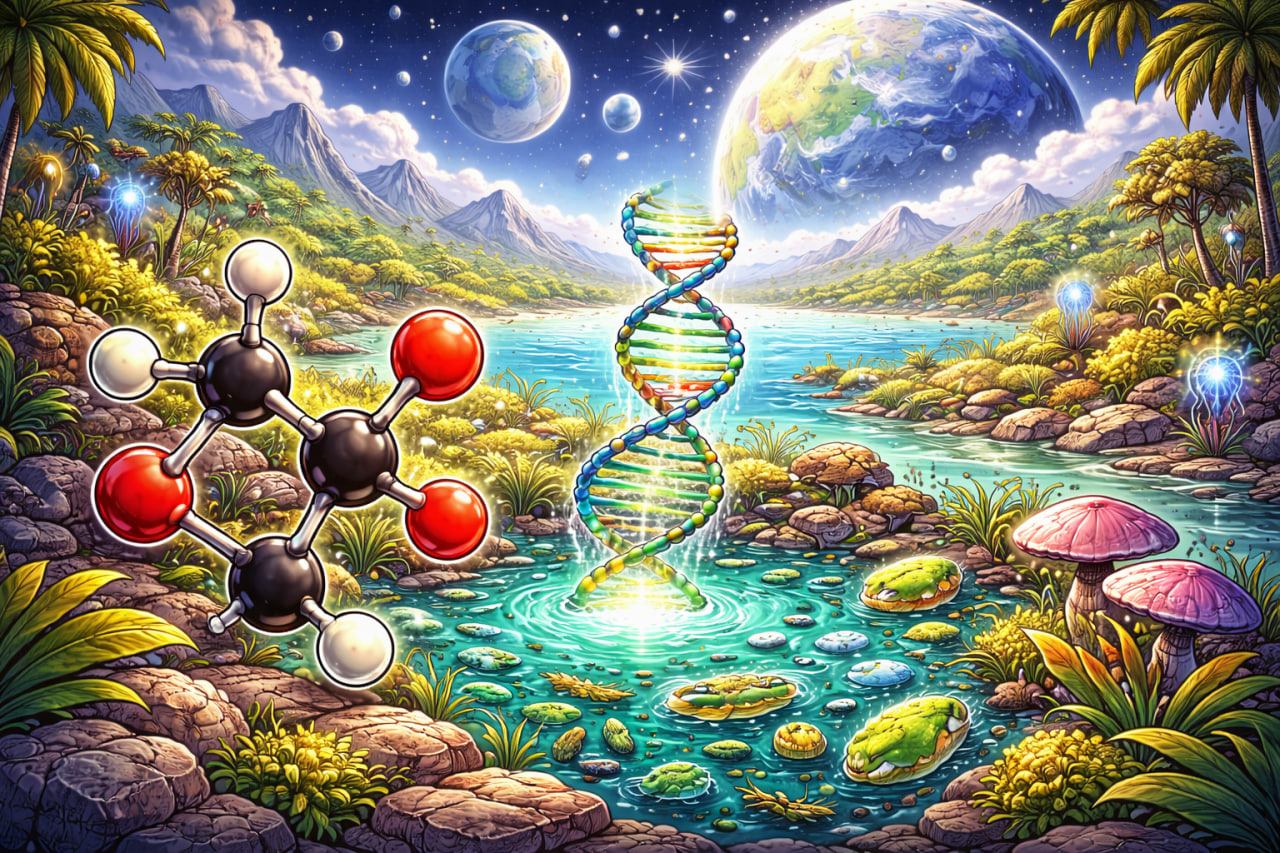
When scientists search for life beyond Earth, they begin with a fundamental question: what conditions are required for life to exist at all? While life on our planet offers only one example, it provides valuable clues about the chemistry and environments that make biology possible. Among these clues, carbon stands out as the central building block of all known living organisms. This has led to the widespread assumption that extraterrestrial life, if it exists, is also likely to be carbon-based. Exploring why carbon is so important—and whether alternatives are possible—helps define the boundaries of life as we understand it.