When we think of light, we usually imagine beams or waves. But in modern physics, light also behaves like a particle — and that particle is called a photon. A…
Life on Earth has evolved under the constant pull of gravity. But when astronauts travel into space, they experience microgravity, a condition in which gravity is so weak that objects…
The Sun is the central driver of nearly all natural processes on Earth. As the closest star to our planet, it provides the energy necessary for life, powers the weather…
Nuclear power plants generate electricity by harnessing the energy released from splitting atoms in a process called nuclear fission. Unlike fossil fuel plants, they do not burn anything, which means…
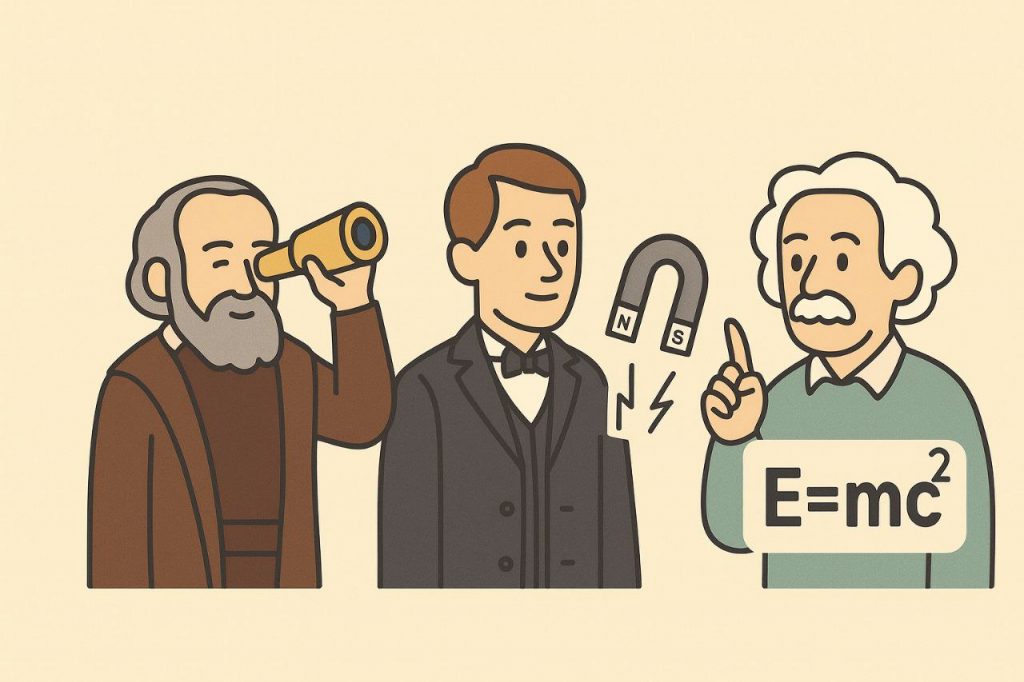
Albert Einstein was one of the most influential physicists in history. His theories transformed our understanding of space, time, and energy. Beyond his iconic status, Einstein made profound contributions to…
A rocket launch is one of the most powerful and complex technological achievements of modern science. Rockets are designed to overcome Earth’s gravity and carry payloads—such as satellites, telescopes, or…
A lunar eclipse is one of the most awe-inspiring celestial events visible from Earth. Unlike solar eclipses, which can only be seen from limited areas, lunar eclipses can be viewed…
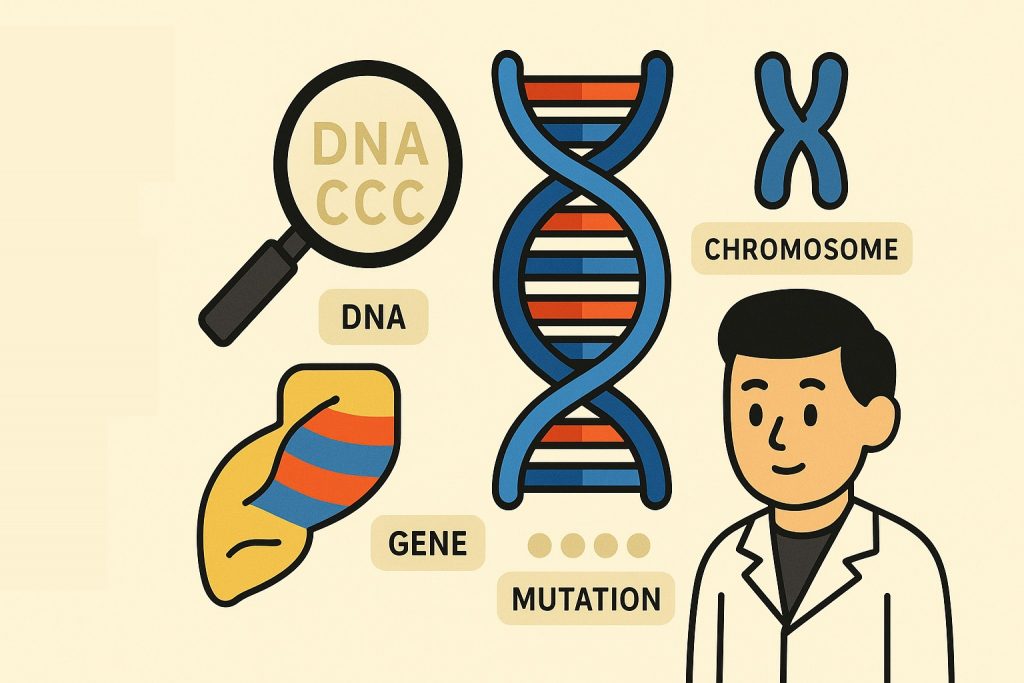
Genetics is the science that studies genes, DNA, and heredity—how traits are passed from one generation to the next. It is one of the most important fields in modern biology,…
The Solar System is a complex and dynamic system of planets, moons, asteroids, comets, and other celestial bodies orbiting our central star—the Sun. It’s our cosmic neighborhood, and its structure…
Metal-plastic is a composite material that combines the strength of metal with the flexibility and corrosion resistance of plastic. This hybrid material has revolutionized many industries, from construction and plumbing…