The idea of generating energy in space and transmitting it to Earth has long been associated with science fiction. However, in recent years, this concept—known as space-based solar power (SBSP)—has begun to move closer to reality. With rapid advances in satellite technology, wireless energy transmission, and materials science, scientists and engineers are seriously exploring whether energy from space could become a reliable and scalable source of clean power for the future.
What Is Space-Based Solar Power
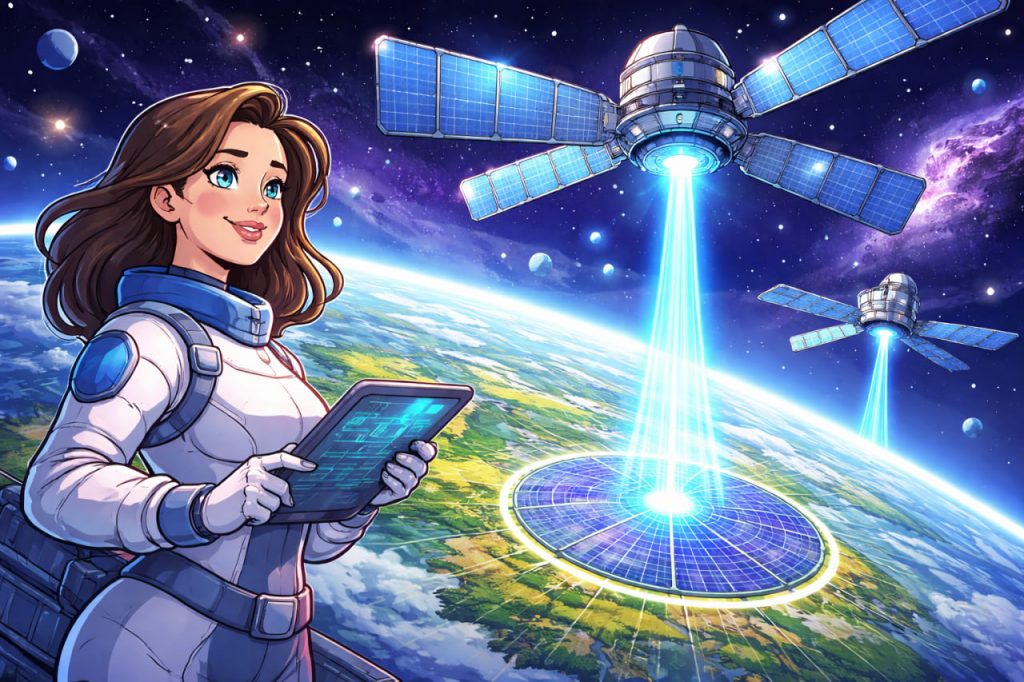
Space-based solar power involves placing solar panels in orbit, where they can collect sunlight continuously without interference from weather, clouds, or the day-night cycle. This energy is then converted and transmitted to Earth using microwaves or laser beams, where it is received and converted back into electricity.
As experts explain:
“Space offers uninterrupted access to solar energy, making it one of the most efficient environments for energy generation.”
Unlike ground-based solar panels, which depend on local conditions, orbital systems could provide constant energy supply.
Why Space Is Ideal for Energy Generation
In space, solar panels can capture sunlight almost 24 hours a day. There is no atmospheric absorption, meaning more energy reaches the panels compared to Earth. This makes the efficiency of space-based systems potentially much higher.
Additionally, orbital systems can be positioned to maximize exposure to sunlight, allowing for continuous and predictable energy production, which is a major advantage over many renewable sources.
How Energy Is Transmitted to Earth
One of the most critical challenges is transmitting energy safely and efficiently. The current concept involves converting electricity into microwave radiation, which is then directed toward receiving stations on Earth. These stations, called rectennas, convert the energy back into usable electricity.
Laser-based transmission is another possibility, though it presents additional technical challenges related to precision and safety.
Technological Challenges
Despite its promise, space-based solar power faces significant obstacles. Launching large structures into orbit is extremely expensive, and building systems that can operate reliably in space over long periods is complex.
There are also challenges related to energy transmission efficiency, infrastructure development, and environmental considerations. Ensuring that the transmitted energy does not interfere with ecosystems or communication systems is essential.
Current Progress and Experiments
Several space agencies and private companies are actively researching SBSP. Experimental missions have already demonstrated small-scale wireless energy transmission from space. While these tests are still in early stages, they show that the concept is technically feasible.
Potential Benefits
If successfully developed, space-based solar power could provide a nearly limitless source of clean energy. It could reduce dependence on fossil fuels and help stabilize energy supply across regions.
Is It the Future or Still a Dream
While the concept is no longer purely theoretical, large-scale implementation is still years away. The technology continues to evolve, and many challenges remain to be solved. However, the steady progress suggests that what once seemed impossible may become part of the future energy landscape.
A New Frontier of Energy
Space-based solar power represents a bold vision of how humanity might harness energy beyond Earth. It reflects the growing need for sustainable solutions and the willingness to explore innovative approaches. Whether it becomes a global energy system or remains a niche technology, it highlights the incredible potential of combining space exploration with energy science.
Interesting Facts
- Space-based solar panels can receive sunlight almost continuously.
- There is no atmospheric loss, increasing energy efficiency.
- Energy can be transmitted using microwaves or lasers.
- Experimental systems have already been tested in orbit.
- The concept could provide stable and large-scale clean energy.
Glossary
- Space-Based Solar Power (SBSP) — energy generated in space and sent to Earth.
- Microwave Transmission — method of sending energy via electromagnetic waves.
- Rectenna — a device that converts microwave energy into electricity.
- Orbit — the path of an object around Earth.
- Solar Radiation — energy emitted by the Sun.