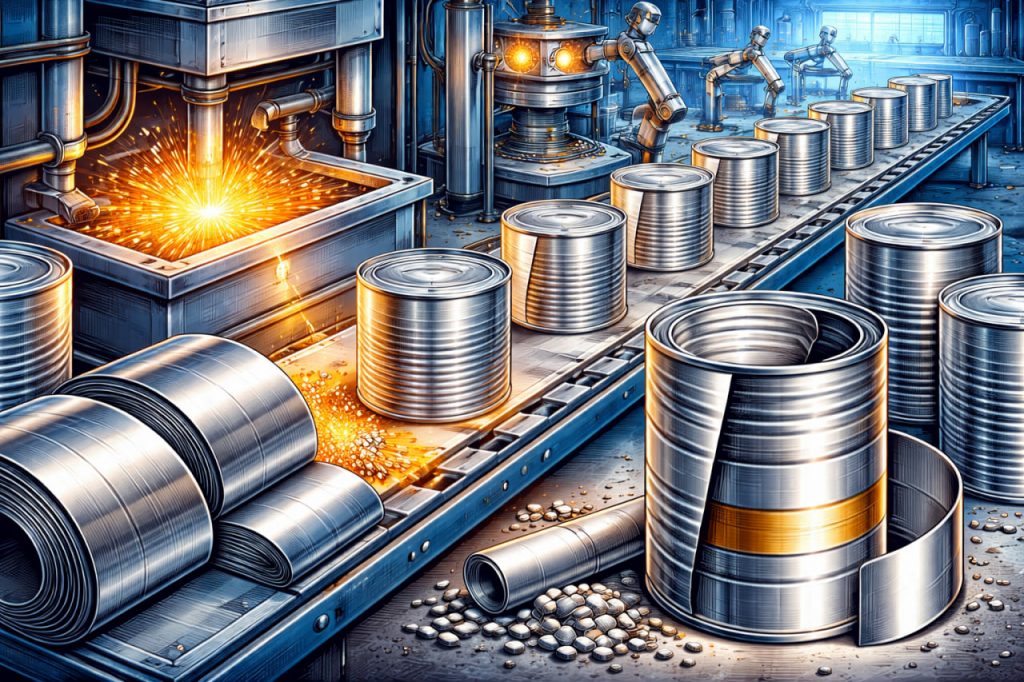
Metal cans are a common part of everyday life, used to store food, drinks, and many other products. Despite their simple appearance, they are made using carefully engineered materials designed to preserve contents and ensure safety. Most traditional food cans are made from a material called tinplate, which is steel coated with a thin layer of tin. This combination provides both strength and resistance to corrosion. Over time, manufacturing methods have improved to make cans lighter, safer, and more efficient. Understanding what cans are made of helps explain why they are so widely used. It also shows how materials science plays a role in everyday objects.
What Is Tinplate
Tinplate is a type of material consisting of thin sheets of steel coated with a layer of tin. Steel provides strength and durability, while tin acts as a protective barrier against rust and chemical reactions. Materials engineer Dr. Andrew Collins explains:
“Tin coating prevents steel from reacting with food
and protects it from corrosion.”
The tin layer is very thin but highly effective. It prevents the contents of the can from interacting with the metal. This helps maintain the taste and safety of food. Tinplate has been used for over a century in food packaging.
How Cans Are Made
The production of cans begins with large sheets of steel that are rolled into thin layers. These sheets are then coated with tin through an electrochemical process. After coating, the metal is cut and shaped into cylindrical forms. The edges are sealed to create an airtight container. Inside the can, an additional protective coating is often applied to prevent direct contact between food and metal. This is especially important for acidic foods like tomatoes. The final product is lightweight, strong, and resistant to damage.
Are All Cans Made the Same Way?
Not all cans are made from tinplate. Many beverage cans, such as those used for soft drinks, are made from aluminum. Aluminum is lighter and does not require a tin coating because it naturally resists corrosion. Steel cans are more common for food, while aluminum is preferred for drinks. Each material has its own advantages depending on the use. This variety allows manufacturers to choose the best option for different products. Both types are widely used and safe.
Safety and Food Protection
Modern cans are designed to be safe for long-term food storage. In addition to the tin coating, most cans have a internal protective coating made from food-safe materials. This layer prevents any interaction between the metal and the food. It also helps preserve flavor and nutritional quality. Strict regulations ensure that materials used in cans are safe for consumers. Proper sealing prevents bacteria from entering. This is why canned food can last for long periods.
Why Tinplate Is Still Used
Despite the availability of new materials, tinplate remains widely used. It offers a balance of strength, cost, and protection. Steel is strong and resistant to damage during transport. Tin provides reliable corrosion resistance. The material is also recyclable, making it environmentally friendly. Advances in technology continue to improve its performance. Tinplate remains one of the most practical materials for packaging.
Conclusion
Cans may look simple, but they are the result of advanced material engineering. Most food cans are made from tinplate, combining steel and tin for strength and protection. Other cans, such as beverage containers, are made from aluminum. Each material is chosen for specific properties and uses. Understanding how cans are made highlights the importance of science in everyday life. It also shows how small details contribute to safety and convenience. Even ordinary objects can have complex and fascinating designs.
Interesting Facts
- Tin coating is extremely thin but highly effective
- Steel cans are widely used for food storage
- Aluminum cans are lighter and used for drinks
- Most cans are fully recyclable
- Internal coatings protect food from metal contact
Glossary
- Tinplate — steel coated with tin
- Aluminum — lightweight metal used in cans
- Coating — protective layer on material
- Recycling — reuse of materials