In the digital age, millions of people purchase movies, games, books, software, music, and online services every day. But an important question is increasingly being asked by consumers, legal experts, and technologists alike: do people truly own digital products they buy online, or are they merely renting access under strict corporate control?
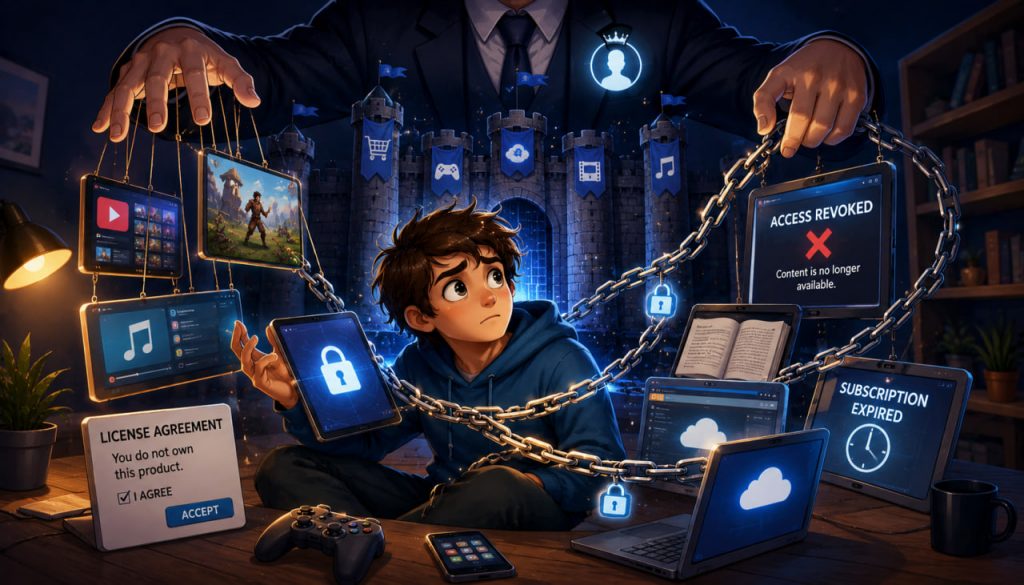
This issue has become central to a growing concept often called digital feudalism — a system where large technology platforms control access to digital property, while users possess limited rights over what they supposedly “own.”
Unlike physical goods, digital purchases often exist inside ecosystems controlled by companies that can modify, restrict, or even revoke access at any time.
What Is Digital Feudalism?
The term “digital feudalism” is used to describe a modern digital economy where users depend heavily on powerful online platforms for access to products, communication, and information.
Historically, feudalism involved people relying on landowners who controlled resources and rights. In the digital world, platforms and corporations may occupy a similar role by controlling:
- Digital marketplaces
- User accounts
- Cloud services
- Software ecosystems
- Online identities
Consumers may pay for products, yet still remain dependent on the rules and infrastructure of the platform provider.
Why Digital Ownership Is Different
When you buy a physical book, you fully own it. You can:
- Keep it forever
- Resell it
- Lend it to others
- Use it without permission from the publisher
Digital products often work differently.
In many cases, users do not actually purchase ownership. Instead, they receive a license — legal permission to access or use content under specific conditions.
This distinction is extremely important.
For example:
- An online game can disappear if servers shut down
- Digital movies may be removed from accounts
- Software access can end if subscriptions expire
The product may feel owned, but legally it often remains under corporate control.
The Rise of Subscription Culture
One major reason digital ownership is changing is the growth of subscription-based services.
Today, consumers increasingly pay monthly fees for:
- Streaming platforms
- Cloud storage
- Software tools
- Online gaming services
This model provides convenience, but also shifts power away from consumers.
Instead of permanently owning products, users rent temporary access controlled by centralized platforms.
Can Companies Remove Purchased Content?
In some situations, yes.
There have been cases where:
- Digital books disappeared from devices
- Online games became inaccessible
- Purchased media licenses were revoked
This happens because digital ecosystems rely on servers, authentication systems, and legal agreements controlled by companies.
Consumers may discover that what they believed they owned exists only while the platform allows access.
Technology writer Cory Doctorow has criticized this trend, arguing:
“If you can’t open it, repair it, modify it, or keep using it independently, you don’t truly own it.”
This statement reflects growing concern about the limits of digital ownership.
The Problem With Closed Ecosystems
Many modern devices and services operate inside tightly controlled ecosystems.
Examples include:
- Locked app stores
- Proprietary file formats
- Restricted repair access
- Platform-dependent software
These systems create convenience, but they also increase dependence on specific companies.
Switching platforms can become difficult because users risk losing:
- Purchases
- Data
- Compatibility
- Access to digital libraries
Digital Rights and Consumer Protection
Governments and legal experts are increasingly debating how digital ownership should work.
Important questions include:
- Should users have permanent access to purchased digital goods?
- Should companies be allowed to disable products remotely?
- Do consumers deserve repair and modification rights?
Some regions have introduced:
- Right-to-repair laws
- Data portability regulations
- Consumer protection rules for digital purchases
However, laws still struggle to keep pace with technological change.
Cloud Computing and Dependency
Modern digital life increasingly depends on the cloud — remote servers operated by companies.
This affects:
- Documents
- Photos
- Games
- Artificial intelligence tools
- Smart home systems
The advantage is convenience and synchronization across devices. The disadvantage is dependence on internet access and platform stability.
If a service closes, users may lose access to years of digital content.
Are NFTs and Blockchain a Solution?
Some people believe decentralized technologies such as blockchain could restore digital ownership.
Blockchain-based systems may allow:
- Direct ownership verification
- Decentralized storage
- Transferable digital assets
However, these technologies also face challenges:
- Scalability
- Security risks
- Environmental concerns
- Speculation and fraud
The future role of decentralized ownership remains uncertain.
Why This Issue Matters
Digital ownership is becoming one of the defining economic and legal questions of the modern era.
As more aspects of life move online, control over digital property affects:
- Personal freedom
- Consumer rights
- Cultural preservation
- Economic power
The shift from ownership to licensed access could fundamentally change the relationship between individuals and technology companies.
The Future of Digital Ownership
Experts predict that future debates will focus on finding balance between:
- Corporate innovation
- Consumer rights
- Security
- Long-term digital access
People may increasingly demand systems that provide:
- Greater transparency
- More user control
- Interoperability between platforms
- Permanent access to purchased content
The outcome could shape the future structure of the digital economy itself.
Interesting Facts
- Many digital purchases are legally classified as licenses rather than owned products.
- Some online games become permanently unplayable after server shutdowns.
- Streaming services regularly remove movies and shows from their libraries.
- Right-to-repair movements are growing worldwide.
- Cloud-based software has dramatically increased over the past decade.
Glossary
- Digital License — Legal permission to use digital content under certain conditions.
- Cloud Computing — Using remote internet servers to store and process data.
- Closed Ecosystem — A tightly controlled digital platform with limited external access.
- Right to Repair — The idea that consumers should be able to repair and modify products they own.
- Blockchain — A decentralized digital record system used to verify transactions and ownership.