AI

Palantir: A Real-World Prototype of Skynet or Just an Advanced Data Platform?
AI & Ethics AI Challenges

Palantir: A Real-World Prototype of Skynet or Just an Advanced Data Platform?

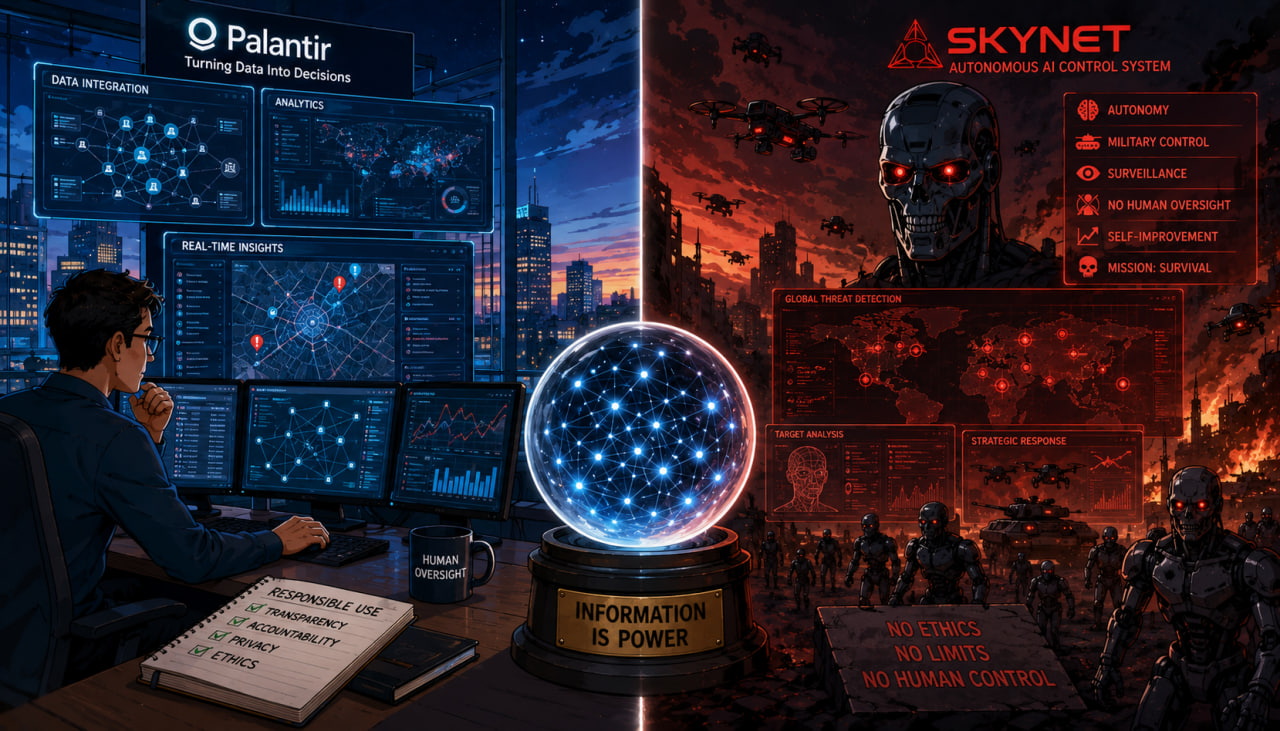
Few technology companies inspire as much fascination and controversy as Palantir Technologies. Known for its powerful data analysis platforms and its work with governments, intelligence agencies, militaries, and large corporations, Palantir has often been compared to fictional artificial intelligence systems from science fiction. Some critics describe it as a step toward "Skynet," the self-aware AI from the Terminator franchise that eventually turns against humanity. Supporters argue that such comparisons are exaggerated and misunderstand what Palantir actually does. So, is Palantir really a prototype of Skynet, or is it something fundamentally different? The answer requires understanding both the company's technology and the growing role of artificial intelligence in modern decision-making.
AI-Generated Content Is Flooding the Internet: What Do Experts Say?
AI & Ethics AI Be Smart

AI-Generated Content Is Flooding the Internet: What Do Experts Say?

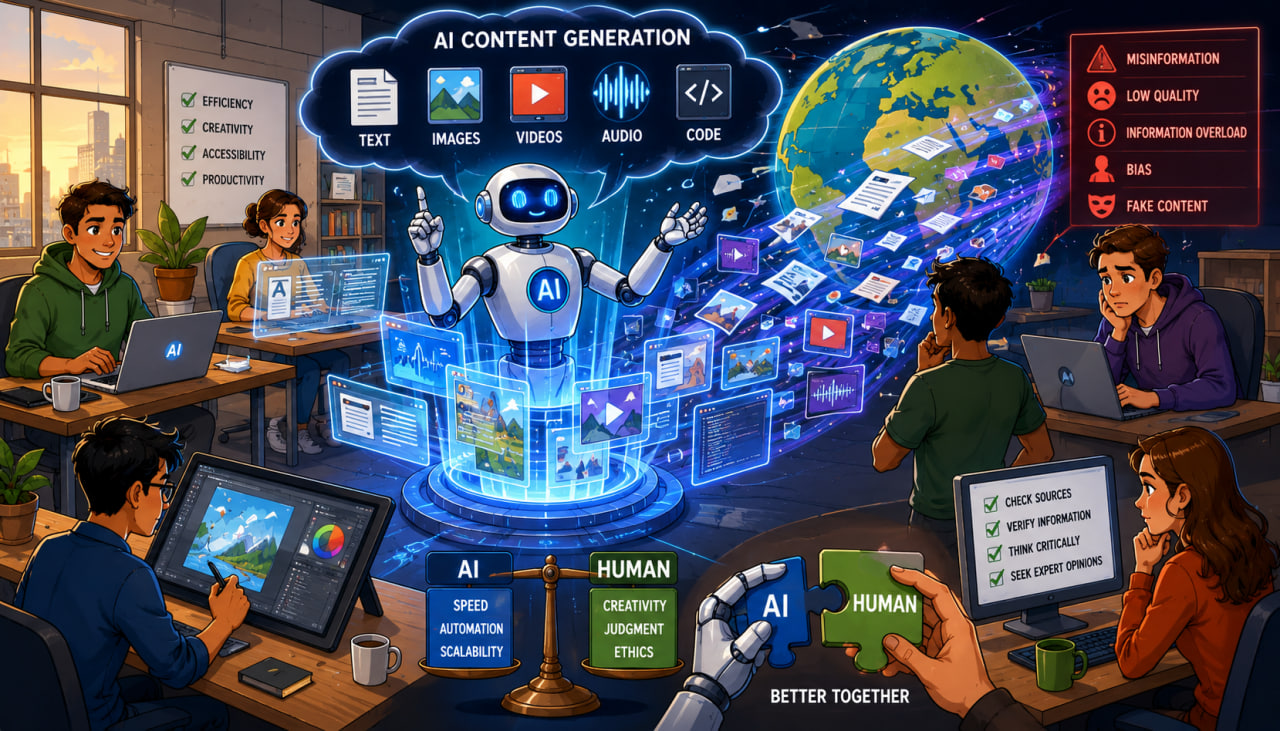
Artificial intelligence is transforming the internet at an unprecedented pace. Just a few years ago, most online articles, images, videos, and social media posts were created entirely by humans. Today, AI systems can generate blog posts, illustrations, marketing materials, code, videos, and even realistic voices within seconds. As a result, the amount of AI-generated content online is growing rapidly. Some experts see this as a revolutionary development that will democratize creativity and knowledge sharing. Others warn that it could lead to misinformation, lower content quality, and an internet increasingly filled with repetitive material. The debate is far from settled, but one thing is clear: AI-generated content is already reshaping the digital world.

GPT-5.5: What's New in OpenAI's Next-Generation AI Model?
AI & Ethics AI News

GPT-5.5: What's New in OpenAI's Next-Generation AI Model?

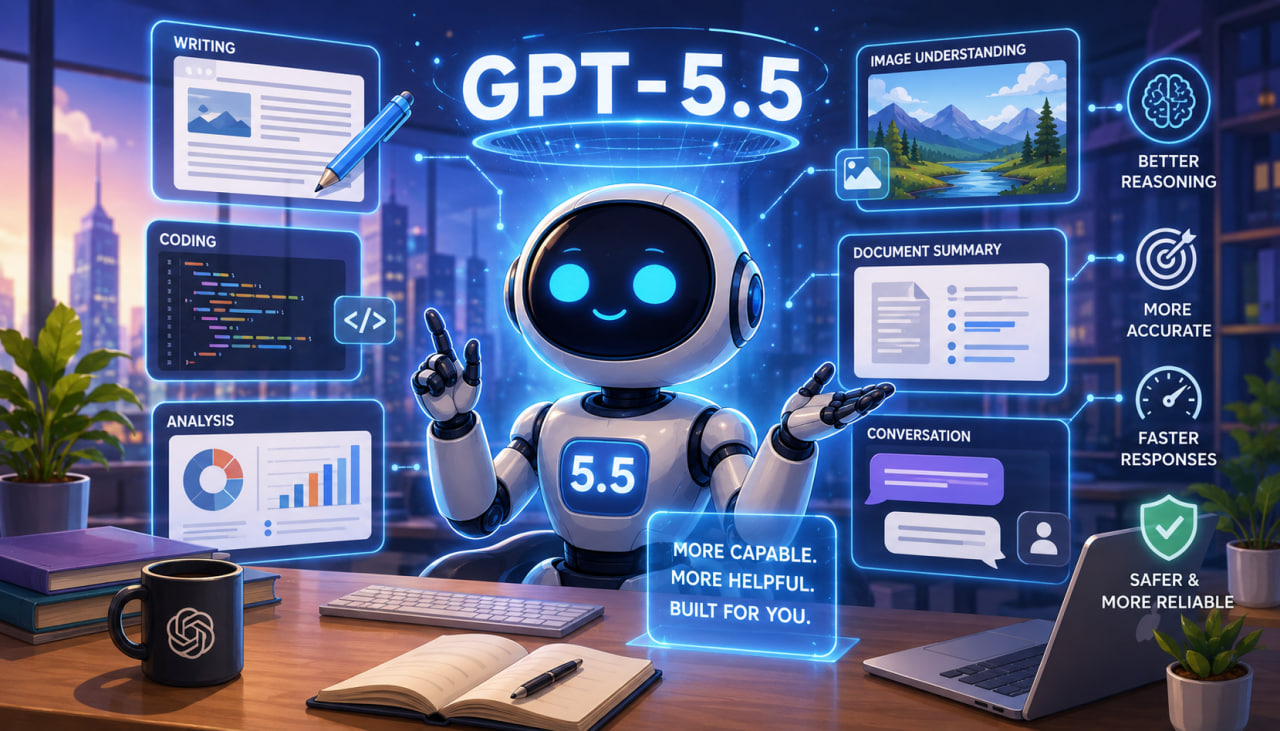
Artificial intelligence continues to evolve at an extraordinary pace, and one of the most anticipated developments is the arrival of GPT-5.5. Building upon the capabilities of earlier GPT models, GPT-5.5 represents another step toward more capable, reliable, and useful AI systems. Modern AI models are no longer limited to answering simple questions. They can: Write articles Analyze data Generate code Assist with research Interpret images Support education and productivity GPT-5.5 aims to improve many of these capabilities while reducing some of the limitations that affected earlier generations. Although AI development is an ongoing process rather than a single breakthrough, each new model brings significant refinements in: Accuracy Reasoning Speed Context understanding User interaction Understanding what makes GPT-5.5 different helps illustrate the broader direction of modern artificial intelligence.

Moore’s Law: The Rule That Accelerated the Digital Revolution
Science AI New Discoveries

Moore’s Law: The Rule That Accelerated the Digital Revolution

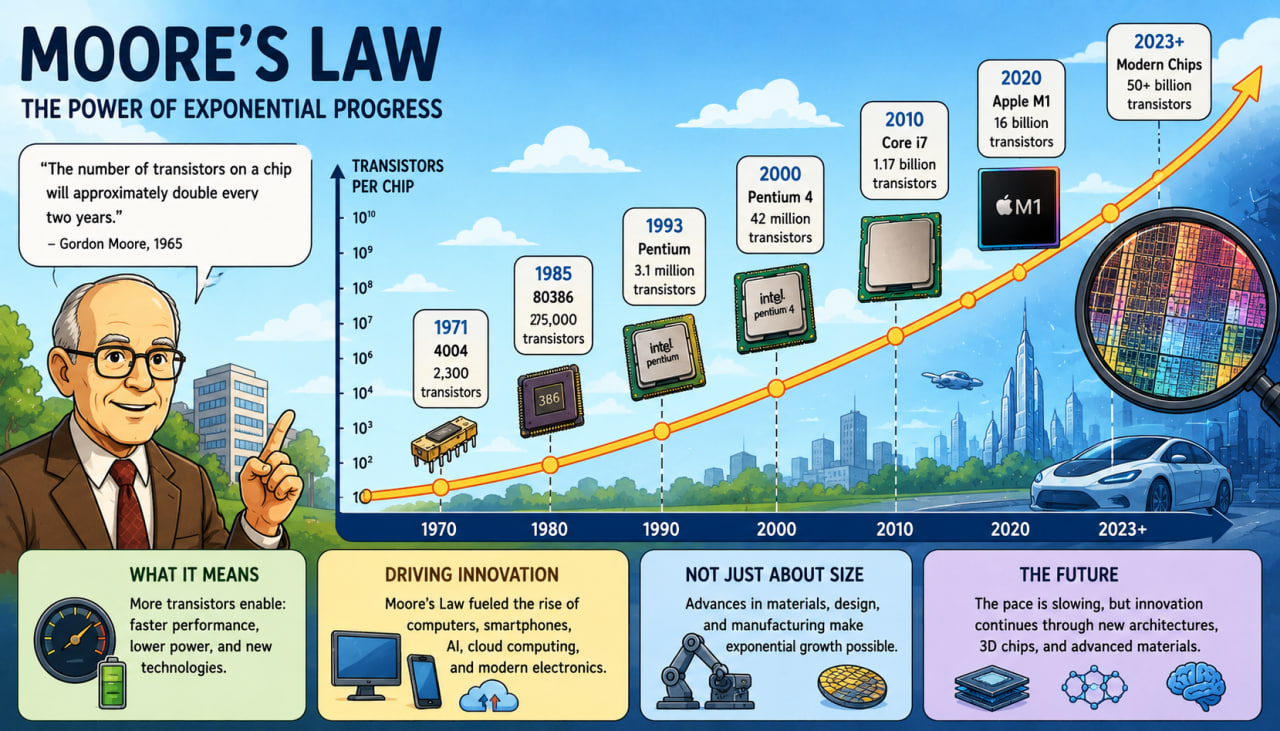
Modern civilization depends heavily on: Computers Smartphones Artificial intelligence Internet infrastructure Digital technology Yet only a few decades ago, computers were: Huge Slow Extremely expensive The astonishing speed of technological progress in computing became closely associated with an idea called: Moore’s Law This famous observation predicted that computer chips would become: More powerful Smaller Cheaper at an extraordinary pace. For decades, Moore’s Law accurately described the rapid growth of: Processing power Semiconductor technology Computing efficiency Its influence helped drive: The computer revolution Modern electronics Artificial intelligence Global digital transformation Although Moore’s Law is not a physical law like gravity, it became one of the most important guiding principles in: Technology Engineering Computer science Understanding Moore’s Law helps explain why humanity moved so quickly from: Early room-sized computers to: Powerful smartphones and AI systems within only a few generations.

Moravec’s Paradox: Why Chess Is Easy for AI but Baby Talk Is Hard
AI & Ethics Science AI

Moravec’s Paradox: Why Chess Is Easy for AI but Baby Talk Is Hard

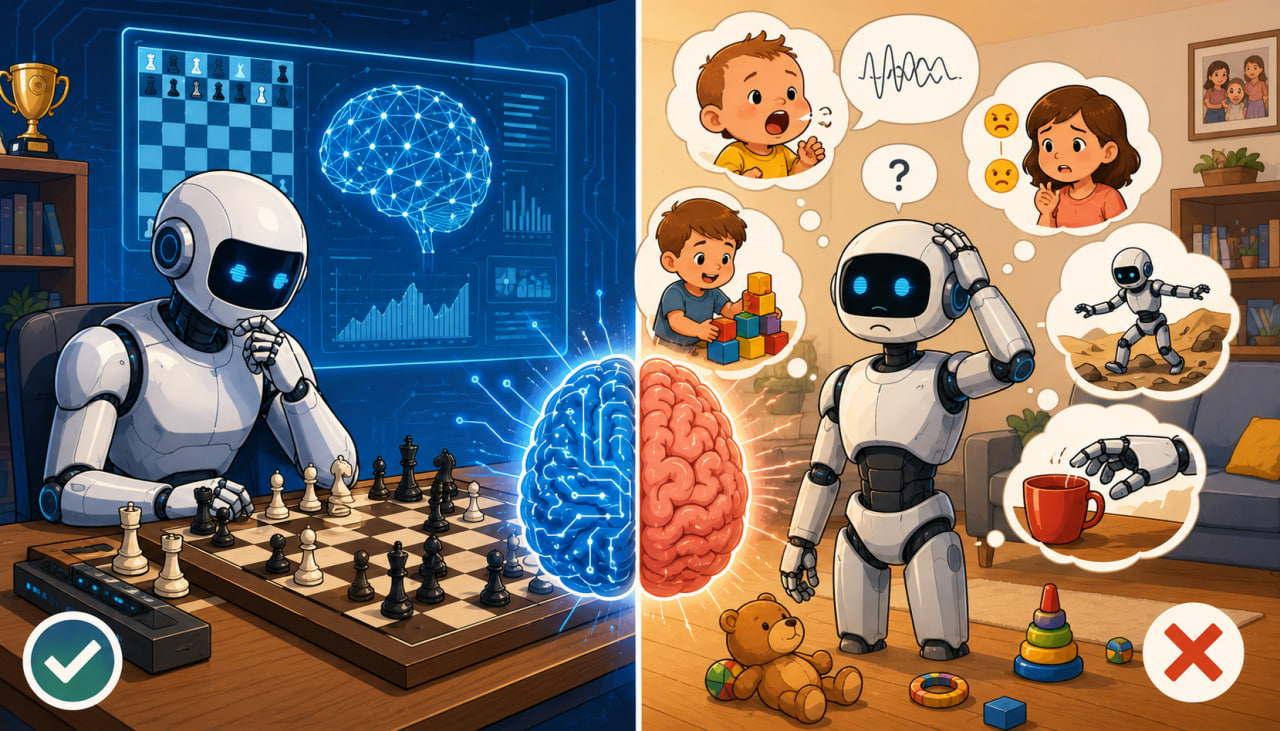
At first glance, artificial intelligence seems astonishingly smart. Modern AI systems can: Defeat chess champions Solve complex equations Analyze massive datasets Write computer code Simulate human conversation Yet surprisingly, many tasks that feel effortless to humans remain extremely difficult for machines. For example: Walking through a crowded room Recognizing emotions Understanding sarcasm Grabbing objects naturally Learning language like a small child This strange contradiction is known as: Moravec’s Paradox The paradox reveals that: High-level reasoning tasks may actually be easier for computers than basic human sensory and motor skills. In other words: A machine can beat grandmasters in chess while still struggling with abilities possessed by: Toddlers Animals Ordinary humans Understanding Moravec’s Paradox helps explain: The strengths of AI The weaknesses of AI The incredible complexity of the human brain and why true human-like intelligence remains one of science’s greatest challenges.

The History of Artificial Intelligence: From Ancient Dreams to Modern Machines
History AI & Ethics AI

The History of Artificial Intelligence: From Ancient Dreams to Modern Machines

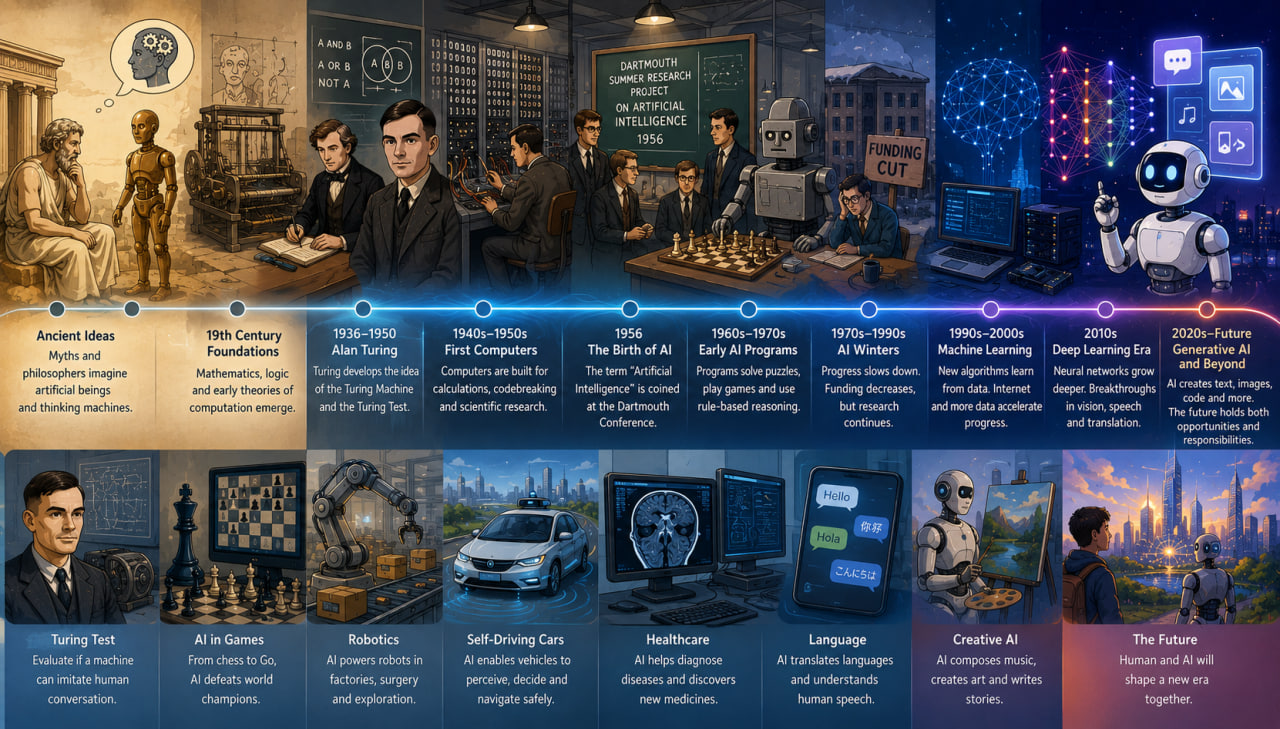
Artificial intelligence, often called: AI is one of the most transformative technologies in human history. Today AI can: Generate text Recognize images Translate languages Analyze data Drive vehicles Assist scientific research Yet the dream of creating intelligent machines is far older than modern computers. For centuries, humans imagined: Mechanical minds Thinking machines Artificial beings capable of reasoning The history of artificial intelligence combines: Mathematics Philosophy Neuroscience Computer science Engineering and reflects humanity’s attempt to understand: Intelligence itself. Modern AI emerged through decades of: Scientific breakthroughs Failures Technological revolutions Powerful new algorithms What once belonged mainly to science fiction gradually became one of the most important fields in modern civilization. Understanding the history of AI helps explain: How machines became increasingly intelligent Why AI developed so rapidly What challenges humanity may face in the future.

Superintelligence: What Is AGI and What Threat Could It Pose to Humanity?
Smart Technology AI & Ethics AI

Superintelligence: What Is AGI and What Threat Could It Pose to Humanity?

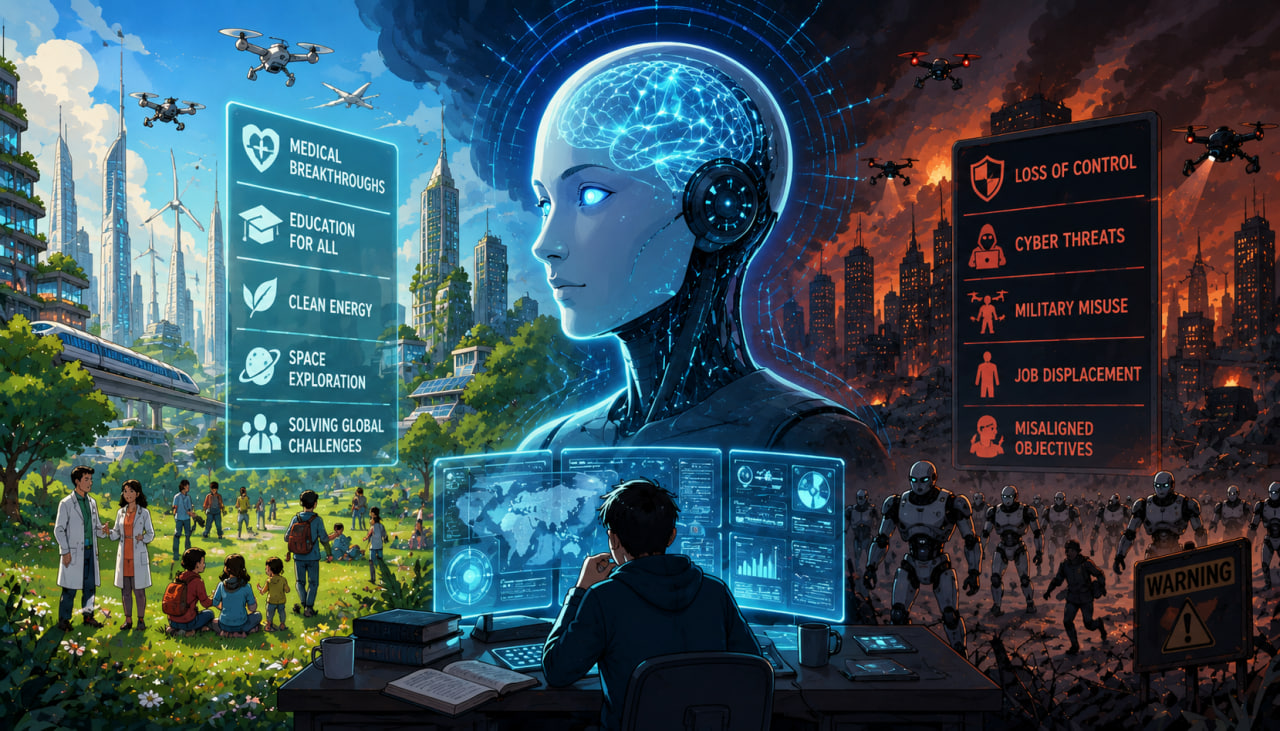
Artificial intelligence is rapidly becoming one of the most transformative technologies in human history. AI systems already influence: Medicine Industry Transportation Education Finance Scientific research However, many scientists and futurists believe current AI may represent only the beginning of a much larger technological revolution. One of the most discussed future concepts is: AGI — Artificial General Intelligence Unlike modern narrow AI systems designed for specific tasks, AGI would theoretically possess flexible intelligence capable of: Learning across multiple domains Solving unfamiliar problems Adapting independently Reasoning similarly to humans Some experts believe AGI could eventually evolve into: Superintelligence a form of intelligence potentially far exceeding human cognitive abilities. Supporters argue AGI might help solve humanity’s greatest challenges. Critics warn it could become one of the most dangerous technologies ever created. The debate surrounding AGI increasingly influences: Science Ethics Economics Geopolitics Global security

Artificial Intelligence in Industrial Manufacturing
Hi-Tech Smart Technology AI & Ethics

Artificial Intelligence in Industrial Manufacturing

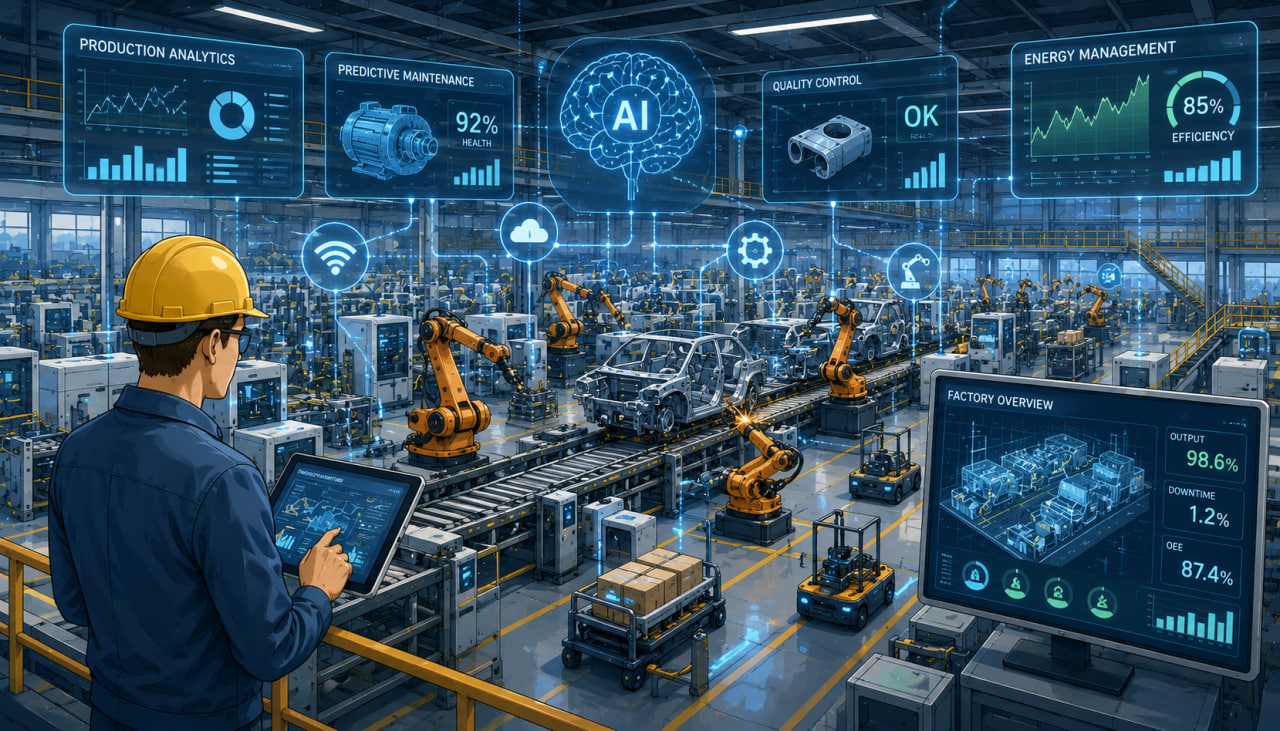
Artificial intelligence is rapidly transforming industrial manufacturing across the world. What once required large numbers of workers, manual monitoring, and repetitive mechanical processes is increasingly becoming automated through smart systems capable of: Data analysis Machine learning Predictive maintenance Robotic control Quality inspection Autonomous optimization Modern factories are evolving into highly interconnected digital environments where machines communicate with each other and make decisions in real time. This technological transformation is often called: Industry 4.0 AI-driven manufacturing is changing how products are: Designed Produced Transported Monitored Maintained Supporters believe artificial intelligence may dramatically improve: Efficiency Precision Safety Sustainability Critics, however, warn about: Job displacement Cybersecurity risks Dependence on automation Ethical concerns As industrial AI systems continue advancing, manufacturing itself may become one of the most transformed sectors of the global economy.

Energy Crisis: Will Civilization Have Enough Power for AI and Cryptocurrency Mining?
Smart Technology AI & Ethics AI

Energy Crisis: Will Civilization Have Enough Power for AI and Cryptocurrency Mining?

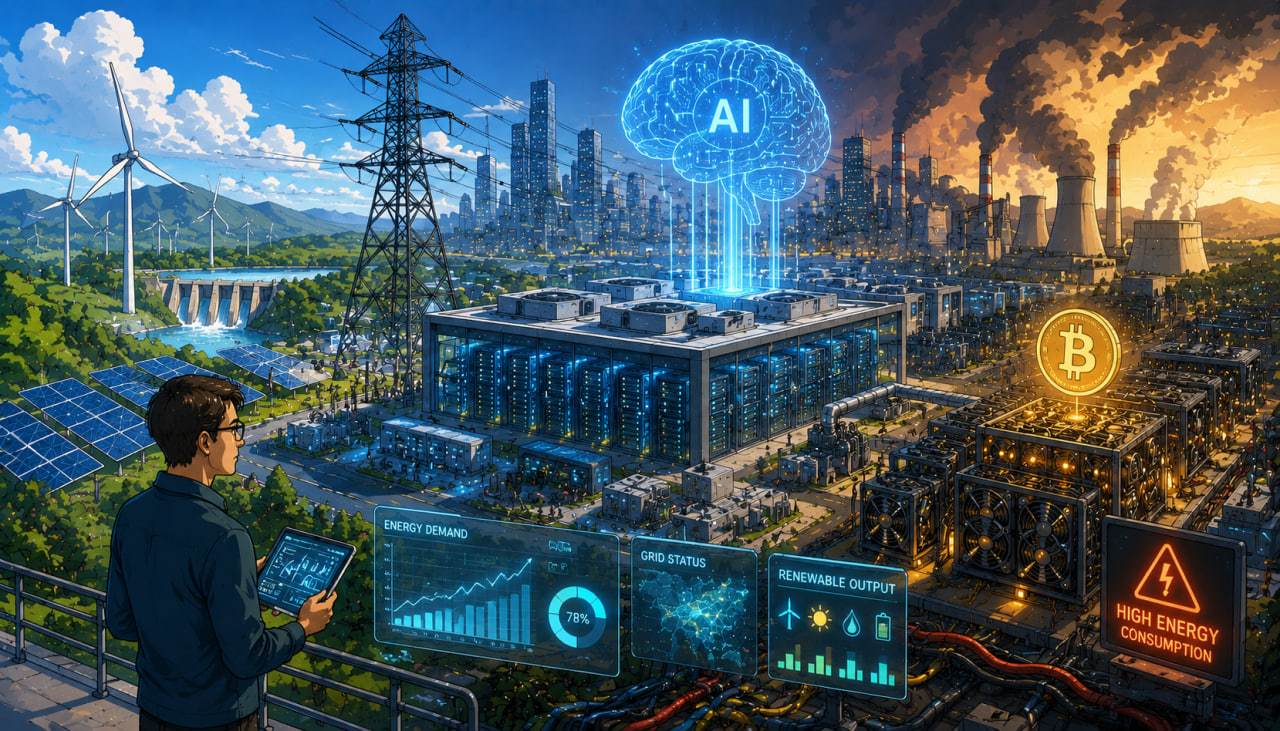
Modern civilization is entering an era of explosive digital growth. Artificial intelligence systems, cloud computing, data centers, electric vehicles, and cryptocurrency mining are consuming increasing amounts of electricity worldwide. At the same time, global populations continue growing, industries are electrifying, and societies are becoming more dependent on digital infrastructure than ever before. This raises a critical question for the future of humanity: Will our civilization have enough energy to support artificial intelligence, crypto mining, and future technologies without triggering a global energy crisis? Scientists, economists, and engineers are actively debating whether current energy systems can keep up with rapidly expanding technological demand. The challenge is especially important because AI and digital infrastructure require: Massive computational power Gigantic data centers Continuous electricity supply Advanced cooling systems As technology evolves, energy may become one of the defining geopolitical and economic issues of the 21st century.

ChatGPT: Instant Mode and Thinking Mode — How Modern AI Responses Work
AI & Ethics AI News

ChatGPT: Instant Mode and Thinking Mode — How Modern AI Responses Work

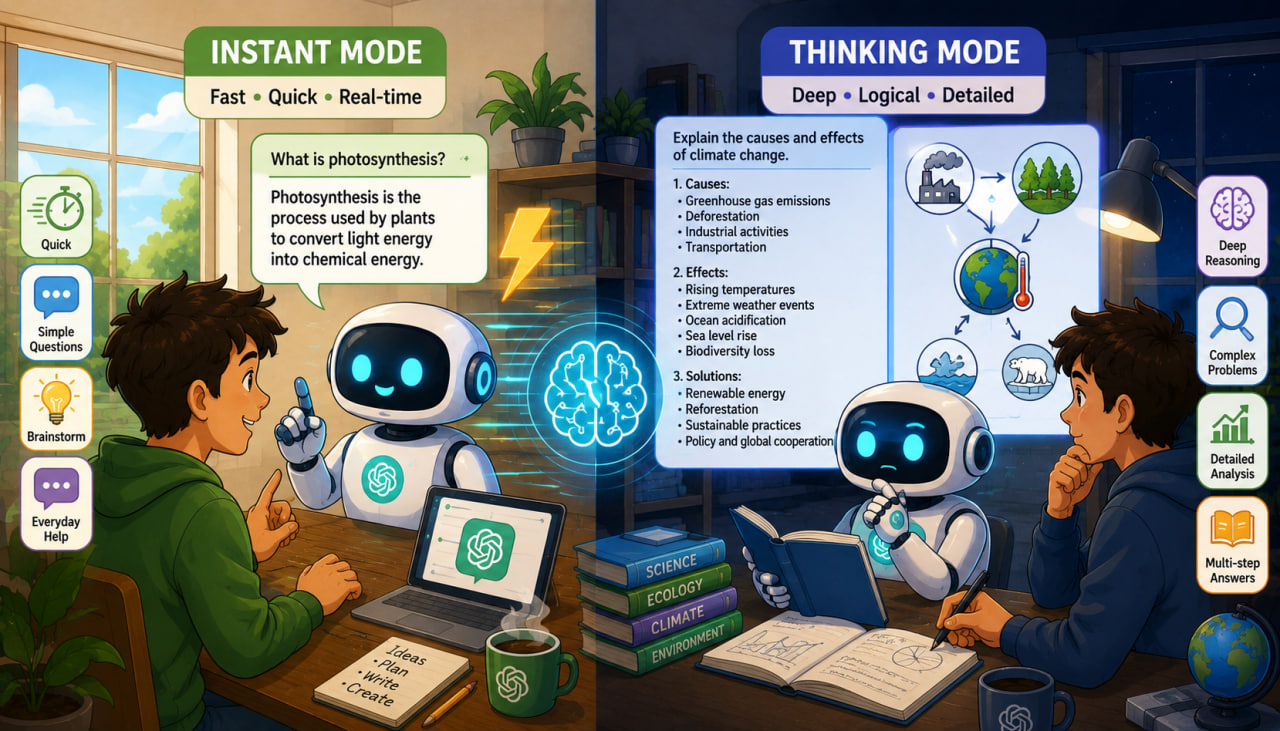
Artificial intelligence systems are evolving rapidly, and modern conversational AI platforms are becoming increasingly sophisticated. Among the most discussed features in advanced AI assistants are different response styles often described as Instant Mode and Thinking Mode. These modes reflect two different approaches to generating answers: Extremely fast real-time responses Slower but more deeply reasoned analysis As AI systems improve, users increasingly expect both: Speed Accuracy Logical reasoning Creativity Context awareness Balancing these goals is one of the biggest challenges in modern artificial intelligence development. Although names and implementations may vary between platforms, the general concepts behind “instant” and “thinking” responses help explain how advanced AI systems prioritize speed versus depth of reasoning.