Be Smart

Modern Web Browsers: Which One Is Best for Work?
Smart Technology AI & Ethics AI

Modern Web Browsers: Which One Is Best for Work?

Web browsers have become essential tools for productivity, communication, and daily tasks. Whether you are working with documents, managing projects, or using cloud services, the choice of browser can significantly affect speed, security, and efficiency. Modern browsers offer different strengths, from performance and customization to privacy and integration with ecosystems. Understanding these differences helps users select the best option for their specific workflow. There is no single perfect browser, but there are clear leaders depending on your needs. Choosing wisely can improve both comfort and productivity.


Astroengineering: Dyson Spheres Around Stars — How Could We Detect Them?
Cosmic Innovations New Discoveries Be Smart

Astroengineering: Dyson Spheres Around Stars — How Could We Detect Them?

The concept of a Dyson sphere represents one of the most ambitious ideas in astroengineering, proposing a structure built around a star to capture a significant portion of its energy output. First introduced by physicist Freeman Dyson, this idea suggests that an advanced civilization might construct a vast system of satellites or structures to harness stellar energy on a massive scale. While a solid shell is unlikely, more realistic models describe Dyson swarms—large collections of orbiting objects. Although no confirmed Dyson spheres have been observed, scientists actively search for indirect evidence of such megastructures. Detecting them would not only revolutionize astronomy but also provide insight into the existence of highly advanced extraterrestrial civilizations. Understanding how such structures could be observed helps guide modern astrophysical research.

Astroengineering: What Is It and Why Does It Matter?
Cosmic Innovations Science Be Smart

Astroengineering: What Is It and Why Does It Matter?

Astroengineering is a field of science and engineering focused on designing and potentially constructing large-scale structures and systems in space, often on a planetary or even stellar level. Unlike traditional engineering, which operates within the limits of Earth, astroengineering explores projects that could reshape entire planets, harness the energy of stars, or alter cosmic environments. While many of these ideas remain theoretical, they are grounded in real physics and are actively studied as part of future technological possibilities. Concepts such as space habitats, planetary defense systems, and energy megastructures highlight the ambitious scope of this field. Understanding astroengineering allows us to imagine how advanced civilizations—human or otherwise—might expand beyond the constraints of a single planet.

Preons: Is There Anything Smaller Than Quarks?
Universe Science New Discoveries

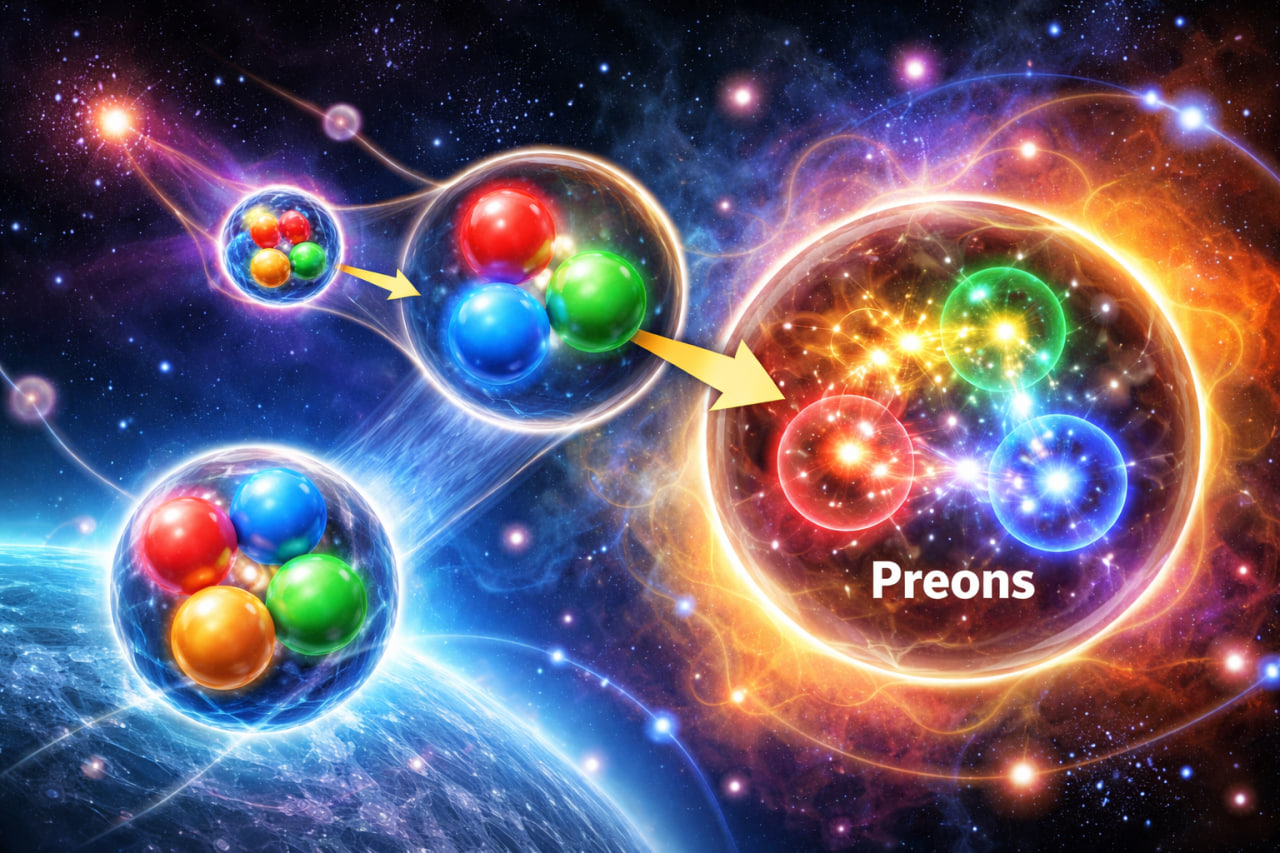
Preons: Is There Anything Smaller Than Quarks?

Modern physics describes the fundamental building blocks of matter using particles such as quarks and leptons, which are considered elementary particles—meaning they are not known to be made of anything smaller. However, the idea of preons challenges this assumption, suggesting that even quarks might have an internal structure. This concept arises from the desire to simplify and unify the growing number of particles observed in high-energy physics experiments. If preons exist, they could represent a deeper level of reality, revealing that what we consider “fundamental” is actually composed of even smaller entities. Despite decades of theoretical exploration, no direct experimental evidence for preons has been found. Understanding this idea helps scientists explore the limits of particle physics and the nature of matter itself.

Planck Length: Where Does the Standard Model Break Down?
Universe Science Be Smart

Planck Length: Where Does the Standard Model Break Down?

The Planck length represents one of the most fundamental limits in modern physics, marking a scale at which our current understanding of reality begins to break down. At approximately 1.6 × 10⁻³⁵ meters, it is considered the smallest meaningful unit of length, beyond which classical concepts of space and time may no longer apply. While the Standard Model of particle physics successfully describes fundamental particles and forces at accessible scales, it does not incorporate gravity in a fully consistent way. As scientists probe deeper into smaller distances, they encounter theoretical limits where known physics becomes incomplete. The Planck length emerges from combining constants of quantum mechanics, relativity, and gravity, suggesting a boundary where a new theory is required. Understanding this scale is crucial for exploring the unification of physics and the true nature of space-time.

Microwave Oven: Invention and How It Works Today
Hi-Tech Be Smart Inventions

Microwave Oven: Invention and How It Works Today

The microwave oven is one of the most common household appliances, yet many people rarely think about how it actually works. What seems like simple and fast food heating is the result of advanced electromagnetic technology and an accidental discovery. From its origins in radar research to modern smart kitchens, the microwave oven has become an essential part of everyday life.

What Einstein and Bohr Argued About: The Great Debate on Quantum Reality
History Science Be Smart

What Einstein and Bohr Argued About: The Great Debate on Quantum Reality

One of the most famous scientific debates in history took place between Albert Einstein and Niels Bohr. Their discussions were not about small details, but about the fundamental nature of reality itself. At the center of their disagreement was quantum mechanics, a theory describing how particles behave at the smallest scales. While both scientists contributed greatly to physics, they had very different views on what quantum theory actually meant.

Why and How to Properly Clean Dust From Your Computer
Hi-Tech Smart Technology Be Smart

Why and How to Properly Clean Dust From Your Computer

Over time, every computer accumulates dust inside its case. This may seem harmless at first, but dust buildup can significantly affect performance and longevity. Regular cleaning helps maintain proper airflow, keeps components cool, and reduces the risk of overheating. Understanding why and how to safely clean your computer is essential for keeping it running efficiently.

Science and the Egyptian Pyramids
History Science Be Smart

Science and the Egyptian Pyramids

The pyramids of ancient Egypt remain among the most remarkable architectural achievements in human history. Built more than four thousand years ago, these massive stone monuments continue to fascinate scientists, historians, engineers, and archaeologists. While pyramids are often associated with mystery and legends, modern scientific research has revealed much about how they were constructed, why they were built, and what they tell us about the advanced knowledge of ancient Egyptian civilization. By combining archaeology, physics, geology, engineering, and modern scanning technologies, scientists continue to uncover new insights into the design and purpose of these extraordinary structures.

Imhotep: The Legendary Genius of Ancient Egypt
History Science Be Smart

Imhotep: The Legendary Genius of Ancient Egypt

Imhotep is one of the most remarkable figures in the history of ancient Egypt. Living around the 27th century BCE, he served as a high-ranking official during the reign of Pharaoh Djoser of the Third Dynasty. Unlike many ancient historical figures who are remembered only through legends, Imhotep was a real person whose achievements were recorded in inscriptions and historical texts. He is widely regarded as a polymath—a scholar skilled in many fields—including architecture, medicine, engineering, and administration. Over time, his reputation grew so greatly that later generations of Egyptians even began to revere him as a deity of wisdom and healing. Today, Imhotep is remembered as one of the earliest known scientists and architects in human history.