
Be Smart

What Are the Fundamental Constants of Our Universe?
Space Stories Universe Science

What Are the Fundamental Constants of Our Universe?

The universe is governed by a set of physical laws that remain consistent everywhere we observe them. These laws depend on specific values known as fundamental physical constants. These constants represent fixed numerical values that appear in the equations describing how the universe behaves. They determine how particles interact, how gravity works, how light travels, and how atoms form. Without these constants, the laws of physics would not produce a stable universe capable of forming stars, planets, and life. Scientists study these constants carefully because they help reveal the deep structure of reality and the rules that govern the cosmos.
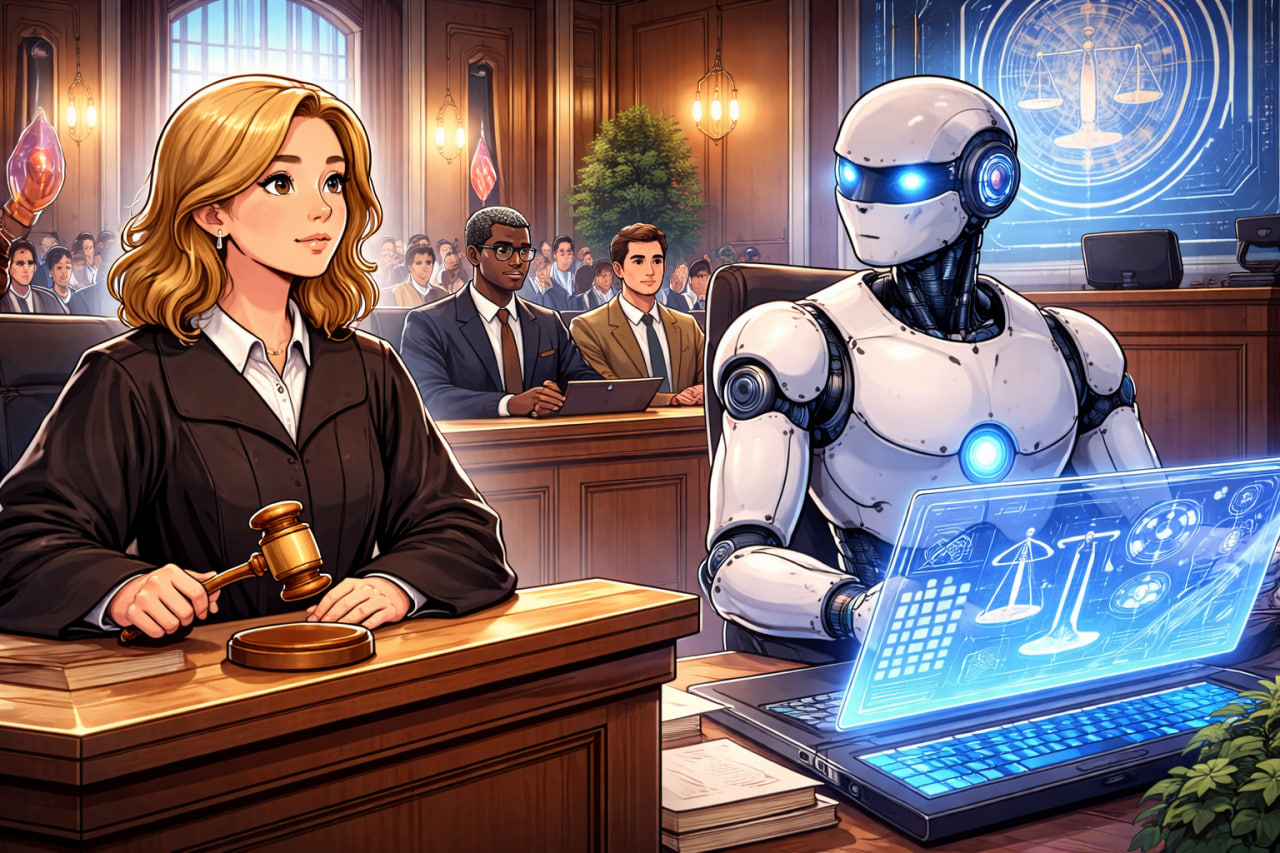

Artificial Intelligence in Court: Can We Trust AI to Deliver Verdicts?
AI & Ethics AI Be Smart

Artificial Intelligence in Court: Can We Trust AI to Deliver Verdicts?

Artificial intelligence is rapidly transforming many sectors of modern society, including healthcare, transportation, finance, and education. Recently, discussions have expanded into another sensitive and complex field: the judicial system. Some researchers and policymakers have begun exploring whether artificial intelligence could assist courts in analyzing cases, predicting legal outcomes, or even helping determine sentences. While AI technologies already support certain legal processes, the idea of allowing machines to influence or deliver court decisions raises important ethical, legal, and technological questions. Understanding the potential benefits and limitations of AI in the courtroom is essential before such systems can play a larger role in justice systems around the world.

Will Sea Ships Disappear in the Future?
Smart Technology Be Smart What if?

Will Sea Ships Disappear in the Future?

For thousands of years, ships have played a crucial role in transportation, exploration, and global trade. From ancient wooden sailing vessels to modern cargo ships and cruise liners, maritime technology has continuously evolved to meet the needs of human civilization. Today, more than 80% of global trade is transported by sea, making ships one of the most important elements of the global economy. However, rapid technological development, environmental concerns, and the search for new transportation methods have raised questions about the future of maritime shipping. Some experts wonder whether traditional sea vessels could eventually be replaced by alternative systems such as autonomous ships, underwater cargo transport, or even advanced air-based logistics. While these ideas are being explored, ships continue to adapt to new technologies rather than disappear entirely.

What Is Bluetooth and How Does It Work?
Hi-Tech New Discoveries Be Smart

What Is Bluetooth and How Does It Work?

Bluetooth is a wireless communication technology that allows electronic devices to exchange data over short distances without using cables. It is widely used in everyday devices such as smartphones, headphones, laptops, smartwatches, and wireless speakers. Bluetooth operates using radio waves in a specific frequency band, enabling devices to connect quickly and transfer information efficiently. Since its introduction in the late 1990s, Bluetooth has become one of the most common technologies for connecting personal electronic devices. Its simplicity, low energy consumption, and compatibility with many types of hardware have made it an essential part of modern digital communication.

Sirius: The Brightest Star in the Night Sky
Space Stories Universe Be Smart

Sirius: The Brightest Star in the Night Sky

Sirius is the brightest star visible in Earth’s night sky and has fascinated humans for thousands of years. Located in the constellation Canis Major, Sirius shines with an intensity that makes it easily recognizable even in areas with moderate light pollution. Because of its brightness and visibility from many parts of the world, the star has played an important role in ancient astronomy, mythology, and navigation. Today, Sirius continues to attract scientific interest because it is actually a binary star system, consisting of two stars orbiting each other. Studying Sirius helps astronomers better understand stellar evolution, star formation, and the dynamics of nearby stellar systems.

The History of Astronomy: From Ancient Skywatchers to Modern Space Science
History Science Be Smart

The History of Astronomy: From Ancient Skywatchers to Modern Space Science

Astronomy is one of the oldest sciences in human history, born from humanity’s natural curiosity about the night sky. For thousands of years, people observed the movements of stars, planets, and the Moon, seeking to understand patterns that governed time, seasons, and navigation. Early civilizations built monuments aligned with celestial events and developed calendars based on astronomical observations. Over centuries, these observations evolved into scientific theories that transformed our understanding of the universe. Today, astronomy combines advanced telescopes, satellites, and space probes to study objects billions of light-years away. The long journey from simple skywatching to modern astrophysics reflects humanity’s enduring desire to explore the cosmos and understand our place within it.

Data Mirages: Why AI Does Not Truly Understand What It Writes
AI & Ethics AI Be Smart

Data Mirages: Why AI Does Not Truly Understand What It Writes

Artificial intelligence systems often produce responses that appear thoughtful, structured, and coherent. This fluency can create the impression that the system “understands” the topic it discusses. However, modern language models operate fundamentally differently from human cognition. They generate text by predicting patterns based on vast datasets, not by forming conscious comprehension. The phenomenon where AI output appears meaningful without genuine understanding can be described as a “data mirage.” Recognizing this distinction is essential for responsible use of AI systems. The illusion of understanding emerges from statistical pattern recognition rather than awareness or intention.

Will Neural Networks Replace Search Engines?
AI & Ethics AI Be Smart

Will Neural Networks Replace Search Engines?

The rapid development of large language models and conversational AI has sparked debate about the future of traditional search engines. Instead of presenting a list of links, AI systems can generate direct answers, summaries, and contextual explanations. This shift raises an important question: will neural networks fully replace search engines, or will both technologies evolve together? While AI-powered tools are transforming how people access information, search infrastructure remains deeply embedded in the digital ecosystem. The relationship between neural networks and search engines is more likely to be complementary than purely competitive. Understanding their differences clarifies what the future may hold.

Can Users Teach ChatGPT and Similar AI Systems Something New?
AI & Ethics AI Be Smart

Can Users Teach ChatGPT and Similar AI Systems Something New?

As conversational AI becomes more widespread, many users wonder whether their questions, corrections, or conversations can “teach” the system directly. When interacting with tools like ChatGPT, it may feel as though the model is learning in real time. However, the reality is more structured and technical. While AI systems improve over time, they do not typically learn from individual conversations in the way humans do. Understanding how training works helps clarify what influence users actually have. The relationship between users and AI is interactive — but not educational in a traditional sense.

Folk Beliefs and What Science Says About Them
Science Be Smart

Folk Beliefs and What Science Says About Them

Folk beliefs have accompanied humanity for centuries, shaping traditions, daily rituals, and cultural identity. From weather predictions based on animal behavior to superstitions about luck, these beliefs often arise from attempts to explain natural phenomena before modern science existed. While some traditions reflect early observational knowledge, others persist despite lacking empirical support. Understanding folk beliefs through a scientific lens does not necessarily diminish their cultural value; rather, it helps distinguish symbolic meaning from measurable reality. In many cases, traditions emerged from repeated experiences that appeared consistent, even if the underlying mechanisms were misunderstood. Exploring the relationship between folklore and science reveals how human curiosity evolves over time.