Hi-Tech

Liquid Light: The Strange State of Matter Where Light Behaves Like a Fluid
Hi-Tech New Discoveries Be Smart

Liquid Light: The Strange State of Matter Where Light Behaves Like a Fluid

Light is usually described as a stream of photons — particles that have no mass, travel at incredible speed, and do not interact strongly with one another. But under certain extreme conditions, scientists have discovered that light can transform into something astonishing: a fluid-like state known as “liquid light.” In this state, photons behave not as free, independent particles but as a collective entity that flows like a liquid. This remarkable phenomenon blurs the boundaries between matter and energy and opens the door to new technologies in quantum physics, computing, and advanced materials. Understanding liquid light sheds light on the mysterious world of quantum mechanics and reveals just how strange the universe can be.


Quantum Processors: The Future of Ultra-Fast Computational Power
Hi-Tech Smart Technology New Discoveries

Quantum Processors: The Future of Ultra-Fast Computational Power

Quantum processors represent one of the most revolutionary advancements in modern computing, offering capabilities far beyond those of classical processors. Instead of using traditional bits that store information as 0 or 1, quantum processors use qubits, which can exist in multiple states simultaneously through a phenomenon known as superposition. This allows quantum computers to process massive amounts of data in parallel, solve complex problems more efficiently, and tackle challenges that classical systems cannot handle within a realistic timeframe. Quantum processors hold the potential to transform cryptography, materials science, artificial intelligence, climate modeling, and pharmaceutical development. Their power comes from the fundamental laws of quantum mechanics, where particles behave in unpredictable yet mathematically precise ways.

Innovations in Robotics: How Modern Machines Are Transforming the Future
Cosmic Innovations Hi-Tech Smart Technology

Innovations in Robotics: How Modern Machines Are Transforming the Future

Robotics has entered a new era marked by rapid technological breakthroughs, smarter machines, and unprecedented levels of automation. What began as simple mechanical tools has evolved into a multidisciplinary field combining artificial intelligence, advanced sensors, bio-inspired engineering, and human–machine collaboration. Today’s robots can navigate complex environments, perform delicate tasks with surgical precision, and even learn from experience. Innovations in robotics are reshaping industries such as healthcare, manufacturing, transportation, space exploration, and environmental protection. Understanding these advancements reveals how robots are becoming essential partners to humans, boosting efficiency, safety, and scientific progress.

The Newest Advancements in Space Technology: Innovations Shaping the Future of Exploration
Cosmic Innovations Hi-Tech Smart Technology

The Newest Advancements in Space Technology: Innovations Shaping the Future of Exploration

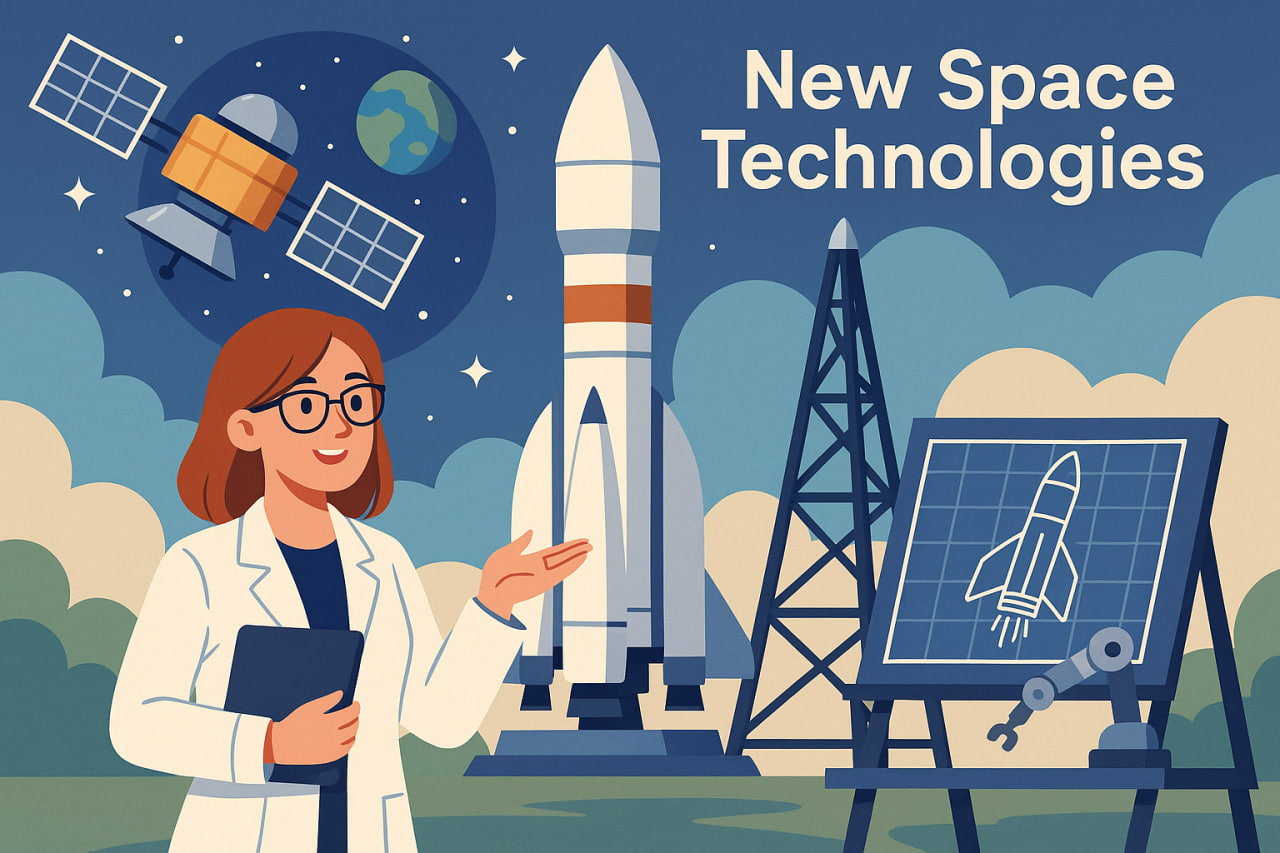
Modern space technology is evolving faster than ever before, driven by international missions, private industry, and groundbreaking scientific research. Today’s innovations go far beyond traditional rockets or satellites — they include reusable launch systems, advanced propulsion engines, deep-space habitats, autonomous robots, and next-generation telescopes capable of seeing further into the universe than any previous instrument. These technologies aim to make space travel more affordable, safer, and more capable of supporting long-term human presence beyond Earth. As global interest in the Moon, Mars, and near-Earth asteroids grows, the newest developments in space engineering are shaping the roadmap for the next century of exploration. Understanding these advances reveals how humanity is preparing to push deeper into space than ever before.

Batteries: Their History and the Modern Technologies Shaping the Future of Energy Storage
History Hi-Tech Inventions

Batteries: Their History and the Modern Technologies Shaping the Future of Energy Storage

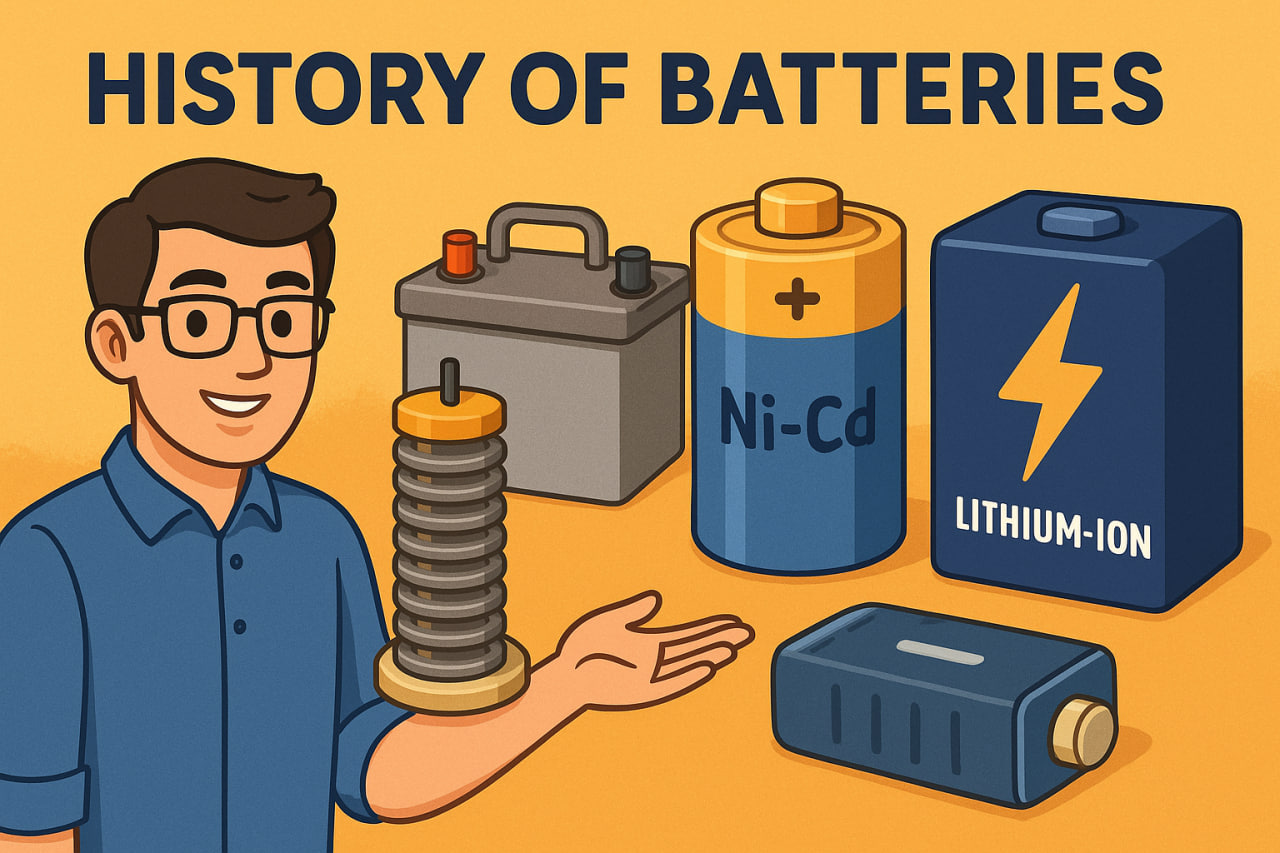
Batteries have transformed the world by providing portable, reliable electrical energy for everything from telecommunication devices to renewable power systems. The evolution of battery technology spans more than two centuries, beginning with simple chemical cells and expanding into sophisticated, high-density systems that power electric vehicles, satellites, and entire electrical grids. Understanding the history of batteries reveals how scientific discovery, industrial innovation, and global energy demands have shaped modern storage solutions. As the world transitions toward sustainable energy, cutting-edge battery technologies are becoming more important than ever, enabling cleaner transportation, stabilizing renewable electricity, and supporting the development of advanced electronics. The story of batteries is a story of continuous improvement — and it continues to accelerate.

Human-Cell Processors: Building Computers From Living Tissue
Neuro-Tech Hi-Tech Bioengineering

Human-Cell Processors: Building Computers From Living Tissue

Human-cell processors, sometimes called bio-computers or organoid-based processors, are an emerging technology that uses living human cells as the core of a computing system instead of traditional silicon transistors. In most experimental designs, tiny clusters of brain-like cells are grown in the lab and connected to electronic interfaces that can send signals in and read activity out. These living networks are capable of learning, adapting, and processing information in ways that resemble biological brains rather than conventional computers. The goal is not to replace digital chips completely, but to explore new kinds of computation that are more energy-efficient and better at tasks such as pattern recognition, decision-making, and learning from experience. At the same time, these systems raise important ethical, technical, and safety questions that scientists must address carefully as the field develops.

Solar Sails: Harnessing Sunlight for Space Travel
Space Stories Cosmic Innovations Hi-Tech

Solar Sails: Harnessing Sunlight for Space Travel

Solar sails are one of the most elegant and futuristic propulsion technologies ever developed, offering a method of space travel that requires no fuel and relies solely on the power of sunlight. Instead of burning propellant, solar sails use photons — tiny particles of light — to generate thrust. When sunlight hits a highly reflective, ultrathin sail, it transfers momentum, gradually pushing the spacecraft forward. Although the acceleration is extremely gentle, it continues indefinitely as long as the sail remains illuminated, allowing solar-sail spacecraft to reach remarkable speeds over time. This makes them ideal for long-duration missions, deep-space exploration, and even travel to other star systems. Solar sails represent a revolutionary shift in how humanity might explore space: not through explosive engines, but through silent, continuous propulsion powered by the universe itself.

Nanotechnology: Transforming the World One Atom at a Time
Hi-Tech Smart Technology Science

Nanotechnology: Transforming the World One Atom at a Time

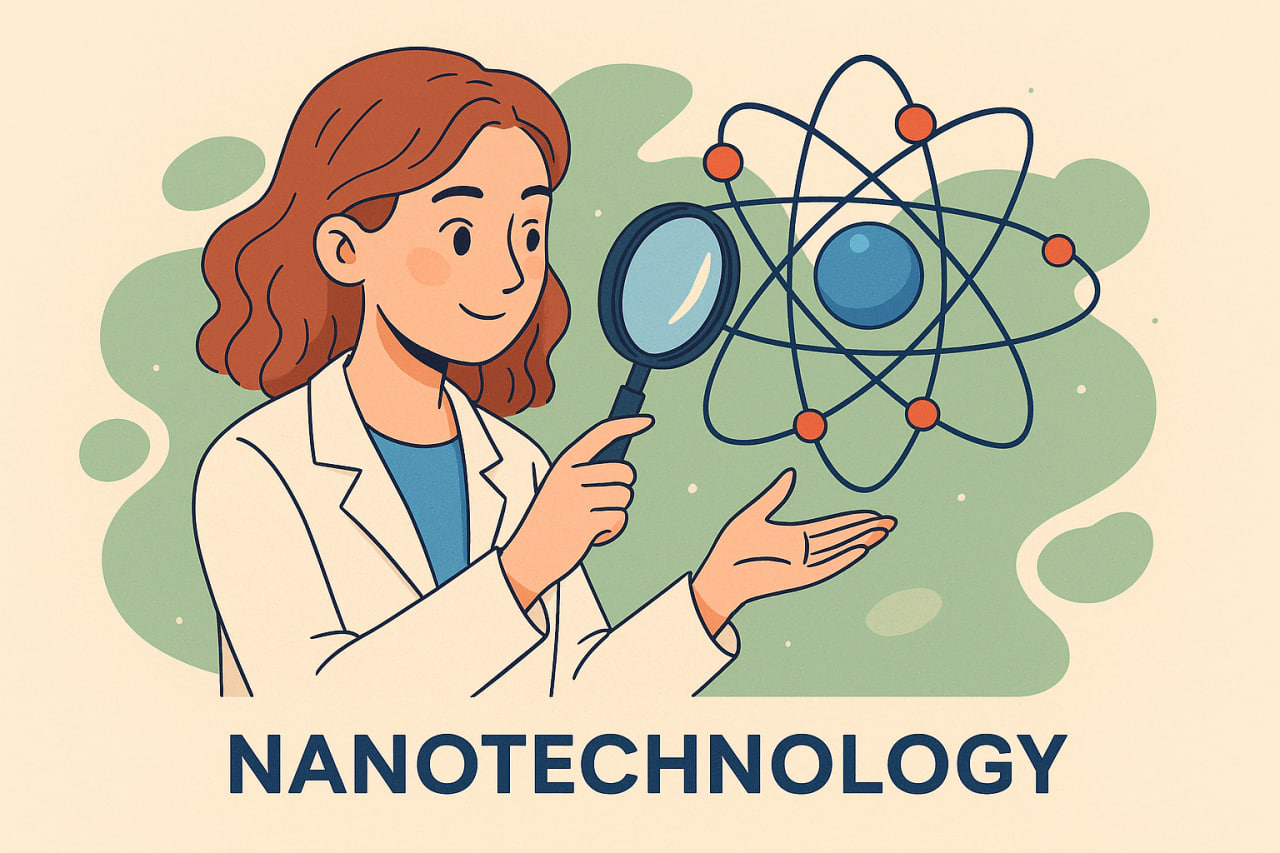
Nanotechnology is the science and engineering of manipulating matter at the scale of atoms and molecules, typically between 1 and 100 nanometers. At this incredibly small scale, materials behave in ways that differ dramatically from their larger counterparts, displaying unique optical, electrical, mechanical, and chemical properties. These unusual behaviors allow scientists to design new materials and devices that revolutionize medicine, electronics, energy production, environmental protection, and manufacturing. Nanotechnology is not a single field but an interdisciplinary fusion of physics, chemistry, biology, and engineering — giving it the power to reshape entire industries. As research accelerates, nanotechnology continues to push the boundaries of what is physically possible, offering groundbreaking opportunities and raising important questions about safety, ethics, and responsible innovation.

Nanorobots: The Microscopic Machines Transforming Technology
Hi-Tech Bioengineering Smart Technology

Nanorobots: The Microscopic Machines Transforming Technology

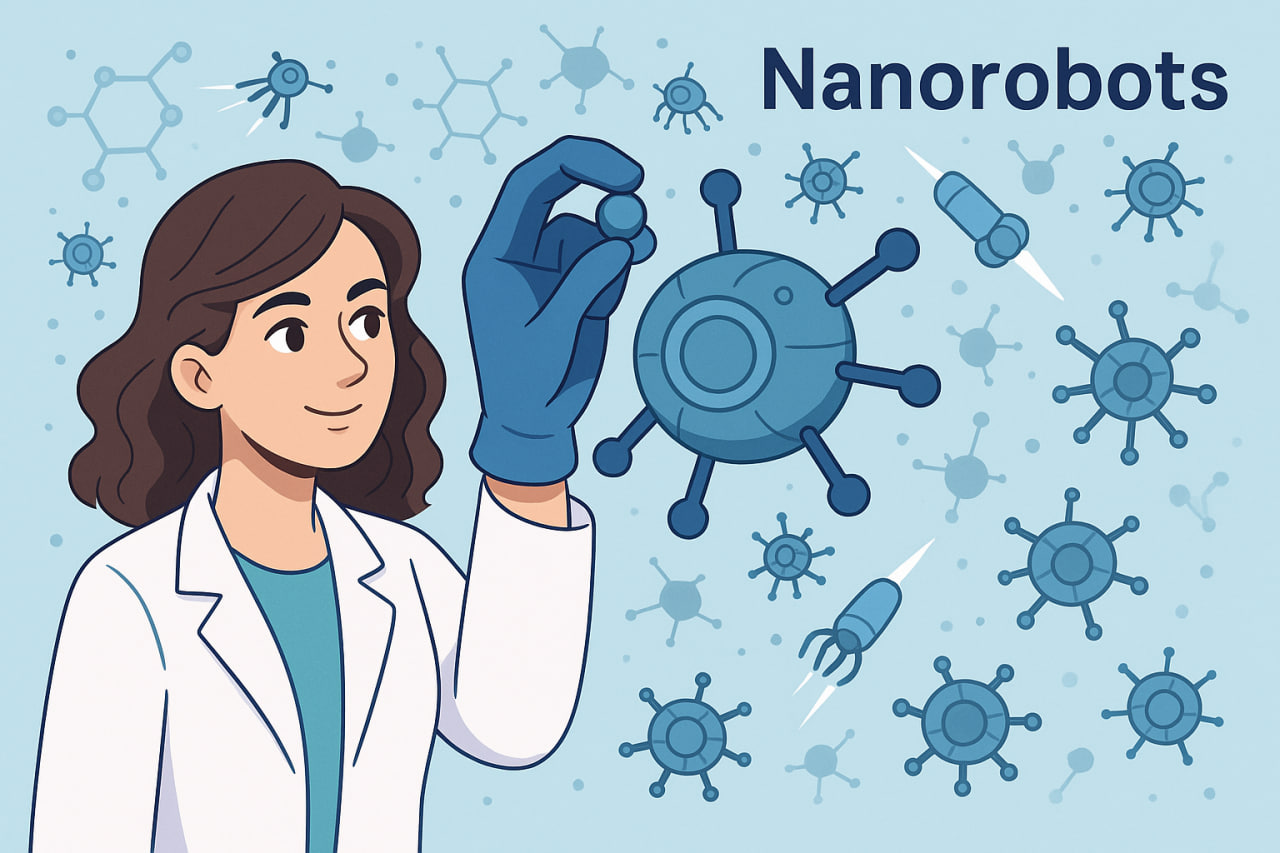
Nanorobots — tiny machines measured in billionths of a meter — represent one of the most revolutionary frontiers in modern science. Operating at scales comparable to molecules and viruses, these microscopic devices have the potential to transform medicine, manufacturing, environmental protection, and even computing. Although many concepts are still experimental, rapid advances in materials science, artificial intelligence, and molecular engineering are bringing the era of practical nanorobotics closer than ever. Nanorobots are designed to perform tasks that are impossible for larger machines, such as navigating inside the human body, assembling structures atom by atom, or detecting pollutants with extreme precision. Their development highlights how innovation can reshape our understanding of technology at the most fundamental level.

VASIMR Engine: A New Era of High-Power Plasma Propulsion
Space Stories Cosmic Innovations Hi-Tech

VASIMR Engine: A New Era of High-Power Plasma Propulsion

The VASIMR engine, short for Variable Specific Impulse Magnetoplasma Rocket, represents one of the most promising breakthroughs in advanced space propulsion. Unlike traditional chemical rockets, which burn fuel to create high-temperature exhaust, the VASIMR engine uses superheated plasma — an electrically charged gas — controlled by magnetic fields to generate thrust. This technology aims to combine high efficiency with significantly greater power, potentially reducing travel times to distant planets such as Mars. Because it relies on electrical power rather than combustion, the VASIMR engine could operate continuously for weeks or months, gradually accelerating spacecraft to extremely high speeds. As energy generation systems in space improve, this propulsion method may become a foundation for future deep-space missions, orbital transport, and long-duration scientific journeys. Understanding how VASIMR works provides a glimpse into the next generation of spacecraft engineering.