Hi-Tech

Ion Engines: The Future of Deep Space Propulsion
Space Stories Cosmic Innovations Hi-Tech

Ion Engines: The Future of Deep Space Propulsion

Ion engines represent one of the most advanced propulsion technologies ever developed, enabling spacecraft to travel vast distances using remarkably little fuel. Unlike traditional chemical rocket engines that produce enormous thrust in a short burst, ion engines create a steady, gentle push by accelerating electrically charged particles — ions — to extremely high speeds. This slow but continuous acceleration allows spacecraft to reach extraordinary velocities over long periods, making ion engines ideal for deep-space missions where efficiency is more important than raw power. Their ability to operate for months or even years without refueling has reshaped modern space exploration and opened new possibilities for scientific discovery across the solar system. Understanding how ion engines work highlights humanity’s growing capability to explore space sustainably and intelligently.

Rocket Engines: The Power Behind Space Exploration
Space Stories Cosmic Innovations Hi-Tech

Rocket Engines: The Power Behind Space Exploration

Rocket engines are the fundamental technology that makes space travel possible, enabling spacecraft to break free from Earth’s gravity and operate in the vacuum of space. Unlike aircraft engines that rely on atmospheric oxygen, rocket engines carry both fuel and oxidizer, allowing them to function in environments with no air at all. This makes them uniquely powerful and efficient for reaching orbit, traveling to other planets, and conducting scientific missions deep into the cosmos. Modern rocket engines combine precise engineering, advanced materials, and complex thermodynamics to generate extraordinary amounts of thrust. Despite their incredible power, they remain highly sensitive systems that require exact control and deep scientific understanding. As space agencies and private companies push toward new frontiers, rocket engine technology continues to evolve, shaping the future of exploration and transportation beyond Earth.

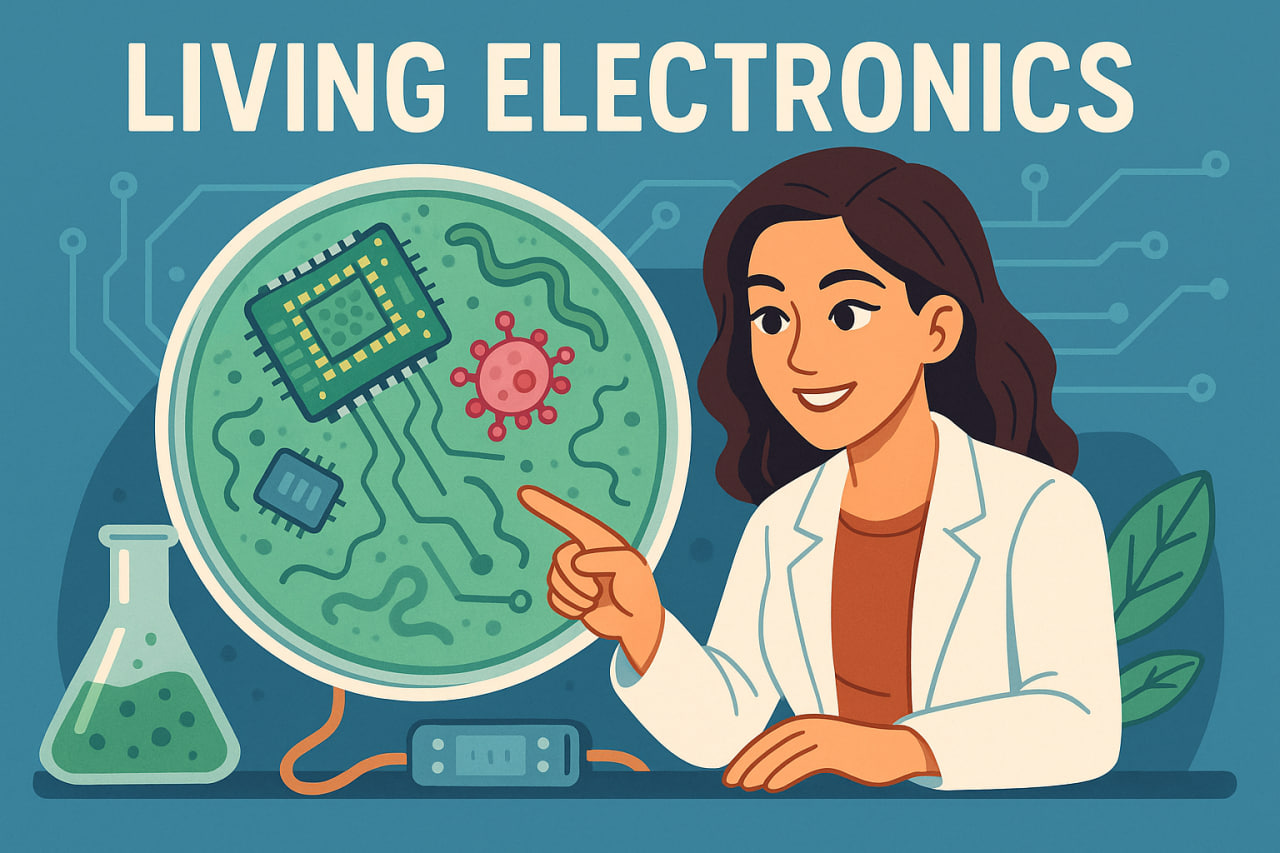
Living Electronics: The Future of Bio-Integrated Technology
Hi-Tech Bioengineering Smart Technology

Living Electronics: The Future of Bio-Integrated Technology

Living electronics, also known as bio-electronics or biological electronic systems, represent a rapidly evolving field that integrates living cells, biological materials, and electronic components into hybrid devices. This emerging technology explores how biological processes can be combined with electronic circuits to create systems that are more adaptive, energy-efficient, and capable of complex sensory functions. Unlike conventional electronics, which rely on synthetic materials and rigid structures, living electronics take advantage of the self-healing, flexible, and environmentally responsive properties of biological tissues or cells. Researchers believe that these innovations will play a major role in future medical diagnostics, environmental monitoring, soft robotics, and implantable devices. Understanding the principles behind living electronics provides insight into how biology and engineering are merging to form a new generation of technological solutions.

Carbon Nanotubes: Structure, Properties, and Modern Applications
Hi-Tech New Discoveries Inventions

Carbon Nanotubes: Structure, Properties, and Modern Applications

Carbon nanotubes (CNTs) are cylindrical nanostructures composed entirely of carbon atoms arranged in a hexagonal lattice, forming tubes with extraordinary mechanical, electrical, and thermal properties. Discovered in the early 1990s, they quickly became one of the most studied materials in nanotechnology due to their remarkable strength, low weight, and unique conductivity. CNTs can be single-walled or multi-walled, with each type offering different characteristics suitable for specialized applications. Scientists consider carbon nanotubes a major breakthrough because their properties exceed those of many conventional materials used in engineering and electronics. Research continues to uncover new uses for CNTs in fields such as energy storage, medicine, aerospace, and advanced manufacturing. Understanding their structure and behavior helps researchers design cutting-edge technologies that push the boundaries of modern science.

Atomic Clocks: The Most Precise Timekeepers in Human History
Hi-Tech Smart Technology New Discoveries

Atomic Clocks: The Most Precise Timekeepers in Human History

Atomic clocks are the most accurate timekeeping devices ever invented, capable of measuring time with extraordinary precision by tracking the natural vibrations of atoms. Unlike mechanical or quartz clocks, which rely on physical movement or crystal oscillation, atomic clocks use electromagnetic transitions within atoms, most commonly cesium or rubidium. These atomic oscillations are incredibly stable, allowing scientists to define the second based on the frequency of these transitions. Because of their unmatched accuracy, atomic clocks serve as the foundation of global navigation systems, telecommunications networks, scientific research, and international time standards. Their development represents a major milestone in physics and engineering, enabling technological advances that depend on nanosecond-level precision. Understanding how atomic clocks work reveals the extraordinary science behind modern timekeeping and the role they play in shaping today’s technological world.

Fuel-Free Energy: Modern Developments and Emerging Technologies
Hi-Tech Smart Technology Science

Fuel-Free Energy: Modern Developments and Emerging Technologies

Fuel-free energy represents one of the most ambitious areas of modern scientific research, focusing on ways to generate power without traditional fossil fuels or consumable energy sources. This field includes technologies that harness natural physical phenomena, such as magnetic fields, ambient heat, atmospheric electricity, and zero-point energy. While many concepts remain theoretical or experimental, researchers worldwide continue exploring solutions that could drastically reduce humanity’s dependence on conventional energy systems. Some scientists argue that fuel-free approaches may complement renewable energy rather than replace it, helping stabilize grids and reduce environmental impact. However, experts also emphasize that rigorous testing, peer-reviewed studies, and transparent methodology are essential to distinguish real scientific progress from unverified claims. Understanding current developments allows us to identify which technologies show genuine potential and which remain purely speculative.

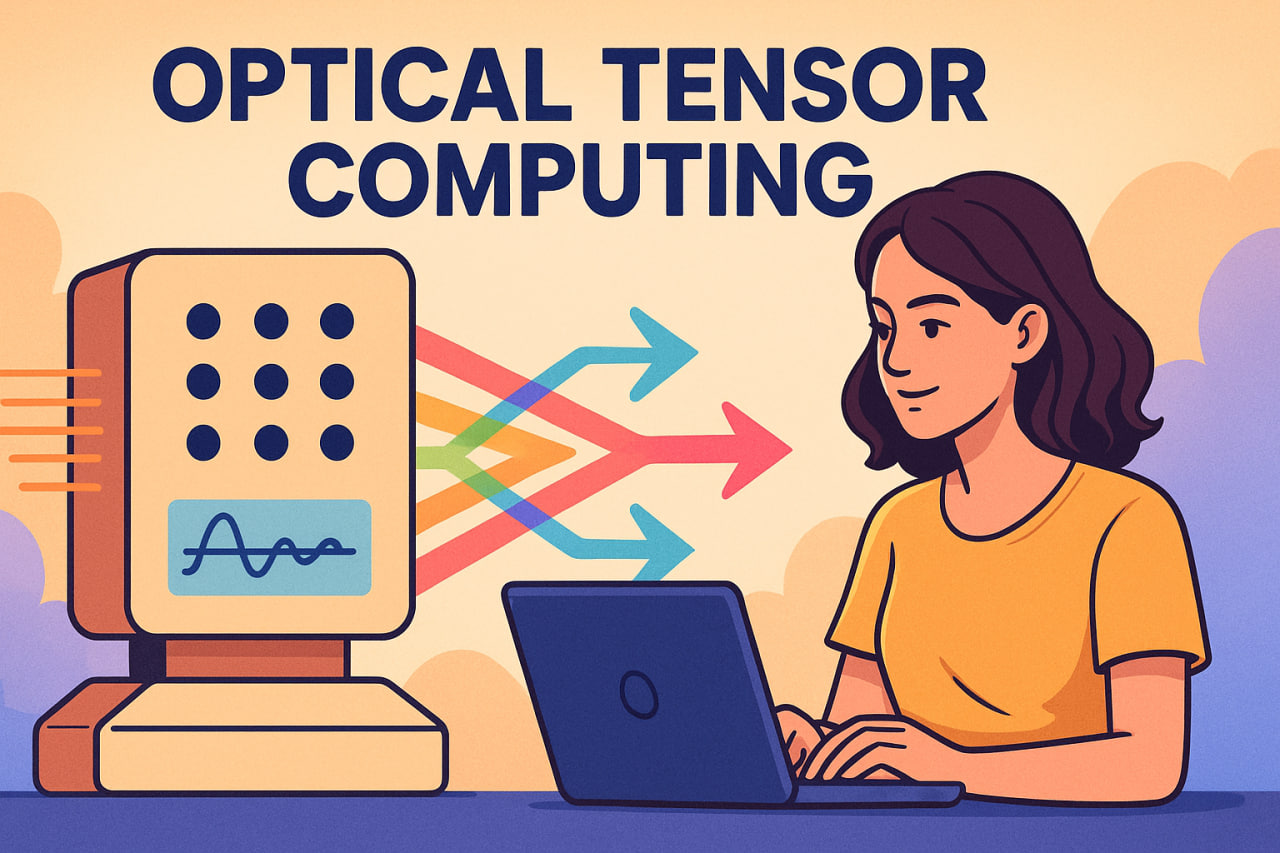
Optical Tensor Computing: The Future of High-Speed Information Processing
Hi-Tech Science New Discoveries

Optical Tensor Computing: The Future of High-Speed Information Processing

Optical tensor computing represents a breakthrough approach to performing complex mathematical operations using light instead of traditional electronic circuits. This technology relies on photonic components to process multidimensional data structures—known as tensors—at unprecedented speeds and with significantly lower energy consumption. Because photons travel faster and generate far less heat than electrons, optical systems can execute massive parallel computations more efficiently, making them especially valuable for fields such as artificial intelligence, scientific simulations, and large-scale data analytics. Many researchers believe that optical tensor processors will eventually complement or even surpass conventional semiconductor-based accelerators in certain applications. At the same time, experts caution that while optical systems offer impressive speed advantages, they must be carefully engineered to integrate reliably with existing computing infrastructure. As development continues, optical tensor computing stands out as one of the most promising directions in next-generation computational technology.

AI in Construction
Hi-Tech Science AI

AI in Construction

Artificial intelligence is rapidly transforming the construction industry, offering new possibilities for improving efficiency, safety, and project management. Modern construction projects generate massive amounts of data, from material estimates to structural measurements, and AI provides the tools needed to analyze this information quickly and accurately. The implementation of AI also helps reduce human error by automating repetitive tasks and providing predictive insights that guide decision-making. As a result, construction companies are increasingly adopting AI-driven systems to streamline operations and optimize resources. At the same time, experts emphasize that AI is not a replacement for skilled professionals but rather a tool that enhances their abilities. The careful integration of AI ensures that construction remains innovative, reliable, and aligned with global technological standards.

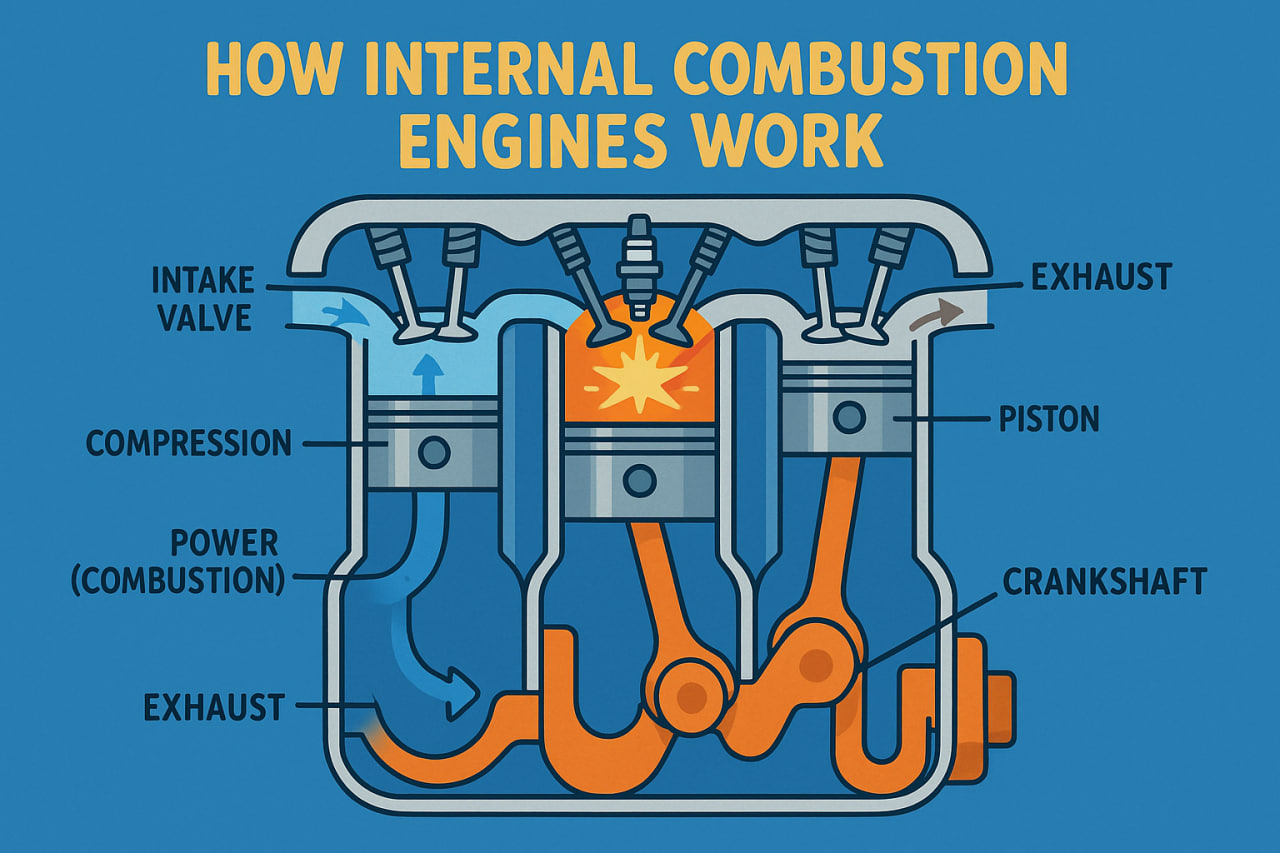
How Internal Combustion Engines Work
Hi-Tech Science Be Smart

How Internal Combustion Engines Work

Every time you start your car or ride a motorcycle, a complex series of explosions happens beneath the hood — safely and efficiently. This is the work of the internal combustion engine (ICE), one of the most important inventions in human history. Despite growing electric alternatives, internal combustion engines still power most vehicles around the world today.