Inventions

Kozyrev Mirrors: Exploring the Idea of Time, Consciousness, and Space
Smart Technology New Discoveries Inventions

Kozyrev Mirrors: Exploring the Idea of Time, Consciousness, and Space

Kozyrev mirrors are one of the most mysterious and unconventional concepts associated with experimental physics and consciousness research. They are named after the Russian astrophysicist Nikolai Kozyrev, who proposed that time is not just a passive dimension but an active force that can influence physical processes. Supporters of this idea believe that specially designed reflective structures—called Kozyrev mirrors—can interact with this “flow of time” and potentially enhance human perception.

Electrostatic Machine: How It Works and Why It Matters
Science Tesla&Co Inventions

Electrostatic Machine: How It Works and Why It Matters

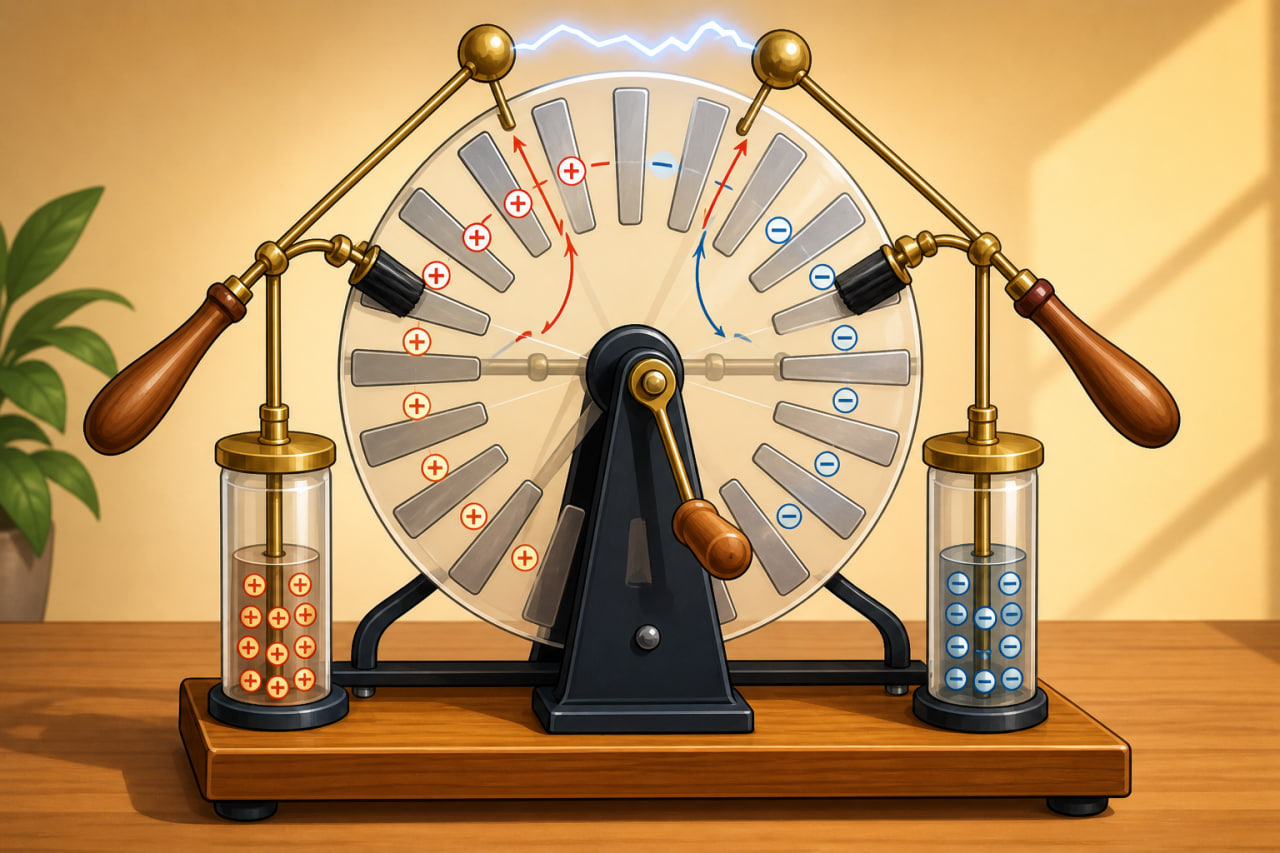
Electrostatic machines are devices that generate electricity through the buildup and separation of electric charges. Unlike modern electrical generators that rely on magnetic fields and continuous current, these machines produce high voltage static electricity with very low current. They played a key role in early scientific discoveries and remain important for education and demonstrations today.

Metallic Hydrogen: The Holy Grail of High-Pressure Physics
New Discoveries Inventions Physics

Metallic Hydrogen: The Holy Grail of High-Pressure Physics

Metallic hydrogen is one of the most fascinating and elusive goals in modern physics. For decades, scientists have pursued the idea that hydrogen—the simplest and most abundant element in the universe—can transform into a metal under extreme pressure. If confirmed and stabilized, metallic hydrogen could revolutionize energy, materials science, and our understanding of planetary interiors.

Atomic Force Microscopy: Seeing Atoms Through Touch
Smart Technology New Discoveries Inventions

Atomic Force Microscopy: Seeing Atoms Through Touch

Modern science has given humanity the ability to observe structures far smaller than what the human eye can perceive. Among the most remarkable tools is the atomic force microscope (AFM)—a device that allows scientists to “see” atoms not with light, but through physical interaction. In a sense, it lets researchers feel the surface of matter at the atomic scale. This revolutionary technology has transformed nanotechnology, materials science, biology, and physics by enabling direct exploration of the nanoscale world.

Supersonic Aircraft: How They Work and Why They Matter
Hi-Tech Smart Technology Science

Supersonic Aircraft: How They Work and Why They Matter

Supersonic aircraft represent one of the most advanced achievements in aviation. These planes are capable of flying faster than the speed of sound, dramatically reducing travel time and pushing the boundaries of engineering and physics. From military jets to the iconic Concorde, supersonic flight has fascinated scientists and travelers alike. Today, renewed interest in supersonic travel is driving innovation, with new technologies aiming to make faster-than-sound flight more efficient, quieter, and accessible.

Acoustic Lasers: How Sound Can Behave Like Light
Hi-Tech New Discoveries Inventions

Acoustic Lasers: How Sound Can Behave Like Light

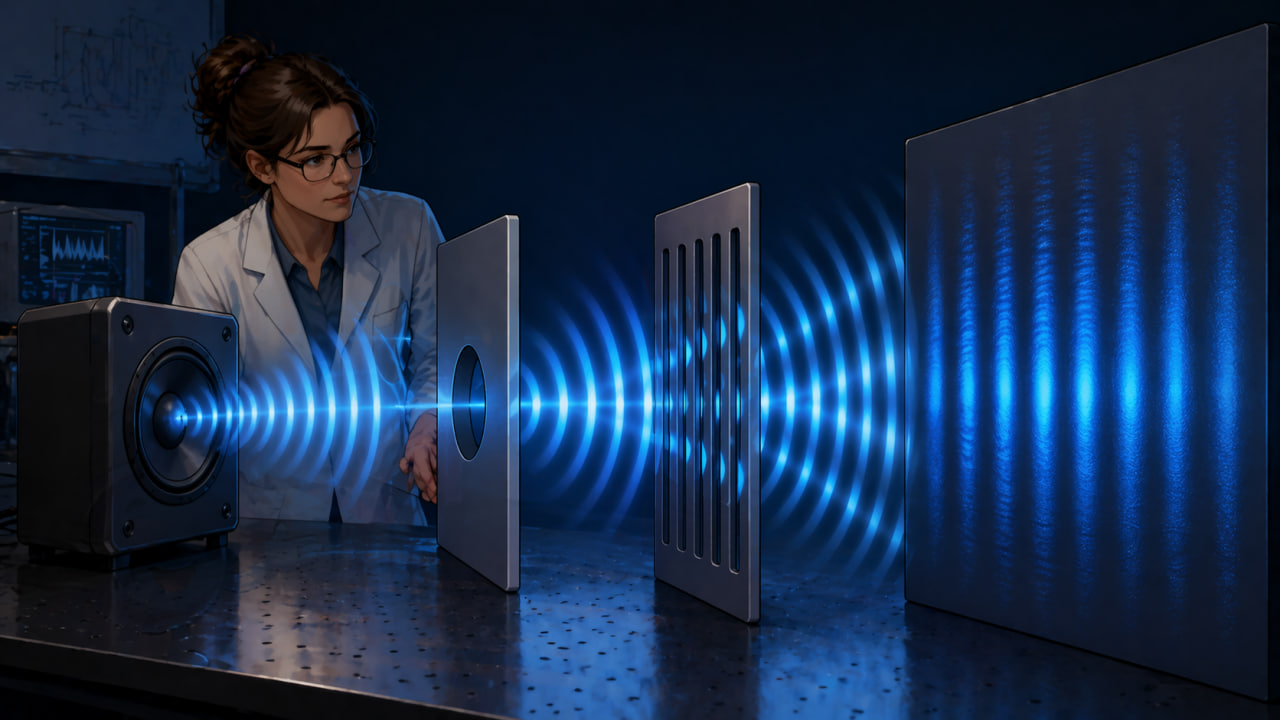
The term “laser” usually brings to mind beams of light used in medicine, communication, and technology. But scientists have discovered a fascinating counterpart: acoustic lasers, devices that amplify and control sound waves in ways similar to how traditional lasers manipulate light. These systems open new possibilities in physics, engineering, and medicine, challenging our understanding of waves and energy.

Radio Communication: How Walkie-Talkies Work and Where They Are Used
History Smart Technology Inventions

Radio Communication: How Walkie-Talkies Work and Where They Are Used

Radio communication devices, commonly known as walkie-talkies, are portable tools that allow people to communicate over distance without the need for cellular networks or the internet. These devices use radio waves to transmit voice signals instantly between users. Despite the development of smartphones and modern communication systems, radios remain essential in many fields due to their reliability, simplicity, and independence from infrastructure. From emergency services to outdoor activities, radios provide a fast and effective way to stay connected. Understanding how they work and where they are used helps explain why they are still widely relevant today.

Tinplate: What Are Cans Made Of?
Science Be Smart Inventions

Tinplate: What Are Cans Made Of?

Metal cans are a common part of everyday life, used to store food, drinks, and many other products. Despite their simple appearance, they are made using carefully engineered materials designed to preserve contents and ensure safety. Most traditional food cans are made from a material called tinplate, which is steel coated with a thin layer of tin. This combination provides both strength and resistance to corrosion. Over time, manufacturing methods have improved to make cans lighter, safer, and more efficient. Understanding what cans are made of helps explain why they are so widely used. It also shows how materials science plays a role in everyday objects.

Astroengineering: Dyson Spheres Around Stars — How Could We Detect Them?
Cosmic Innovations New Discoveries Be Smart

Astroengineering: Dyson Spheres Around Stars — How Could We Detect Them?

The concept of a Dyson sphere represents one of the most ambitious ideas in astroengineering, proposing a structure built around a star to capture a significant portion of its energy output. First introduced by physicist Freeman Dyson, this idea suggests that an advanced civilization might construct a vast system of satellites or structures to harness stellar energy on a massive scale. While a solid shell is unlikely, more realistic models describe Dyson swarms—large collections of orbiting objects. Although no confirmed Dyson spheres have been observed, scientists actively search for indirect evidence of such megastructures. Detecting them would not only revolutionize astronomy but also provide insight into the existence of highly advanced extraterrestrial civilizations. Understanding how such structures could be observed helps guide modern astrophysical research.

Microwave Oven: Invention and How It Works Today
Hi-Tech Be Smart Inventions

Microwave Oven: Invention and How It Works Today

The microwave oven is one of the most common household appliances, yet many people rarely think about how it actually works. What seems like simple and fast food heating is the result of advanced electromagnetic technology and an accidental discovery. From its origins in radar research to modern smart kitchens, the microwave oven has become an essential part of everyday life.