Science

Static Electricity: How Invisible Charges Shape Everyday Life
Science Be Smart Physics

Static Electricity: How Invisible Charges Shape Everyday Life

Static electricity is one of the simplest yet most fascinating phenomena in physics. Almost everyone has experienced it—whether through a small shock after touching a metal object or hair standing on end when rubbed with a balloon. Despite its simplicity, static electricity reveals fundamental principles about how electric charges behave. Understanding static electricity not only explains everyday effects but also provides insight into the broader world of electromagnetism.

Time as a Loop: Do Temporal Paradoxes Really Exist in Physics?
Science Be Smart What if?

Time as a Loop: Do Temporal Paradoxes Really Exist in Physics?

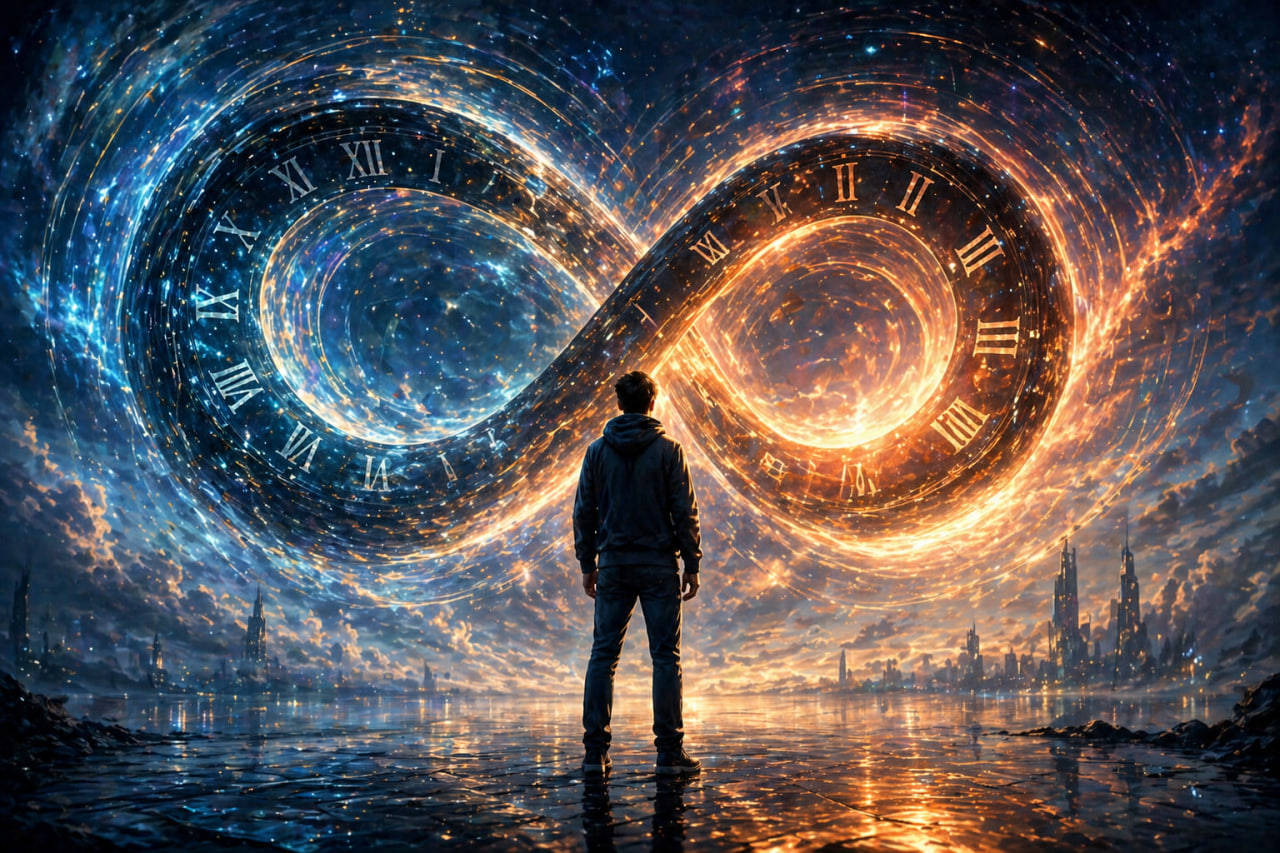
Time is usually perceived as a straight line—flowing from the past, through the present, and into the future. However, modern physics suggests that time may be far more complex. Under certain theoretical conditions, it might even behave like a loop, allowing events to influence themselves. This leads to one of the most intriguing questions in science: are time paradoxes physically possible, or are they just logical puzzles?

Supersonic Aircraft: How They Work and Why They Matter
Hi-Tech Smart Technology Science

Supersonic Aircraft: How They Work and Why They Matter

Supersonic aircraft represent one of the most advanced achievements in aviation. These planes are capable of flying faster than the speed of sound, dramatically reducing travel time and pushing the boundaries of engineering and physics. From military jets to the iconic Concorde, supersonic flight has fascinated scientists and travelers alike. Today, renewed interest in supersonic travel is driving innovation, with new technologies aiming to make faster-than-sound flight more efficient, quieter, and accessible.

Shock Waves: How Powerful Pressure Fronts Shape Nature and Technology
Science Be Smart Physics

Shock Waves: How Powerful Pressure Fronts Shape Nature and Technology

Shock waves are one of the most intense and fascinating phenomena in physics. They occur when energy moves through a medium—such as air, water, or solid material—faster than the speed at which disturbances normally travel in that medium. The result is a sudden, almost instantaneous change in pressure, temperature, and density. From supersonic jets and explosions to lightning and volcanic eruptions, shock waves play a crucial role in both natural events and modern technology. Understanding how they form and behave helps scientists improve safety, engineering, and even medical treatments.

Does Time Really Exist? The Block Universe Theory Explained
Universe Science Be Smart

Does Time Really Exist? The Block Universe Theory Explained

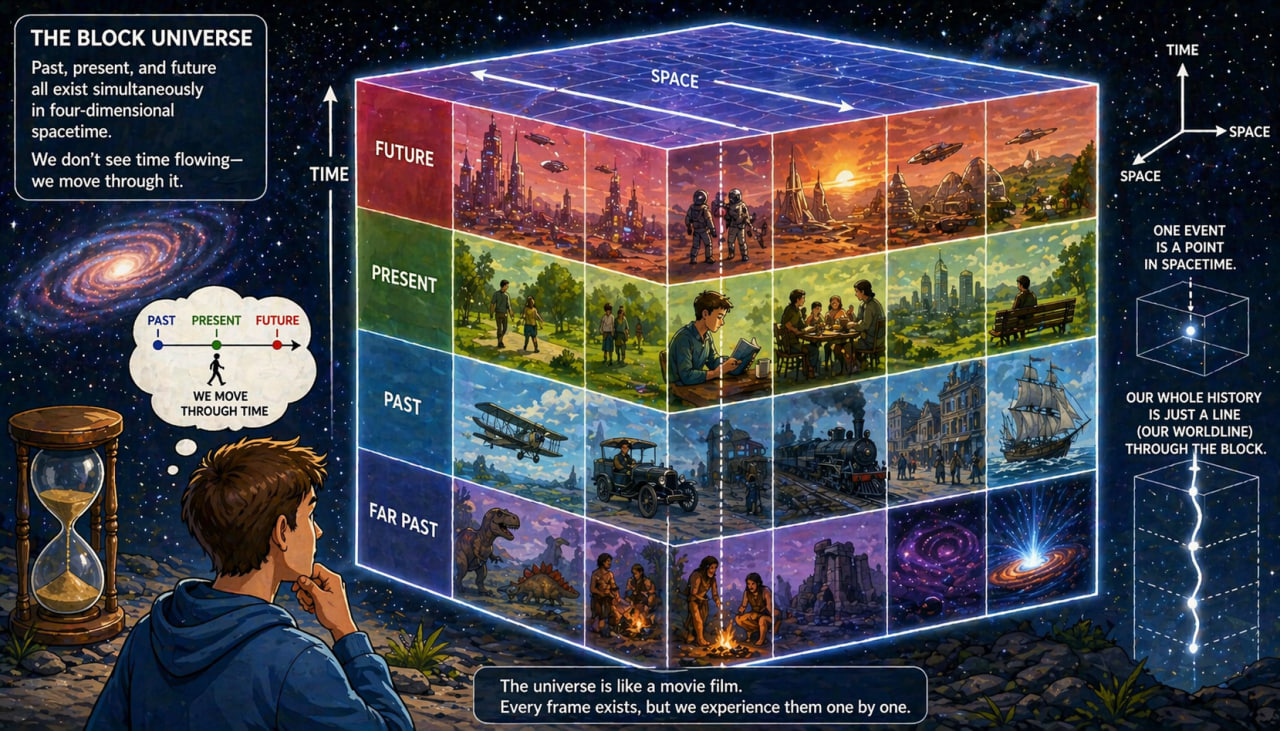
Time feels like one of the most fundamental aspects of reality. We experience it as a constant flow from past to present to future. But what if this perception is an illusion? The block universe theory, one of the most intriguing ideas in modern physics and philosophy, suggests that time does not “flow” at all. Instead, all moments—past, present, and future—exist simultaneously. This concept challenges our everyday understanding of reality and raises profound questions about free will, causality, and the nature of existence.

The Observer Effect in Quantum Physics: Do Particles Change When We Look at Them?
Smart Technology Science Physics

The Observer Effect in Quantum Physics: Do Particles Change When We Look at Them?

The idea that simply observing a particle can change its behavior is one of the most fascinating and misunderstood concepts in modern science. Often popularized in movies and online discussions, the observer effect in quantum mechanics raises a profound question: does reality depend on observation? While the answer is more complex than it may seem, understanding this phenomenon reveals how strange and counterintuitive the quantum world truly is.

Why the Ocean Is Salty: The Geochemistry of Our Planet
Science Be Smart What if?

Why the Ocean Is Salty: The Geochemistry of Our Planet

The salty taste of ocean water is one of the most familiar features of Earth, yet its origin is the result of long-term geological and chemical processes acting over billions of years. The oceans did not start out as salty as they are today. Instead, their composition gradually changed as minerals were transported, dissolved, and recycled through Earth’s systems. The saltiness of the ocean reflects a balance between inputs from land and the seafloor and processes that remove or store dissolved elements. Understanding this balance reveals how deeply connected the ocean is to the planet’s geology.

Biomimicry: How Nature Inspires Engineering Solutions
Science New Discoveries Be Smart

Biomimicry: How Nature Inspires Engineering Solutions

Biomimicry is an approach in science and engineering where ideas are drawn from natural systems, organisms, and processes to solve human problems. Instead of inventing solutions from scratch, researchers study how nature has already optimized structures and mechanisms over millions of years of evolution. This method has led to innovations in materials, architecture, medicine, and technology. Nature operates efficiently, using minimal energy and resources, which makes it an ideal model for sustainable design. Biomimicry is not about copying nature directly, but about understanding the principles behind natural solutions and applying them in new contexts.

The Amazing Geometry of Pyramids
History Science Be Smart

The Amazing Geometry of Pyramids

Pyramids are among the most mathematically precise and visually striking structures ever created by ancient civilizations. Beyond their monumental scale, what makes pyramids truly remarkable is their geometric accuracy, symmetry, and alignment. These structures are not random piles of stone; they are carefully designed forms that reflect a deep understanding of mathematics, proportions, and spatial organization. Across different cultures, pyramids demonstrate consistent geometric principles, suggesting that ancient builders possessed advanced knowledge of measurement and design. The study of pyramid geometry reveals not only engineering skill but also a possible connection between architecture, astronomy, and symbolic meaning. Understanding these geometric features allows us to better appreciate how such structures were conceived and constructed thousands of years ago.

How Many Books and Documents Are Not on the Internet — and Where to Find Them
History Science Be Smart

How Many Books and Documents Are Not on the Internet — and Where to Find Them

The internet gives the impression that nearly all human knowledge is accessible with a simple search, but in reality, a vast portion of books and documents still remains offline. Estimates suggest that only a fraction of all published materials has been digitized, especially when considering historical archives, rare manuscripts, and local publications. Millions of works exist only in physical form, stored in libraries, private collections, or institutional archives. The reasons for this gap include technical limitations, legal restrictions, and the sheer scale of global knowledge production. Understanding why so much information is not online helps researchers, students, and curious readers expand their search beyond digital sources. In many cases, the most valuable or unique materials require traditional methods of discovery.