Science

Automation: Shaping the Future of Work and Innovation
Hi-Tech Science Be Smart

Automation: Shaping the Future of Work and Innovation

Automation has become one of the defining forces of the 21st century, transforming industries, economies, and the way people work. At its core, automation refers to the use of technology and systems to perform tasks with minimal human intervention. From manufacturing robots to artificial intelligence algorithms, automation enhances efficiency, accuracy, and productivity across all sectors. While some see it as a potential threat to traditional jobs, others recognize it as a catalyst for innovation and growth. Understanding how automation works—and how to adapt to it—has become crucial for individuals and organizations navigating the modern digital era.

Copper: The Timeless Metal of Power and Progress
Science Be Smart

Copper: The Timeless Metal of Power and Progress

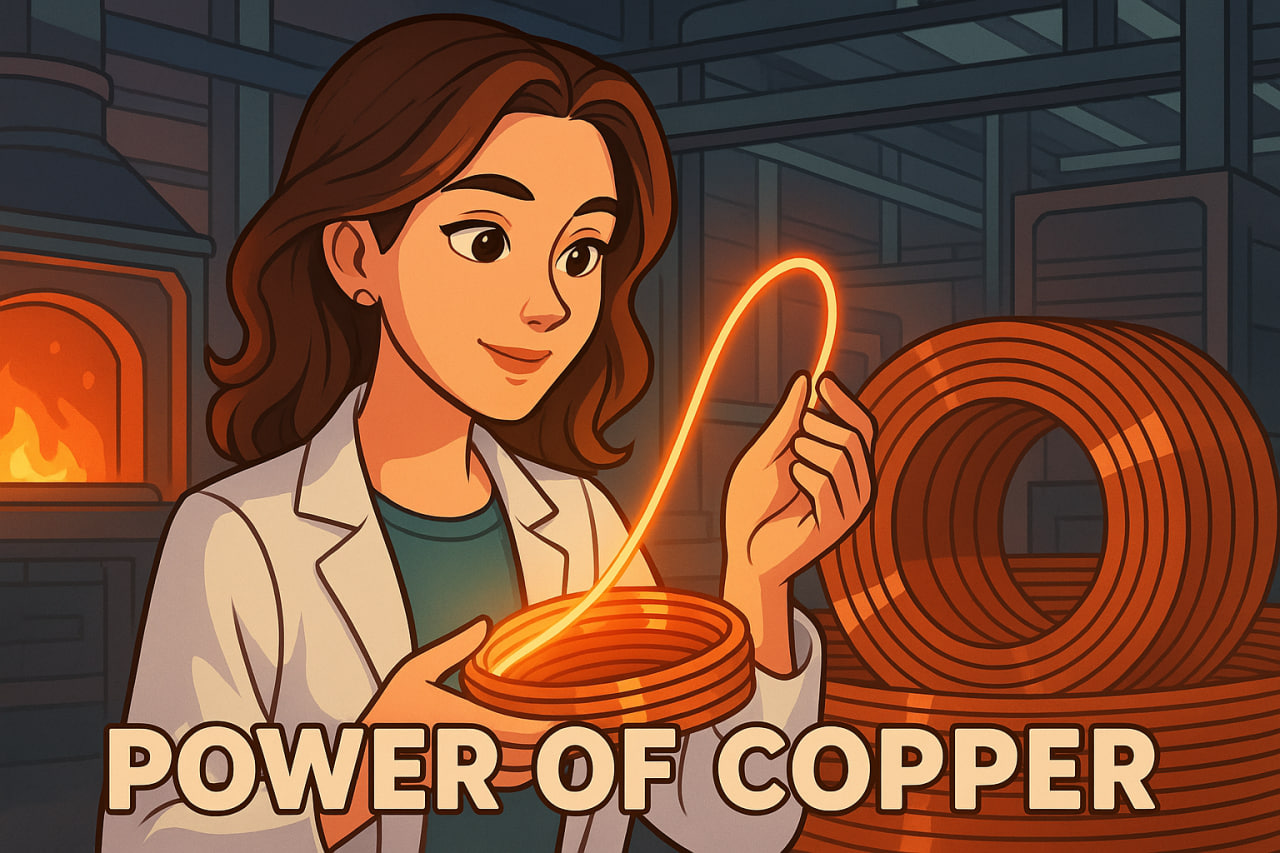
Copper, one of humanity’s oldest and most versatile metals, has shaped civilization for more than 10,000 years. Known for its reddish hue and exceptional conductivity, copper has been a cornerstone of human development, from ancient tools and coins to modern electronics and renewable energy systems. Its unique combination of durability, flexibility, and resistance to corrosion makes it indispensable across industries. Beyond its practical uses, copper holds deep cultural and economic significance—it symbolizes prosperity, technology, and connection. In an age focused on sustainability, this timeless metal continues to play a crucial role in building a greener and more efficient future.

Modern Theories About the Origin of Our Universe
Space Stories Universe Science

Modern Theories About the Origin of Our Universe

The question of how our universe began has fascinated humanity for millennia, inspiring myths, religions, and scientific inquiry. Modern science now offers several compelling theories that attempt to explain the universe’s origin, structure, and evolution. These theories combine physics, astronomy, and mathematics to describe events that occurred nearly 14 billion years ago. The leading idea—the Big Bang Theory—suggests that the universe expanded from a single, incredibly dense and hot point. However, scientists have developed alternative and complementary models, such as cosmic inflation, multiverse theory, and quantum fluctuation models, to address the mysteries that the Big Bang alone cannot explain. The pursuit of understanding our cosmic origins continues to challenge our knowledge of time, space, and existence itself.

Diamond – Nature’s Masterpiece of Strength and Light
Science Be Smart

Diamond – Nature’s Masterpiece of Strength and Light

Diamonds are among the most extraordinary materials on Earth — symbols of beauty, strength, and eternity. But beyond their dazzling appearance, diamonds are marvels of physics and chemistry. Formed under extreme pressure deep within the Earth, they represent one of nature’s finest examples of atomic perfection. Understanding how diamonds form, what gives them their unique properties, and how humans use them reveals the incredible science behind this timeless gemstone.

Quantum Nanodiamonds – The Future of Ultra-Precise Technology
Hi-Tech Science New Discoveries

Quantum Nanodiamonds – The Future of Ultra-Precise Technology

In the intersection of quantum physics and nanotechnology lies one of the most fascinating materials of the modern age — quantum nanodiamonds. These tiny crystalline structures, often just billionths of a meter in size, are revolutionizing fields from medicine to computing. What makes them so remarkable is their ability to manipulate and sense quantum information at room temperature — something few materials can achieve. Quantum nanodiamonds are not just a scientific curiosity; they are a gateway to the next generation of quantum sensors, biomedical imaging tools, and ultra-secure communication systems.

Magnetic Carbon Materials – The Unexpected Frontier of Modern Science
Hi-Tech Science New Discoveries

Magnetic Carbon Materials – The Unexpected Frontier of Modern Science

Carbon, one of the most versatile elements in the universe, has long been known for its non-magnetic nature. Found in materials like graphite, graphene, and diamond, it has shaped countless innovations in electronics, energy storage, and nanotechnology. Yet, in recent years, scientists have discovered a surprising phenomenon — magnetic carbon materials. These carbon-based substances, engineered at the atomic level, can exhibit ferromagnetism similar to that found in iron or cobalt. This breakthrough challenges conventional chemistry and opens doors to new technologies in quantum computing, spintronics, and medical diagnostics.

Ferromagnetism – The Hidden Force Shaping Modern Technology
Science Be Smart

Ferromagnetism – The Hidden Force Shaping Modern Technology

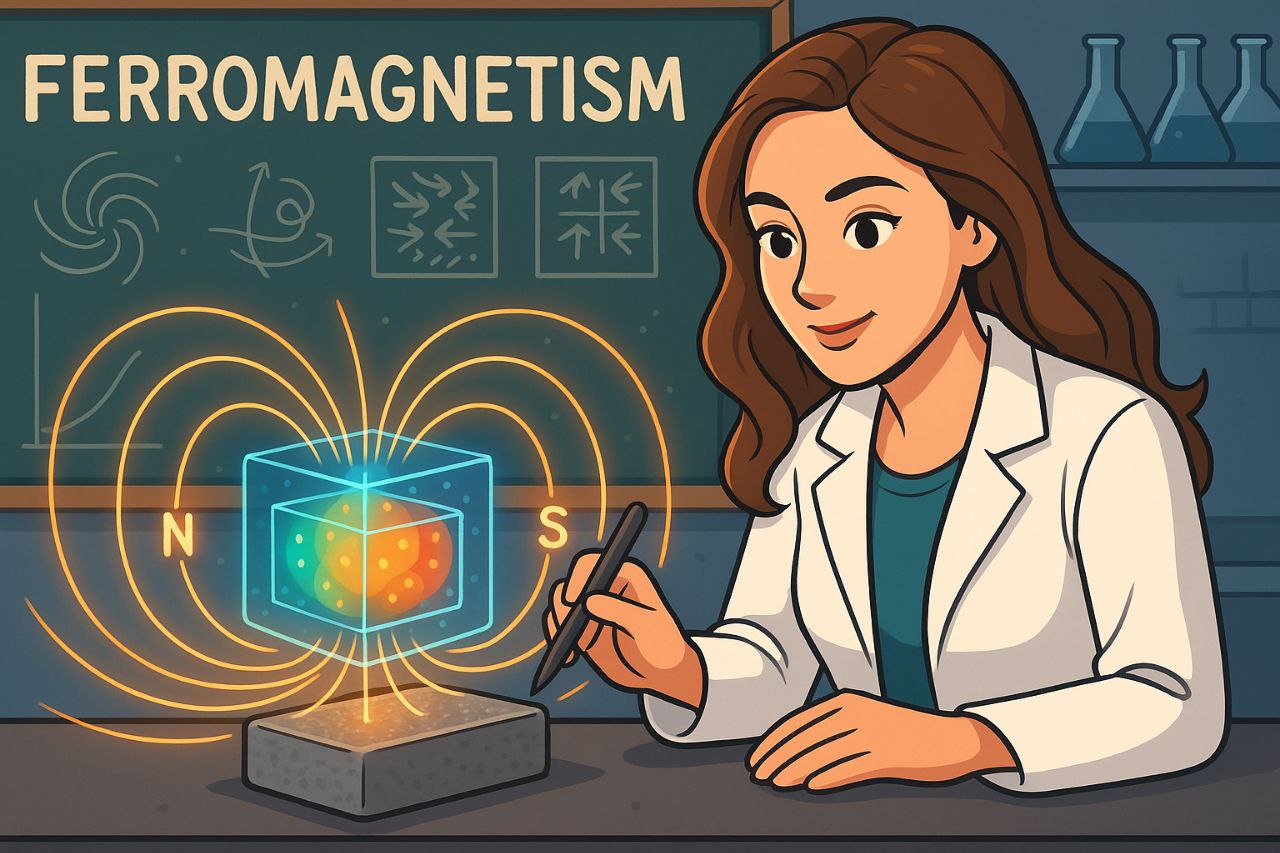
Ferromagnetism is one of the most fascinating and practical phenomena in physics. It is the fundamental principle behind magnets, electric motors, data storage, and many everyday technologies. From refrigerator magnets to MRI machines and hard drives, ferromagnetism plays a central role in modern life. But what exactly is it, and why do certain materials exhibit this remarkable property while others do not? Understanding ferromagnetism reveals not just the science of attraction but also the invisible quantum order that shapes our technological world.

What Are Polymers and Why They Matter
Science Be Smart

What Are Polymers and Why They Matter

Polymers are among the most versatile and widely used materials on Earth, forming the backbone of modern life — quite literally in some cases. From the DNA inside our cells to the plastics in our homes and the fibers in our clothes, polymers are everywhere. Their unique molecular structure allows them to be incredibly strong, flexible, and lightweight, making them essential in industries ranging from medicine to aerospace. Understanding what polymers are and how they work helps explain how chemistry shapes the world we live in.

Voyager Mission – Humanity’s Message to the Stars
Space Stories History Universe

Voyager Mission – Humanity’s Message to the Stars

In the late 1970s, two small spacecraft left Earth on a journey that would redefine exploration and stretch the boundaries of human imagination. Known as Voyager 1 and Voyager 2, these twin probes were launched by NASA to study the outer planets of our solar system — but their mission soon evolved into something far greater. Today, both Voyagers continue to travel through the cold expanse of interstellar space, carrying with them a golden record — a time capsule of human civilization — destined to wander the galaxy for billions of years. The Voyager Mission is not only a triumph of science and engineering but also a symbol of humanity’s desire to understand the cosmos and to be remembered among the stars.

Prism – The Science of Light and Color
Science Be Smart

Prism – The Science of Light and Color

A prism is one of the simplest yet most fascinating tools in optics, revealing the hidden beauty of light. At first glance, it’s merely a transparent geometric object—often triangular—but when a beam of light passes through it, something magical happens: a rainbow emerges. This phenomenon, known as dispersion, demonstrates how white light is composed of multiple colors. Beyond its aesthetic appeal, the prism has been central to scientific discovery, helping humans understand the nature of light, color, and the physical laws that govern them.