Solar System

The Fate of Our Sun: What Science Tells Us
Space Stories Universe Solar System

The Fate of Our Sun: What Science Tells Us

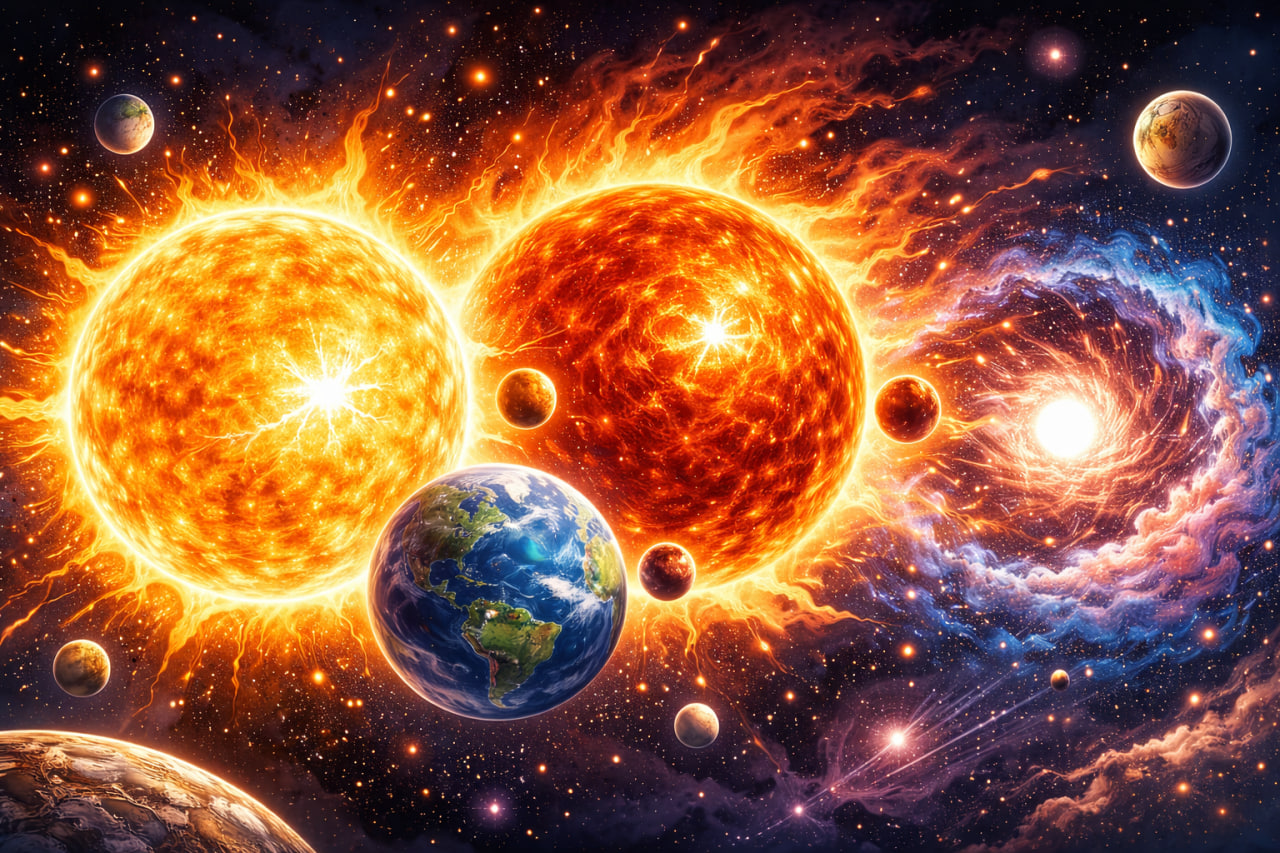
The Sun is the central engine of the Solar System and the primary source of energy for life on Earth. Although it feels permanent and unchanging on a human timescale, the Sun is a dynamic star with a well-defined life cycle. Astronomy allows scientists to understand not only how the Sun works today, but also how it will evolve over billions of years. The fate of the Sun is governed by physical laws that apply to stars across the universe. Studying this future helps place humanity in a broader cosmic context.
Trojan Asteroids: Ancient Companions of Planets
Space Stories Universe Solar System

Trojan Asteroids: Ancient Companions of Planets

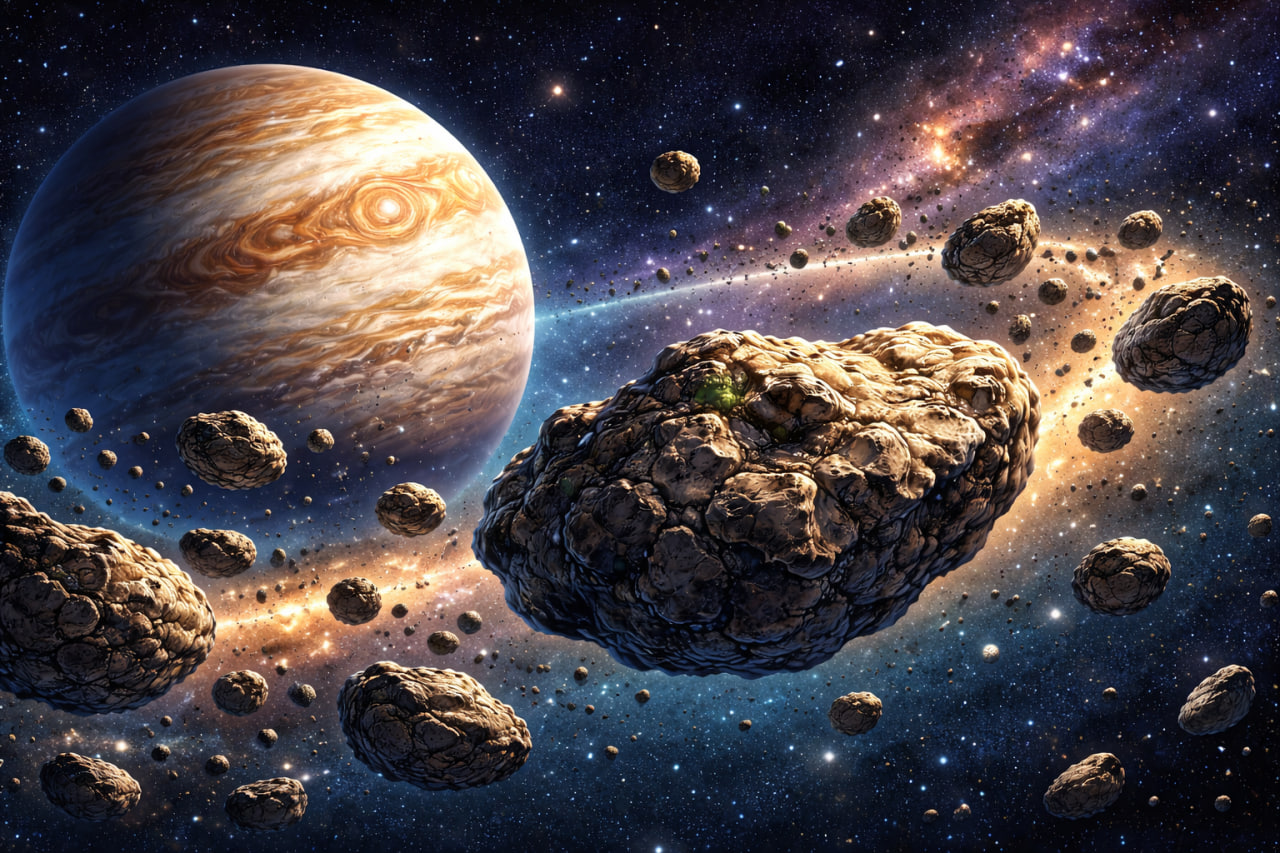
Trojan asteroids are a unique group of small celestial bodies that share an orbit with a planet while remaining locked in stable gravitational positions. Unlike typical asteroids found in the main asteroid belt, Trojans travel alongside planets, clustered around special points where gravitational forces balance perfectly. These objects are considered cosmic fossils, preserving information about the early Solar System. Studying Trojan asteroids helps scientists understand how planets formed, migrated, and interacted billions of years ago. Although they move through space at enormous speeds, their orbital relationship with planets remains remarkably stable. Trojan asteroids reveal that even in a dynamic Solar System, long-term balance is possible.

Jupiter and Saturn: The Formation History of Their Moons
Space Stories Universe Solar System

Jupiter and Saturn: The Formation History of Their Moons

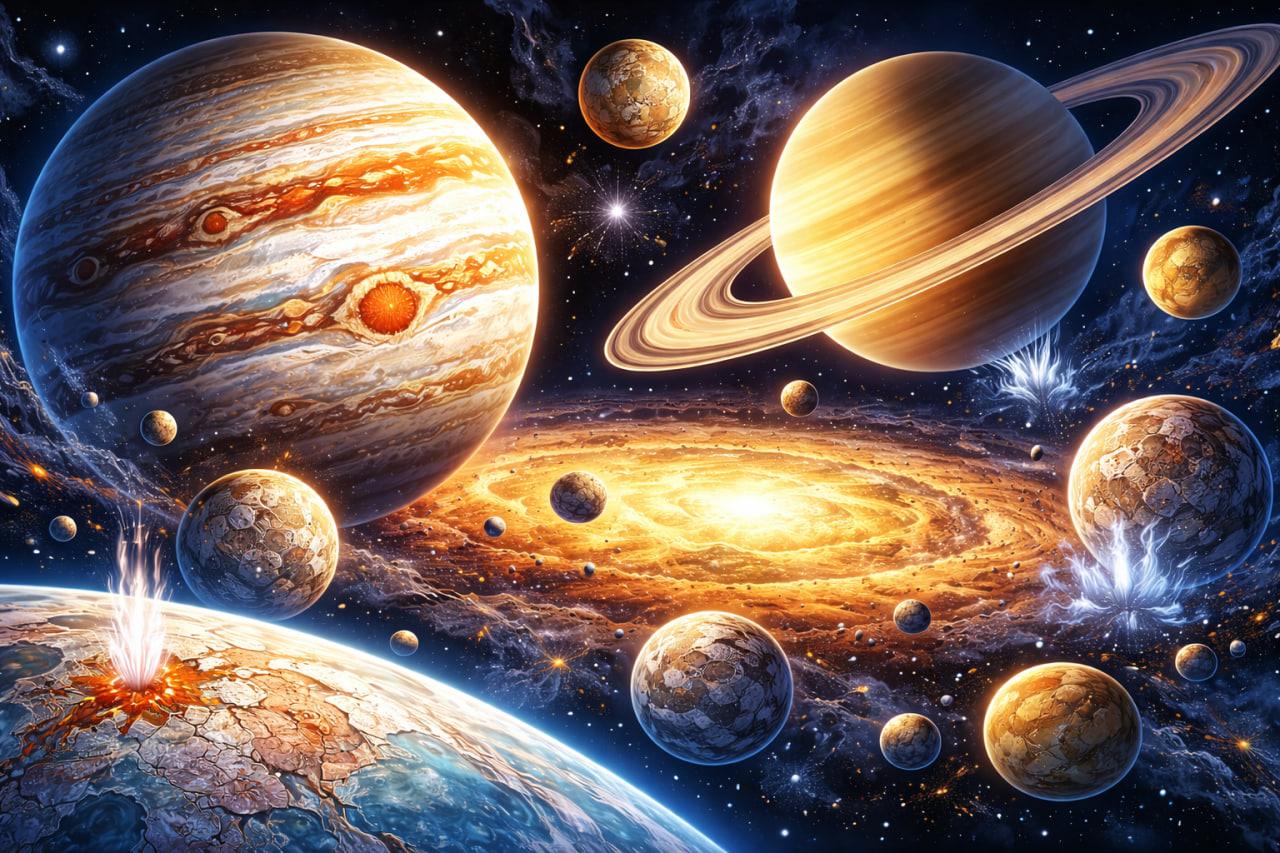
Jupiter and Saturn are not only the largest planets in the Solar System but also the centers of complex miniature planetary systems formed by their numerous moons. These satellites range from icy worlds with subsurface oceans to volcanically active bodies, each preserving clues about the early stages of planetary formation. Scientists believe that the moons of Jupiter and Saturn formed alongside their parent planets, shaped by gravity, gas dynamics, and collisions billions of years ago. Studying these moons allows researchers to reconstruct the conditions that existed in the protoplanetary disk and understand how giant planets influence their surroundings. The diversity of these satellites reveals that moon formation is a dynamic and evolving process rather than a single uniform event.

Mercury: Why Does the Closest Planet to the Sun Have Ice?
Space Stories Universe Solar System

Mercury: Why Does the Closest Planet to the Sun Have Ice?

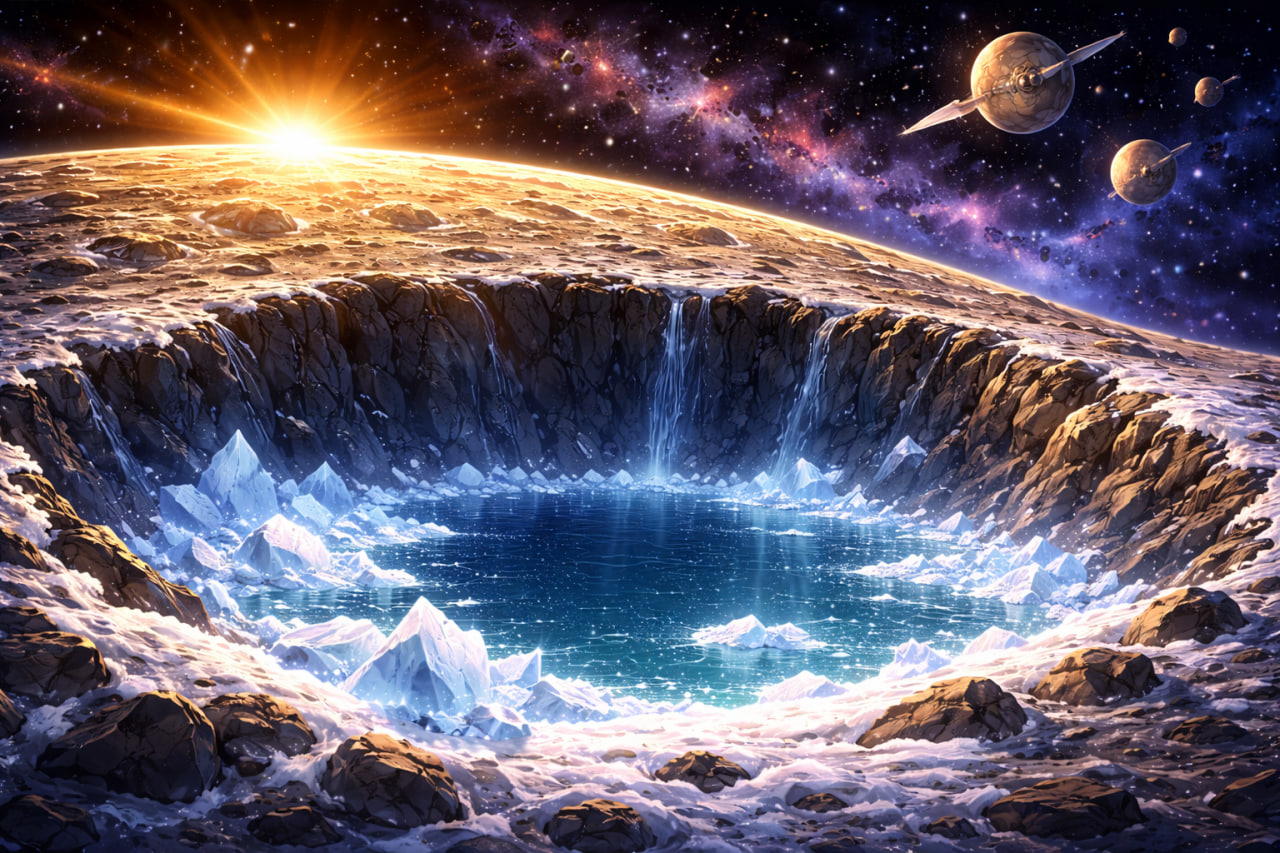
At first glance, Mercury seems like the last place in the Solar System where ice could exist. As the planet closest to the Sun, its surface can heat up to extreme temperatures during the day. For a long time, scientists assumed that any water or ice on Mercury would have evaporated billions of years ago. However, modern space missions have revealed a surprising reality: water ice exists on Mercury, preserved in some of the coldest places in the inner Solar System. This discovery reshaped our understanding of planetary environments and showed how extreme conditions can coexist on a single world. Explaining this paradox requires looking closely at Mercury’s orbit, rotation, and unique surface features.

Why the Moon Is So Fascinating for People on Earth
Space Stories Universe Solar System

Why the Moon Is So Fascinating for People on Earth

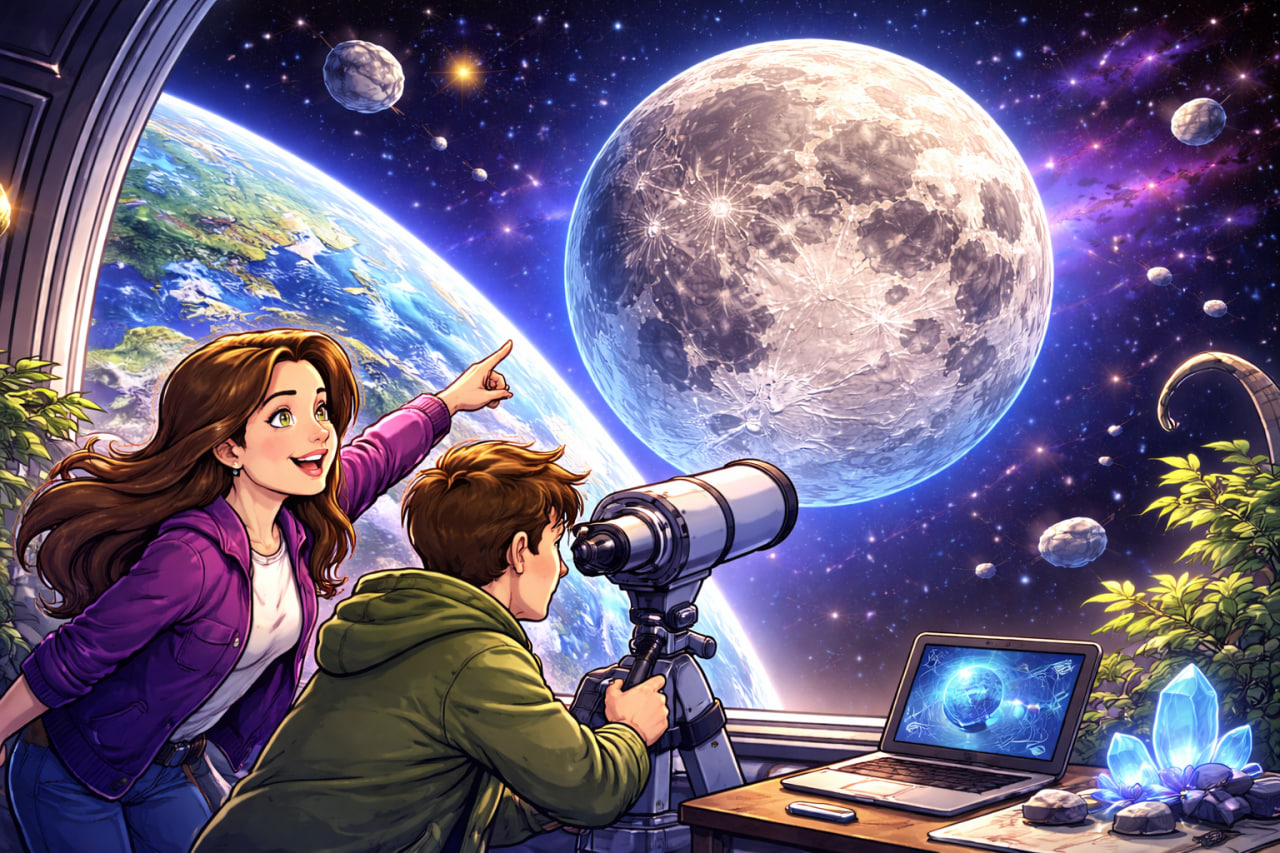
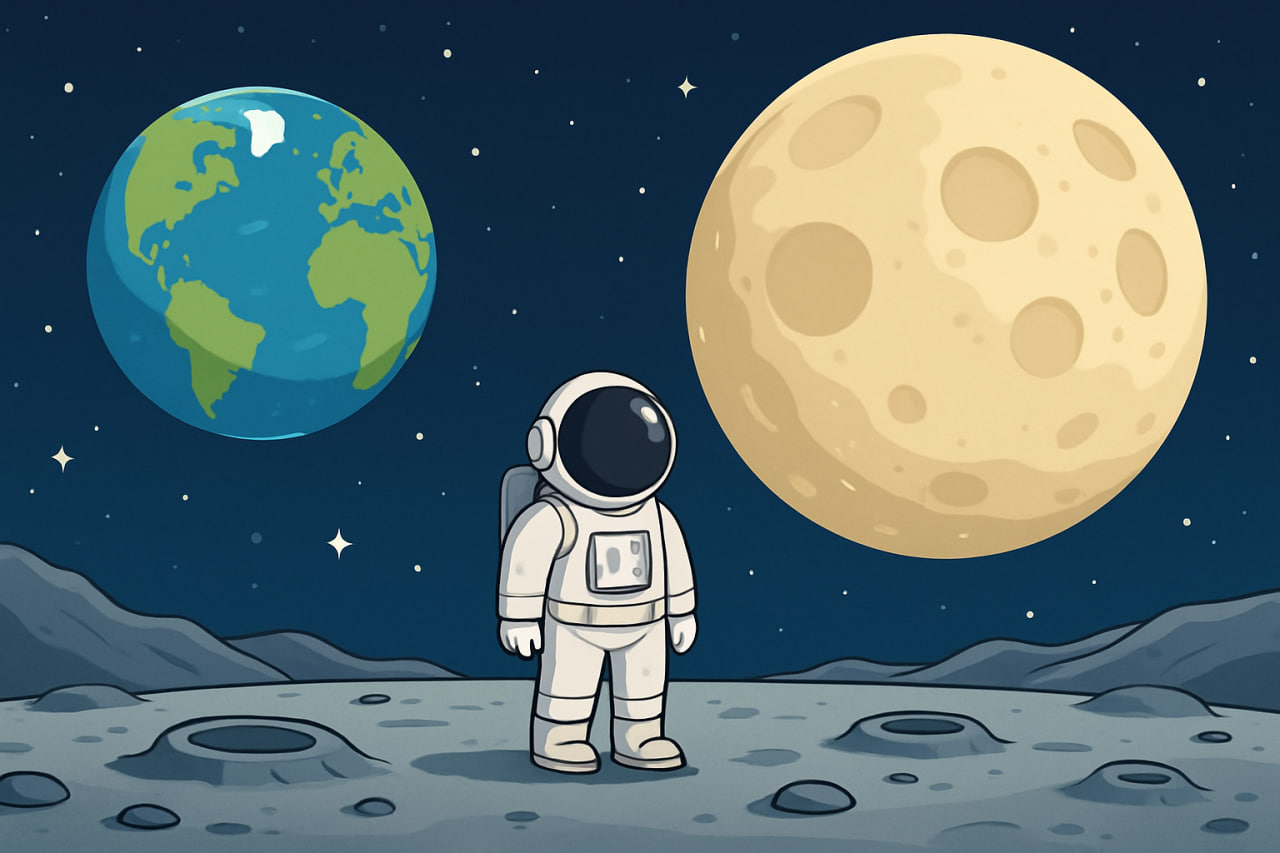
The Moon has captivated humanity since the earliest days of civilization, serving as a constant presence in the night sky and a powerful symbol in culture, science, and imagination. As Earth’s only natural satellite, it influences natural processes, inspires exploration, and offers unique opportunities for scientific discovery. Unlike distant planets, the Moon is close enough to study in great detail, making it a natural laboratory for understanding planetary evolution. Its surface preserves records of cosmic events that Earth has long erased through weather and tectonics. For modern humanity, the Moon is not only an object of curiosity but also a gateway to future space exploration and technological progress.

The Kuiper Belt and the Oort Cloud: Icy Worlds at the Edge of the Solar System
Space Stories Universe Solar System

The Kuiper Belt and the Oort Cloud: Icy Worlds at the Edge of the Solar System

Far beyond the orbit of Neptune lies a vast and mysterious region of the Solar System, populated by frozen remnants from its formation. These distant domains—the Kuiper Belt and the Oort Cloud—are composed of icy bodies that preserve clues about the earliest stages of planetary history. Although invisible to the naked eye and difficult to study directly, they play a crucial role in shaping the Solar System’s structure and evolution. Comets, orbital dynamics, and even planetary migration are deeply connected to these remote regions. Understanding them expands our perception of the Solar System from a compact planetary neighborhood into a vast, layered cosmic system. These icy worlds mark the true boundary between our planetary system and interstellar space.

Venus: Earth’s Hellish Sister and the Mystery of Its Climate
Space Stories Universe Solar System

Venus: Earth’s Hellish Sister and the Mystery of Its Climate

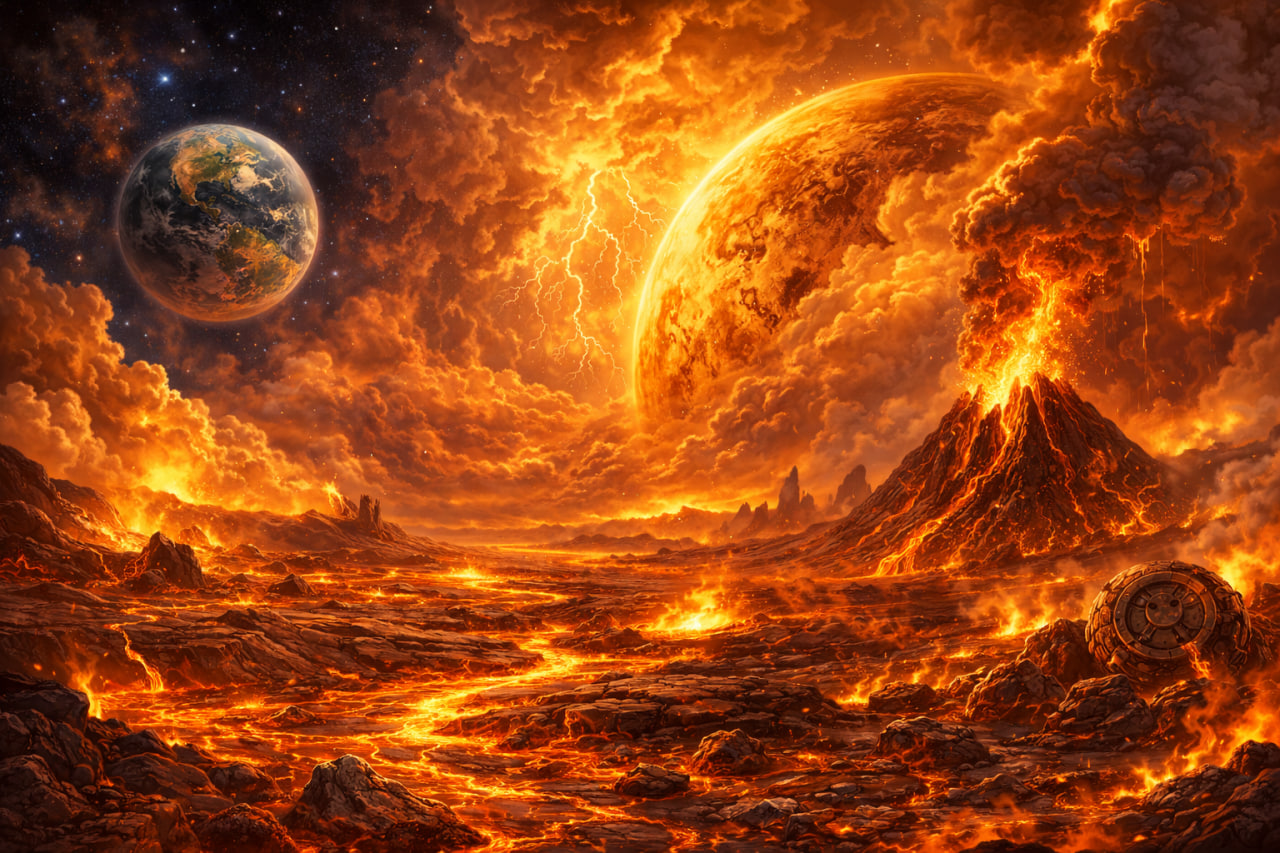
Venus is often called Earth’s sister planet because of its similar size, mass, and rocky composition, yet its environment could not be more different. While Earth supports life, Venus is a world of extreme heat, crushing pressure, and toxic clouds. Surface temperatures are hot enough to melt lead, and the atmosphere is dominated by carbon dioxide and sulfuric acid. These conditions make Venus one of the most hostile places in the Solar System. Understanding why two seemingly similar planets evolved so differently is one of the most important questions in planetary science. Venus offers a powerful lesson about climate, planetary evolution, and the fragility of habitability.

How Mars Could Be Made Habitable: Science, Challenges, and Limits
Space Stories Universe Solar System

How Mars Could Be Made Habitable: Science, Challenges, and Limits

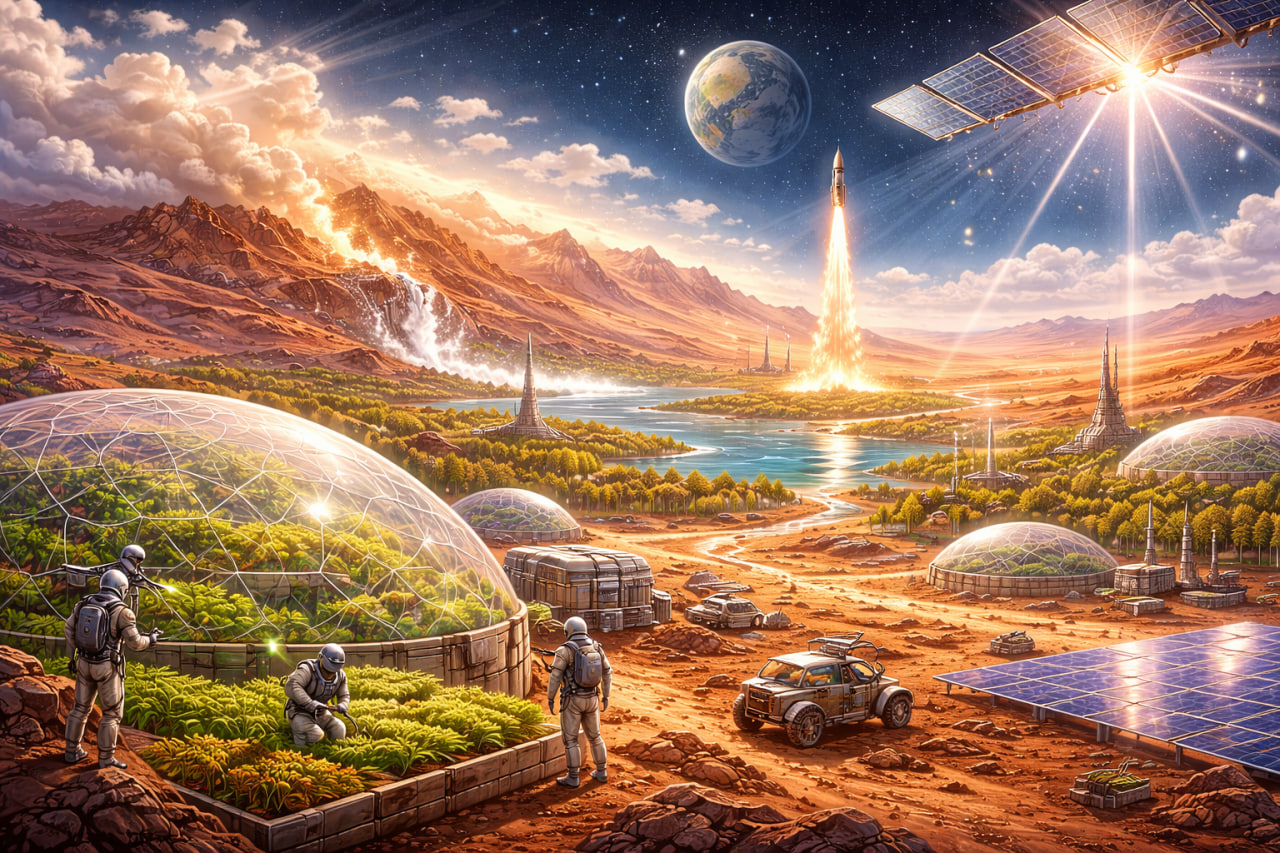
The idea of making Mars suitable for human life has fascinated scientists, engineers, and science fiction writers for decades. Mars is often considered the most Earth-like planet in the Solar System, yet its current conditions are extremely hostile to life as we know it. The planet is cold, dry, and exposed to intense radiation, with a thin atmosphere incapable of supporting liquid water on the surface. Transforming Mars into a habitable world, a process often called terraforming, would require changes on a planetary scale. While some aspects are theoretically possible, others remain far beyond current technological capabilities. Understanding what would be required helps separate scientific discussion from speculation.

Asteroid Psyche: A Metallic World Unlike Any Other
Space Stories Universe Solar System

Asteroid Psyche: A Metallic World Unlike Any Other

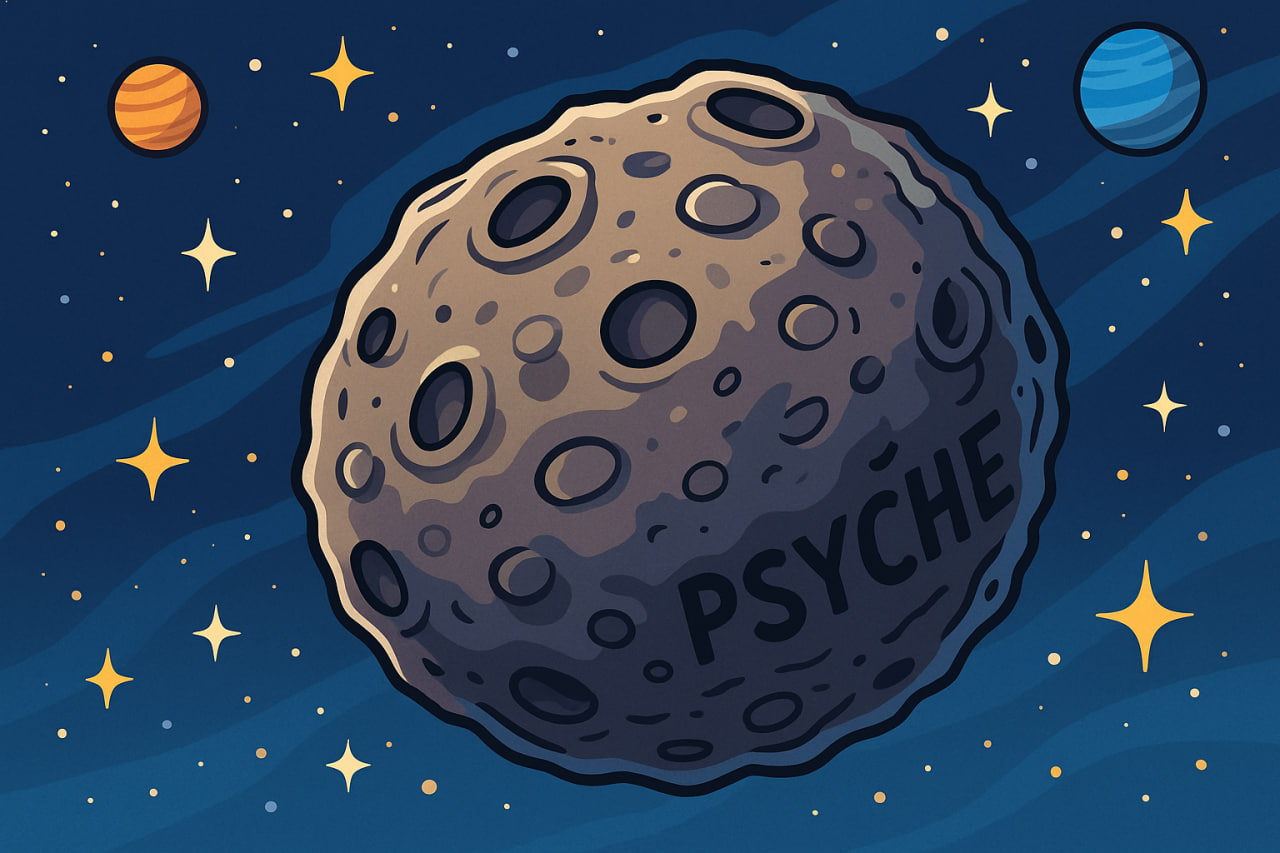
Asteroid Psyche is one of the most unusual and scientifically valuable objects in our solar system. Located in the asteroid belt between Mars and Jupiter, Psyche stands out because it appears to be composed largely of metal — primarily iron and nickel — resembling the core of a planet. Most asteroids are rocky or icy, but Psyche may represent the exposed metallic heart of an ancient world that never fully formed. This makes it a unique window into the early stages of planetary evolution. Understanding Psyche could reveal how rocky planets like Earth developed their layered internal structures billions of years ago.

The Moon: Earth’s Mysterious and Essential Companion
Space Stories Universe Solar System

The Moon: Earth’s Mysterious and Essential Companion

The Moon is Earth’s only natural satellite and one of the most influential celestial bodies in our solar system. For thousands of years, it has shaped human culture, guided navigation, inspired mythology, and sparked scientific curiosity. Beyond its symbolic meaning, the Moon plays a crucial physical role in stabilizing Earth’s climate, regulating ocean tides, and influencing biological rhythms. Its desolate, airless surface contains clues to the early formation of the solar system, while its gravitational pull has shaped life on Earth in profound ways. From ancient astronomers to modern space missions, the Moon remains a gateway to scientific discovery and a stepping stone toward future space exploration.