Space Stories

55 Cancri e: The “Diamond Planet” Worth Quintillions
Space Stories Universe New Discoveries

55 Cancri e: The “Diamond Planet” Worth Quintillions

The exoplanet 55 Cancri e has gained worldwide attention due to the idea that it may contain enormous amounts of carbon in the form of diamond. Located about 40 light-years from Earth, this planet orbits very close to its parent star and completes a full orbit in less than a day. Because of its extreme conditions, it is classified as a super-Earth, meaning it is larger than our planet but smaller than gas giants. Early scientific models suggested that its composition might be rich in carbon, leading to the popular nickname “diamond planet.” This idea captured public imagination, with estimates of its potential value reaching unimaginable numbers. However, the reality is more complex than the headlines suggest. Studying this planet helps scientists better understand how different types of worlds can form in the universe.
Dark Matter Stars: Could Such Objects Exist?
Space Stories Universe What if?

Dark Matter Stars: Could Such Objects Exist?

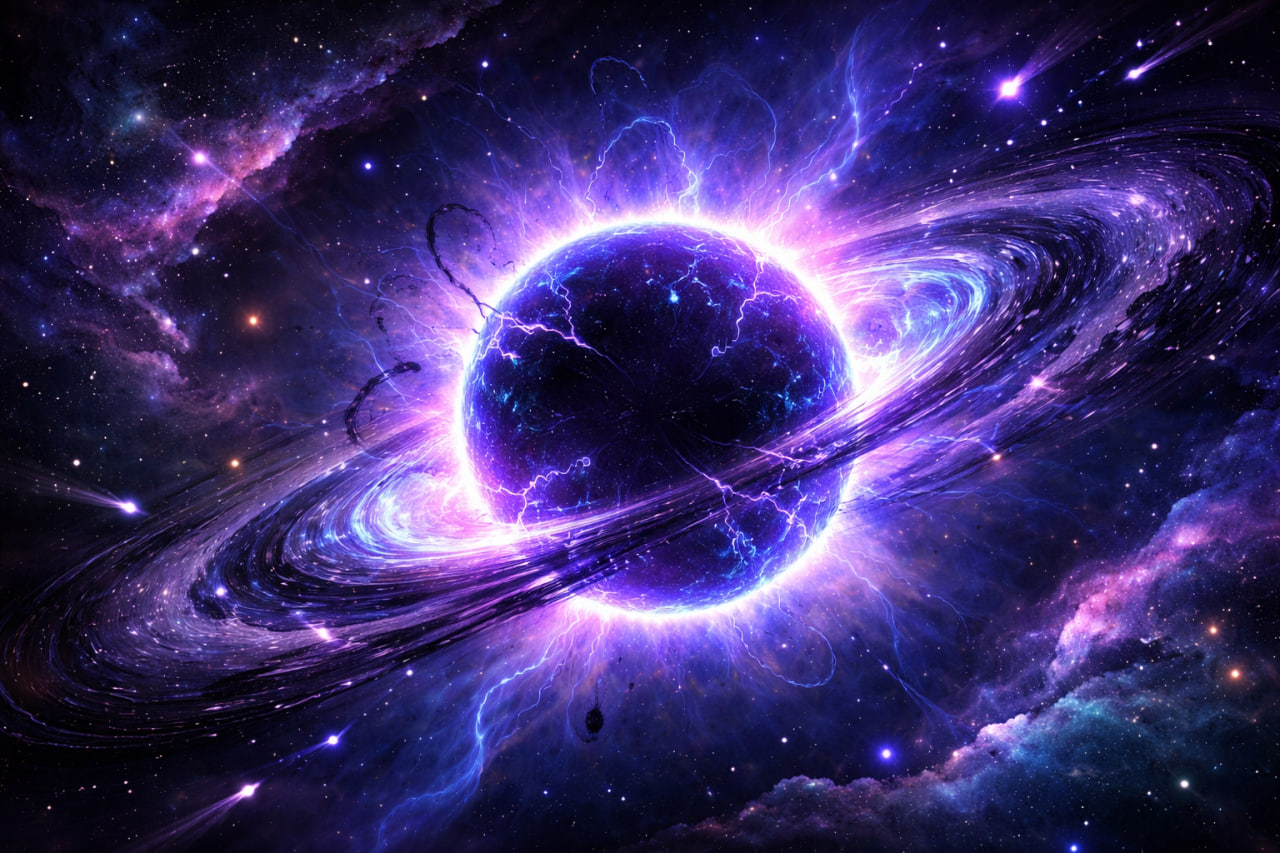
The idea of stars made from dark matter is one of the most intriguing hypotheses in modern astrophysics. Dark matter is a mysterious form of matter that does not emit, absorb, or reflect light, making it invisible to direct observation. Despite this, scientists believe it makes up a significant portion of the universe’s total mass. Because dark matter interacts primarily through gravity, it behaves very differently from ordinary matter. This raises the question of whether it could form structures similar to stars. While no direct evidence of such stars exists, theoretical models suggest that unusual objects related to dark matter may be possible. Exploring this idea helps scientists better understand the nature of the universe.

Space Stations Beyond Earth: Which Planets and Moons Are the Most Promising?
Space Stories Cosmic Innovations Solar System

Space Stations Beyond Earth: Which Planets and Moons Are the Most Promising?

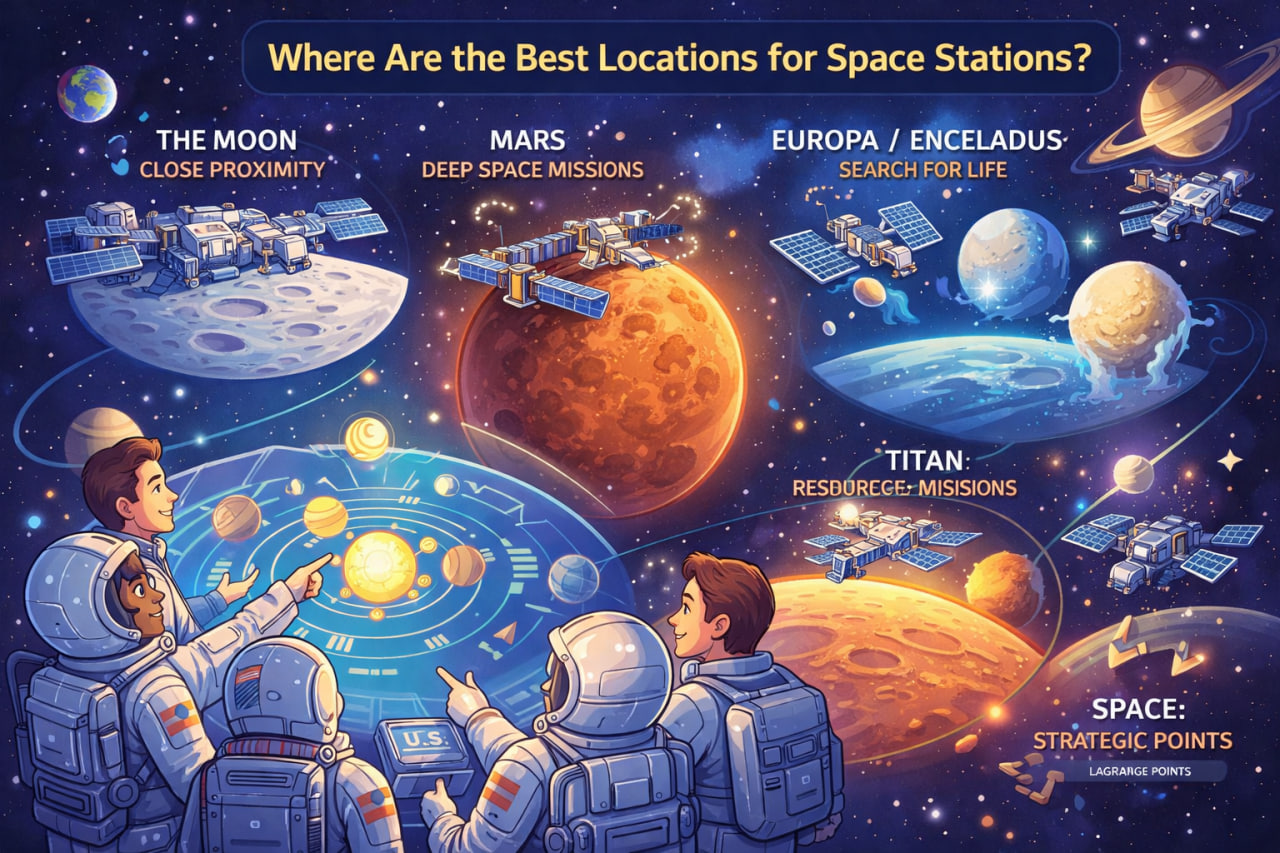
As humanity looks beyond Earth, the idea of placing space stations near other planets and moons becomes increasingly important. These stations could serve as scientific hubs, logistics centers, refueling points, and stepping stones for deep-space exploration. However, not every celestial body is equally suitable for such projects. Factors such as gravity, radiation, access to water ice, orbital stability, and distance from Earth all influence whether a location is practical. Scientists and engineers study these conditions carefully to identify the most promising destinations for long-term infrastructure in space. Understanding where future stations could be built helps define the next stages of human exploration and makes the concept of a multi-planetary civilization more realistic.

White Holes: The Opposite of Black Holes — Do They Exist?
Space Stories Universe What if?

White Holes: The Opposite of Black Holes — Do They Exist?

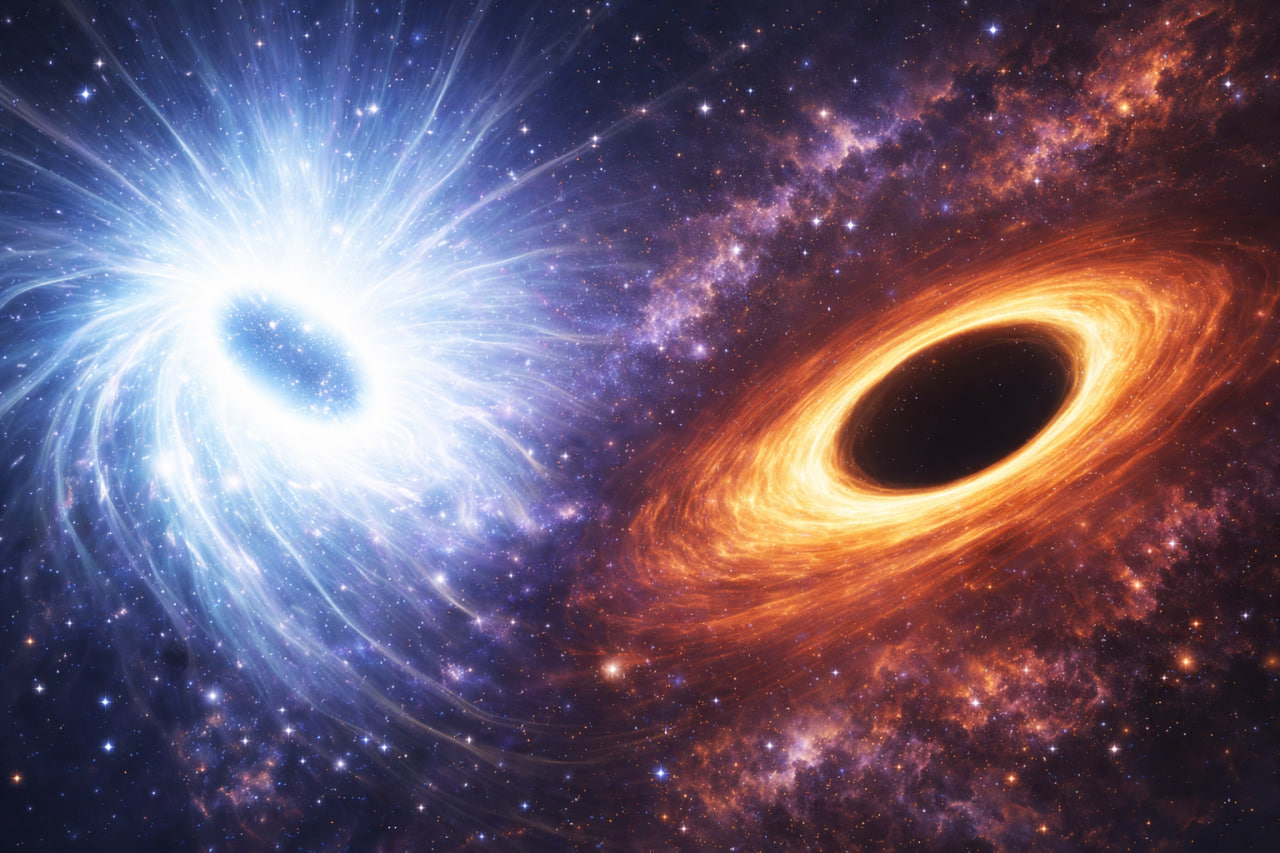
White holes are one of the most fascinating and speculative concepts in modern physics, often described as the theoretical opposites of black holes. While black holes absorb matter and light, white holes are predicted to do the reverse—expelling matter and preventing anything from entering. This idea emerges naturally from certain solutions of Einstein’s equations of general relativity, suggesting that space-time could allow such objects to exist. However, unlike black holes, which have strong observational evidence, white holes remain purely theoretical. Their existence raises deep questions about time, causality, and the fundamental structure of the universe. Exploring white holes helps scientists test the limits of physics and understand whether our current theories describe reality completely.

Wormholes: Tunnels Through Space and Time as a Scientific Hypothesis
Space Stories Universe Science

Wormholes: Tunnels Through Space and Time as a Scientific Hypothesis

Wormholes are one of the most intriguing concepts in theoretical physics, often described as shortcuts connecting distant points in space and time. Unlike conventional travel, which requires moving through space step by step, a wormhole would allow instant passage between two regions of the universe. The idea originates from solutions to Einstein’s equations of general relativity, suggesting that space-time can be curved in ways that create hidden connections. Although wormholes remain hypothetical, they have become a powerful tool for exploring the limits of physics, cosmology, and even the nature of time itself. Understanding wormholes helps scientists investigate whether faster-than-light travel or time travel could ever be possible within the laws of physics.

The Moon: What Lies Beneath Its Lifeless Surface?
Space Stories Universe Solar System

The Moon: What Lies Beneath Its Lifeless Surface?

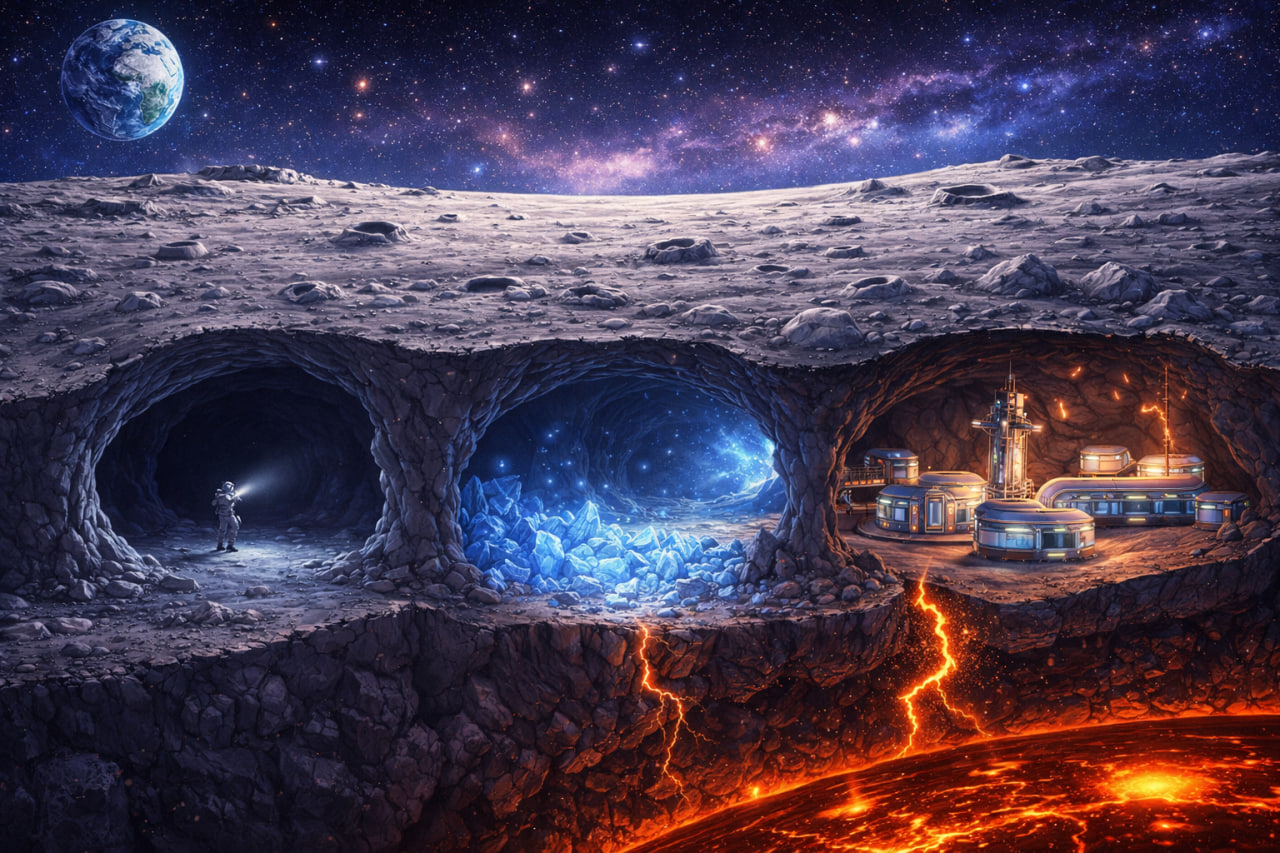
At first glance, the Moon appears to be a barren and lifeless world, covered in dust, craters, and silent plains. However, beneath its seemingly inactive surface lies a complex history and hidden structures that continue to intrigue scientists. The Moon preserves a record of billions of years of solar system evolution, acting as a time capsule untouched by weather, water, or tectonic activity. Modern missions and advanced instruments have revealed that its interior is far more dynamic than once believed. From subsurface ice to geological layers and ancient lava tubes, the Moon holds secrets that could reshape our understanding of planetary formation and even support future human exploration. Exploring what lies beneath the lunar surface is key to unlocking its past—and its potential future.

Volcanism on the Moon: Evidence of an Ancient Fire
Space Stories Universe Solar System

Volcanism on the Moon: Evidence of an Ancient Fire

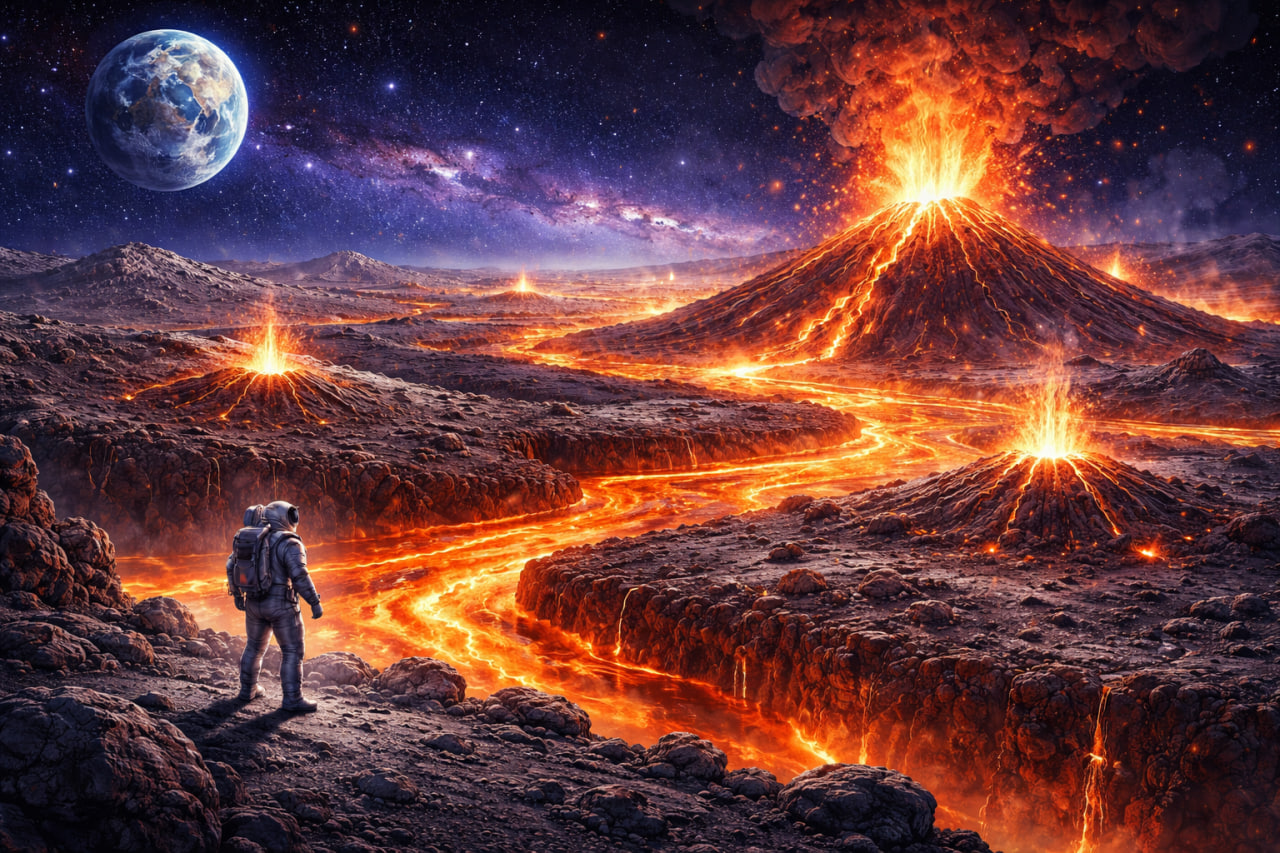
Today, the Moon appears cold, silent, and geologically inactive, but billions of years ago it was shaped by intense volcanic activity. Vast dark plains known as lunar maria were created by enormous lava flows that spread across the surface after powerful eruptions from the Moon’s interior. These features, visible even from Earth with the naked eye, show that the Moon was once a far more dynamic world than it appears today. Although its volcanism ended long ago, the traces of these ancient eruptions remain preserved because the Moon has no atmosphere, rain, or strong erosion to erase them. This makes the lunar surface an extraordinary geological archive of early planetary history. Studying volcanic activity on the Moon helps scientists understand not only the Moon itself, but also how rocky bodies cool, evolve, and transform over time throughout the solar system.

Valles Marineris on Mars: The Giant Canyon of Another World
Space Stories Universe Solar System

Valles Marineris on Mars: The Giant Canyon of Another World

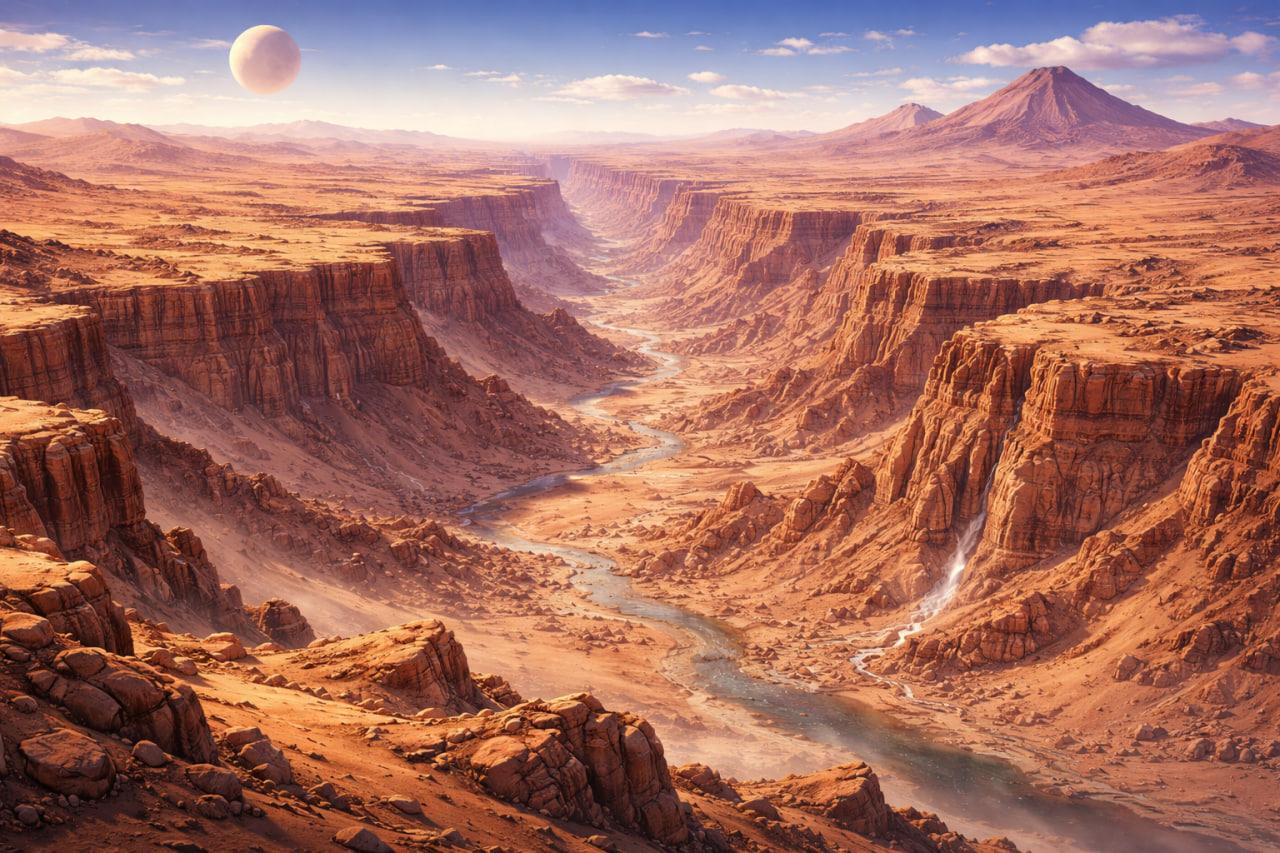
Valles Marineris is one of the most impressive geological structures in the solar system, stretching across the surface of Mars like a massive scar. This enormous canyon system extends for over 4,000 kilometers, making it far larger than any canyon on Earth, including the Grand Canyon. Its vast scale, depth, and complexity reveal a dramatic history of tectonic activity, erosion, and possible water flow. Unlike typical river-formed canyons on Earth, Valles Marineris is believed to have formed primarily through crustal stretching and collapse. Studying this region provides valuable insights into the geological evolution of Mars and the processes that have shaped its surface. It also raises intriguing questions about the planet’s past, including the possible presence of water and habitable conditions.

What Are the Fundamental Constants of Our Universe?
Space Stories Universe Science

What Are the Fundamental Constants of Our Universe?

The universe is governed by a set of physical laws that remain consistent everywhere we observe them. These laws depend on specific values known as fundamental physical constants. These constants represent fixed numerical values that appear in the equations describing how the universe behaves. They determine how particles interact, how gravity works, how light travels, and how atoms form. Without these constants, the laws of physics would not produce a stable universe capable of forming stars, planets, and life. Scientists study these constants carefully because they help reveal the deep structure of reality and the rules that govern the cosmos.

Sirius: The Brightest Star in the Night Sky
Space Stories Universe Be Smart

Sirius: The Brightest Star in the Night Sky

Sirius is the brightest star visible in Earth’s night sky and has fascinated humans for thousands of years. Located in the constellation Canis Major, Sirius shines with an intensity that makes it easily recognizable even in areas with moderate light pollution. Because of its brightness and visibility from many parts of the world, the star has played an important role in ancient astronomy, mythology, and navigation. Today, Sirius continues to attract scientific interest because it is actually a binary star system, consisting of two stars orbiting each other. Studying Sirius helps astronomers better understand stellar evolution, star formation, and the dynamics of nearby stellar systems.