Skip to content
Science Observer Science Observer

Useful articles about our universe and science

  • Home
  • Calculators
    • Artificial intelligence
      • AI Automation ROI Calculator
      • AI Ethics & Governance Risk Checker
      • AI Hallucination Risk Estimator
      • AI Model Training Cost Calculator
      • AI Time Saved Calculator
      • AI Token & Cost Calculator
      • Data Transfer Time Calculator
      • Internet Data Usage Calculator
    • Bioengineering
      • Bacterial Growth Calculator (Doubling Time)
      • DNA Melting Temperature (Tm) Calculator
      • Genetic Trait Probability Calculator
      • Neural Signal Latency Calculator
      • Neural Signal Speed Calculator
      • Punnett Square Calculator
    • Hi-tech
      • GPU Training Time Calculator
      • Screen PPI Calculator
      • Smart Home Energy Savings Calculator
    • Science
      • Capacitor Calculator (C, Q, V, Energy, RC)
      • Coulomb’s Law Calculator
      • Dew Point Calculator
      • Dilution Calculator (C₁V₁ = C₂V₂) !
      • Doppler Effect Calculator (Sound)
      • Electric Power Calculator
      • Exponential Growth Calculator
      • Free Fall Time Calculator
      • Gravitational Force Calculator
      • Heat Capacity Calculator (Q = m·c·ΔT)
      • Heat Conduction Calculator (Fourier’s Law)
      • Historical Time Gap Calculator
      • Ideal Gas Law Calculator (pV = nRT)
      • Kinetic Energy Calculator
      • Magnetic Field Strength Calculator
      • Momentum & Impulse Calculator!
      • Newton’s Second Law Calculator (F = m·a)
      • pH Calculator
      • pH Dilution Calculator
      • Pressure Calculator
      • Projectile Motion Calculator
      • Radioactive Half-Life Calculator
      • Research Impact Projection Calculator
      • Resistors in Series / Parallel Calculator
      • Science Unit Converter
      • Sound Distance Calculator (Thunder)
      • Sound Level (dB) Calculator
      • Time Dilation Calculator
      • Torque Calculator
      • Underwater Pressure Calculator
      • VO₂max Estimate Calculator
      • Wave Calculator
    • Universe
      • Age on Other Planets Calculator
      • Asteroid Impact Energy Calculator
      • Black Hole Radius Calculator
      • Black Hole Survival Distance Calculator
      • Cosmic Lookback Time Calculator
      • Escape Velocity Calculator
      • Horizon Distance Calculator
      • How Many Stars Can You See?
      • Intergalactic Travel Energy Calculator
      • Light Travel Time Calculator
      • Mars vs Earth Day Length Calculator
      • Orbit Speed & Period Calculator
      • Planet Gravity Comparison Calculator
      • Rocket Delta-V Estimator
      • Satellite Signal Delay Calculator
      • Space Travel Time Calculator
      • Telescope Resolution Calculator
      • Tidal Force Comparison Calculator
      • Time to Reach a Planet Calculator
      • Weight on Other Planets Calculator
      • What If Earth Stopped Spinning Calculator
      • What If the Sun Disappeared Timer
      • What If You Fell Into Jupiter Calculator

Be Smart

  • Home
  • Be Smart
  • Page 18
Shock Waves: The Physics of Sudden Pressure Changes
Posted inBe Smart Physics Science

Shock Waves: The Physics of Sudden Pressure Changes

A shock wave is a powerful physical phenomenon that occurs when a disturbance moves through a medium faster than the speed of sound. Unlike ordinary sound waves, shock waves involve…
Posted by deka March 31, 2026
Phase Transitions: The Physics of Changing States of Matter
Posted inBe Smart Physics Science

Phase Transitions: The Physics of Changing States of Matter

A phase transition is a fundamental physical process in which a substance changes from one state of matter to another, such as from solid to liquid or liquid to gas.…
Posted by deka March 31, 2026
Boiling: The Physics Behind a Common Phenomenon
Posted inBe Smart Physics Science

Boiling: The Physics Behind a Common Phenomenon

Boiling is a fundamental physical process that occurs when a liquid transforms into vapor throughout its entire volume. Unlike evaporation, which happens only at the surface, boiling involves the formation…
Posted by deka March 31, 2026
Messenger Max in Russia: Myths and Facts
Posted inAI AI & Ethics Be Smart

Messenger Max in Russia: Myths and Facts

In recent years, various messaging platforms have gained attention in Russia, including lesser-known or emerging services often discussed under names like “Messenger Max.” Around such platforms, there are many rumors,…
Posted by deka March 30, 2026
What Lies Inside Earth’s Core: Exploring the Planet’s Hidden Interior
Posted inBe Smart Earth & Moon Science

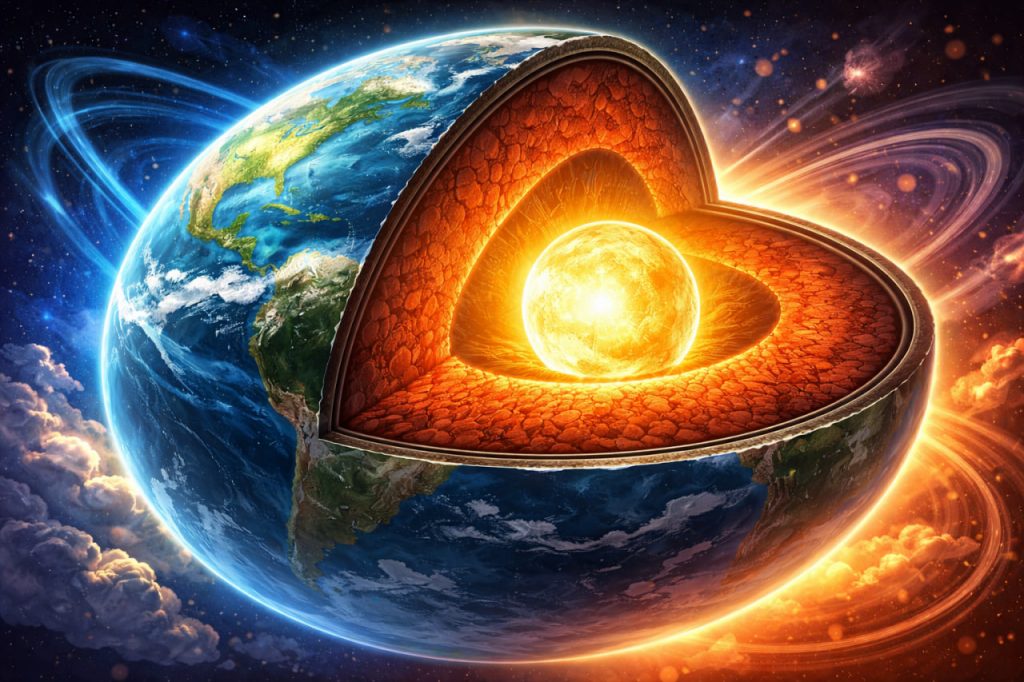
What Lies Inside Earth’s Core: Exploring the Planet’s Hidden Interior

The interior of Earth is one of the most mysterious and fascinating parts of our planet. Although we cannot directly observe it, scientists have developed detailed models of its structure…
Posted by deka March 30, 2026
Modern Web Browsers: Which One Is Best for Work?
Posted inAI AI & Ethics Be Smart

Modern Web Browsers: Which One Is Best for Work?

Web browsers have become essential tools for productivity, communication, and daily tasks. Whether you are working with documents, managing projects, or using cloud services, the choice of browser can significantly…
Posted by deka March 26, 2026
Astroengineering: Dyson Spheres Around Stars — How Could We Detect Them?
Posted inBe Smart Cosmic Innovations Inventions

Astroengineering: Dyson Spheres Around Stars — How Could We Detect Them?

The concept of a Dyson sphere represents one of the most ambitious ideas in astroengineering, proposing a structure built around a star to capture a significant portion of its energy…
Posted by deka March 23, 2026
Astroengineering: What Is It and Why Does It Matter?
Posted inBe Smart Cosmic Innovations Science

Astroengineering: What Is It and Why Does It Matter?

Astroengineering is a field of science and engineering focused on designing and potentially constructing large-scale structures and systems in space, often on a planetary or even stellar level. Unlike traditional…
Posted by deka March 23, 2026
Preons: Is There Anything Smaller Than Quarks?
Posted inBe Smart New Discoveries Science

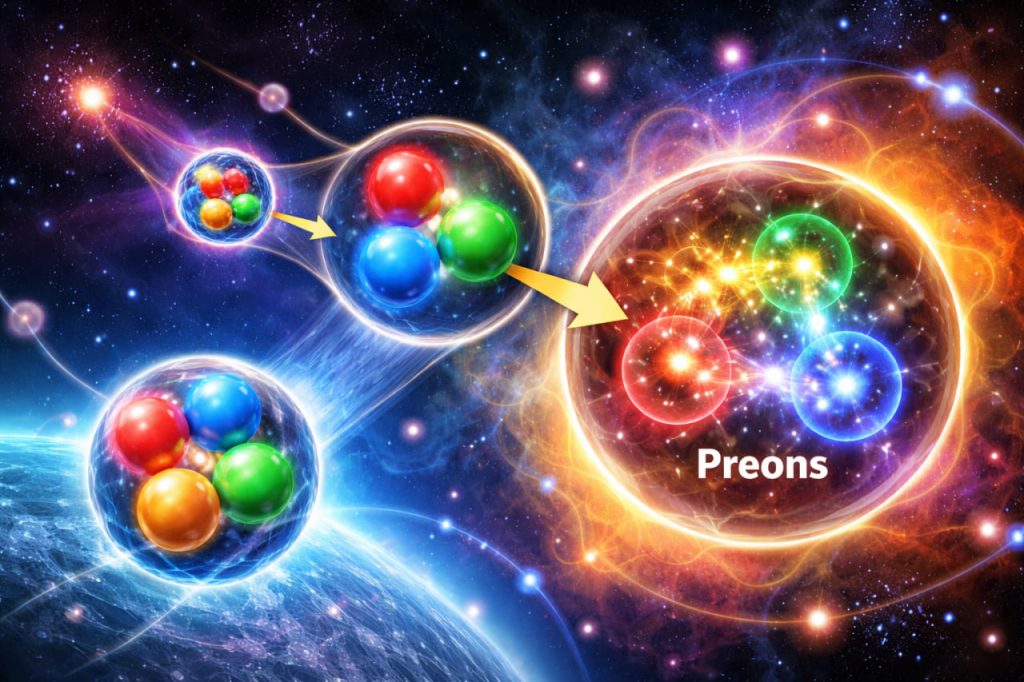
Preons: Is There Anything Smaller Than Quarks?

Modern physics describes the fundamental building blocks of matter using particles such as quarks and leptons, which are considered elementary particles—meaning they are not known to be made of anything…
Posted by deka March 20, 2026
Planck Length: Where Does the Standard Model Break Down?
Posted inBe Smart Science Universe

Planck Length: Where Does the Standard Model Break Down?

The Planck length represents one of the most fundamental limits in modern physics, marking a scale at which our current understanding of reality begins to break down. At approximately 1.6…

Posted by deka March 20, 2026

Posts pagination

Previous page 1 … 16 17 18 19 20 … 45 Next page
Recent Posts
  • Smartwatches and Disease Detection: What Can They Really Diagnose?
  • The History of the Flashlight: From Its Invention in 1899 to Cutting-Edge Technology in 2026
  • How Do Flexible and Foldable Displays Work? The Technology Behind Bendable Screens
  • How Quantum Sensors Could Revolutionize Measurement Technology
  • How Augmented Reality Could Transform Everyday Life: The Future of AR Technology
Categories
  • AI
  • AI & Ethics
  • Be Smart
  • Bioengineering
  • Challenges
  • Cosmic Innovations
  • Earth & Moon
  • Hi-Tech
  • History
  • Inventions
  • KnowHow
  • Mathematics
  • Neuro-Tech
  • New Discoveries
  • News
  • Physics
  • Science
  • Smart Home
  • Smart Technology
  • Solar System
  • Space Stories
  • Star Wars
  • Tesla&Co
  • Universe
  • What if?
Copyright 2026 — Science Observer. All rights reserved. Bloghash WordPress Theme
Scroll to Top