Computer Vision as an Illusion: How AI Sees a Cat as a Cloud of Pixels
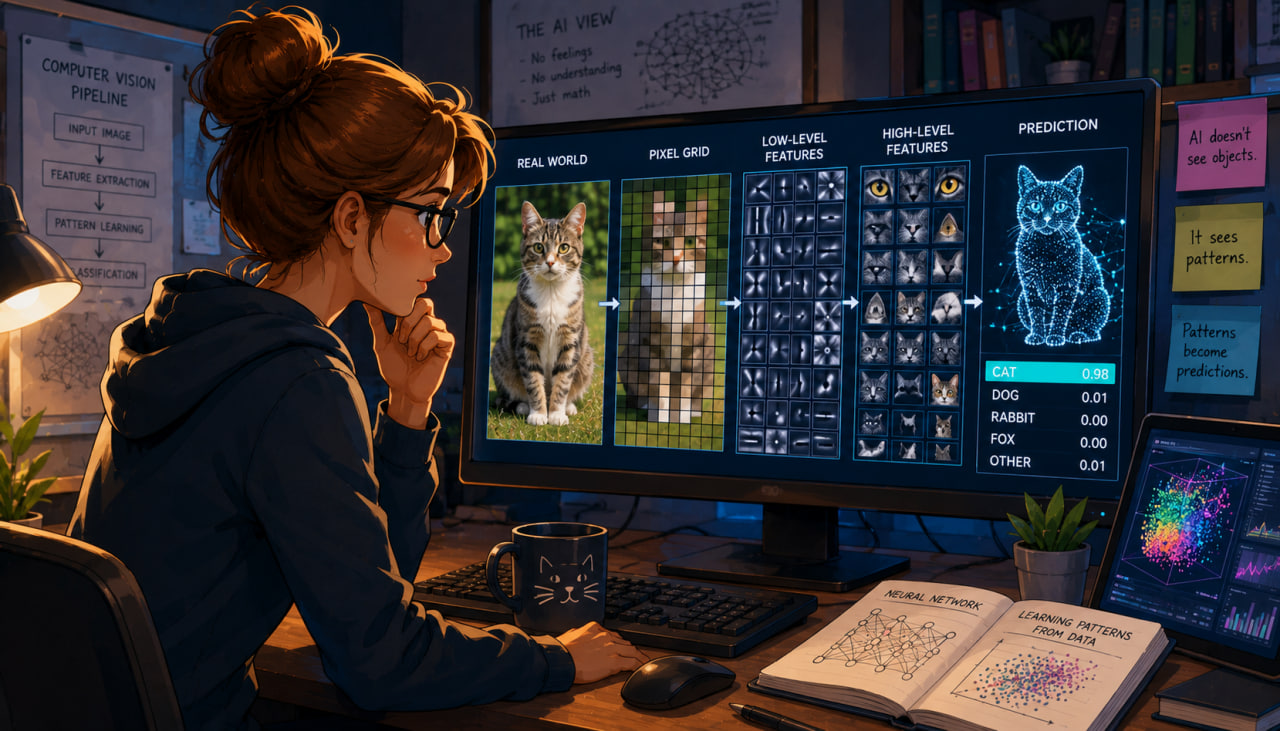
Artificial intelligence can recognize faces, detect tumors in medical scans, identify wildlife in forests, and even help self-driving cars navigate busy streets. To humans, these achievements may seem to suggest that AI "sees" the world much like we do. In reality, modern computer vision works in a fundamentally different way. An AI does not perceive a cat as a furry animal with whiskers, ears, and a tail. Instead, it processes millions of numerical values representing patterns of colored pixels. This distinction is one of the most fascinating aspects of artificial intelligence. While humans interpret images through experience, context, and common sense, computer vision systems rely on mathematical relationships hidden within digital images. Understanding how AI actually "sees" reveals both the remarkable power and important limitations of modern machine learning.