Moravec’s Paradox: Why Chess Is Easy for AI but Baby Talk Is Hard
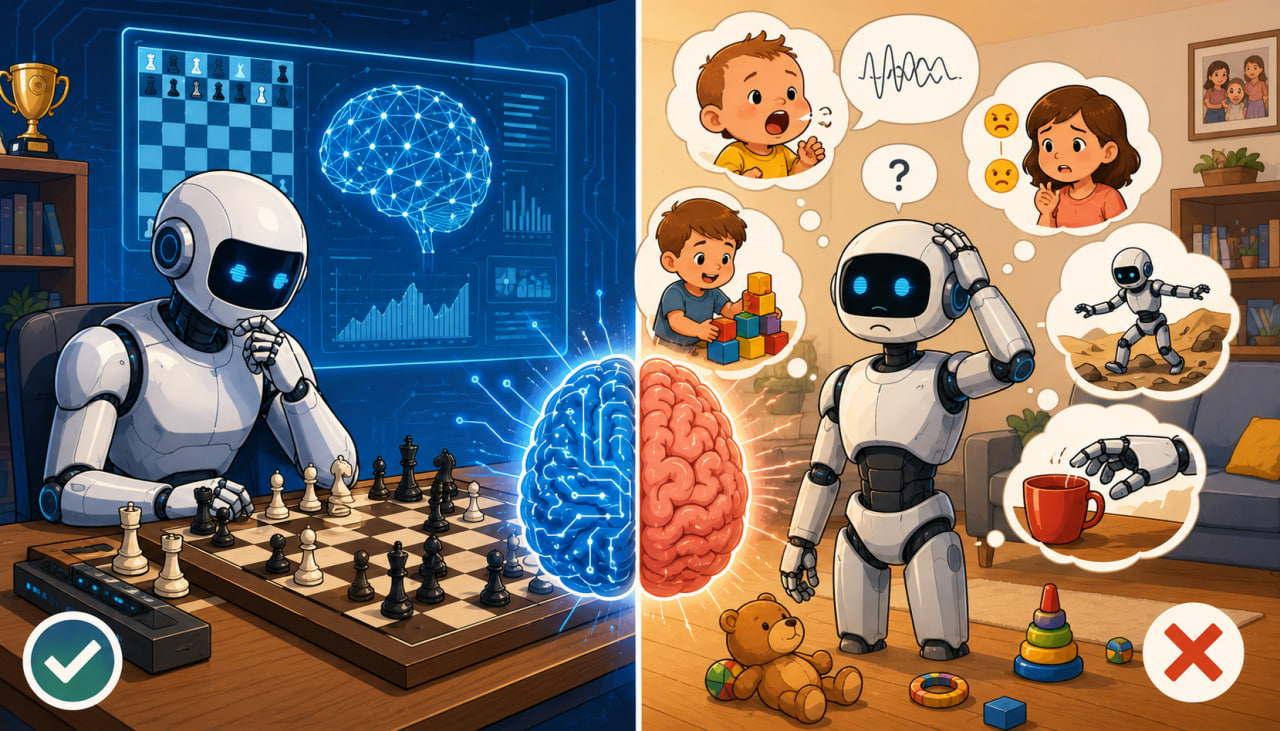
At first glance, artificial intelligence seems astonishingly smart. Modern AI systems can: Defeat chess champions Solve complex equations Analyze massive datasets Write computer code Simulate human conversation Yet surprisingly, many tasks that feel effortless to humans remain extremely difficult for machines. For example: Walking through a crowded room Recognizing emotions Understanding sarcasm Grabbing objects naturally Learning language like a small child This strange contradiction is known as: Moravec’s Paradox The paradox reveals that: High-level reasoning tasks may actually be easier for computers than basic human sensory and motor skills. In other words: A machine can beat grandmasters in chess while still struggling with abilities possessed by: Toddlers Animals Ordinary humans Understanding Moravec’s Paradox helps explain: The strengths of AI The weaknesses of AI The incredible complexity of the human brain and why true human-like intelligence remains one of science’s greatest challenges.