AI & Ethics

Data Mirages: Why AI Does Not Truly Understand What It Writes
AI & Ethics AI Be Smart

Data Mirages: Why AI Does Not Truly Understand What It Writes

Artificial intelligence systems often produce responses that appear thoughtful, structured, and coherent. This fluency can create the impression that the system “understands” the topic it discusses. However, modern language models operate fundamentally differently from human cognition. They generate text by predicting patterns based on vast datasets, not by forming conscious comprehension. The phenomenon where AI output appears meaningful without genuine understanding can be described as a “data mirage.” Recognizing this distinction is essential for responsible use of AI systems. The illusion of understanding emerges from statistical pattern recognition rather than awareness or intention.


Ethical Hackers vs AI: How Neural Networks Are Tested and “Hacked”
Smart Technology AI & Ethics AI

Ethical Hackers vs AI: How Neural Networks Are Tested and “Hacked”

As artificial intelligence systems become more powerful, ensuring their security and reliability has become a global priority. Neural networks now influence finance, healthcare, cybersecurity, and public infrastructure. However, like any digital system, AI models are vulnerable to manipulation. This is where ethical hackers — also known as security researchers or “white-hat” hackers — play a critical role. Instead of exploiting weaknesses for harm, they intentionally probe AI systems to uncover vulnerabilities before malicious actors can. Understanding how neural networks can be “hacked” helps improve their resilience and trustworthiness.

Will Neural Networks Replace Search Engines?
AI & Ethics AI Be Smart

Will Neural Networks Replace Search Engines?

The rapid development of large language models and conversational AI has sparked debate about the future of traditional search engines. Instead of presenting a list of links, AI systems can generate direct answers, summaries, and contextual explanations. This shift raises an important question: will neural networks fully replace search engines, or will both technologies evolve together? While AI-powered tools are transforming how people access information, search infrastructure remains deeply embedded in the digital ecosystem. The relationship between neural networks and search engines is more likely to be complementary than purely competitive. Understanding their differences clarifies what the future may hold.

Can Users Teach ChatGPT and Similar AI Systems Something New?
AI & Ethics AI Be Smart

Can Users Teach ChatGPT and Similar AI Systems Something New?

As conversational AI becomes more widespread, many users wonder whether their questions, corrections, or conversations can “teach” the system directly. When interacting with tools like ChatGPT, it may feel as though the model is learning in real time. However, the reality is more structured and technical. While AI systems improve over time, they do not typically learn from individual conversations in the way humans do. Understanding how training works helps clarify what influence users actually have. The relationship between users and AI is interactive — but not educational in a traditional sense.

Digital Twins: Virtual Replicas of Cities, Planets, and Patients
Hi-Tech Smart Technology AI & Ethics

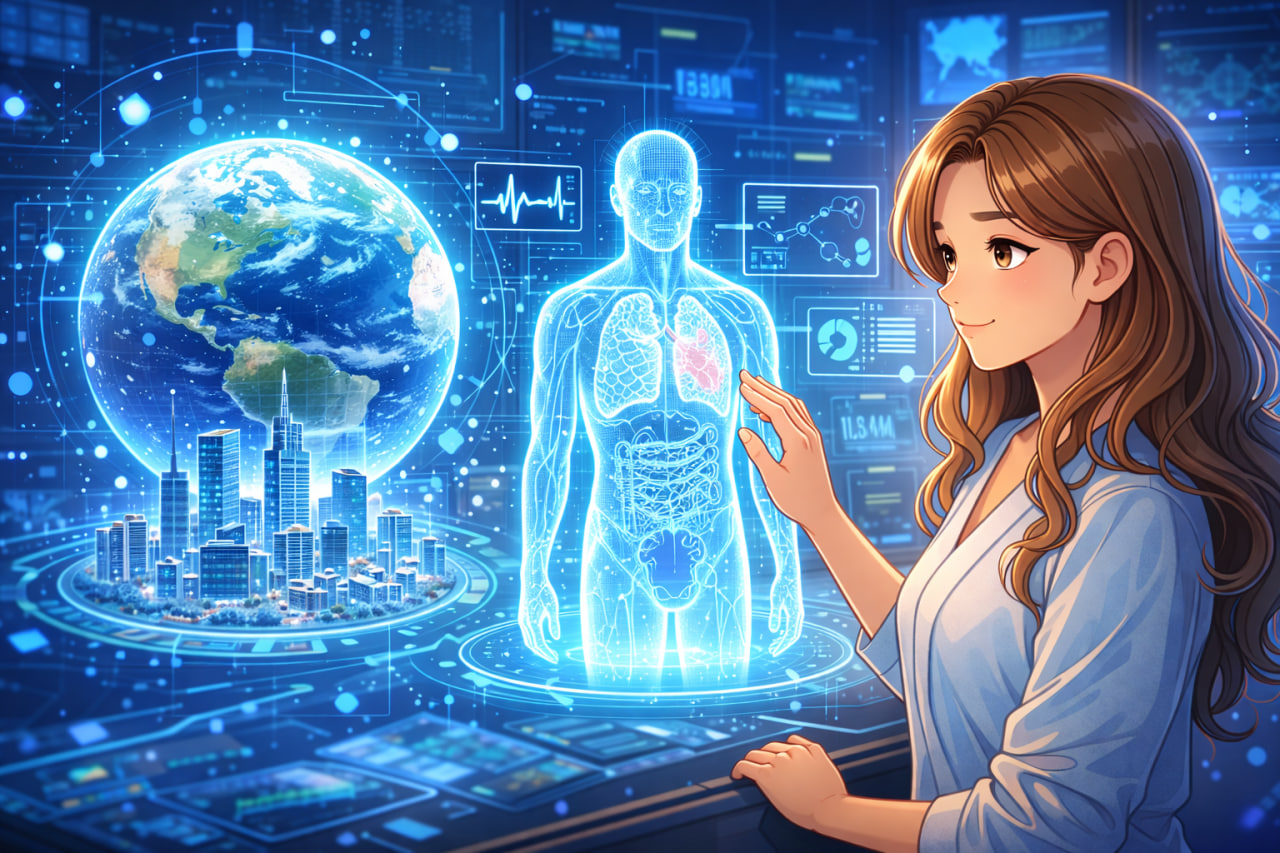
Digital Twins: Virtual Replicas of Cities, Planets, and Patients

The concept of a digital twin refers to a highly detailed virtual model that mirrors a real-world object, system, or living organism. Originally developed for industrial engineering, digital twin technology is now expanding into urban planning, healthcare, environmental science, and even planetary research. By combining real-time data, sensors, simulations, and advanced analytics, digital twins allow researchers and professionals to test scenarios without physically altering the original system. This capability improves decision-making, reduces risk, and increases efficiency across many sectors. Whether modeling an entire smart city, a patient’s cardiovascular system, or global climate patterns, digital twins represent a powerful bridge between physical reality and computational insight. As technology evolves, these virtual replicas are becoming increasingly precise and dynamic.

AI for Deciphering Ancient Languages and Scrolls
History AI & Ethics AI

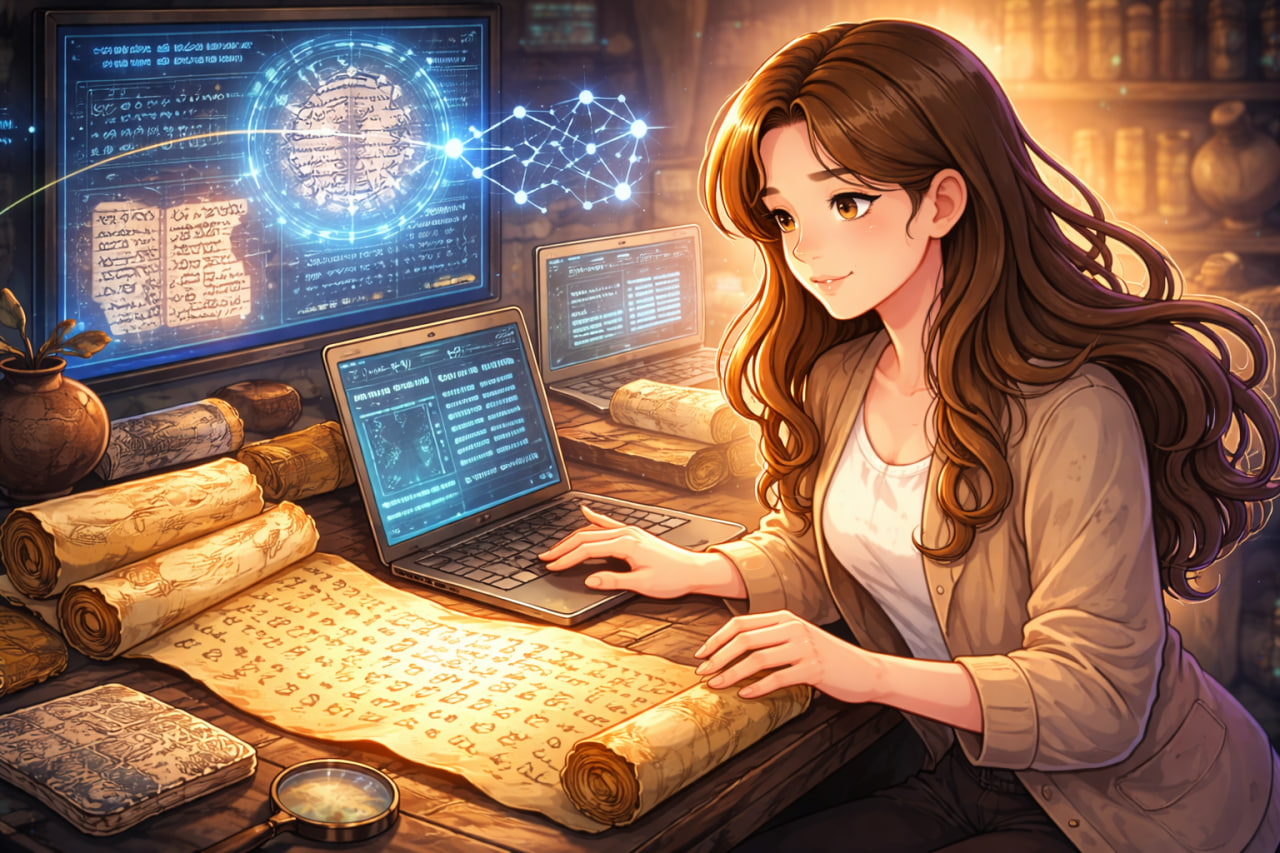
AI for Deciphering Ancient Languages and Scrolls

For centuries, historians and linguists have struggled to decode ancient manuscripts, damaged scrolls, and forgotten languages. Many texts have survived only in fragments, faded ink, or carbonized layers, making traditional analysis slow and uncertain. Today, artificial intelligence is transforming the field of historical linguistics and archaeology by offering powerful tools for pattern recognition, reconstruction, and translation. By training neural networks on known linguistic structures, researchers can analyze incomplete texts and predict missing characters with remarkable accuracy. AI does not replace historians, but it accelerates discoveries and opens new possibilities for understanding humanity’s cultural heritage. As computational methods improve, previously unreadable documents are gradually revealing their secrets.

The Hidden Costs of AI: How Much Energy and Water Does One ChatGPT Query Use?
Smart Technology AI & Ethics AI

The Hidden Costs of AI: How Much Energy and Water Does One ChatGPT Query Use?

Artificial intelligence systems like ChatGPT may feel invisible and effortless to use, but behind every response lies a vast physical infrastructure of data centers, servers, cooling systems, and electrical grids. Each AI query triggers complex computations performed by powerful processors that require electricity and generate heat. While a single request may seem insignificant, the global scale of AI usage transforms small energy demands into substantial environmental impacts. Researchers are now examining how much electricity, water, and computing power are consumed per AI interaction to better understand the sustainability challenges of modern digital services. As AI becomes more integrated into daily life, evaluating its hidden resource costs becomes increasingly important for policymakers, engineers, and users alike. Understanding these invisible inputs allows society to balance innovation with environmental responsibility.

AI as a Collective Mind: Are Neural Networks Becoming Smarter Than Humans?
AI & Ethics AI Be Smart

AI as a Collective Mind: Are Neural Networks Becoming Smarter Than Humans?

Artificial intelligence systems are often described as tools, but increasingly they are compared to a form of collective digital intelligence. Large neural networks are trained on enormous datasets that include books, scientific papers, code repositories, and global online discussions. This allows them to synthesize knowledge from millions of human contributors, creating outputs that feel broad, informed, and sometimes surprisingly insightful. As AI systems improve in reasoning, pattern recognition, and language processing, many people wonder whether they are becoming “smarter” than humans. The answer, however, depends heavily on how we define intelligence. Intelligence is not a single measurable trait but a complex combination of reasoning, creativity, emotional awareness, adaptability, and ethical judgment. To understand whether neural networks surpass human intelligence, we must examine what they truly are—and what they are not.

Copyright in the Age of AI: Who Owns Content Created by Neural Networks?
AI & Ethics AI Be Smart

Copyright in the Age of AI: Who Owns Content Created by Neural Networks?

The rapid development of artificial intelligence has transformed how text, images, music, and software are created. Neural networks can now generate complex creative works in seconds, raising a fundamental legal question: who owns AI-generated content? Traditional copyright law was designed to protect works created by human authors. However, when a machine produces content based on training data and algorithms, authorship becomes less clear. Courts, policymakers, and technology companies are actively debating how intellectual property frameworks should adapt. Understanding this evolving landscape is essential for creators, businesses, and users navigating AI-driven creativity.

AI for Telescope Data Analysis: Discovering New Planets and Galaxies
Cosmic Innovations AI & Ethics AI

AI for Telescope Data Analysis: Discovering New Planets and Galaxies

Modern telescopes generate enormous volumes of data every night, capturing images and signals from distant regions of the universe. Processing this information manually would take decades, which is why artificial intelligence has become an essential tool in astronomy. AI systems can rapidly analyze patterns in light curves, spectral data, and deep-space imagery. By identifying subtle anomalies and recurring signatures, machine learning models help scientists detect exoplanets, classify galaxies, and uncover previously unnoticed cosmic phenomena. Rather than replacing astronomers, AI enhances their ability to interpret vast datasets efficiently. As telescope technology advances, AI-driven analysis plays an increasingly central role in expanding our understanding of the universe.