Be Smart

How “Branch in New Chat” in ChatGPT Works
AI & Ethics AI Be Smart

How “Branch in New Chat” in ChatGPT Works

The “Branch in new chat” feature allows users to continue a conversation from a chosen point while keeping the original dialogue unchanged. Instead of restarting from scratch or copying context manually, branching creates a parallel conversation that inherits the discussion up to a specific message. From that moment on, the new chat develops independently. This approach makes it possible to explore alternative ideas, structures, or strategies without disrupting the original thread. In essence, branching turns a single conversation into multiple parallel paths. It is a powerful organizational tool rather than a change in how answers are generated.
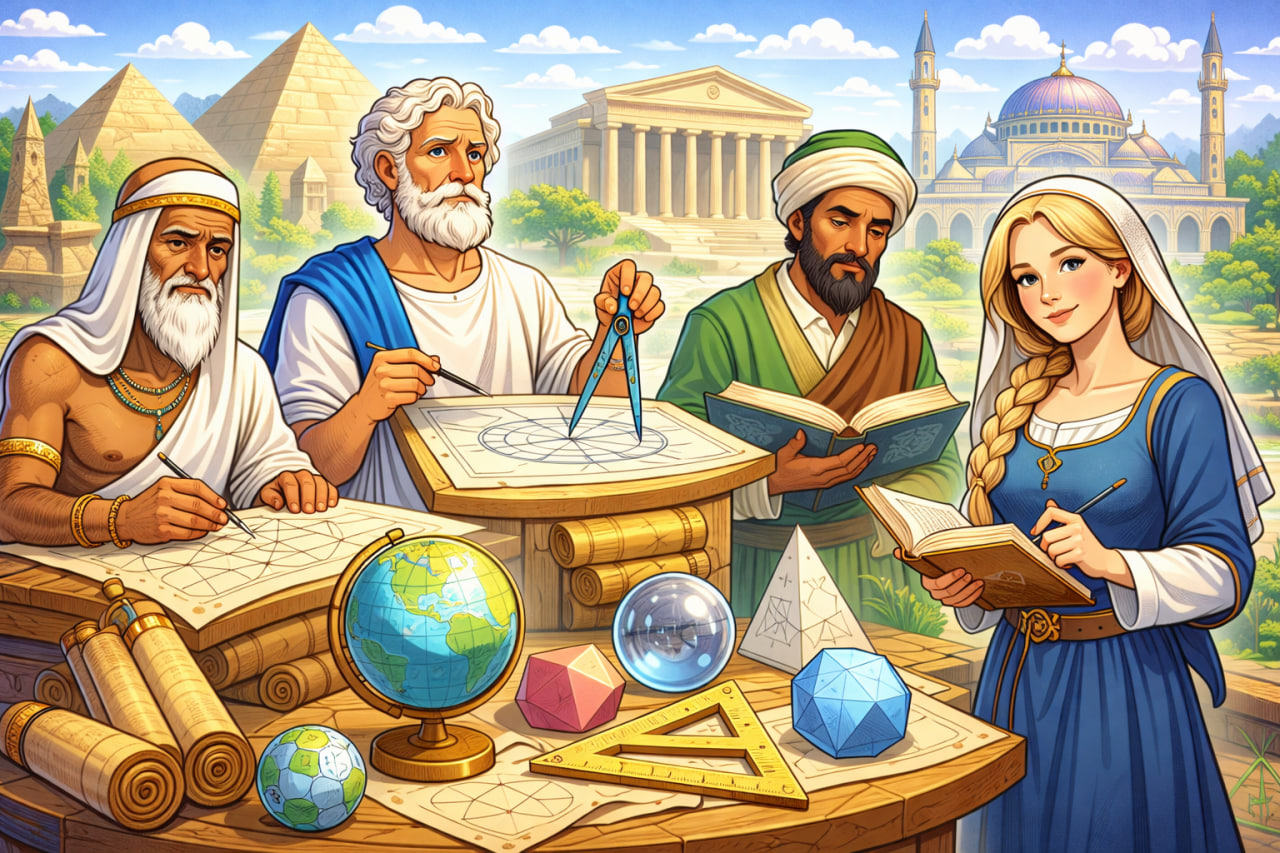

The History of Geometry
History Science Be Smart

The History of Geometry

The history of geometry reflects humanity’s long effort to understand space, shape, and order in the world around us. From the earliest markings on stone and sand to abstract mathematical systems, geometry has evolved alongside civilization itself. Initially driven by practical needs such as land measurement, construction, and astronomy, geometry gradually became a theoretical science concerned with logic and proof. Over thousands of years, different cultures contributed ideas that expanded geometric thinking far beyond simple shapes. Geometry not only shaped mathematics but also influenced art, architecture, engineering, and philosophy. Tracing its history reveals how humans learned to move from visual intuition to abstract reasoning.

Omar Khayyam and Science
History Science Be Smart

Omar Khayyam and Science

Omar Khayyam is widely known to the modern world as a poet, yet his scientific legacy is just as remarkable as his literary one. Living during the Islamic Golden Age, Khayyam worked at the intersection of mathematics, astronomy, philosophy, and logic. His scientific contributions were rooted in rigorous reasoning, careful observation, and a deep respect for knowledge inherited from earlier civilizations. At a time when poetry and science were not seen as separate domains, Khayyam embodied the ideal of the universal scholar. Understanding his role in science reveals a thinker whose influence extended far beyond verse and metaphor.

Loop Quantum Gravity Theory
Science New Discoveries Be Smart

Loop Quantum Gravity Theory

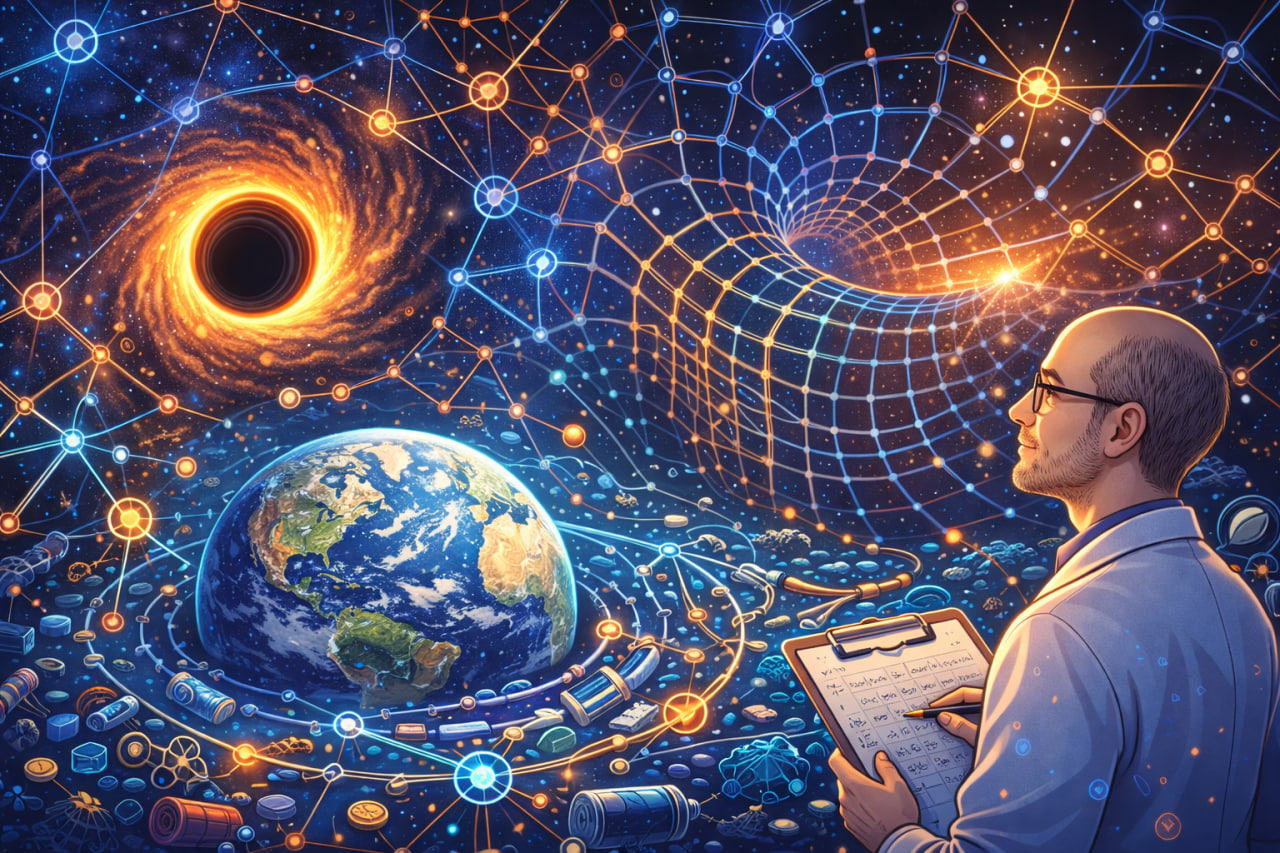
Loop quantum gravity is one of the leading theoretical attempts to unify quantum mechanics with general relativity. Unlike approaches that add extra dimensions or rely on unobserved entities, this theory focuses on quantizing spacetime itself. It proposes that space is not smooth and continuous, but instead has a discrete, granular structure at the smallest possible scales. These fundamental “loops” form a network that gives rise to geometry, distance, and volume. By rethinking the nature of space and time, loop quantum gravity challenges deeply rooted assumptions about the fabric of reality.

Will the Development of Artificial Intelligence Take Jobs Away from People?
AI & Ethics AI Be Smart

Will the Development of Artificial Intelligence Take Jobs Away from People?

The rapid development of artificial intelligence has sparked widespread debate about the future of human work. As algorithms become capable of performing tasks once reserved for skilled professionals, concerns about mass unemployment grow stronger. From automated customer support to self-driving vehicles, AI systems are already reshaping entire industries. However, history shows that technological progress rarely eliminates work altogether; instead, it transforms the nature of jobs and the skills required to perform them. Understanding whether AI will truly take jobs away requires a deeper look at how technology changes economies, workplaces, and human roles. The real question is not whether jobs will disappear, but which jobs will change and how society will adapt.

Plastic and Electrostatic Charge
Science Be Smart

Plastic and Electrostatic Charge

Plastic is one of the materials most strongly associated with electrostatic charge in everyday life. From crackling sounds when removing synthetic clothing to small shocks after touching metal, plastic often plays a central role in static electricity. These effects are not random; they arise from the physical properties of plastics and how they interact with other materials. Electrostatic charge in plastics is a well-studied phenomenon in physics, with implications for industry, technology, and safety. Understanding why plastic accumulates charge helps explain many common observations and highlights how invisible forces shape our daily environment. This topic connects fundamental physics with practical consequences.

Alfvén Waves
Universe Science New Discoveries

Alfvén Waves

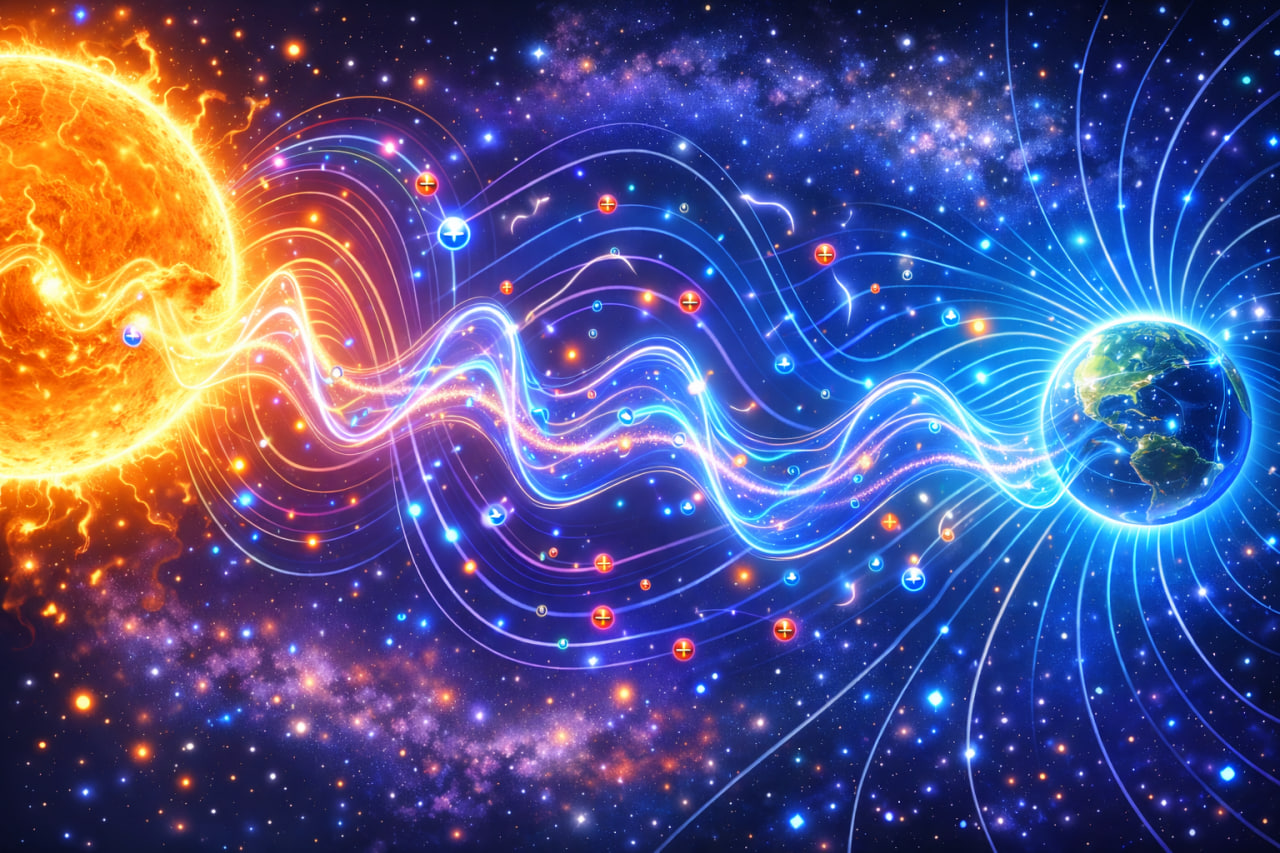
Alfvén waves are one of the most important phenomena in plasma physics and astrophysics, revealing how energy and information travel through magnetized space. They describe oscillations that occur when charged particles interact with magnetic fields, producing wave-like motions that can propagate over vast distances. These waves play a key role in shaping the behavior of plasmas found in stars, the solar wind, and planetary magnetospheres. Although invisible to the human eye, Alfvén waves influence processes ranging from space weather to energy transport in the universe. Their discovery helped bridge the gap between electromagnetism and fluid dynamics. Understanding Alfvén waves is essential for explaining how cosmic plasmas remain dynamic and structured.

What Is Plasma
Science New Discoveries Be Smart

What Is Plasma

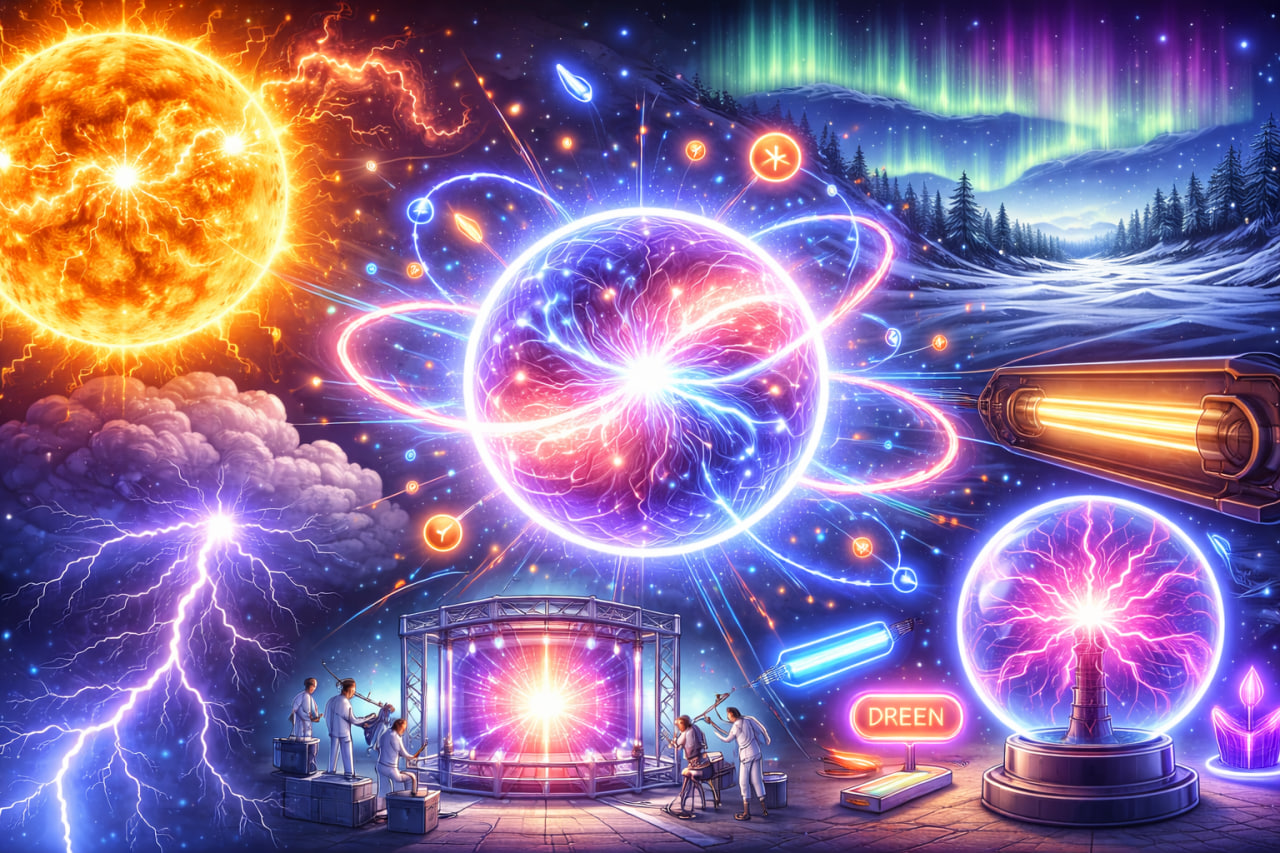
Plasma is often described as the fourth state of matter, yet this definition barely captures its true significance. While solids, liquids, and gases dominate everyday experience, plasma governs the behavior of stars, cosmic space, and many high-energy processes on Earth. It forms when matter becomes so energized that electrons separate from atoms, creating a dynamic mixture of charged particles. Unlike ordinary gases, plasma responds strongly to electric and magnetic fields, leading to complex collective behavior. This makes plasma both extraordinarily powerful and challenging to control. Understanding plasma is essential for explaining how the universe works at its most fundamental level.

Time Machines: Myths and Facts
History Science Be Smart

Time Machines: Myths and Facts

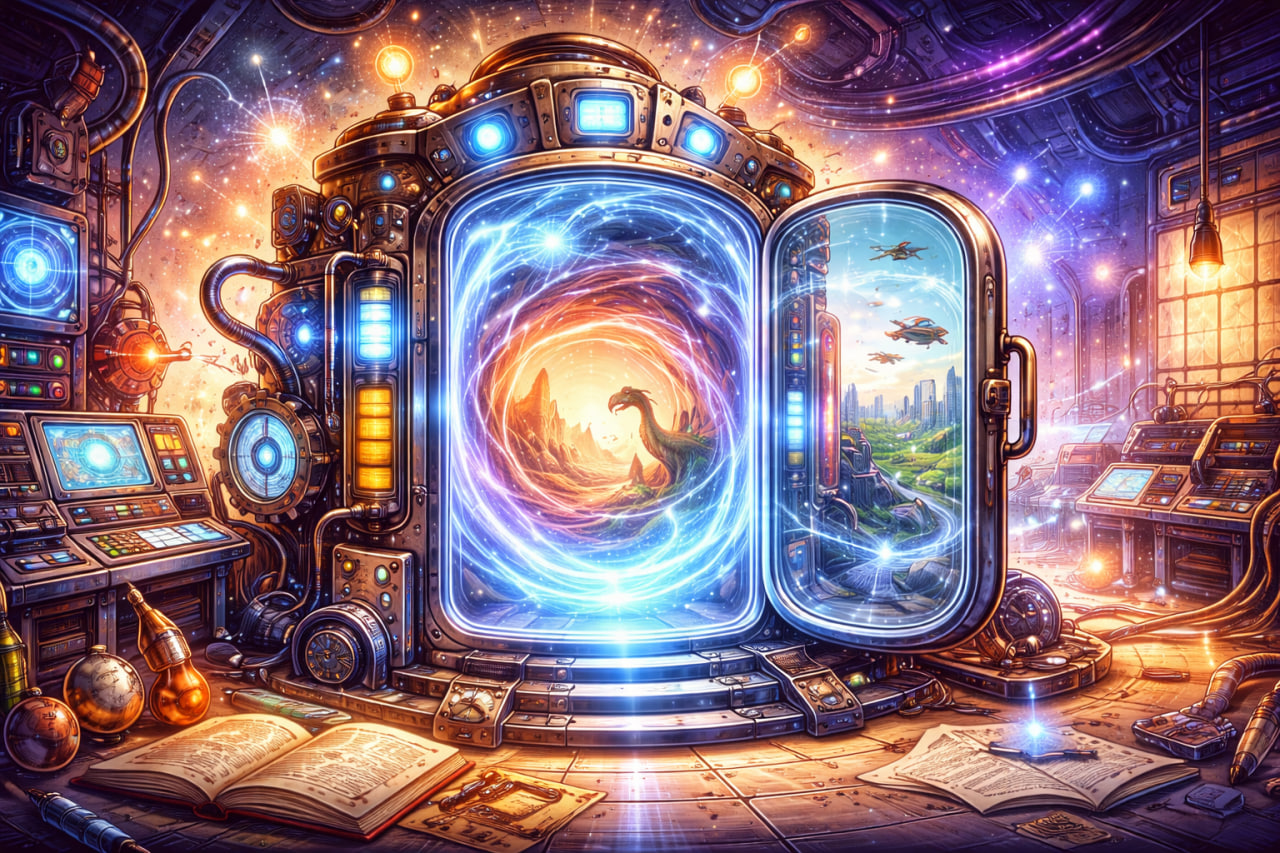
The idea of a time machine has fascinated humanity for centuries, appearing in myths, literature, and modern science fiction. The possibility of traveling into the past or future challenges our understanding of time, causality, and the laws of physics. While popular culture often presents time travel as a mechanical device with buttons and levers, real science treats time as a fundamental dimension governed by strict physical rules. Some concepts associated with time travel are rooted in legitimate physics, while others remain pure speculation. Distinguishing between what science actually allows and what belongs to imagination helps clarify why time machines remain elusive. Exploring these ideas reveals as much about human curiosity as it does about the structure of the universe.

The Ether Theory
History Universe Science

The Ether Theory

The ether theory is one of the most important historical ideas in physics, illustrating how scientific understanding evolves over time. For centuries, scientists believed that space could not be truly empty and that a special medium—called ether—filled the universe and carried light and electromagnetic waves. This concept shaped early theories of optics, electricity, and cosmology, influencing some of the greatest minds in science. Although the ether was eventually rejected by modern physics, its role in scientific development remains highly significant. Studying the ether theory helps explain how evidence, experimentation, and new frameworks transform scientific thought. It also demonstrates that even incorrect ideas can drive progress when tested rigorously.