Be Smart

What Is a Photon? Understanding the Fundamental Particle of Light
Science Be Smart

What Is a Photon? Understanding the Fundamental Particle of Light

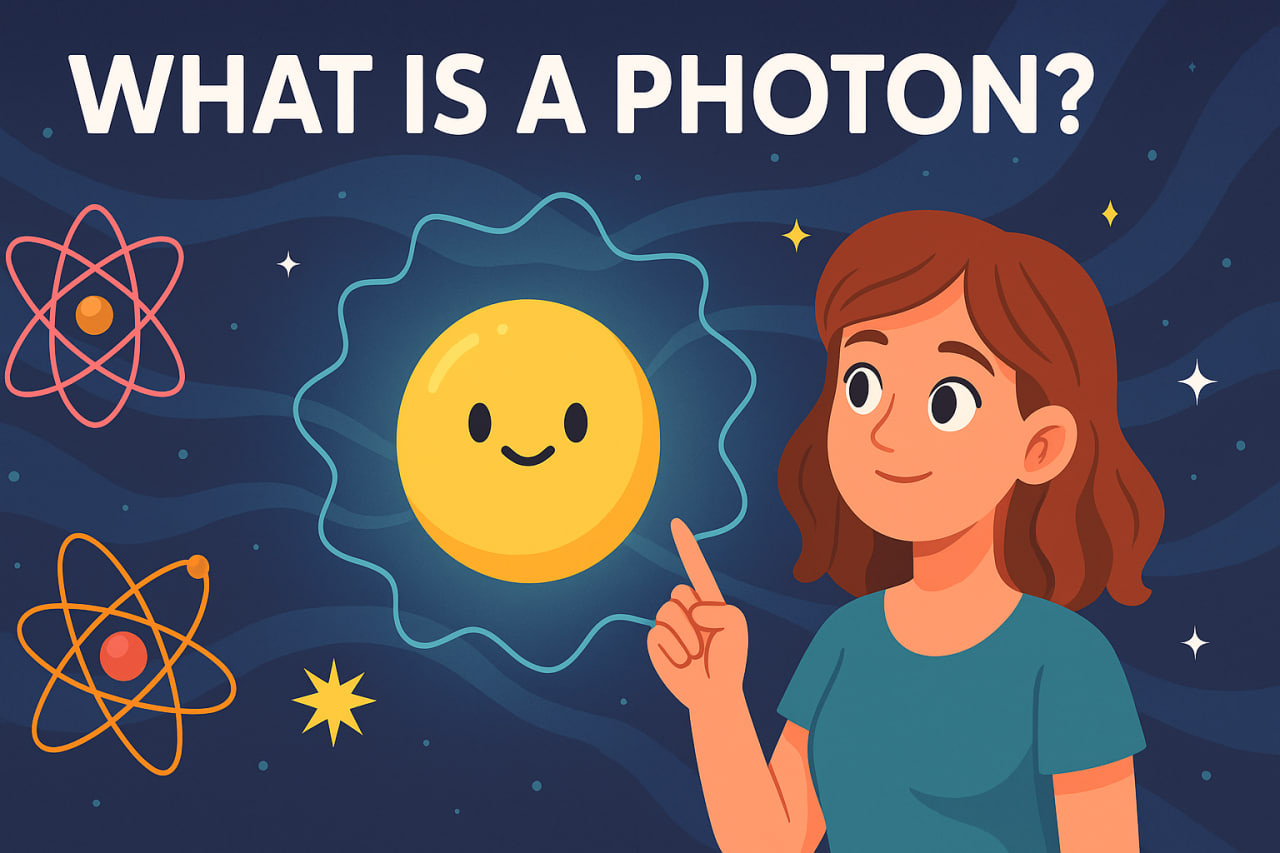
A photon is one of the most fascinating and fundamental particles in the universe. It is the smallest indivisible unit of light and all other forms of electromagnetic radiation. Every ray of sunlight, every beam from a flashlight, every signal in a fiber-optic cable, and even the warmth emitted from your skin consists of countless photons. Photons behave in ways unlike anything in ordinary life: they act as both particles and waves, travel at the speed of light, and carry energy without having any mass. Because of these unusual properties, photons play a central role in modern physics, quantum technology, communication systems, and our understanding of the cosmos. Exploring what photons are helps reveal how light interacts with matter and how information moves through the universe.
Wave–Particle Duality: Understanding the Dual Nature of Light and Matter
Science New Discoveries Be Smart

Wave–Particle Duality: Understanding the Dual Nature of Light and Matter

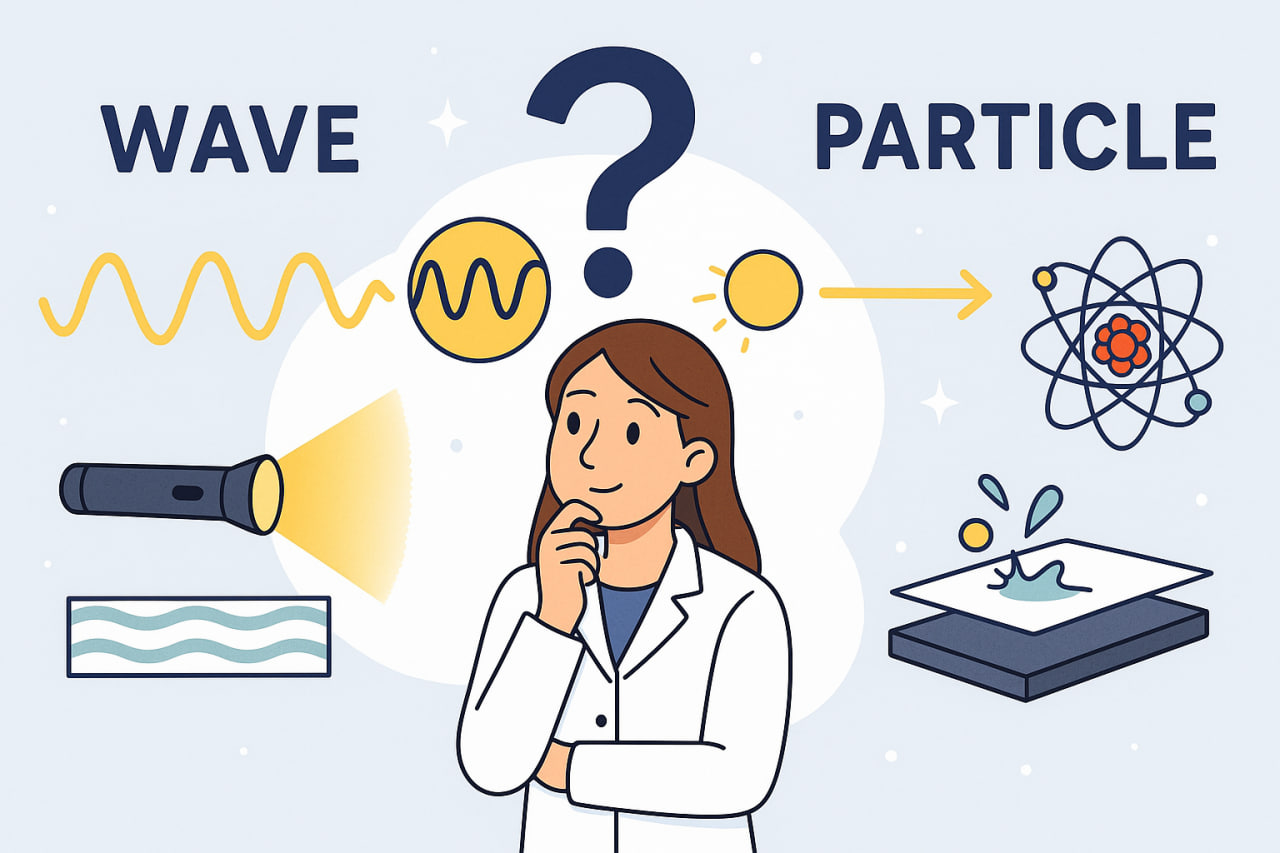
Wave–particle duality is one of the most intriguing and foundational concepts in quantum physics. It describes the surprising behavior of light and matter, which exhibit both wave-like and particle-like properties depending on how they are observed. This principle fundamentally changed our understanding of reality, revealing that classical physics cannot fully describe the microscopic world. Wave–particle duality lies at the heart of quantum mechanics and explains phenomena such as electron interference, photon behavior, and the structure of atoms. Although the idea may seem paradoxical, it reflects the complex and elegant nature of the universe. Understanding this duality helps scientists design modern technologies, from lasers and semiconductors to quantum computers and advanced communication systems.

Precious Gemstones: Their Origin, Value, and the Science Behind Their Beauty
Science Be Smart Earth & Moon

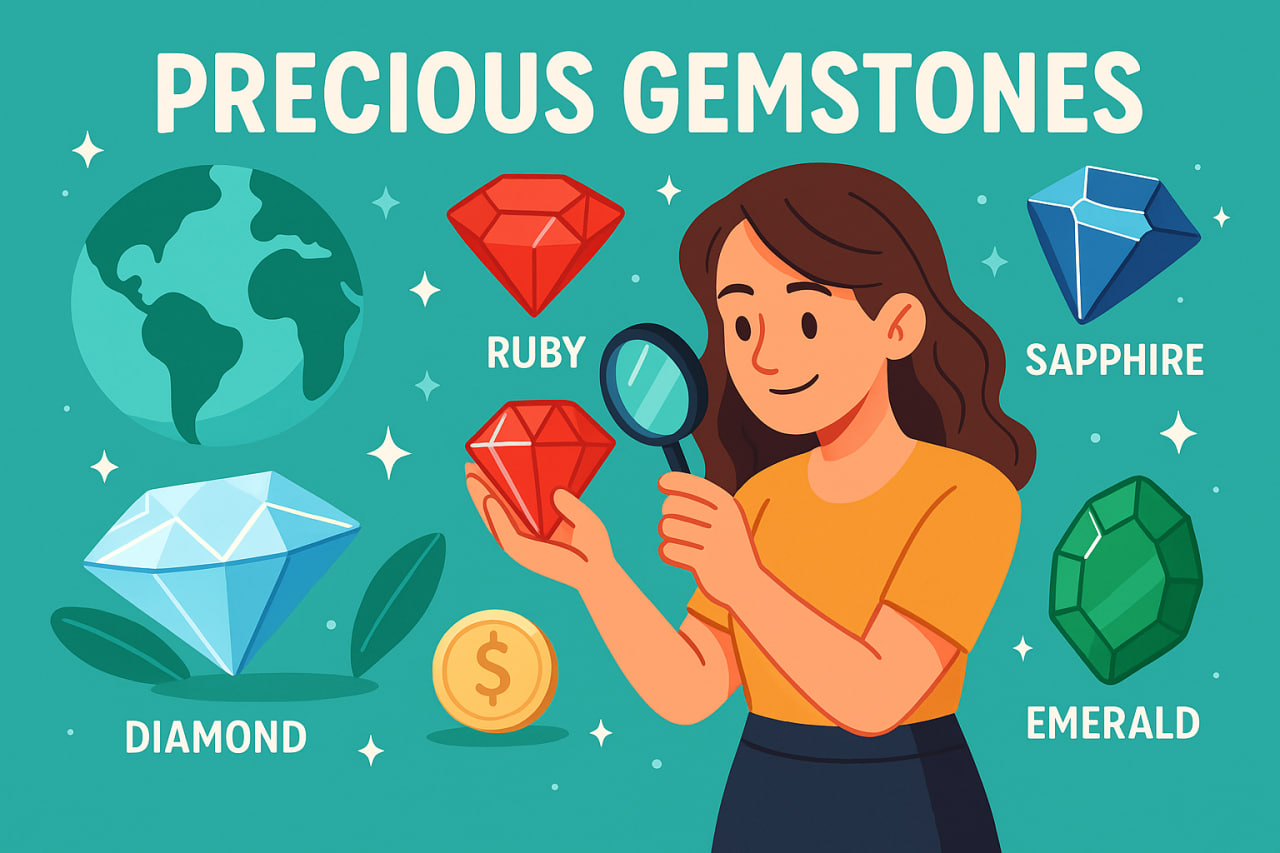
Precious Gemstones: Their Origin, Value, and the Science Behind Their Beauty

Precious gemstones have fascinated humanity for thousands of years. Their vibrant colors, rarity, and durability made them symbols of power, wealth, spirituality, and artistic expression across civilizations. Beyond their beauty, gemstones are remarkable geological materials formed under extreme conditions deep within Earth’s crust and mantle. Each gemstone carries a story of pressure, heat, time, and chemical transformation. Understanding gemstones means exploring geology, mineralogy, and human culture all at once.

The Calendar: How Humans Learned to Measure Time and Organize Life
History Be Smart Inventions

The Calendar: How Humans Learned to Measure Time and Organize Life

A calendar is one of humanity’s oldest and most important inventions — a system that divides time into days, months, and years, allowing societies to plan seasons, track astronomical cycles, coordinate human activity, and preserve history. The development of calendars reflects the evolution of civilization itself: as agriculture emerged, people needed reliable ways to predict seasons, schedule harvests, and prepare for climate patterns. Over time, calendars also became essential for religious traditions, political administration, economic planning, and scientific understanding of Earth’s motion.

The Hindu Calendar: A Sophisticated Lunisolar System Shaped by Astronomy and Tradition
History Be Smart Inventions

The Hindu Calendar: A Sophisticated Lunisolar System Shaped by Astronomy and Tradition

The Hindu calendar is one of the world’s oldest and most complex timekeeping systems. Unlike the purely solar Gregorian calendar, the Hindu calendar is lunisolar, meaning it harmonizes both lunar phases and the solar year. This unique structure allows it to accurately track seasons, religious festivals, agricultural cycles, and astronomical events. It has evolved for thousands of years, reflecting deep scientific observation, mathematical precision, and cultural meaning. Even today, it guides millions of people in India and across the world in determining auspicious dates, ritual timings, and traditional celebrations.

The Space Elevator: A Bold Vision for Reaching Orbit Without Rockets
Cosmic Innovations Hi-Tech Be Smart

The Space Elevator: A Bold Vision for Reaching Orbit Without Rockets

A space elevator is one of the most ambitious engineering concepts ever proposed — a structure extending from Earth’s surface all the way to space, allowing payloads and potentially humans to ascend into orbit without rockets. The idea challenges imagination, physics, and materials science, yet it remains one of the most intensely studied futuristic technologies. If a space elevator becomes possible, it could revolutionize space travel by making access to orbit dramatically cheaper, safer, and more energy-efficient, opening new opportunities for exploration, manufacturing, and off-world development.

Teleportation: What Science Understands Today and What the Future May Hold
Science New Discoveries Be Smart

Teleportation: What Science Understands Today and What the Future May Hold

Teleportation has long fascinated humanity — from ancient myths to modern science fiction. The idea of instantly transferring objects or people from one place to another captures the imagination because it challenges our fundamental understanding of space, motion, and physical constraints. While physical teleportation of humans remains impossible with today’s science, quantum teleportation is a real and experimentally proven phenomenon that already powers breakthroughs in communication, cryptography, and fundamental physics research. Understanding what teleportation truly means in scientific terms reveals both the astonishing potential and the strict limitations of current physics.

Einstein–Rosen Bridges: The Science Behind Wormholes and the Possibility of Connecting Distant Regions of Space
Science New Discoveries Be Smart

Einstein–Rosen Bridges: The Science Behind Wormholes and the Possibility of Connecting Distant Regions of Space

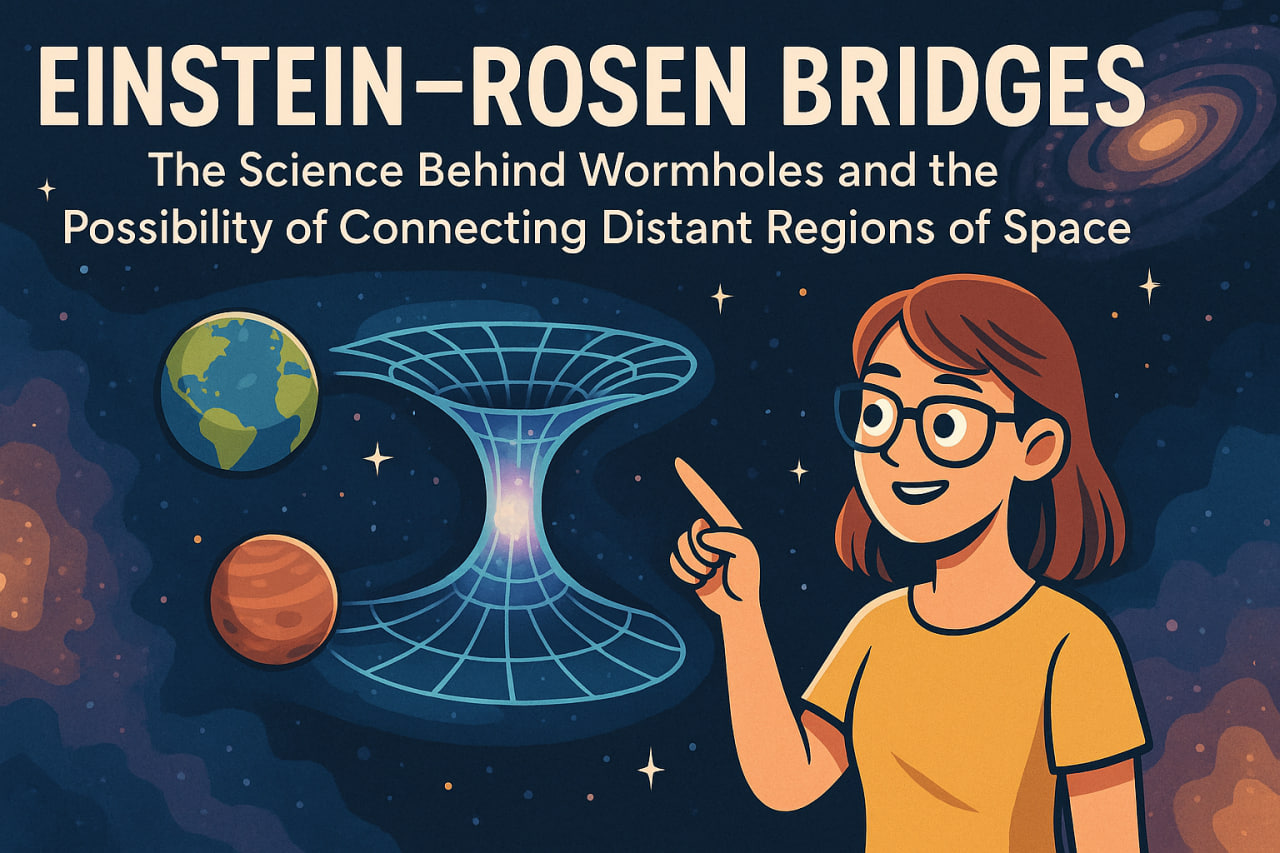
Einstein–Rosen bridges, more commonly known as wormholes, are hypothetical structures predicted by the equations of general relativity. They represent tunnels through spacetime that could, in theory, connect distant regions of the universe — or even different universes entirely. While no wormhole has ever been observed, the mathematics behind them is grounded in legitimate physics, and scientists continue to explore whether such phenomena could exist in reality. Wormholes embody some of the most fascinating ideas in modern theoretical research, blending gravity, quantum mechanics, and geometry into a single, exotic concept.

Stargates: What Science Says About The Possibility of Instant Cosmic Travel
Science Be Smart What if?

Stargates: What Science Says About The Possibility of Instant Cosmic Travel

The concept of a stargate — a portal enabling instant travel across vast cosmic distances — appears in mythology, science fiction, and pop culture. But beneath the fiction lies a serious scientific question: could nature allow shortcuts through spacetime that resemble stargates? Modern physics does not dismiss the idea entirely. While no evidence of real stargates exists, several scientific theories explore mechanisms that could theoretically allow instantaneous travel or connections between distant regions of the universe. These include wormholes, quantum entanglement, exotic matter, and the geometry of spacetime predicted by Einstein’s relativity.

Paint: What It Is, How It Works, and Why It Matters in Art, Industry, and Everyday Life
History Be Smart Inventions

Paint: What It Is, How It Works, and Why It Matters in Art, Industry, and Everyday Life

Paint is one of humanity’s oldest and most versatile creations — a material used for protection, decoration, communication, and artistic expression. From prehistoric cave walls to modern skyscrapers, paint has shaped visual culture and practical technology across thousands of years. At its core, paint is a mixture of pigments, binders, solvents, and additives, each serving a specific role in color, durability, texture, or application. Whether used in fine art, engineering, or interior design, paint transforms surfaces, protects materials, and allows humans to express ideas visually.