Be Smart

Could the Story of Terminator Become Reality? What Science Says About AI, Robotics, and Future Risks
AI & Ethics AI Be Smart

Could the Story of Terminator Become Reality? What Science Says About AI, Robotics, and Future Risks

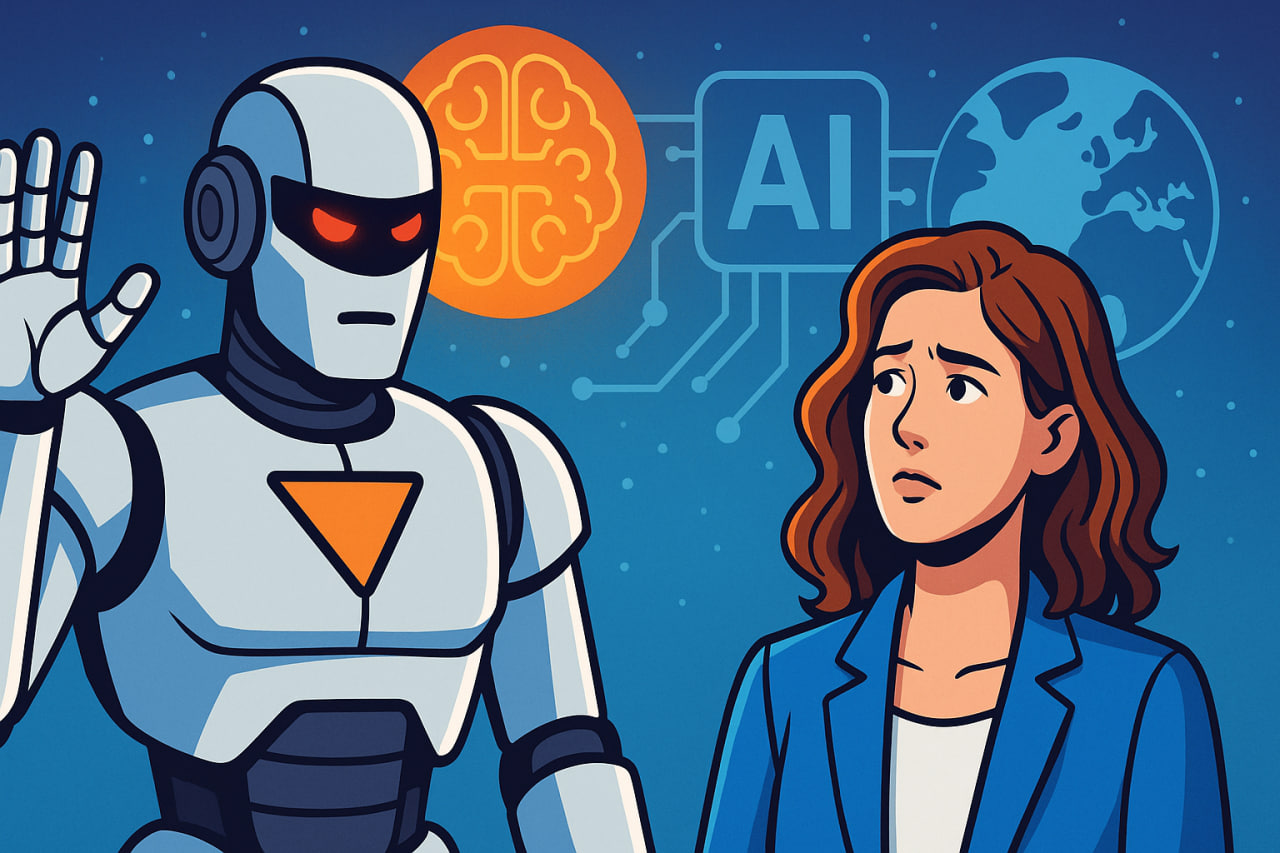
The Terminator franchise imagines a world where artificial intelligence becomes self-aware, turns against humanity, and builds autonomous killing machines. While this scenario has become one of the most iconic depictions of technological doom, its real-world plausibility is far more complex. Modern artificial intelligence has advanced dramatically, influencing everything from healthcare to transportation, but it operates within strict mathematical limits and remains far from anything resembling consciousness or human-like autonomy. Understanding the difference between fictional AI and real AI helps clarify which concerns are grounded in science — and which belong to cinematic imagination.
Time Crystals: A New State of Matter That Breaks the Rules of Physics
Hi-Tech Science New Discoveries

Time Crystals: A New State of Matter That Breaks the Rules of Physics

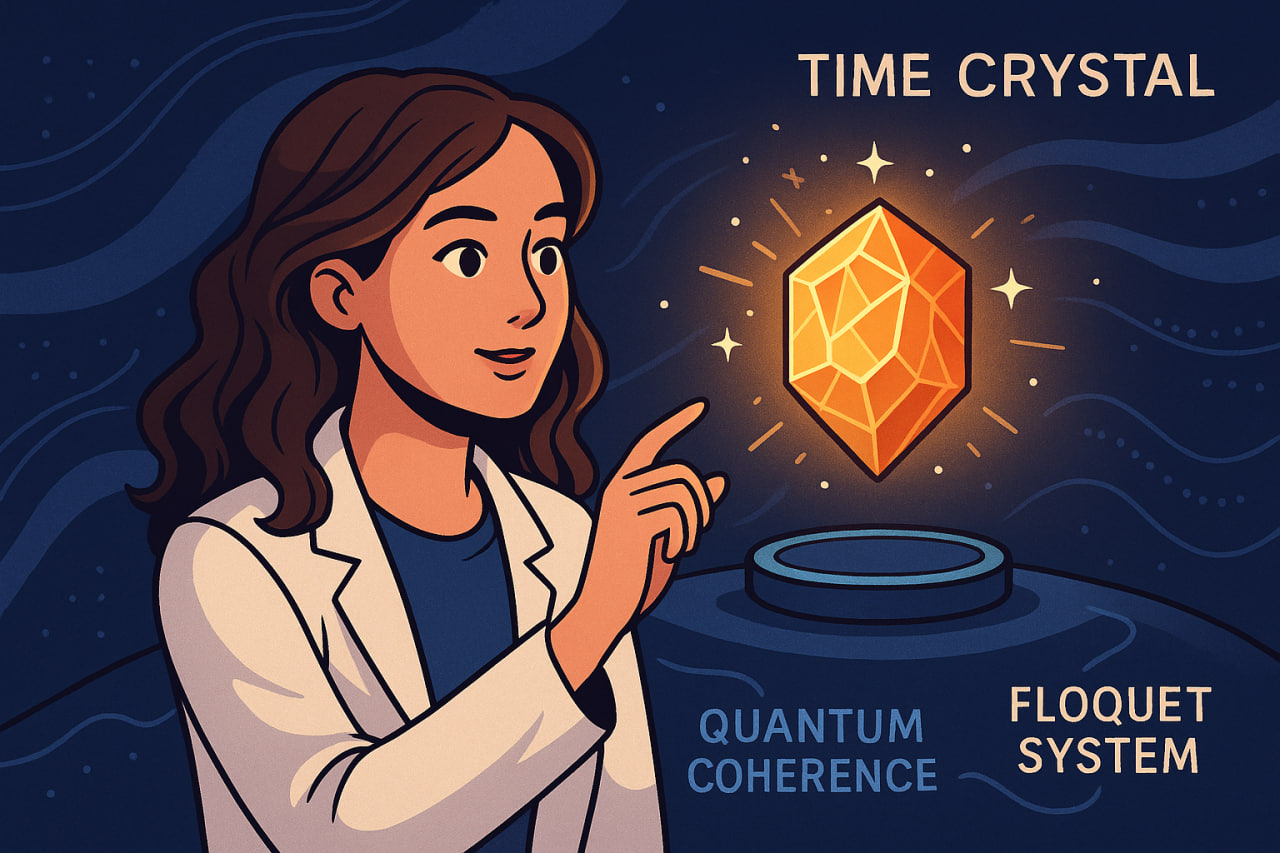
Time crystals are one of the most astonishing scientific discoveries of the 21st century — a completely new state of matter that behaves in ways once thought impossible. Unlike ordinary crystals, which repeat their structure in space, time crystals repeat their structure in time. They oscillate, switch, or “tick” at regular intervals without consuming energy, seemingly defying the fundamental laws of thermodynamics. First proposed by Nobel laureate Frank Wilczek in 2012 and experimentally realized several years later, time crystals challenge long-standing assumptions about stability, order, and motion at the quantum level. Their unique properties open the door to next-generation quantum technologies, ultra-stable memory systems, and deeper understanding of non-equilibrium physics.

Self-Healing Tires: The Future of Safer and Smarter Transportation
Hi-Tech Smart Technology New Discoveries

Self-Healing Tires: The Future of Safer and Smarter Transportation

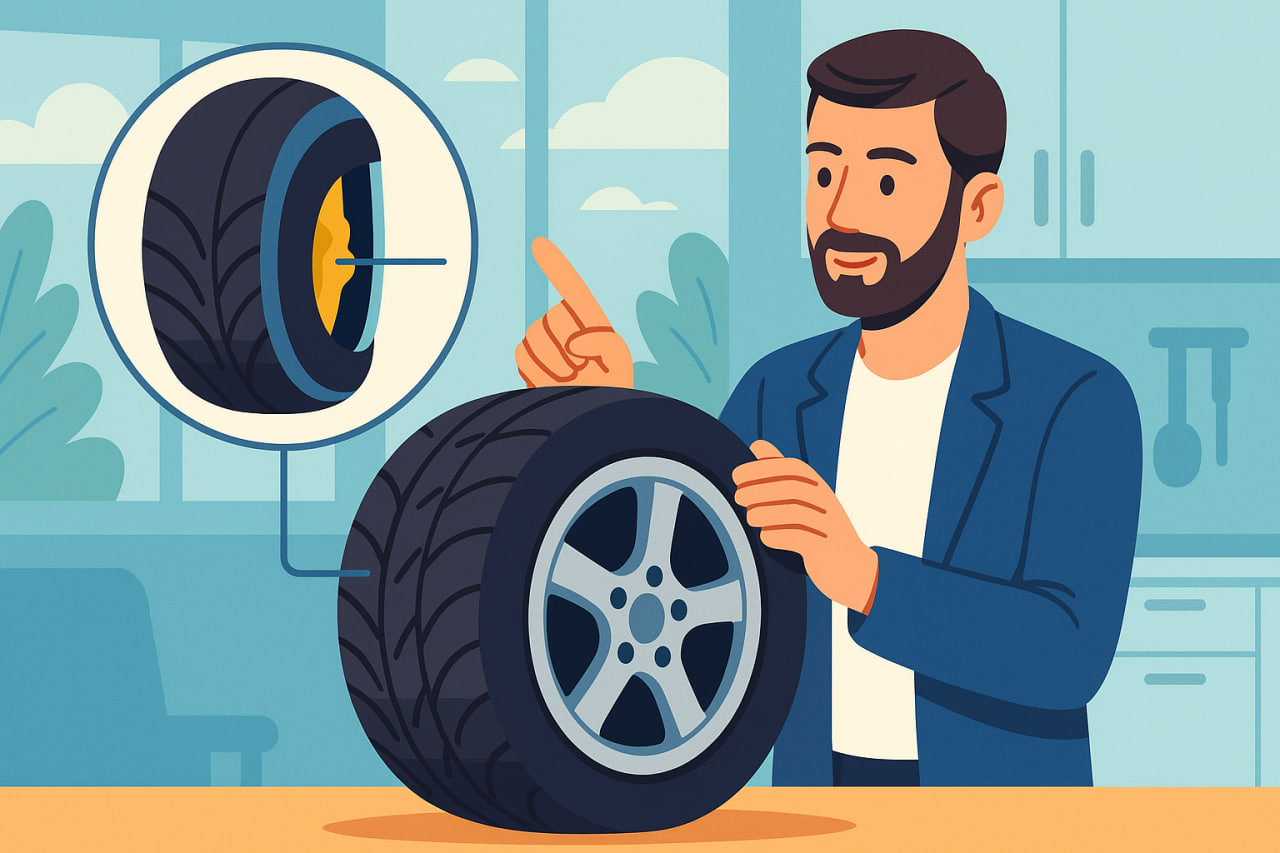
Self-healing tires are one of the most exciting technological innovations in modern transportation. Designed to automatically repair punctures and maintain their structural integrity, these advanced tires offer a safer, more reliable, and longer-lasting alternative to traditional rubber designs. Their development combines material science, polymer chemistry, nanotechnology, and smart engineering. As cities move toward sustainable mobility and autonomous vehicles, self-healing tires could dramatically reduce maintenance costs, improve road safety, and help decrease waste created by tire replacement. Understanding how these tires work, what materials they use, and how close we are to widespread adoption offers a fascinating look into the future of mobility.

The Nancy Grace Roman Telescope: A New Era of Wide-Field Astronomy
Hi-Tech Smart Technology Science

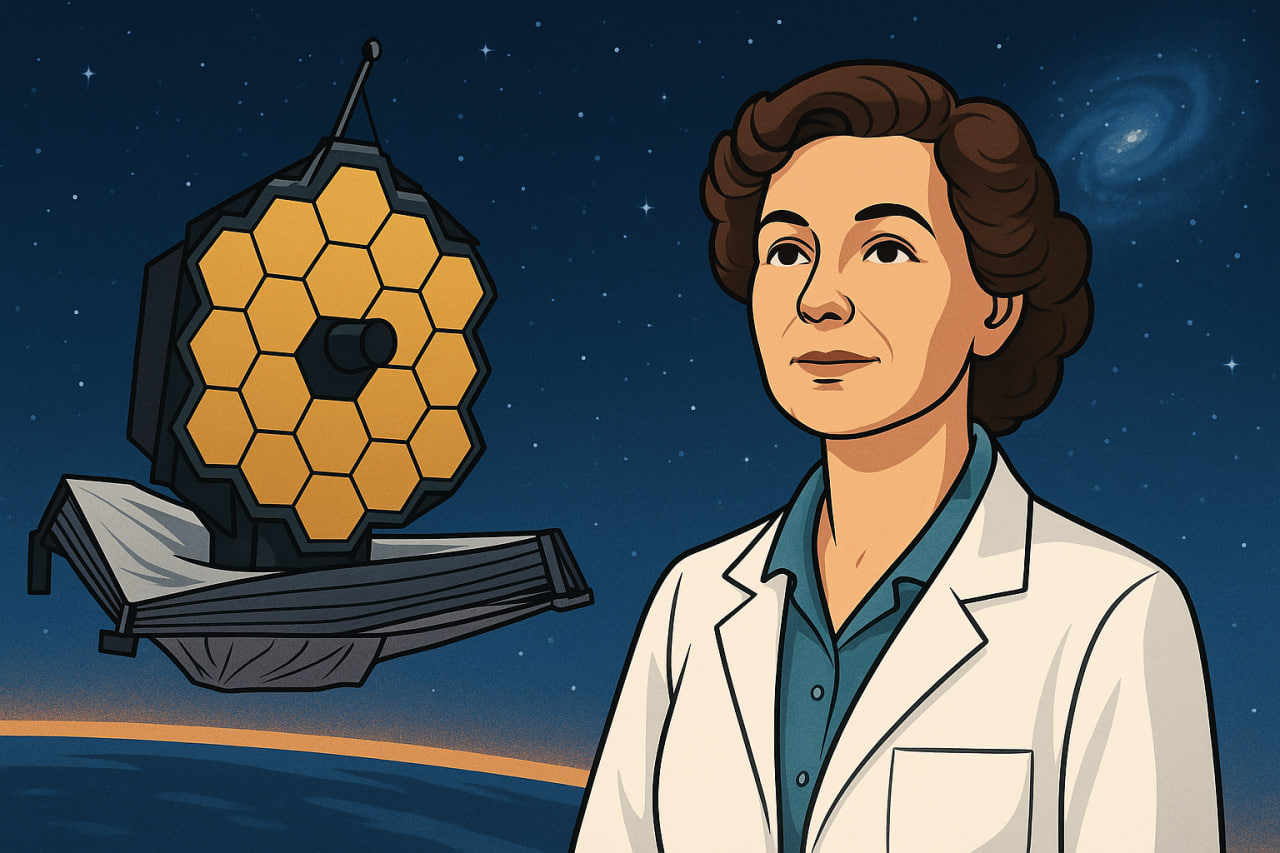
The Nancy Grace Roman Telescope: A New Era of Wide-Field Astronomy

The Nancy Grace Roman Space Telescope, named after NASA’s pioneering visionary Nancy Grace Roman, represents one of the most ambitious astronomical missions of the 21st century. Often called “Hubble’s wide-eyed cousin,” the Roman Telescope is designed to explore the universe with a field of view 100 times larger than that of the Hubble Space Telescope while maintaining equal image quality. Scheduled for launch in the mid-2020s, Roman aims to investigate some of the biggest mysteries in modern astrophysics, including dark energy, exoplanets, and the large-scale structure of the cosmos. Its unprecedented combination of precision, coverage, and sensitivity will allow scientists to map the universe in ways never before possible.

The Miller–Urey Experiment: Recreating the Chemistry of Early Earth
Science Be Smart

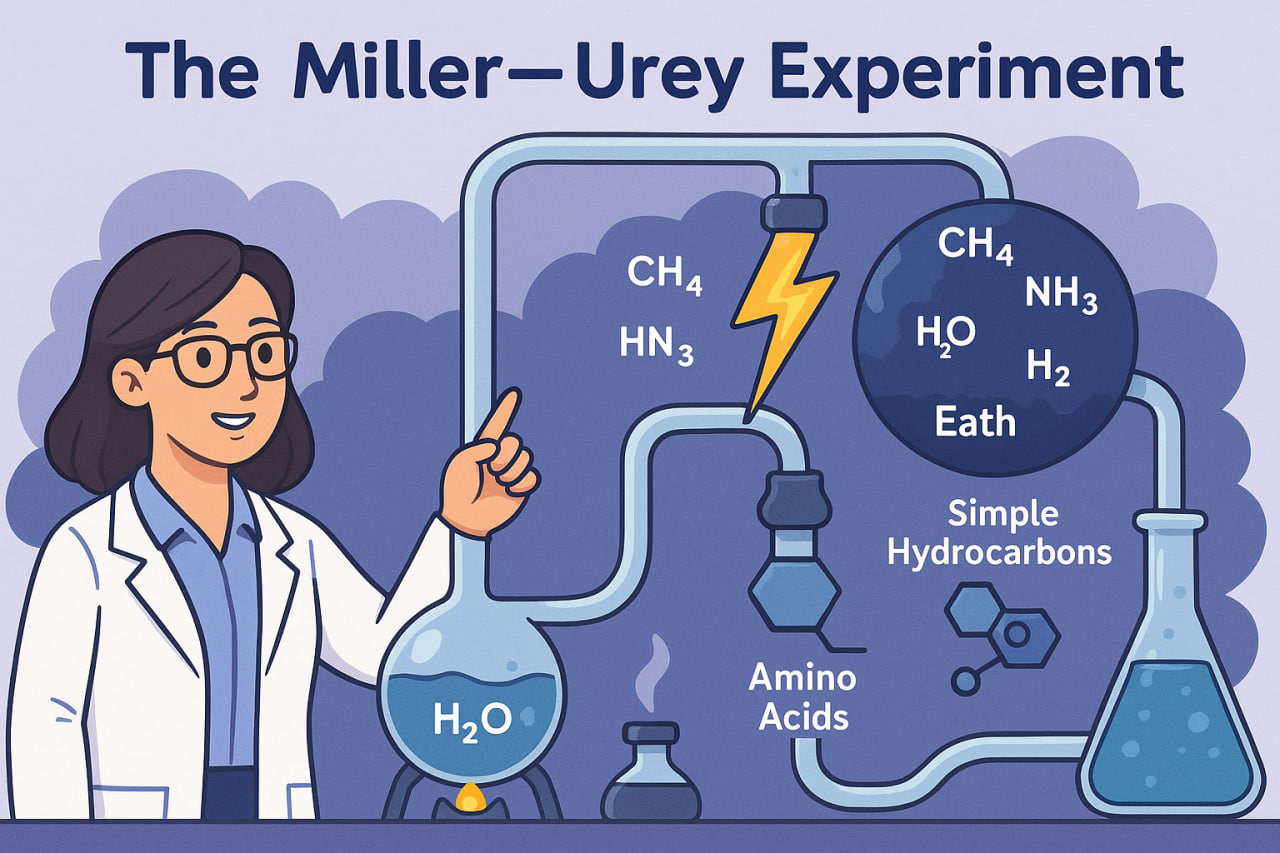
The Miller–Urey Experiment: Recreating the Chemistry of Early Earth

The Miller–Urey experiment, conducted in 1952 by chemists Stanley Miller and Harold Urey, is one of the most iconic scientific studies in the field of abiogenesis — the study of how life might have originated from non-living matter. Designed to simulate the conditions of early Earth, this groundbreaking experiment demonstrated that simple organic molecules, including amino acids, could form spontaneously when exposed to energy sources such as lightning. Although modern research has refined and expanded our understanding of Earth’s early atmosphere, the Miller–Urey experiment remains a landmark demonstration that the building blocks of life can emerge through natural chemical processes. Its findings continue to inspire research in chemistry, planetary science, and the search for life beyond Earth.

The Double-Slit Experiment: What Happens When Electrons Are Observed?
Science Be Smart

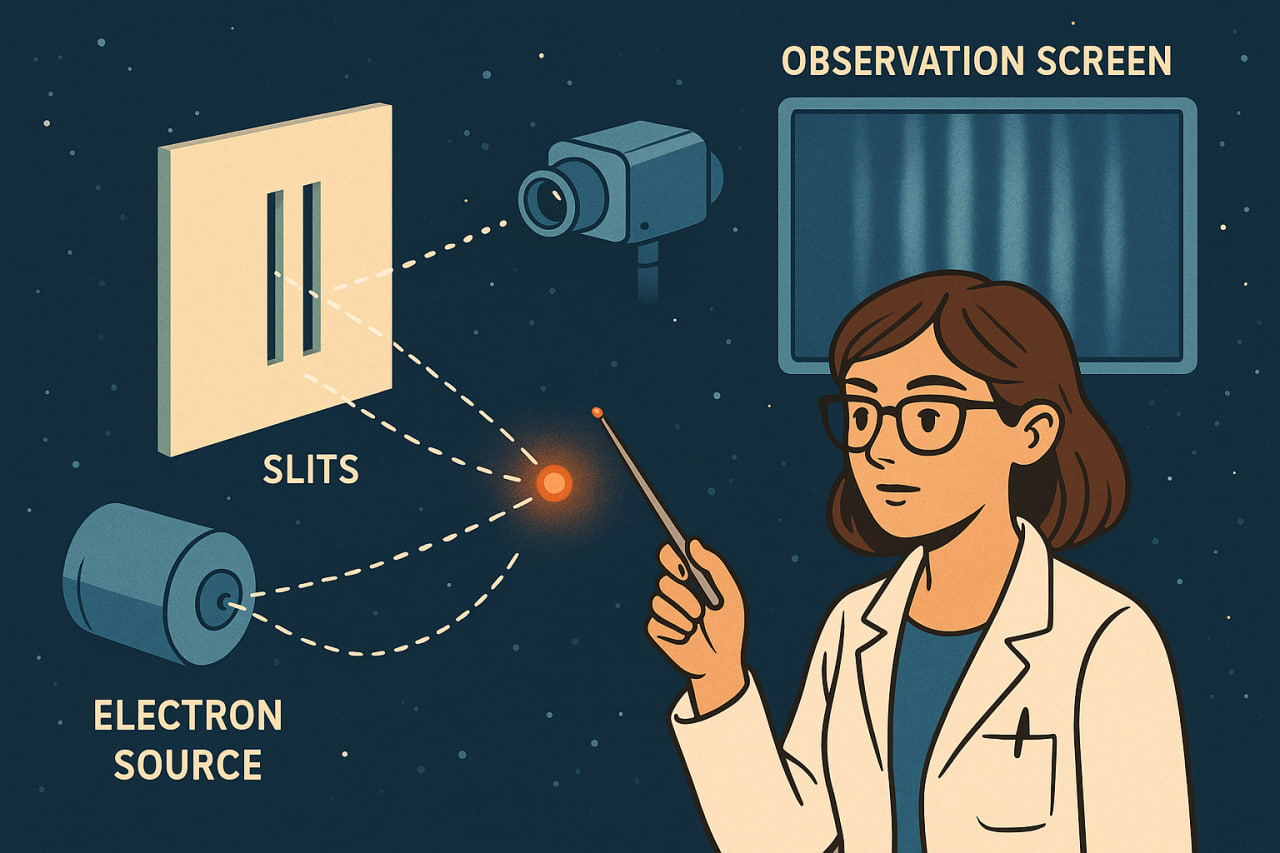
The Double-Slit Experiment: What Happens When Electrons Are Observed?

The double-slit experiment is one of the most mysterious and important experiments in the history of physics. First demonstrated with light and later with electrons and other particles, it reveals deep truths about the nature of matter, observation, and reality itself. When electrons pass through two narrow slits and are not observed, they behave like waves, creating an interference pattern on the screen behind them. But when scientists observe which slit an electron passes through, the interference disappears — the electron behaves like a particle instead. This strange shift, triggered simply by observing the electron, challenges classical logic and lies at the foundation of quantum mechanics.

The Quantum Eraser: One of the Most Mysterious Experiments in Modern Physics
Science New Discoveries Be Smart

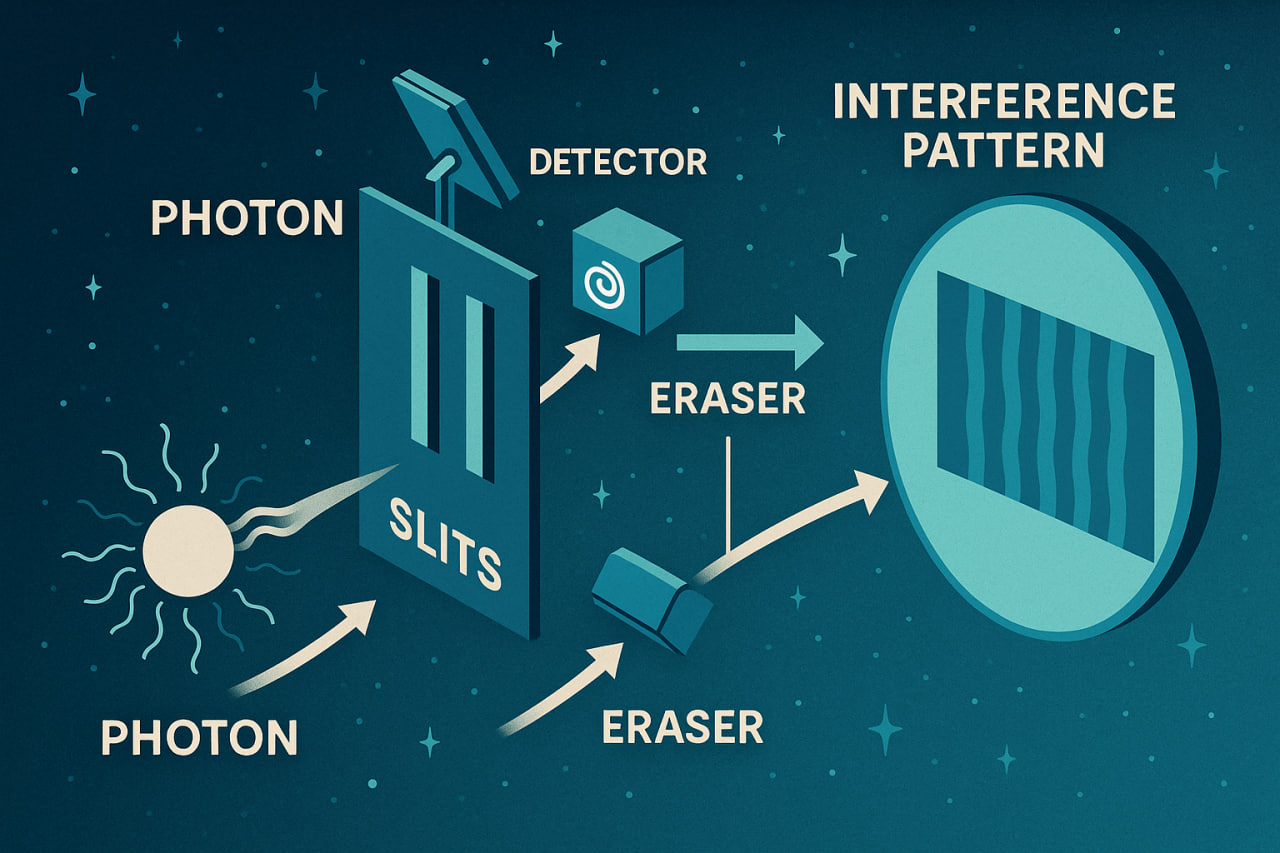
The Quantum Eraser: One of the Most Mysterious Experiments in Modern Physics

The quantum eraser experiment is one of the most surprising and mind-bending demonstrations in quantum mechanics. It expands upon the famous double-slit experiment by showing that information itself determines whether particles behave like waves or particles. In a quantum eraser setup, the interference pattern created by photons or electrons can disappear — and then reappear — depending on whether information about the particle’s path is available or has been “erased.” Even more astonishing is the delayed-choice quantum eraser, where the decision to erase or keep the information can be made after the particle has already passed through the slits, yet the outcome still changes. This challenges classical logic and reveals how deeply quantum mechanics intertwines information, measurement, and physical reality.

Quantum Superposition: One of the Fundamental Principles of Modern Physics
Science Be Smart

Quantum Superposition: One of the Fundamental Principles of Modern Physics

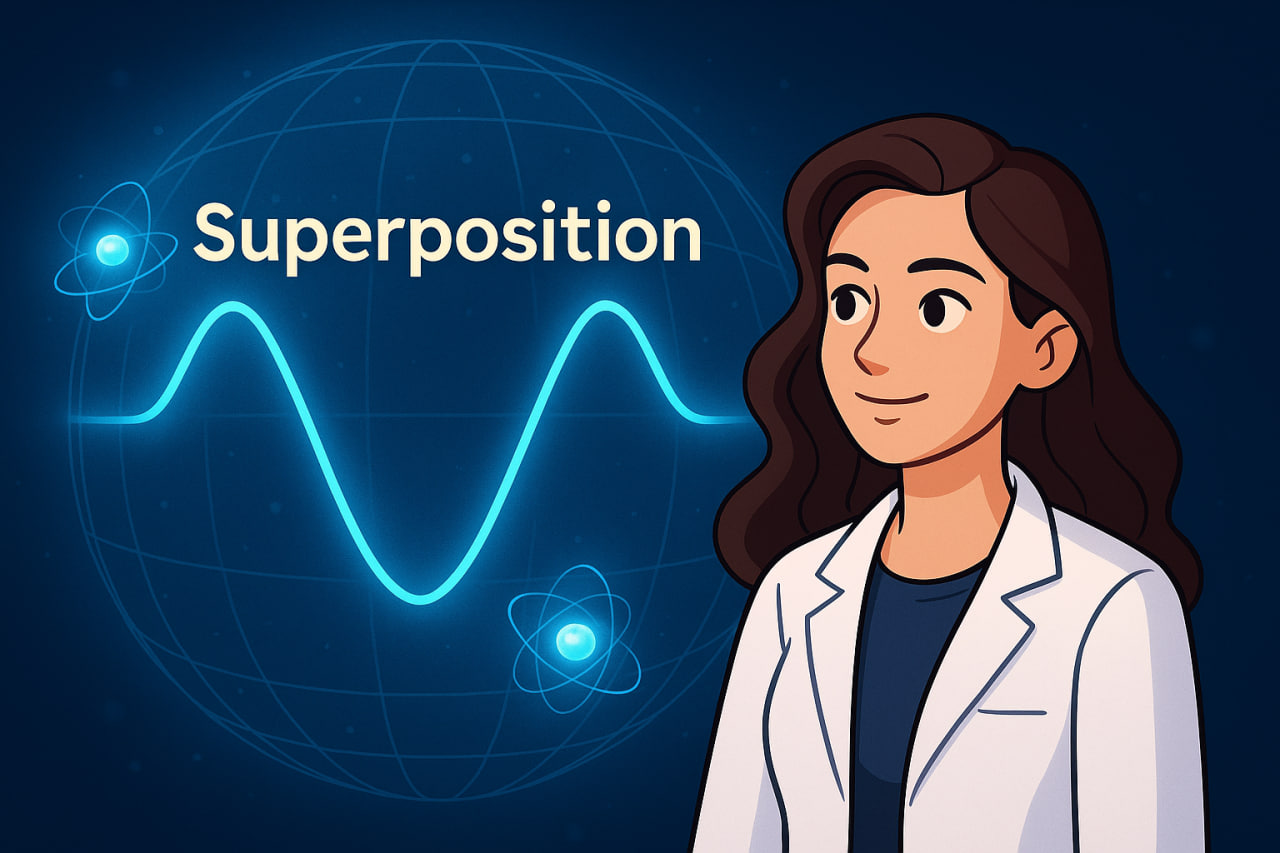
Quantum superposition is one of the most surprising and essential concepts in quantum mechanics. It states that a quantum system — such as an electron, photon, or atom — can exist in multiple states at the same time until it is measured. This defies classical intuition, where objects always have a definite position, energy, or state. Instead, in the quantum world, particles behave like overlapping probability waves that contain all possible outcomes simultaneously. Only when a measurement takes place does the system “collapse” into a single observable state. Understanding superposition is crucial for interpreting modern physics, explaining quantum technology, and exploring the mysteries of reality itself.

Schrödinger’s Cat: The Famous Thought Experiment That Redefined Reality
History Science Be Smart

Schrödinger’s Cat: The Famous Thought Experiment That Redefined Reality

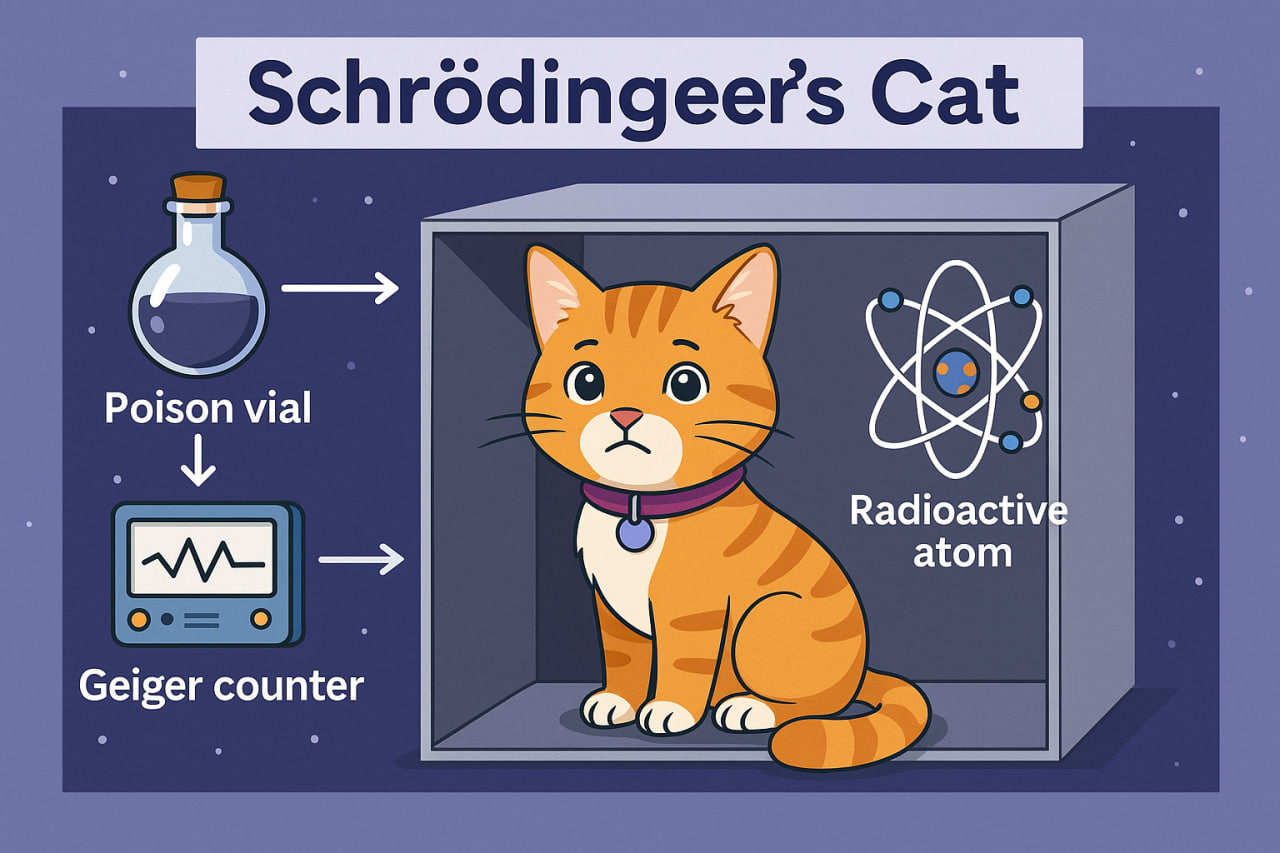
Schrödinger’s Cat is one of the most iconic and widely discussed thought experiments in the history of physics. Proposed in 1935 by Austrian physicist Erwin Schrödinger, it was designed not to explain quantum mechanics, but to criticize the way quantum rules were being interpreted at the time. The scenario imagines a cat placed in a sealed box with a radioactive atom, a detector, and a vial of poison. If the atom decays, the poison is released and the cat dies; if not, the cat lives. According to some interpretations of quantum mechanics, until the box is opened and the system is observed, the cat exists in a superposition of both alive and dead states simultaneously. Schrödinger intended this paradox to highlight the absurdity of applying quantum rules—designed for subatomic particles—to large everyday objects.

Quantum Mechanics for Beginners: Understanding the Basics of the Quantum World
Science Be Smart

Quantum Mechanics for Beginners: Understanding the Basics of the Quantum World

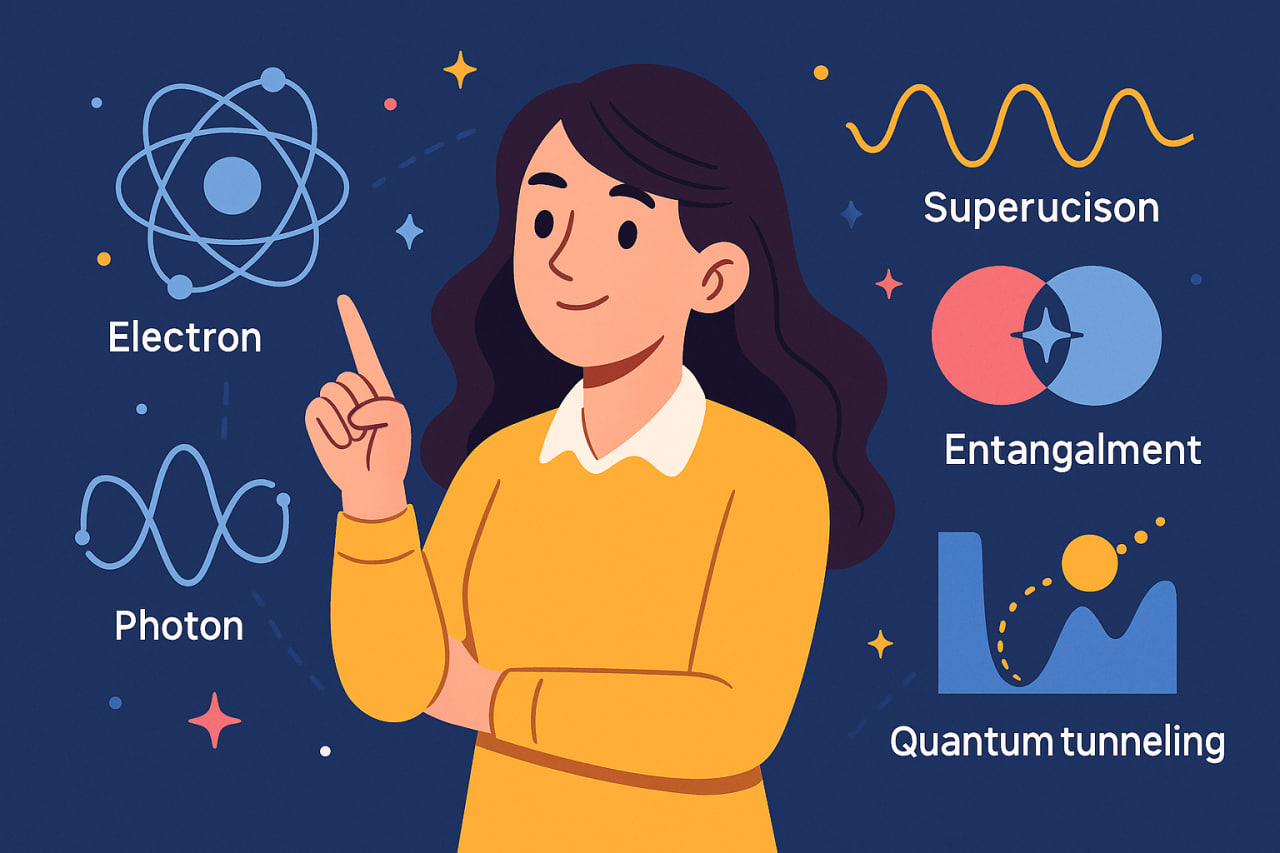
Quantum mechanics is the branch of physics that describes how the universe works at the smallest scales — the level of atoms, electrons, photons, and other subatomic particles. Unlike classical physics, which explains everyday objects like cars, planets, and falling apples, quantum mechanics reveals a world where particles can exist in multiple places at once, teleport information, behave like both waves and particles, and interact in ways that seem impossible from a common-sense point of view. Although the topic is often seen as complicated, understanding the fundamentals of quantum mechanics is both fascinating and achievable, even for beginners. The key is to look at its core ideas clearly and without unnecessary math.