Be Smart

Liquid Light: The Strange State of Matter Where Light Behaves Like a Fluid
Hi-Tech New Discoveries Be Smart

Liquid Light: The Strange State of Matter Where Light Behaves Like a Fluid

Light is usually described as a stream of photons — particles that have no mass, travel at incredible speed, and do not interact strongly with one another. But under certain extreme conditions, scientists have discovered that light can transform into something astonishing: a fluid-like state known as “liquid light.” In this state, photons behave not as free, independent particles but as a collective entity that flows like a liquid. This remarkable phenomenon blurs the boundaries between matter and energy and opens the door to new technologies in quantum physics, computing, and advanced materials. Understanding liquid light sheds light on the mysterious world of quantum mechanics and reveals just how strange the universe can be.


What Can Artificial Intelligence Do Today? Capabilities, Limits, and Emerging Possibilities
AI & Ethics AI Be Smart

What Can Artificial Intelligence Do Today? Capabilities, Limits, and Emerging Possibilities

Artificial intelligence (AI) has advanced rapidly over the past decade, transforming nearly every part of modern life — from medicine and science to entertainment and daily tasks. Unlike earlier systems that followed strict rules, today’s AI can learn from data, recognize patterns, make predictions, process language, and even create original content. These capabilities have made AI a powerful tool for solving complex problems, accelerating research, and supporting human decision-making. While AI is not conscious and does not “think” like humans, it can perform specialized tasks with incredible speed and accuracy. Understanding what AI can do today helps individuals and organizations use these technologies responsibly and effectively while remaining aware of their limitations.

Why Does ChatGPT Sometimes Provide Incorrect Answers Instead of Saying “I Don’t Know”?
AI & Ethics AI Be Smart

Why Does ChatGPT Sometimes Provide Incorrect Answers Instead of Saying “I Don’t Know”?

Large language models such as ChatGPT are powerful tools designed to assist with information, reasoning, and creative tasks. However, like any AI model, they can occasionally provide incorrect, incomplete, or overly confident answers instead of openly stating uncertainty. This phenomenon is commonly known as “hallucination” in artificial intelligence. It happens when the model generates text that sounds correct but does not accurately reflect real facts or reliable knowledge. Understanding why this occurs helps users work more effectively with AI tools while recognizing their strengths and limitations. ChatGPT is not a conscious thinker — it predicts words based on patterns in data — and therefore handles uncertainty differently from humans. Exploring these mechanisms reveals how AI models are trained, how they construct responses, and why transparency about limitations is an ongoing challenge in AI development.

Electrolysis: The Chemical Process Powering Modern Industry and Clean Energy
Science New Discoveries Be Smart

Electrolysis: The Chemical Process Powering Modern Industry and Clean Energy

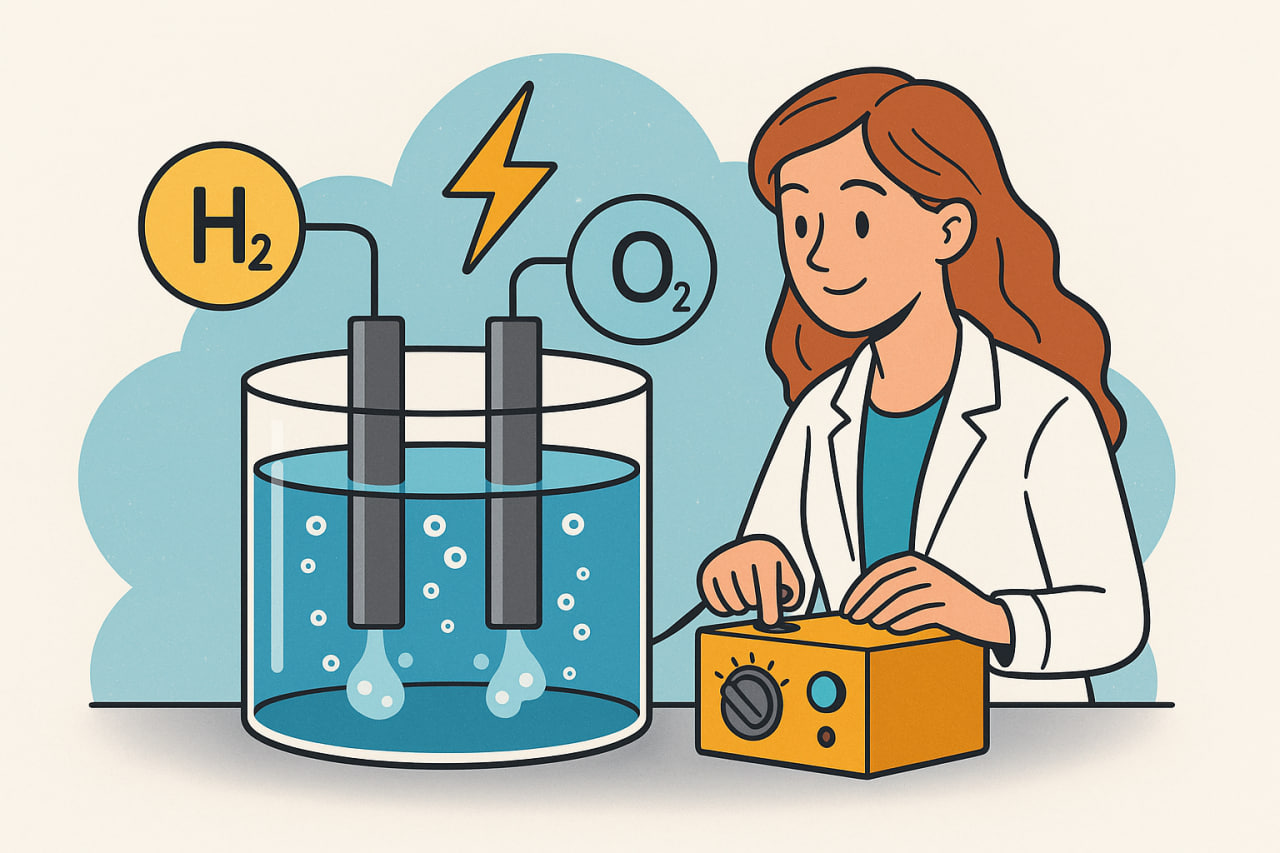
Electrolysis is a fundamental chemical process in which an electric current is used to drive a reaction that would not normally occur on its own. By splitting compounds into their component elements, electrolysis plays a key role in manufacturing, metallurgy, environmental technology, and renewable energy systems. The process is most widely known for splitting water into hydrogen and oxygen, but it is also essential for producing aluminum, chlorine, sodium hydroxide, and many industrial chemicals. In the modern energy landscape, electrolysis is gaining even greater attention as the foundational technology behind green hydrogen, a clean fuel that can help reduce global carbon emissions. Understanding how electrolysis works and why it is so important reveals its influence on energy, industry, and technological innovation.

The Newest Advancements in Space Technology: Innovations Shaping the Future of Exploration
Cosmic Innovations Hi-Tech Smart Technology

The Newest Advancements in Space Technology: Innovations Shaping the Future of Exploration

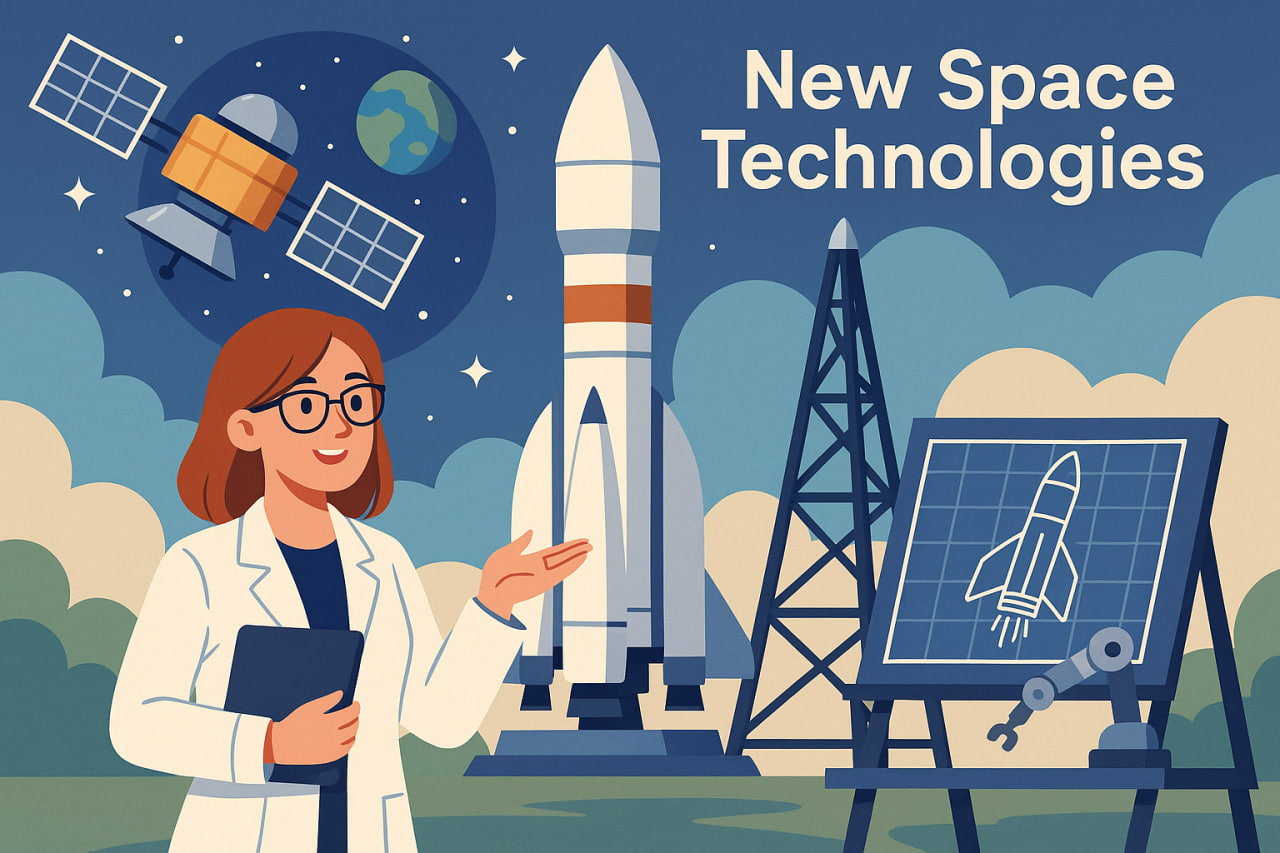
Modern space technology is evolving faster than ever before, driven by international missions, private industry, and groundbreaking scientific research. Today’s innovations go far beyond traditional rockets or satellites — they include reusable launch systems, advanced propulsion engines, deep-space habitats, autonomous robots, and next-generation telescopes capable of seeing further into the universe than any previous instrument. These technologies aim to make space travel more affordable, safer, and more capable of supporting long-term human presence beyond Earth. As global interest in the Moon, Mars, and near-Earth asteroids grows, the newest developments in space engineering are shaping the roadmap for the next century of exploration. Understanding these advances reveals how humanity is preparing to push deeper into space than ever before.

Solar Wind: The Powerful Stream of Particles Flowing From the Sun
Space Stories Universe Be Smart

Solar Wind: The Powerful Stream of Particles Flowing From the Sun

The solar wind is a continuous stream of charged particles — mainly electrons and protons — that flows outward from the Sun at incredible speeds. This invisible but powerful force shapes the space environment throughout the entire Solar System. As it travels across space, the solar wind interacts with planetary atmospheres, magnetic fields, and even technological systems on Earth. Although it cannot be felt directly, the solar wind plays a crucial role in creating auroras, driving space weather, and influencing long-term planetary evolution. Understanding how the solar wind behaves helps scientists protect satellites, forecast geomagnetic storms, and study the dynamic relationship between the Sun and Earth.

Ion Engines: The Future of Deep Space Propulsion
Space Stories Cosmic Innovations Hi-Tech

Ion Engines: The Future of Deep Space Propulsion

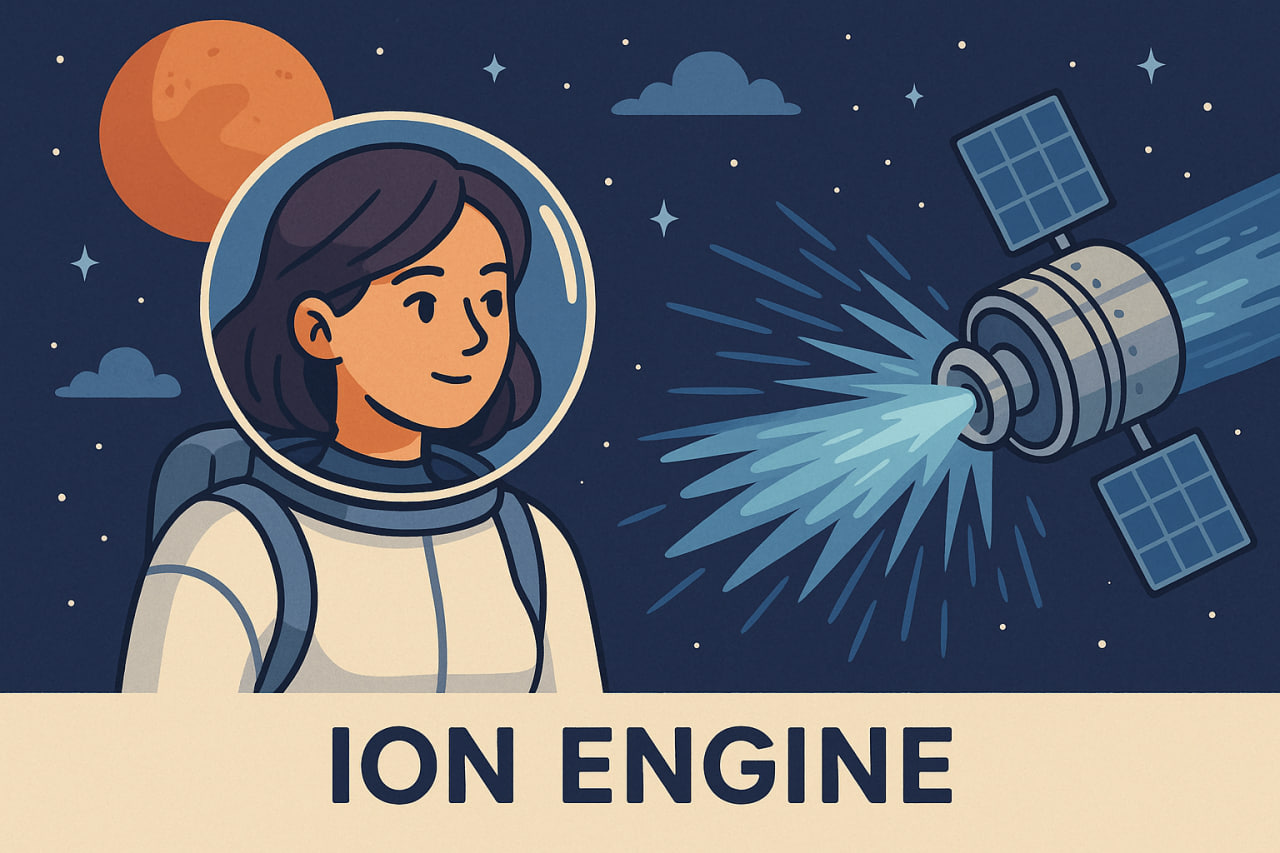
Ion engines represent one of the most advanced propulsion technologies ever developed, enabling spacecraft to travel vast distances using remarkably little fuel. Unlike traditional chemical rocket engines that produce enormous thrust in a short burst, ion engines create a steady, gentle push by accelerating electrically charged particles — ions — to extremely high speeds. This slow but continuous acceleration allows spacecraft to reach extraordinary velocities over long periods, making ion engines ideal for deep-space missions where efficiency is more important than raw power. Their ability to operate for months or even years without refueling has reshaped modern space exploration and opened new possibilities for scientific discovery across the solar system. Understanding how ion engines work highlights humanity’s growing capability to explore space sustainably and intelligently.

Archimedean Solids: Geometry, Symmetry, and Mathematical Beauty
History Science Be Smart

Archimedean Solids: Geometry, Symmetry, and Mathematical Beauty

Archimedean solids are a unique family of polyhedra distinguished by their elegant balance of symmetry, uniformity, and combinatorial regularity. Unlike Platonic solids, which consist of identical faces and identical vertices, Archimedean solids feature two or more types of regular polygons arranged in repeating vertex patterns. This combination of order and variation creates shapes that are both mathematically rich and visually fascinating. These solids have inspired centuries of study in geometry, architecture, crystallography, and art, serving as examples of how mathematical principles manifest in natural and human-made structures. Researchers continue to explore how their symmetries relate to group theory, spatial tiling, and even molecular formation. Studying Archimedean solids reveals the depth and beauty of geometric structures that arise from simple rules yet produce intricate and diverse forms.

Generative AI: How Machines Learn to Create
AI & Ethics AI Be Smart

Generative AI: How Machines Learn to Create

Generative artificial intelligence refers to a class of AI systems capable of producing new content such as text, images, audio, or even code based on patterns learned from large datasets. Unlike traditional software, which follows explicit rules, generative AI models learn statistical relationships and use them to generate outputs that can mimic human creativity. These systems rely on deep learning methods, particularly neural networks, to understand structure, style, and context in the data they process. Generative AI has become widely used in fields like art, entertainment, science, design, and business automation. Its rapid development has sparked both excitement and debate about its capabilities, limitations, and long-term societal impact. Understanding how generative AI works reveals not only its technological foundations but also the challenges of responsible deployment.

Direct Current and Alternating Current: Understanding the Two Pillars of Electrical Power
Science Be Smart

Direct Current and Alternating Current: Understanding the Two Pillars of Electrical Power

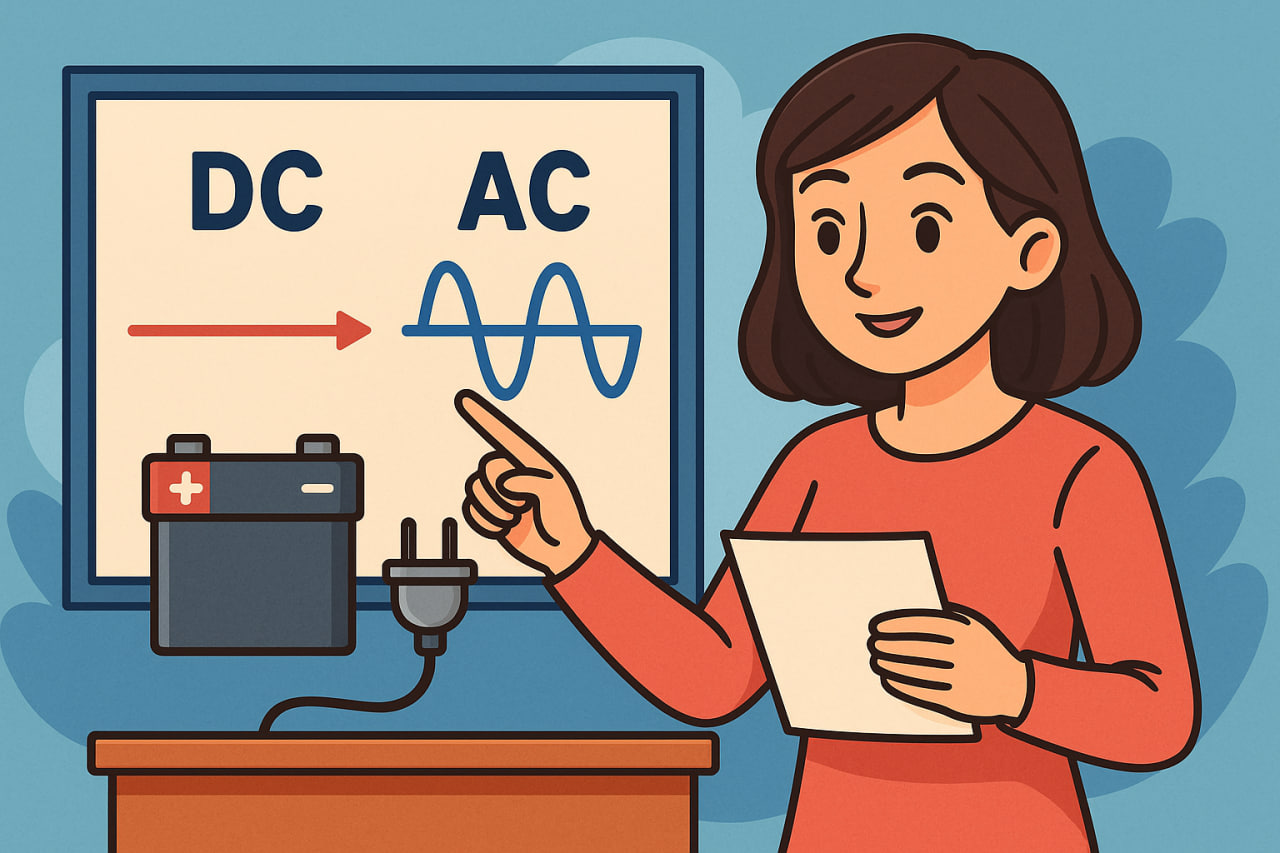
Electricity powers modern life, and understanding the difference between direct current (DC) and alternating current (AC) is essential for grasping how global energy systems operate. Both forms of electrical current play crucial roles in everything from household appliances to industrial machinery and modern electronics. DC flows continuously in one direction, making it vital for batteries, digital devices, and renewable energy storage systems. AC, on the other hand, changes direction periodically and is used for large-scale power distribution due to its efficiency over long distances. Experts emphasize that the coexistence of AC and DC systems reflects the diversity of technological needs in the modern world. By exploring their properties, applications, and history, we can better appreciate how these two electrical systems support daily life and technological progress.