Cosmic Innovations

Asteroid Mining: Science Fiction or the New Gold Rush?
Space Stories Cosmic Innovations Universe

Asteroid Mining: Science Fiction or the New Gold Rush?

The idea of extracting valuable resources from asteroids once belonged exclusively to science fiction, but in recent years it has become a serious topic of scientific and economic discussion. Rapid progress in space technology, robotics, and automation has transformed asteroid mining from a distant dream into a long-term strategic possibility. Asteroids contain vast amounts of metals, water, and rare elements that are increasingly scarce or expensive to extract on Earth. As global demand for resources grows, interest in off-world mining continues to intensify. The central question is no longer whether asteroids contain valuable materials, but whether humanity can realistically access and use them.


Space Tourism: When Will Space Travel Become Accessible to Everyone?
Cosmic Innovations Earth & Moon What if?

Space Tourism: When Will Space Travel Become Accessible to Everyone?

Space tourism has moved from science fiction into the realm of early reality, driven by rapid advances in aerospace technology and private investment. What was once limited to trained astronauts is now being tested by civilian passengers on short suborbital flights. Yet the idea of space travel being accessible to everyone remains a complex challenge involving cost, safety, infrastructure, and regulation. Understanding where space tourism stands today—and what must change for it to become truly widespread—helps separate near-term possibilities from long-term visions. The journey toward accessible space travel is gradual, but its direction is becoming clearer.

Artificial Gravity: How It Works and Why Humanity Needs It
Space Stories Cosmic Innovations Universe

Artificial Gravity: How It Works and Why Humanity Needs It

Artificial gravity is a concept designed to solve one of the most serious challenges of long-term space travel: the absence of natural gravity. While weightlessness may look fascinating, prolonged exposure to microgravity has significant negative effects on the human body, including muscle loss, bone weakening, and cardiovascular changes. To support long-duration missions, space stations, and future colonies, scientists and engineers have explored ways to simulate gravity using physical principles rather than massive planets. Artificial gravity is not science fiction—it is a scientifically grounded idea with real experimental foundations. Understanding how it works reveals how humans may one day live comfortably beyond Earth.

Interferometers: Measuring the Invisible with Waves
Cosmic Innovations Hi-Tech Science

Interferometers: Measuring the Invisible with Waves

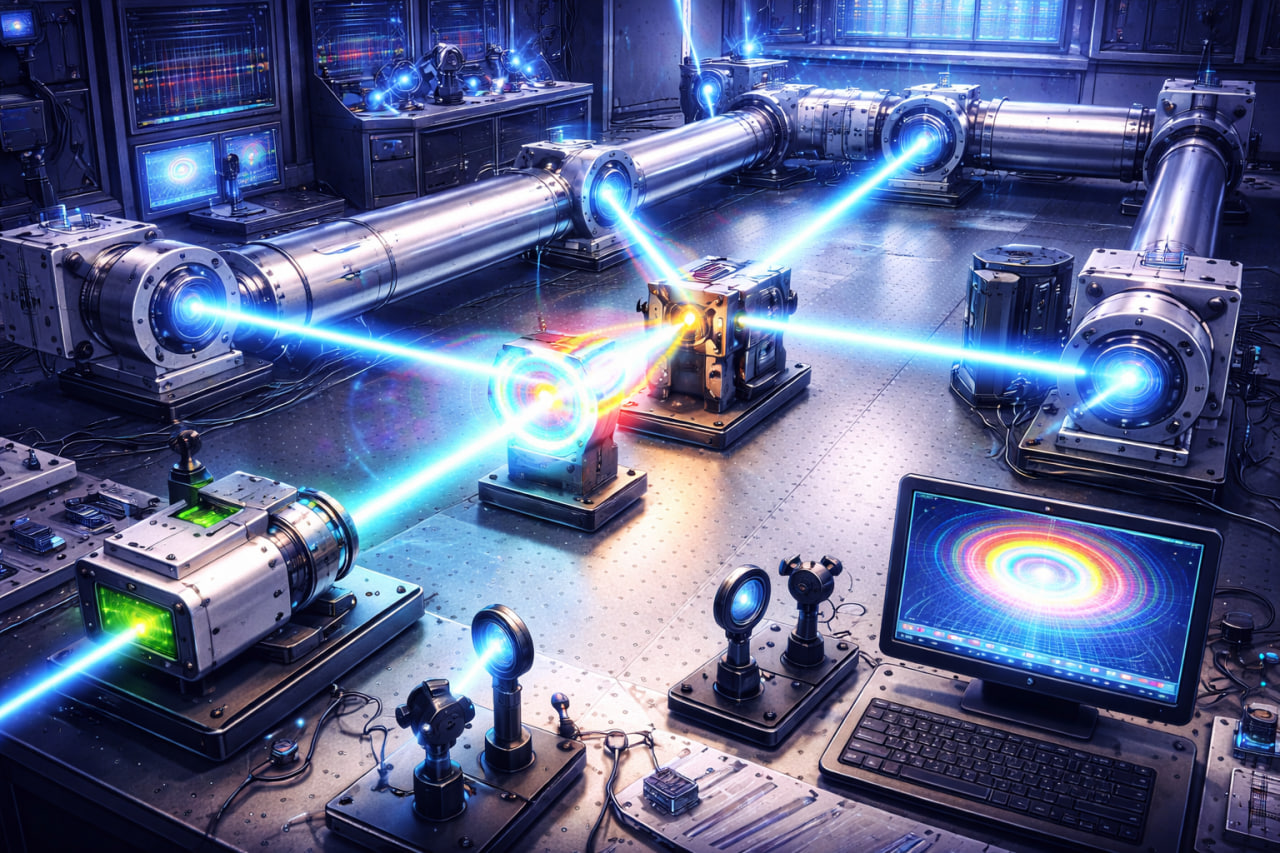
Interferometers are among the most precise scientific instruments ever created, designed to detect changes so small they are almost impossible to imagine. They work by comparing waves—most commonly light or radio waves—to measure extremely tiny differences in distance, motion, or time. Thanks to interferometers, scientists can observe phenomena that would otherwise remain completely hidden, from atomic-scale shifts to cosmic events billions of light-years away. These instruments play a central role in modern physics, astronomy, and engineering, transforming abstract wave behavior into measurable data. Although the underlying concept is elegant, interferometers are capable of extraordinary sensitivity. Understanding how interferometers work reveals how humanity measures reality at its most subtle levels.

The Holographic Principle
Cosmic Innovations Universe Science

The Holographic Principle

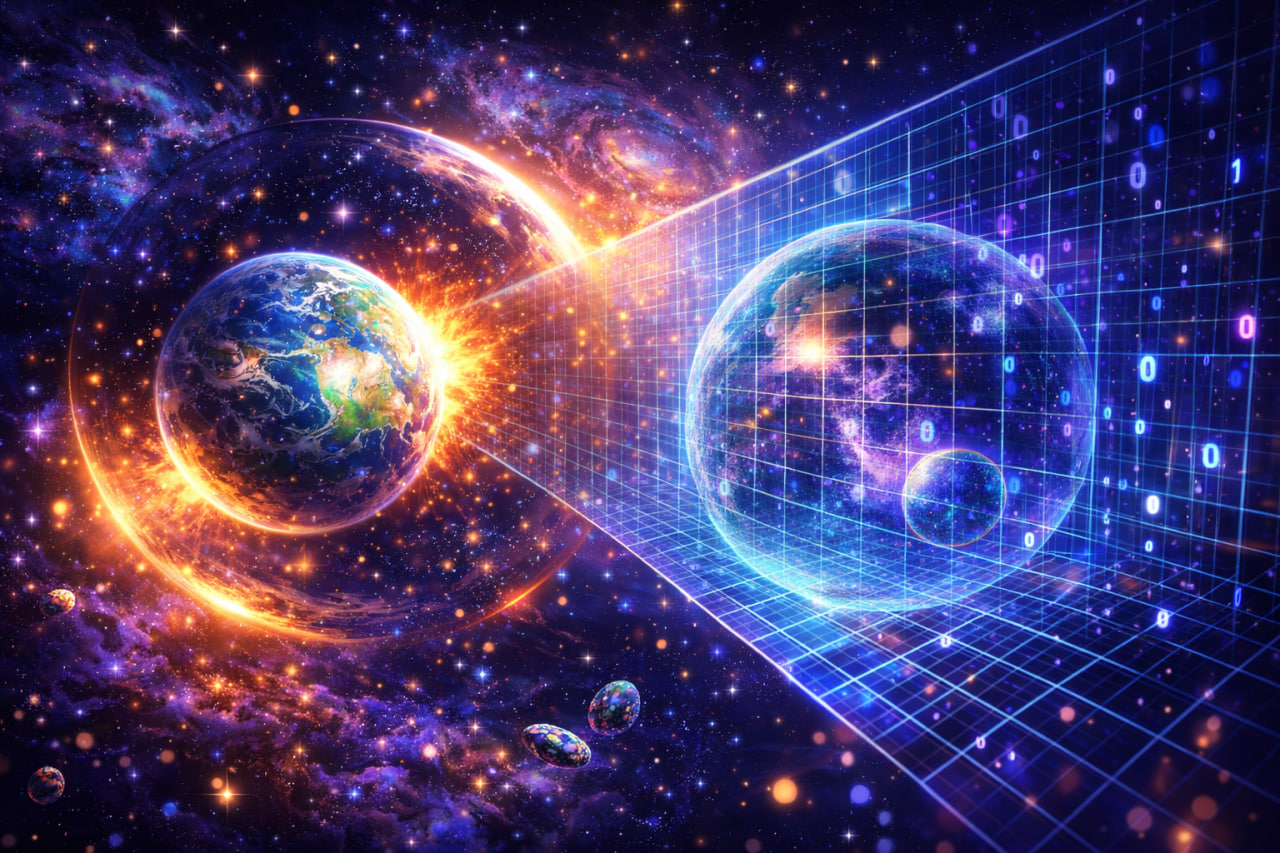
The holographic principle is one of the most radical ideas in modern theoretical physics, proposing that all the information contained within a volume of space can be fully described by data encoded on its boundary. In simple terms, this means that a three-dimensional reality may emerge from information stored on a two-dimensional surface. What sounds like science fiction arises directly from attempts to reconcile gravity, quantum mechanics, and thermodynamics. The principle challenges everyday intuition about space, depth, and locality, forcing physicists to rethink what “inside” and “outside” truly mean. Over the past decades, the holographic principle has become a powerful conceptual tool in the search for a unified description of nature. Understanding it offers a glimpse into how reality itself may be structured at the deepest level.

Uhuru: The First X-Ray Astronomy Laboratory in Space
Cosmic Innovations History Hi-Tech

Uhuru: The First X-Ray Astronomy Laboratory in Space

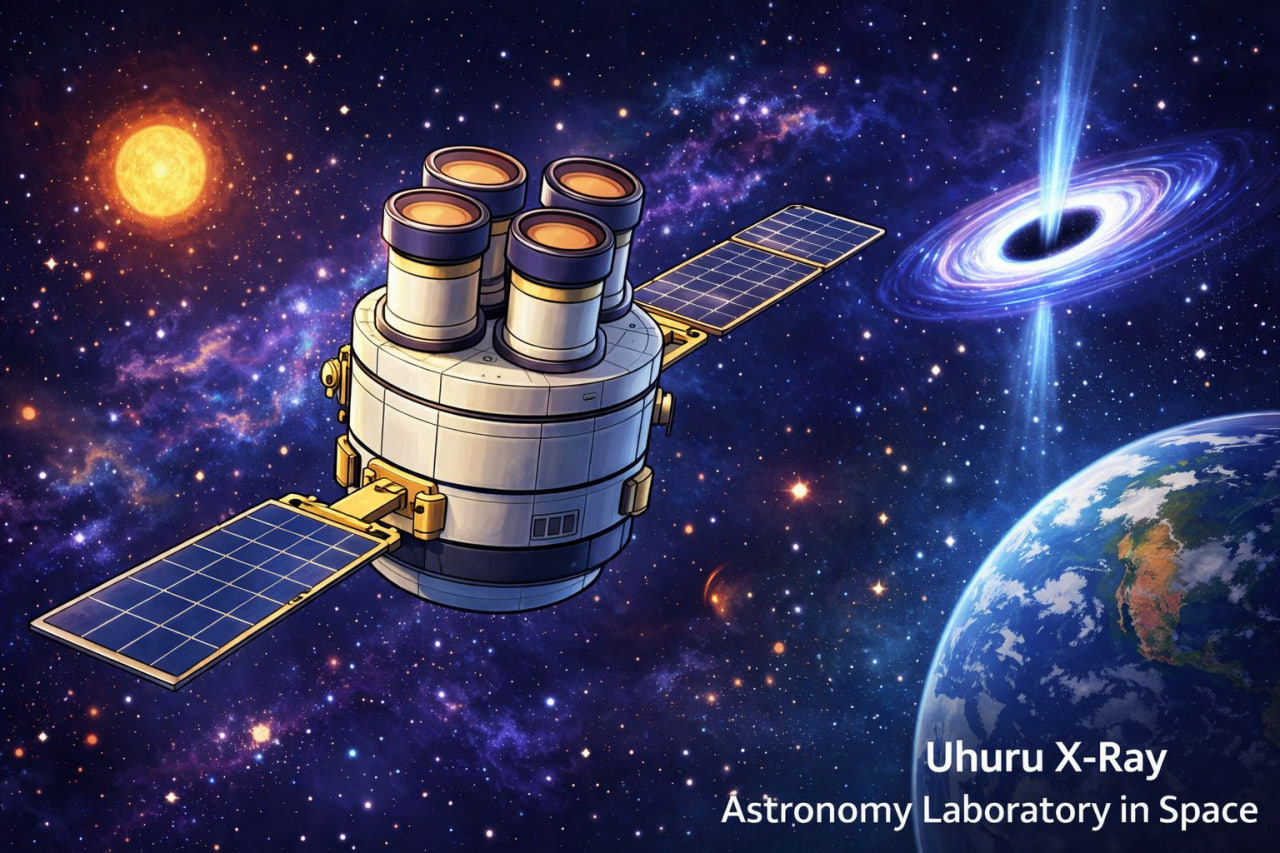
The Uhuru X-ray laboratory marked a turning point in humanity’s exploration of the universe by opening an entirely new window on the cosmos. Launched in 1970, Uhuru became the first satellite dedicated exclusively to X-ray astronomy, allowing scientists to observe high-energy phenomena invisible to optical telescopes. Before Uhuru, astronomers could only guess at the intensity and distribution of cosmic X-ray sources. This pioneering mission transformed those guesses into precise measurements, revealing a universe filled with extreme objects such as black holes, neutron stars, and supernova remnants. Uhuru did not merely collect data; it fundamentally changed how scientists understood the energetic processes shaping galaxies. Its legacy continues to influence modern space observatories and high-energy astrophysics research.

Cosmic Inflation: How the Universe Expanded in an Instant
Space Stories Cosmic Innovations Universe

Cosmic Inflation: How the Universe Expanded in an Instant

One of the most influential ideas in modern cosmology is the concept of cosmic inflation, a brief period of extremely rapid expansion that occurred at the very beginning of the universe’s history. According to this theory, space itself expanded exponentially within a tiny fraction of a second after the Big Bang. This sudden growth helps explain why the universe appears vast, smooth, and nearly uniform in all directions. Inflation does not describe an explosion of matter into space, but rather the stretching of space itself. By addressing fundamental puzzles left unanswered by earlier models, inflation has become a cornerstone of contemporary cosmological theory.

Exoplanet Atmospheres: Chemical Analysis from Light-Years Away
Space Stories Cosmic Innovations Universe

Exoplanet Atmospheres: Chemical Analysis from Light-Years Away

For centuries, planets beyond our solar system were purely theoretical, existing only in speculation and science fiction. Today, astronomers not only detect exoplanets, but also analyze the chemical composition of their atmospheres, despite distances measured in dozens or thousands of light-years. This remarkable achievement is possible thanks to advances in telescope technology, spectroscopy, and data analysis. By studying how starlight interacts with planetary atmospheres, scientists can identify gases, infer temperatures, and even assess whether a planet might support life. Atmospheric analysis has become one of the most powerful tools in modern astronomy, transforming exoplanets from distant dots into complex, physical worlds.

The James Webb Space Telescope: How It Changed Our View of Exoplanets
Space Stories Cosmic Innovations Hi-Tech

The James Webb Space Telescope: How It Changed Our View of Exoplanets

The launch of the James Webb Space Telescope marked a turning point in the study of exoplanets. Before Webb, astronomers could detect many distant worlds, but understanding their true nature remained limited. Most observations focused on size, mass, and orbit, leaving atmospheres and surface conditions largely unknown. With its unprecedented sensitivity and infrared capabilities, Webb transformed exoplanets from distant points of data into complex, character-rich worlds. It allowed scientists to study their atmospheres in detail and investigate their potential habitability. As a result, our understanding of planets beyond the Solar System has become deeper, more precise, and far more nuanced.

SETI and METI: Should Humanity Announce Its Presence to the Cosmos
Space Stories Cosmic Innovations Science

SETI and METI: Should Humanity Announce Its Presence to the Cosmos

For decades, humanity has listened quietly to the universe, searching for signs that we are not alone. At the same time, a growing debate asks whether listening is enough—or whether we should actively announce our presence. These two approaches are known as SETI and METI, and they represent fundamentally different philosophies about contact with extraterrestrial intelligence. The question is not only scientific, but also ethical, technological, and existential. Should we remain silent observers, or is it safe to send messages into the unknown? Understanding this debate reveals how science, risk, and human curiosity intersect on a cosmic scale.