Cosmic Innovations

Starlink: A New Era of Global Satellite Internet
Neuro-Tech Cosmic Innovations Hi-Tech

Starlink: A New Era of Global Satellite Internet

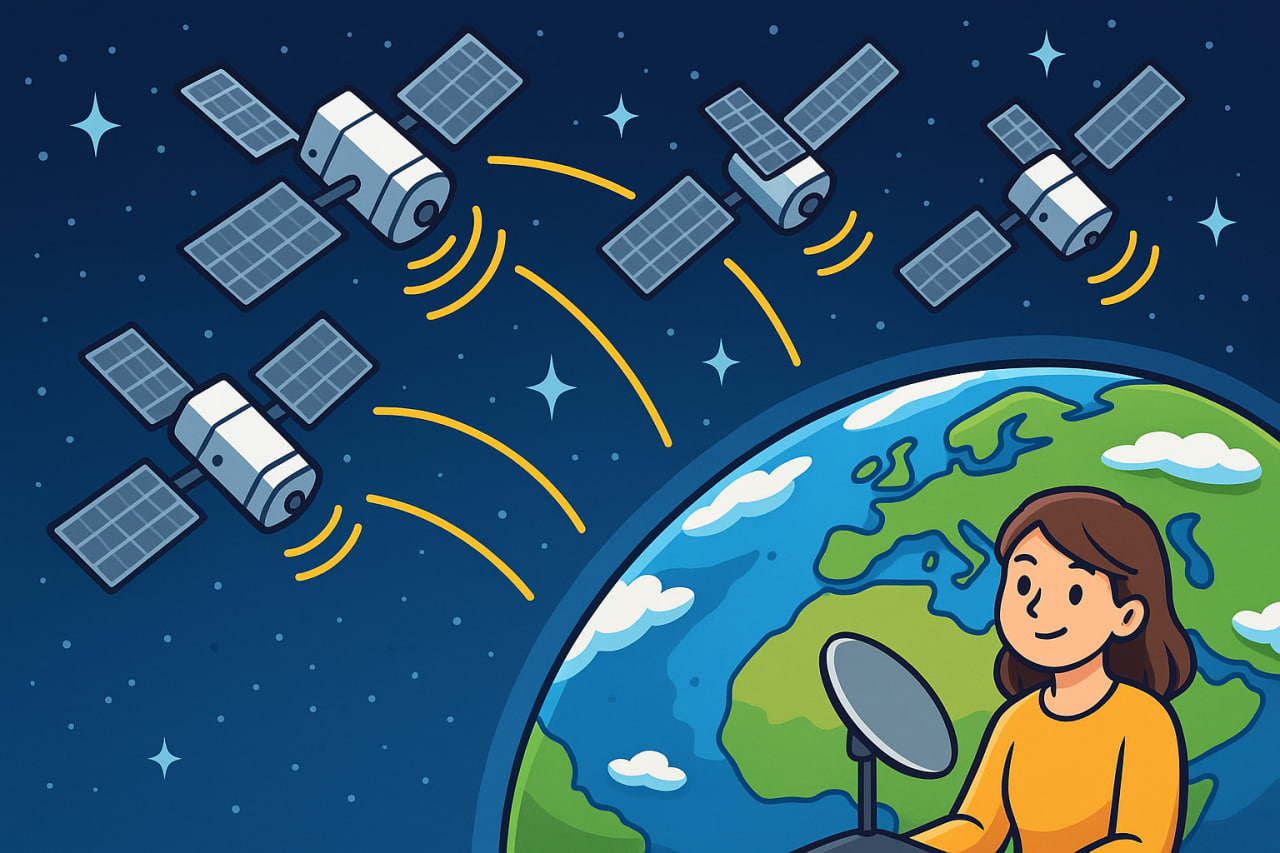
Starlink is a satellite-based internet system developed by SpaceX with the goal of providing high-speed, low-latency broadband access anywhere on Earth. Unlike traditional satellite internet, which relies on a few large satellites placed high above the planet, Starlink uses a massive constellation of thousands of small satellites operating in low Earth orbit (LEO). Their closer proximity allows faster data transmission, reduced signal delay, and more stable connectivity, even in remote or underserved regions. Starlink represents a major technological shift in global communications, reshaping how people access information, work online, and stay connected.


Artificial Satellites: What They Are and How They Shape Modern Life
Space Stories Cosmic Innovations Hi-Tech

Artificial Satellites: What They Are and How They Shape Modern Life

Artificial satellites are human-made objects launched into space to orbit the Earth or other celestial bodies. They have become essential tools for communication, navigation, weather forecasting, science, defense, and global connectivity. Today thousands of satellites operate above us, forming invisible networks that support everything from smartphone GPS signals to climate monitoring and international broadcasting. Although they vary widely in size and function, all satellites rely on the same basic principle: moving fast enough sideways so that they continuously fall around Earth rather than down to its surface. Understanding how satellites work and why they are so important explains much of the technology powering our modern world.

The Space Elevator: A Bold Vision for Reaching Orbit Without Rockets
Cosmic Innovations Hi-Tech Be Smart

The Space Elevator: A Bold Vision for Reaching Orbit Without Rockets

A space elevator is one of the most ambitious engineering concepts ever proposed — a structure extending from Earth’s surface all the way to space, allowing payloads and potentially humans to ascend into orbit without rockets. The idea challenges imagination, physics, and materials science, yet it remains one of the most intensely studied futuristic technologies. If a space elevator becomes possible, it could revolutionize space travel by making access to orbit dramatically cheaper, safer, and more energy-efficient, opening new opportunities for exploration, manufacturing, and off-world development.

Innovations in Robotics: How Modern Machines Are Transforming the Future
Cosmic Innovations Hi-Tech Smart Technology

Innovations in Robotics: How Modern Machines Are Transforming the Future

Robotics has entered a new era marked by rapid technological breakthroughs, smarter machines, and unprecedented levels of automation. What began as simple mechanical tools has evolved into a multidisciplinary field combining artificial intelligence, advanced sensors, bio-inspired engineering, and human–machine collaboration. Today’s robots can navigate complex environments, perform delicate tasks with surgical precision, and even learn from experience. Innovations in robotics are reshaping industries such as healthcare, manufacturing, transportation, space exploration, and environmental protection. Understanding these advancements reveals how robots are becoming essential partners to humans, boosting efficiency, safety, and scientific progress.

The Newest Advancements in Space Technology: Innovations Shaping the Future of Exploration
Cosmic Innovations Hi-Tech Smart Technology

The Newest Advancements in Space Technology: Innovations Shaping the Future of Exploration

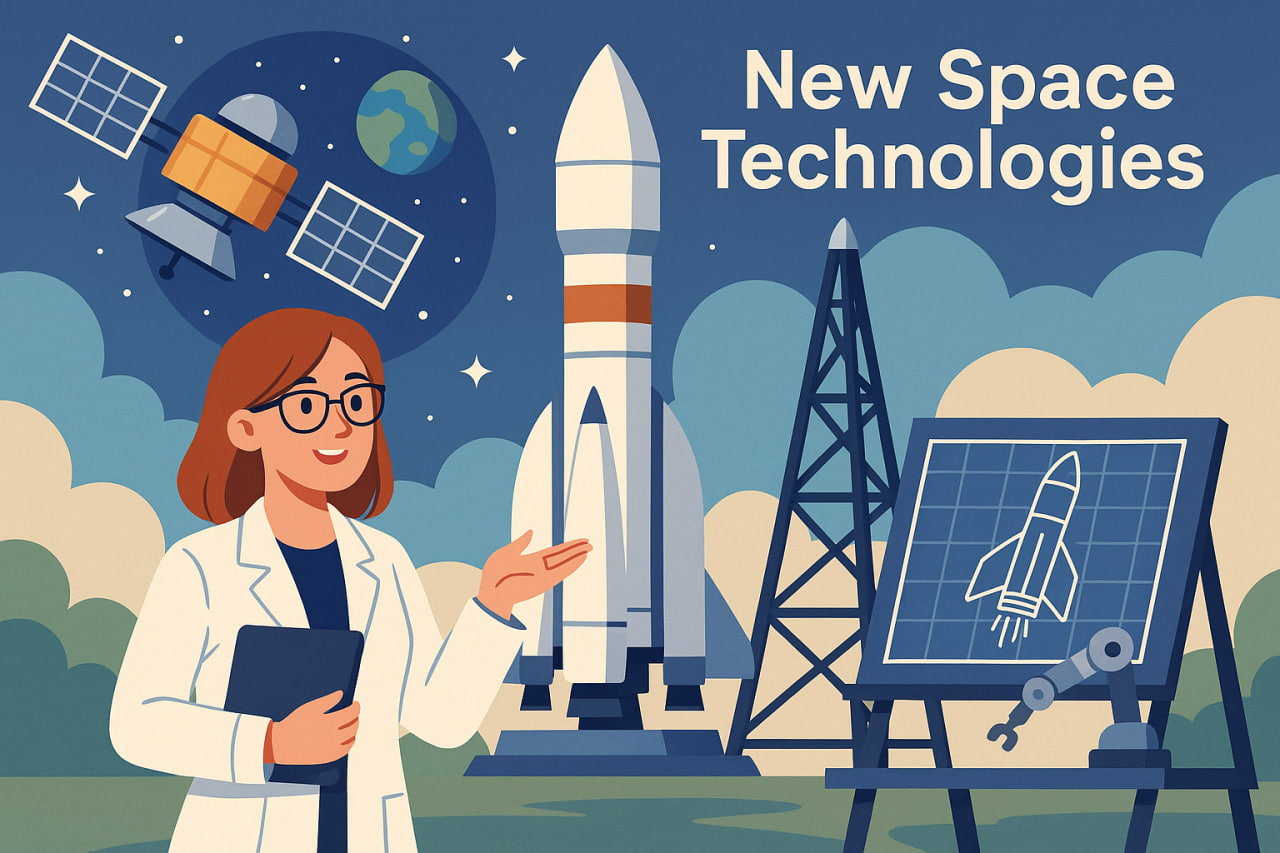
Modern space technology is evolving faster than ever before, driven by international missions, private industry, and groundbreaking scientific research. Today’s innovations go far beyond traditional rockets or satellites — they include reusable launch systems, advanced propulsion engines, deep-space habitats, autonomous robots, and next-generation telescopes capable of seeing further into the universe than any previous instrument. These technologies aim to make space travel more affordable, safer, and more capable of supporting long-term human presence beyond Earth. As global interest in the Moon, Mars, and near-Earth asteroids grows, the newest developments in space engineering are shaping the roadmap for the next century of exploration. Understanding these advances reveals how humanity is preparing to push deeper into space than ever before.

Solar Sails: Harnessing Sunlight for Space Travel
Space Stories Cosmic Innovations Hi-Tech

Solar Sails: Harnessing Sunlight for Space Travel

Solar sails are one of the most elegant and futuristic propulsion technologies ever developed, offering a method of space travel that requires no fuel and relies solely on the power of sunlight. Instead of burning propellant, solar sails use photons — tiny particles of light — to generate thrust. When sunlight hits a highly reflective, ultrathin sail, it transfers momentum, gradually pushing the spacecraft forward. Although the acceleration is extremely gentle, it continues indefinitely as long as the sail remains illuminated, allowing solar-sail spacecraft to reach remarkable speeds over time. This makes them ideal for long-duration missions, deep-space exploration, and even travel to other star systems. Solar sails represent a revolutionary shift in how humanity might explore space: not through explosive engines, but through silent, continuous propulsion powered by the universe itself.

VASIMR Engine: A New Era of High-Power Plasma Propulsion
Space Stories Cosmic Innovations Hi-Tech

VASIMR Engine: A New Era of High-Power Plasma Propulsion

The VASIMR engine, short for Variable Specific Impulse Magnetoplasma Rocket, represents one of the most promising breakthroughs in advanced space propulsion. Unlike traditional chemical rockets, which burn fuel to create high-temperature exhaust, the VASIMR engine uses superheated plasma — an electrically charged gas — controlled by magnetic fields to generate thrust. This technology aims to combine high efficiency with significantly greater power, potentially reducing travel times to distant planets such as Mars. Because it relies on electrical power rather than combustion, the VASIMR engine could operate continuously for weeks or months, gradually accelerating spacecraft to extremely high speeds. As energy generation systems in space improve, this propulsion method may become a foundation for future deep-space missions, orbital transport, and long-duration scientific journeys. Understanding how VASIMR works provides a glimpse into the next generation of spacecraft engineering.

Ion Engines: The Future of Deep Space Propulsion
Space Stories Cosmic Innovations Hi-Tech

Ion Engines: The Future of Deep Space Propulsion

Ion engines represent one of the most advanced propulsion technologies ever developed, enabling spacecraft to travel vast distances using remarkably little fuel. Unlike traditional chemical rocket engines that produce enormous thrust in a short burst, ion engines create a steady, gentle push by accelerating electrically charged particles — ions — to extremely high speeds. This slow but continuous acceleration allows spacecraft to reach extraordinary velocities over long periods, making ion engines ideal for deep-space missions where efficiency is more important than raw power. Their ability to operate for months or even years without refueling has reshaped modern space exploration and opened new possibilities for scientific discovery across the solar system. Understanding how ion engines work highlights humanity’s growing capability to explore space sustainably and intelligently.

Rocket Engines: The Power Behind Space Exploration
Space Stories Cosmic Innovations Hi-Tech

Rocket Engines: The Power Behind Space Exploration

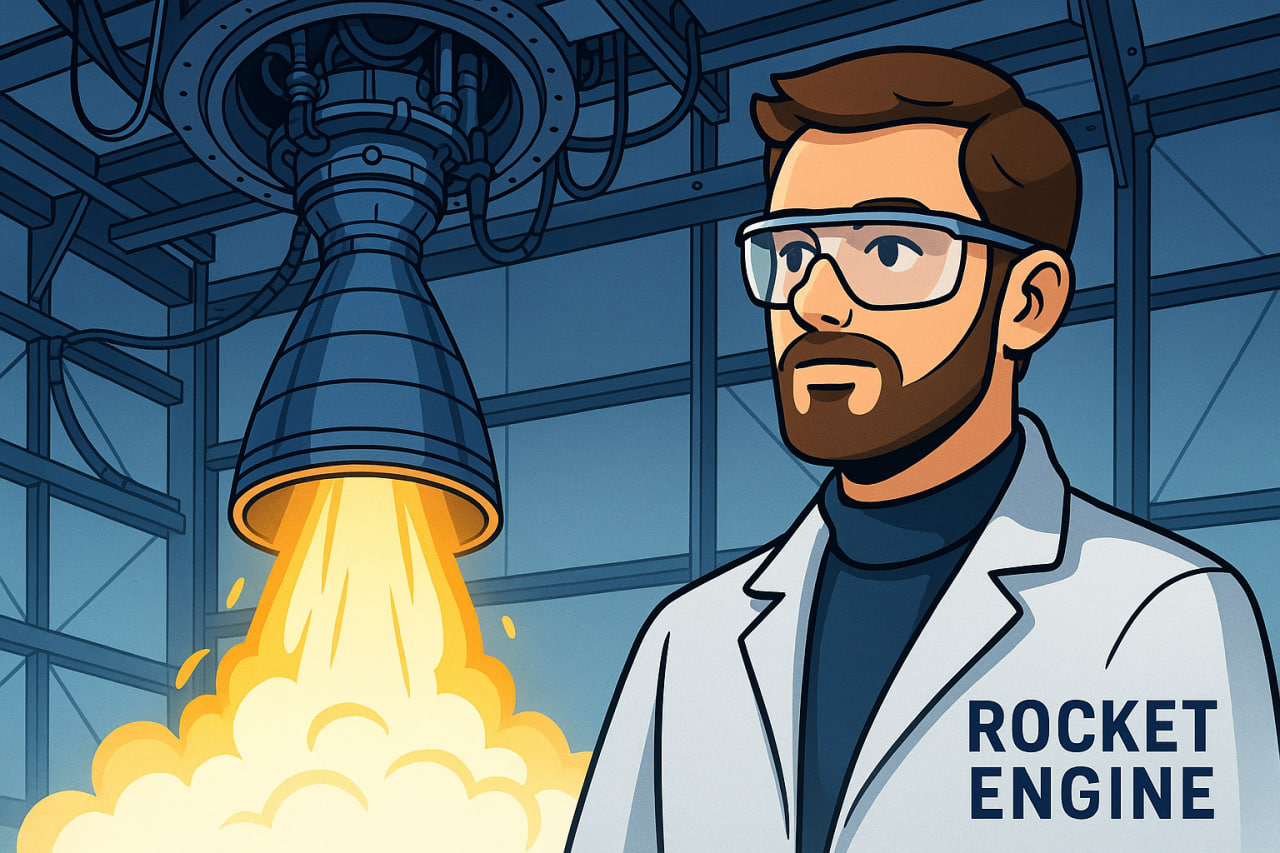
Rocket engines are the fundamental technology that makes space travel possible, enabling spacecraft to break free from Earth’s gravity and operate in the vacuum of space. Unlike aircraft engines that rely on atmospheric oxygen, rocket engines carry both fuel and oxidizer, allowing them to function in environments with no air at all. This makes them uniquely powerful and efficient for reaching orbit, traveling to other planets, and conducting scientific missions deep into the cosmos. Modern rocket engines combine precise engineering, advanced materials, and complex thermodynamics to generate extraordinary amounts of thrust. Despite their incredible power, they remain highly sensitive systems that require exact control and deep scientific understanding. As space agencies and private companies push toward new frontiers, rocket engine technology continues to evolve, shaping the future of exploration and transportation beyond Earth.

The James Webb Space Telescope: Humanity’s Window to the Beginning of Time
Space Stories Cosmic Innovations Hi-Tech

The James Webb Space Telescope: Humanity’s Window to the Beginning of Time

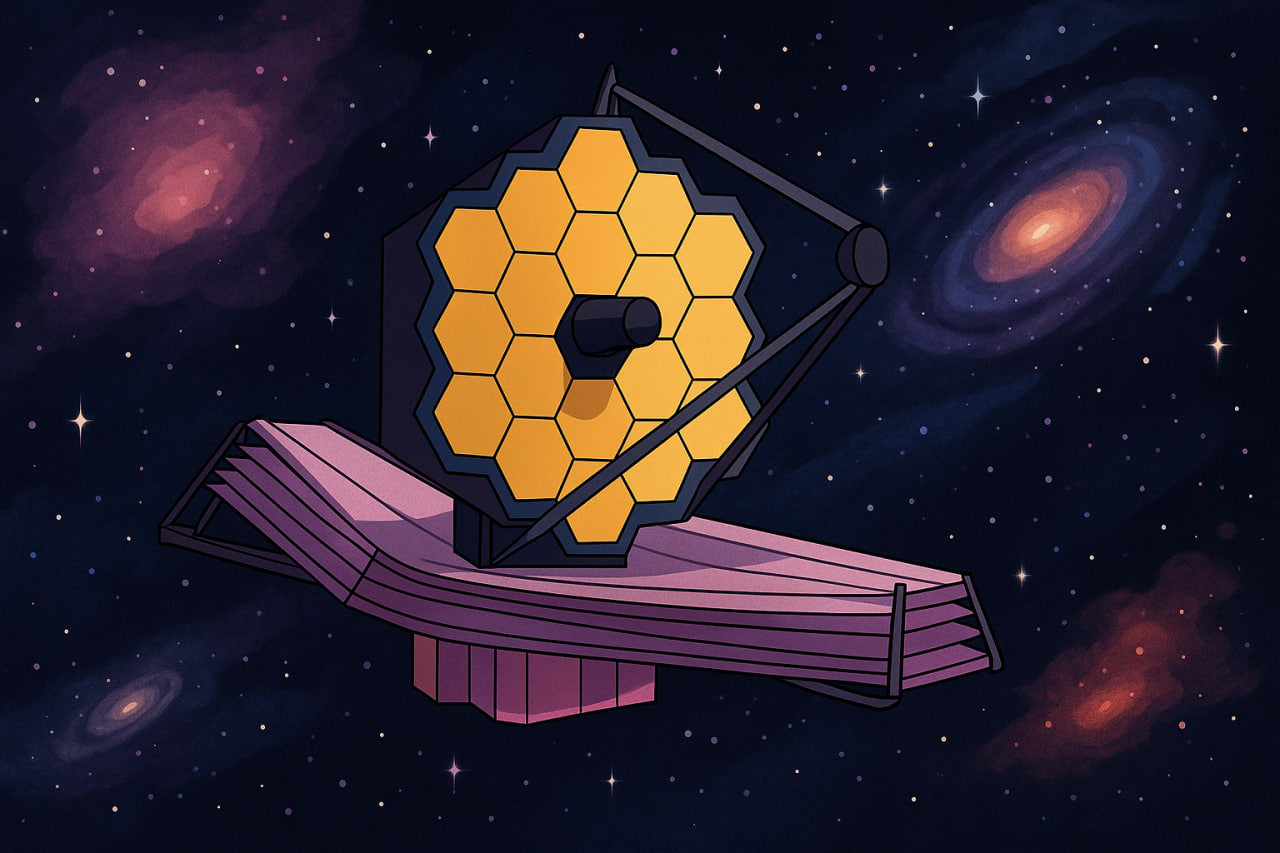
The James Webb Space Telescope (JWST) is one of the most ambitious scientific instruments ever built. Launched on December 25, 2021, it has revolutionized astronomy by allowing humanity to peer deeper into space — and further back in time — than ever before. Often called the “successor to Hubble,” Webb is not just a telescope; it’s a time machine revealing the universe’s earliest galaxies and the secrets of cosmic evolution.