New Discoveries

Starquakes: Cracks in the Strongest Stars in the Universe
Space Stories Universe New Discoveries

Starquakes: Cracks in the Strongest Stars in the Universe

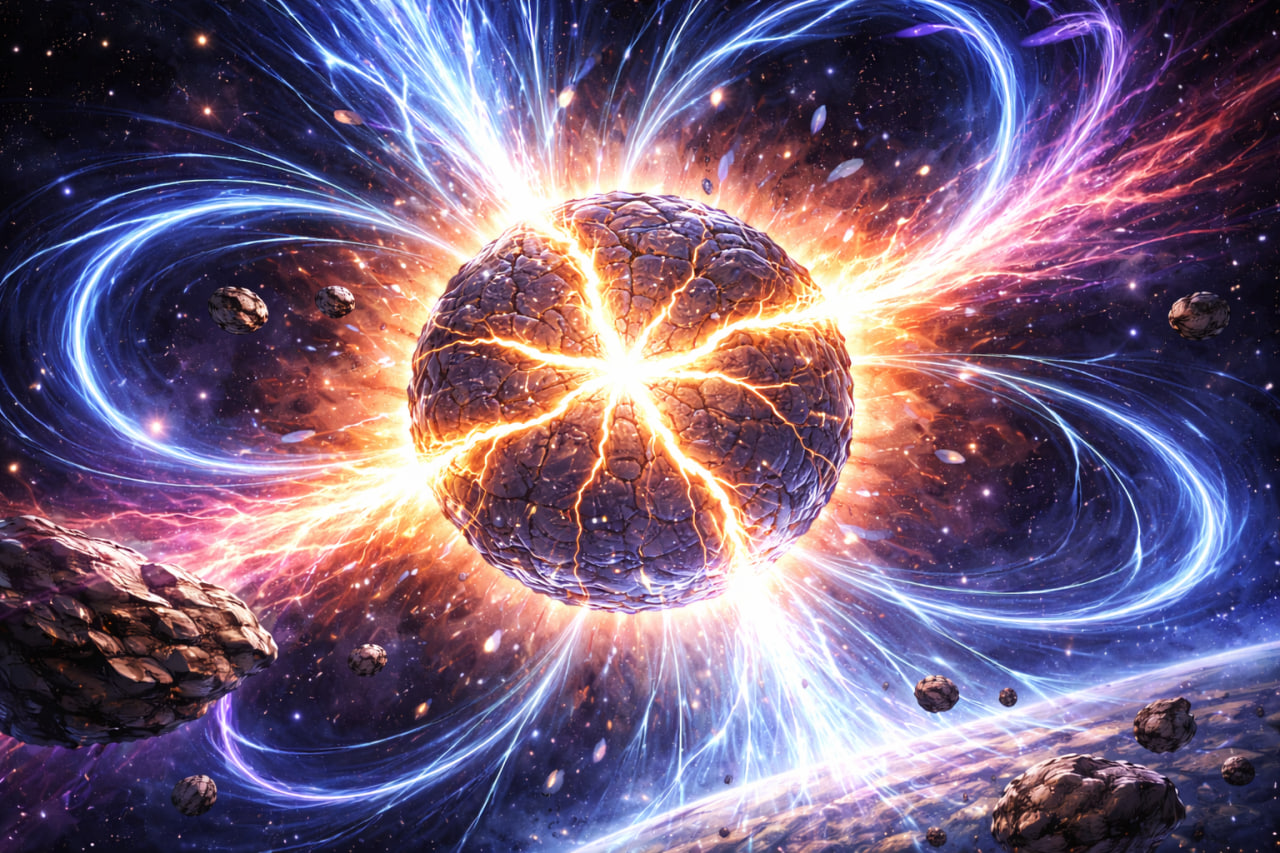
A starquake is one of the most extreme seismic events known in astrophysics. Unlike earthquakes on Earth, starquakes occur on neutron stars, where gravity, density, and magnetic forces reach extraordinary levels. These events involve sudden fractures in a star’s rigid outer crust, releasing vast amounts of energy in a fraction of a second. Although starquakes happen far beyond our solar system, their effects can be detected across the galaxy. Studying starquakes helps scientists understand matter under conditions impossible to replicate on Earth.
Quasars: The Luminous Monsters at the Hearts of Young Galaxies
Space Stories Universe New Discoveries

Quasars: The Luminous Monsters at the Hearts of Young Galaxies

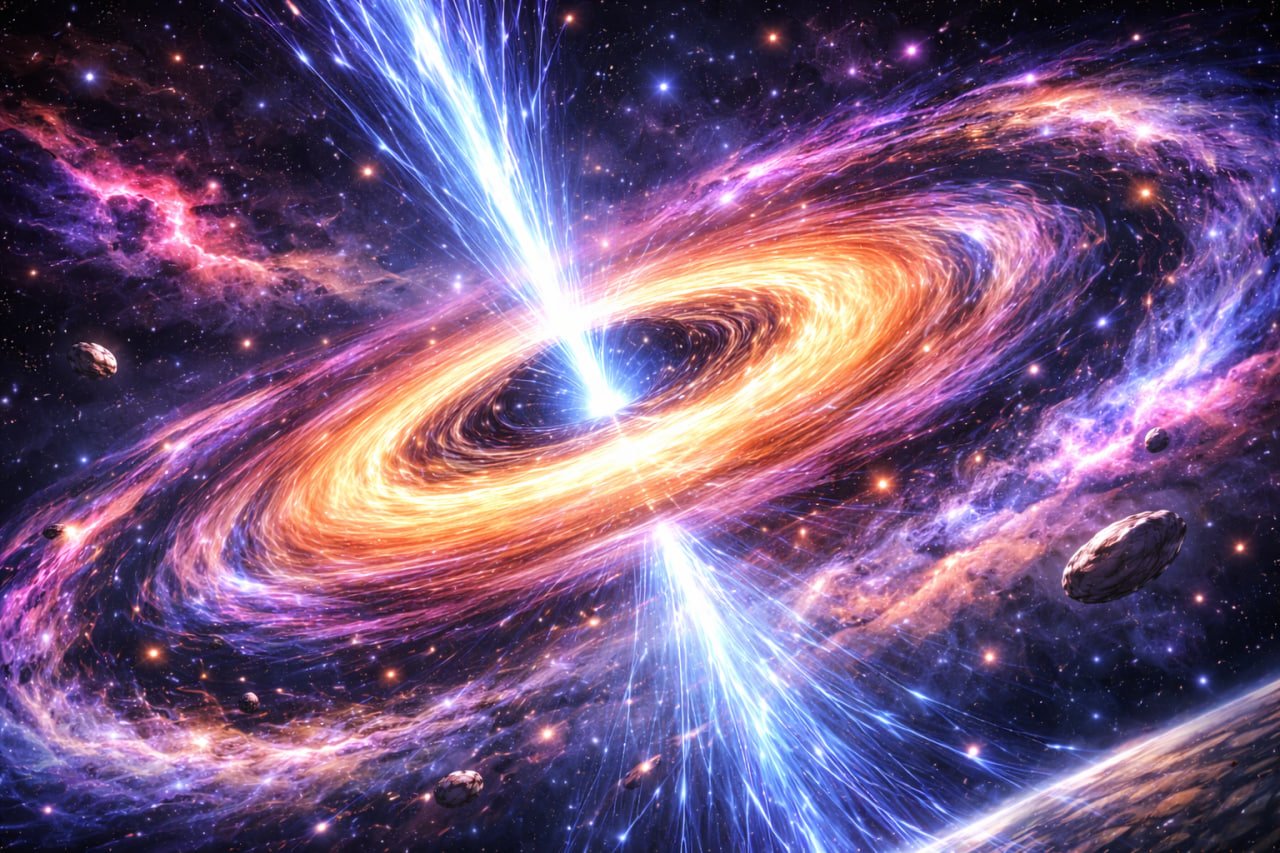
Quasars are among the brightest and most energetic objects ever observed in the universe. Although they appear as point-like sources of light, quasars are not stars but the active cores of distant galaxies powered by supermassive black holes. They shine so intensely that they can outshine all the stars in their host galaxies combined. Most quasars are observed in the early universe, making them key markers of cosmic youth and rapid galactic growth. Studying quasars allows astronomers to look back in time and understand how galaxies and black holes evolved together.

The Black Hole Information Paradox: What Happens to Information?
Space Stories Universe New Discoveries

The Black Hole Information Paradox: What Happens to Information?

The black hole information paradox is one of the deepest unresolved problems at the intersection of gravity, quantum mechanics, and cosmology. It arises from an apparent contradiction between two foundational principles of modern physics: the laws of quantum mechanics, which state that information is never destroyed, and general relativity, which predicts that anything falling into a black hole may be lost forever. This tension has challenged physicists for decades, forcing a re-examination of how space, time, and information are fundamentally connected. The paradox is not just about black holes—it questions whether the laws of physics are internally consistent.

What Is an Event Horizon?
Space Stories Universe New Discoveries

What Is an Event Horizon?

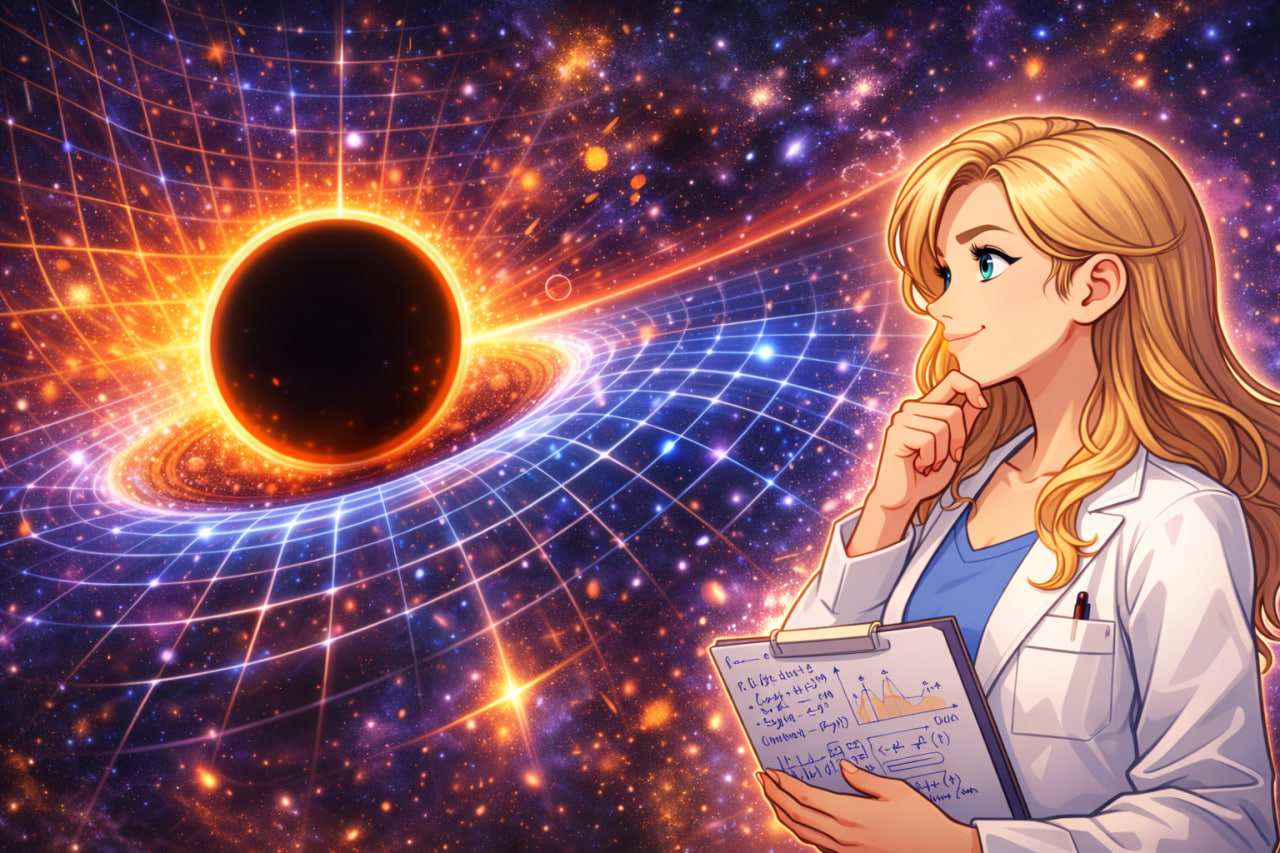
The event horizon is one of the most intriguing and misunderstood concepts in modern physics. It is commonly associated with black holes, yet it is not a physical surface or object in the usual sense. Instead, the event horizon represents a boundary in spacetime, beyond which events can no longer influence an outside observer. Once this boundary is crossed, information cannot escape back to the rest of the universe. Understanding the event horizon is essential for grasping how gravity, space, and time behave under extreme conditions.

Tidal Forces Near a Black Hole: What They Are and Why They Matter
Space Stories Universe Science

Tidal Forces Near a Black Hole: What They Are and Why They Matter

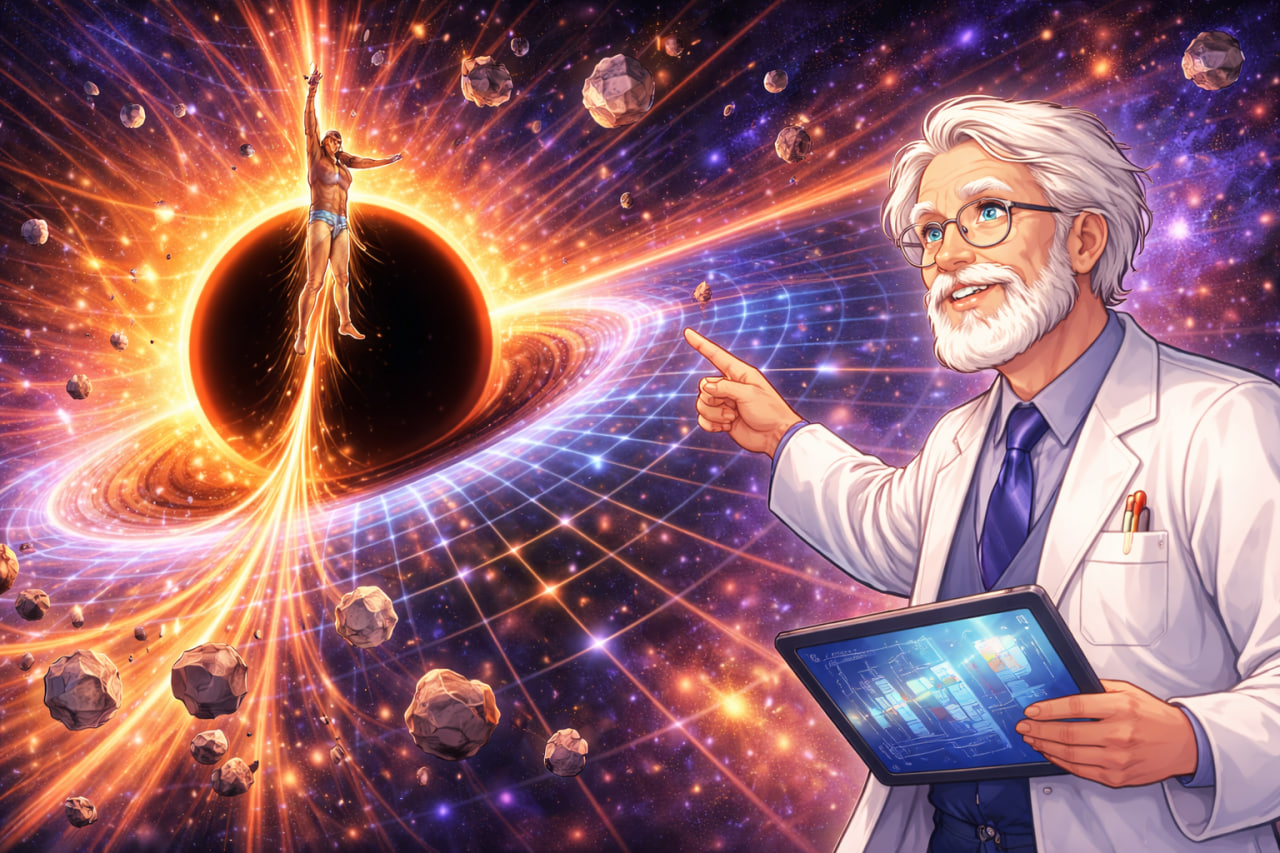
Tidal forces near a black hole are among the most extreme effects predicted by modern physics. They arise not from a mysterious new force, but from the way gravity changes over distance in strongly curved spacetime. While tidal forces exist everywhere in the universe—including on Earth—they become dramatically stronger near compact objects such as black holes. Understanding these forces is essential for explaining phenomena like spaghettification, orbital instability, and the limits of survivability near a black hole. Tidal forces reveal how gravity acts differently across space, not just how strong it is at a single point.

Do We Know What Happens Inside a Black Hole — and Why Not?
Space Stories Universe New Discoveries

Do We Know What Happens Inside a Black Hole — and Why Not?

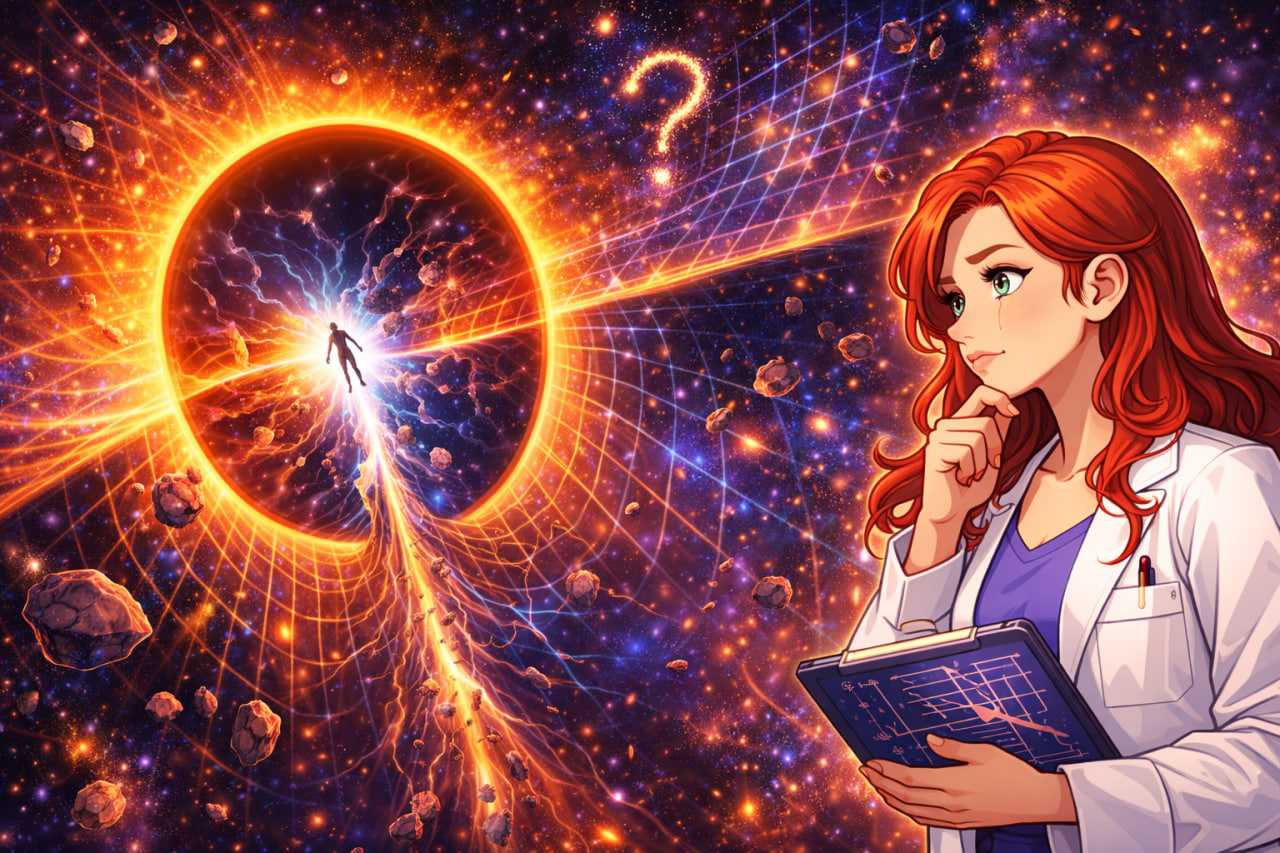
Black holes are among the most extreme objects in the universe, yet what happens inside them remains one of the greatest unanswered questions in physics. While modern science can describe black holes with remarkable precision from the outside, their interiors lie beyond direct observation and experimental testing. This limitation is not due to technological weakness alone, but to the fundamental structure of spacetime itself. The question is therefore not only what happens inside a black hole, but also why physics struggles to answer it. Understanding this distinction is crucial for separating knowledge from speculation.

Hawking Radiation: How Black Holes Slowly Evaporate
Space Stories Universe New Discoveries

Hawking Radiation: How Black Holes Slowly Evaporate

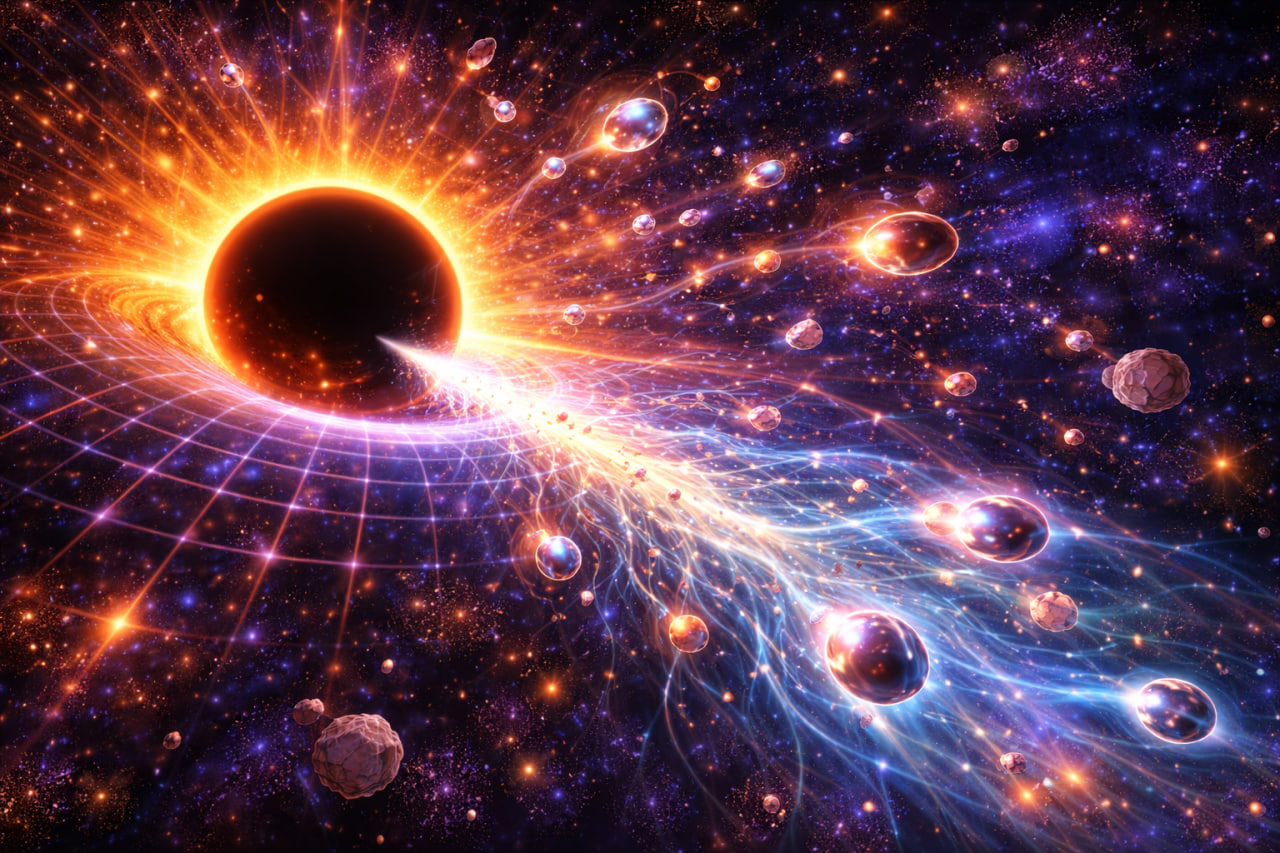
For a long time, black holes were thought to be perfect cosmic traps—objects from which nothing could ever escape. This view changed in the 1970s when physicist Stephen Hawking showed that quantum effects alter this picture in a subtle but profound way. According to his work, black holes are not completely black: they emit a faint form of radiation and gradually lose mass over time. This process, now known as Hawking radiation, links gravity, quantum mechanics, and thermodynamics in a single framework. Although extremely weak for astrophysical black holes, the concept has deep implications for our understanding of the universe.

What Is the Arrow of Time?
Science New Discoveries Be Smart

What Is the Arrow of Time?

The arrow of time is a concept used in physics to describe the apparent one-way direction of time—from past to future. While most fundamental physical laws work the same whether time moves forward or backward, everyday experience tells a different story. Ice melts but does not spontaneously refreeze, broken objects do not reassemble, and memories exist only of the past, not the future. The arrow of time attempts to explain why time seems to flow in a single direction despite time-symmetric laws at the microscopic level. This question lies at the intersection of thermodynamics, cosmology, and philosophy.

Exoplanet Atmospheres: Chemical Analysis from Light-Years Away
Space Stories Cosmic Innovations Universe

Exoplanet Atmospheres: Chemical Analysis from Light-Years Away

For centuries, planets beyond our solar system were purely theoretical, existing only in speculation and science fiction. Today, astronomers not only detect exoplanets, but also analyze the chemical composition of their atmospheres, despite distances measured in dozens or thousands of light-years. This remarkable achievement is possible thanks to advances in telescope technology, spectroscopy, and data analysis. By studying how starlight interacts with planetary atmospheres, scientists can identify gases, infer temperatures, and even assess whether a planet might support life. Atmospheric analysis has become one of the most powerful tools in modern astronomy, transforming exoplanets from distant dots into complex, physical worlds.

Cryo-Electron Microscopy: Seeing Life at Near-Atomic Resolution
Hi-Tech Bioengineering New Discoveries

Cryo-Electron Microscopy: Seeing Life at Near-Atomic Resolution

Cryo-electron microscopy, often called cryo-EM, is one of the most powerful imaging technologies in modern science, allowing researchers to visualize biological structures in extraordinary detail. Unlike traditional microscopy techniques, cryo-EM makes it possible to study molecules in a state that is extremely close to their natural environment. By rapidly freezing samples, scientists can preserve delicate biological structures without the need for chemical fixation or staining. This breakthrough has transformed structural biology, enabling discoveries that were impossible just a few decades ago. Cryo-EM plays a crucial role in understanding viruses, proteins, and cellular machinery at near-atomic resolution. Its impact on medicine, biology, and chemistry continues to grow rapidly.