New Discoveries

Flying Trains: The Future of High-Speed Transportation
Hi-Tech Smart Technology New Discoveries

Flying Trains: The Future of High-Speed Transportation

The idea of flying trains has fascinated engineers, futurists, and the public for decades, appearing in science fiction long before becoming a serious subject of scientific research. Today, this concept refers not to traditional trains with wings, but to advanced transportation systems that eliminate physical contact with rails by using magnetic fields, air pressure, or enclosed vacuum tubes. Flying trains promise extreme speeds, reduced friction, and quieter operation compared to conventional railways. As global cities grow and the demand for fast, sustainable transport increases, these technologies are gaining renewed attention. While fully airborne trains remain theoretical, several real-world systems already operate on principles that closely resemble “flight.” Understanding these technologies helps clarify what is realistic today and what may become possible in the future.


Alfvén Waves
Universe Science New Discoveries

Alfvén Waves

Alfvén waves are one of the most important phenomena in plasma physics and astrophysics, revealing how energy and information travel through magnetized space. They describe oscillations that occur when charged particles interact with magnetic fields, producing wave-like motions that can propagate over vast distances. These waves play a key role in shaping the behavior of plasmas found in stars, the solar wind, and planetary magnetospheres. Although invisible to the human eye, Alfvén waves influence processes ranging from space weather to energy transport in the universe. Their discovery helped bridge the gap between electromagnetism and fluid dynamics. Understanding Alfvén waves is essential for explaining how cosmic plasmas remain dynamic and structured.

What Is Plasma
Science New Discoveries Be Smart

What Is Plasma

Plasma is often described as the fourth state of matter, yet this definition barely captures its true significance. While solids, liquids, and gases dominate everyday experience, plasma governs the behavior of stars, cosmic space, and many high-energy processes on Earth. It forms when matter becomes so energized that electrons separate from atoms, creating a dynamic mixture of charged particles. Unlike ordinary gases, plasma responds strongly to electric and magnetic fields, leading to complex collective behavior. This makes plasma both extraordinarily powerful and challenging to control. Understanding plasma is essential for explaining how the universe works at its most fundamental level.

Fiber Optics: How Light Carries Information
Neuro-Tech Hi-Tech Science

Fiber Optics: How Light Carries Information

Fiber optic technology is one of the most important foundations of the modern digital world. It enables the rapid transmission of information using light rather than electricity, making global communication faster, more stable, and more efficient. Every day, fiber optic networks carry internet traffic, phone calls, video streams, and data between continents in fractions of a second. Although the technology itself is invisible to most users, it quietly supports nearly all aspects of modern life. The principle behind fiber optics is elegant, relying on fundamental laws of physics rather than complex mechanical systems. Understanding how fiber optics work reveals why light has become the preferred carrier of information in the 21st century.

Fast Neutron Reactors
Hi-Tech Science New Discoveries

Fast Neutron Reactors

Fast neutron reactors are one of the most advanced and conceptually important technologies in nuclear energy. Unlike conventional nuclear reactors, they operate using fast (high-energy) neutrons rather than slowed, or thermal, neutrons. This fundamental difference allows them to use nuclear fuel more efficiently and opens possibilities that traditional reactors cannot achieve. Fast reactors are often discussed in the context of long-term energy sustainability, nuclear waste reduction, and advanced fuel cycles. Although technologically complex, they represent a significant step in the evolution of nuclear power. Understanding how fast neutron reactors work helps explain why they attract both scientific interest and public debate.

Nanocellulose: A Tiny Material With Huge Potential
Hi-Tech Science New Discoveries

Nanocellulose: A Tiny Material With Huge Potential

Nanocellulose is an advanced material derived from one of the most common natural substances on Earth — cellulose. Despite its natural origin, nanocellulose exhibits exceptional mechanical strength, low weight, and remarkable versatility at the nanoscale. These properties make it a promising solution for challenges in materials science, medicine, energy, and sustainability. As industries seek alternatives to plastics and carbon-intensive materials, nanocellulose has emerged as a strong candidate due to its renewable nature and low environmental footprint. Scientists continue to explore how manipulating cellulose fibers at the nanometer level unlocks entirely new behaviors not seen in bulk materials. Understanding nanocellulose is key to understanding the future of sustainable high-performance materials.

The Shipov Theory of Physical Vacuum
Universe Science New Discoveries

The Shipov Theory of Physical Vacuum

The theory of the physical vacuum proposed by Georgy Shipov represents one of the most controversial and unconventional concepts in modern theoretical physics. Unlike standard models that describe vacuum as a quantum field with fluctuating energy, Shipov’s approach treats the vacuum as a structured, dynamic medium with its own geometry and physical properties. This theory attempts to go beyond classical general relativity and quantum field theory by introducing additional degrees of freedom linked to space-time itself. Although not accepted within mainstream physics, the theory has attracted attention for its ambition to unify gravity, inertia, and fundamental interactions. Understanding Shipov’s ideas requires distinguishing between established physics and speculative theoretical frameworks. For this reason, the theory is best approached as a philosophical and mathematical hypothesis rather than an experimentally confirmed model.

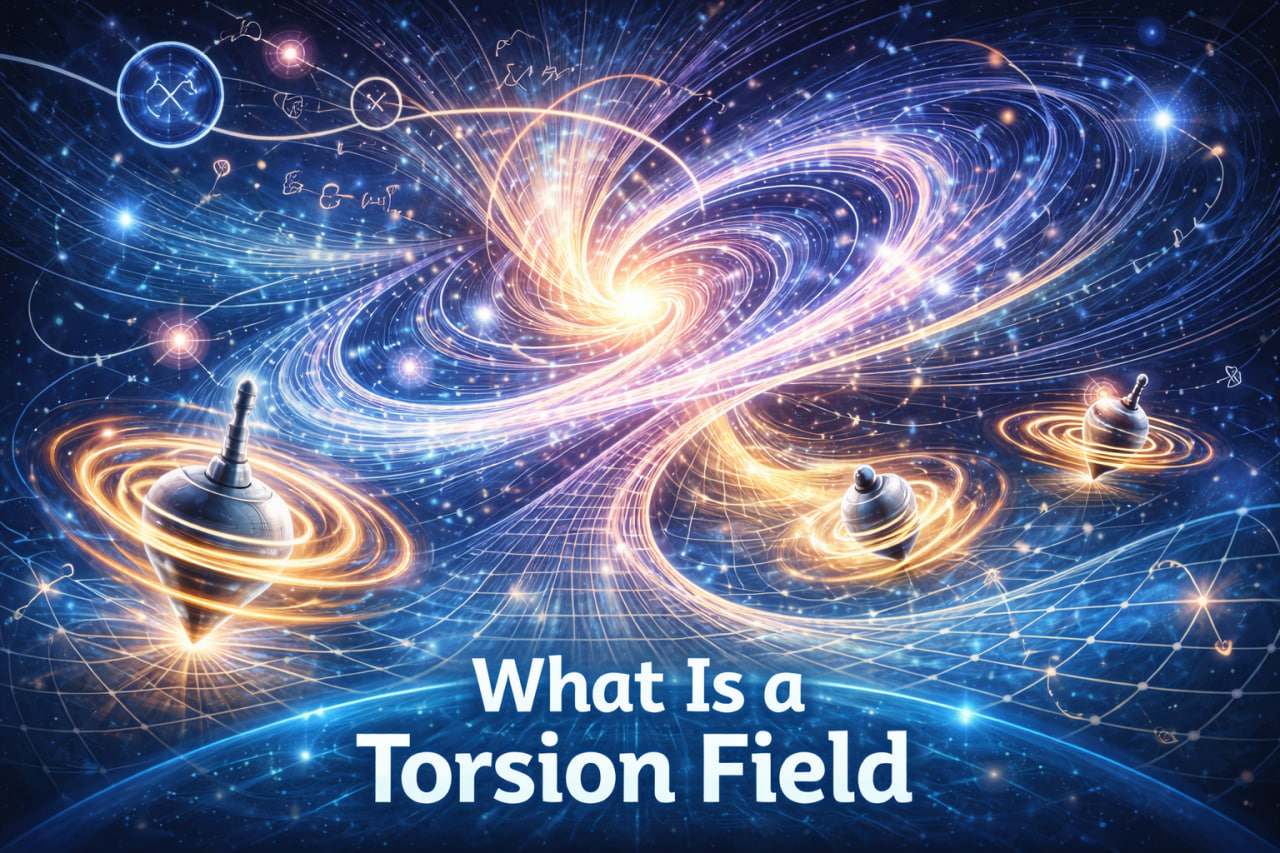
What Is a Torsion Field
Universe Science New Discoveries

What Is a Torsion Field

The concept of a torsion field is one of the most debated ideas at the boundary between theoretical physics and speculative science. It is often presented as an extension of classical notions of space, proposing that reality may include additional geometric properties beyond curvature and electromagnetic fields. While torsion appears as a well-defined concept in some advanced geometric theories of gravity, the idea of an independent, physically detectable “torsion field” influencing matter remains controversial. Supporters describe it as a subtle field connected to rotation, spin, and information transfer, while mainstream physics remains highly skeptical. To understand what a torsion field is claimed to be, it is essential to clearly separate mathematical torsion in accepted physics from torsion fields as proposed in alternative theories. This distinction is crucial for an accurate and responsible discussion of the topic.

Ulexite: The “Television Stone” of the Mineral World
Science New Discoveries Be Smart

Ulexite: The “Television Stone” of the Mineral World

Ulexite is a rare and visually striking mineral that has fascinated scientists and collectors for over a century. Often referred to as the “television stone,” ulexite possesses unusual optical properties that allow it to transmit images from one surface to another. At first glance, it may look like a bundle of silky white fibers or soft crystalline strands, but its internal structure hides remarkable physical behavior. Ulexite forms in arid environments where evaporation concentrates mineral-rich waters, making it a product of very specific geological conditions. Beyond its visual appeal, ulexite plays an important role in industrial processes due to its high boron content. Understanding ulexite means exploring the intersection of geology, physics, and applied materials science.

Magnetars: The Most Powerful Magnets in the Universe
Space Stories Universe New Discoveries

Magnetars: The Most Powerful Magnets in the Universe

Magnetars are among the most extreme and mysterious objects known in astrophysics. They are a rare type of neutron star distinguished not by their mass or size, but by their extraordinary magnetic fields, the strongest ever observed in the universe. These magnetic fields are so intense that they reshape matter, distort atomic structures, and release enormous bursts of energy. Although magnetars are relatively small on cosmic scales, their influence can be felt across vast distances. Studying magnetars provides insight into physics under conditions impossible to recreate on Earth.