New Discoveries

Astroengineering: Dyson Spheres Around Stars — How Could We Detect Them?
Cosmic Innovations New Discoveries Be Smart

Astroengineering: Dyson Spheres Around Stars — How Could We Detect Them?

The concept of a Dyson sphere represents one of the most ambitious ideas in astroengineering, proposing a structure built around a star to capture a significant portion of its energy output. First introduced by physicist Freeman Dyson, this idea suggests that an advanced civilization might construct a vast system of satellites or structures to harness stellar energy on a massive scale. While a solid shell is unlikely, more realistic models describe Dyson swarms—large collections of orbiting objects. Although no confirmed Dyson spheres have been observed, scientists actively search for indirect evidence of such megastructures. Detecting them would not only revolutionize astronomy but also provide insight into the existence of highly advanced extraterrestrial civilizations. Understanding how such structures could be observed helps guide modern astrophysical research.

Preons: Is There Anything Smaller Than Quarks?
Universe Science New Discoveries

Preons: Is There Anything Smaller Than Quarks?

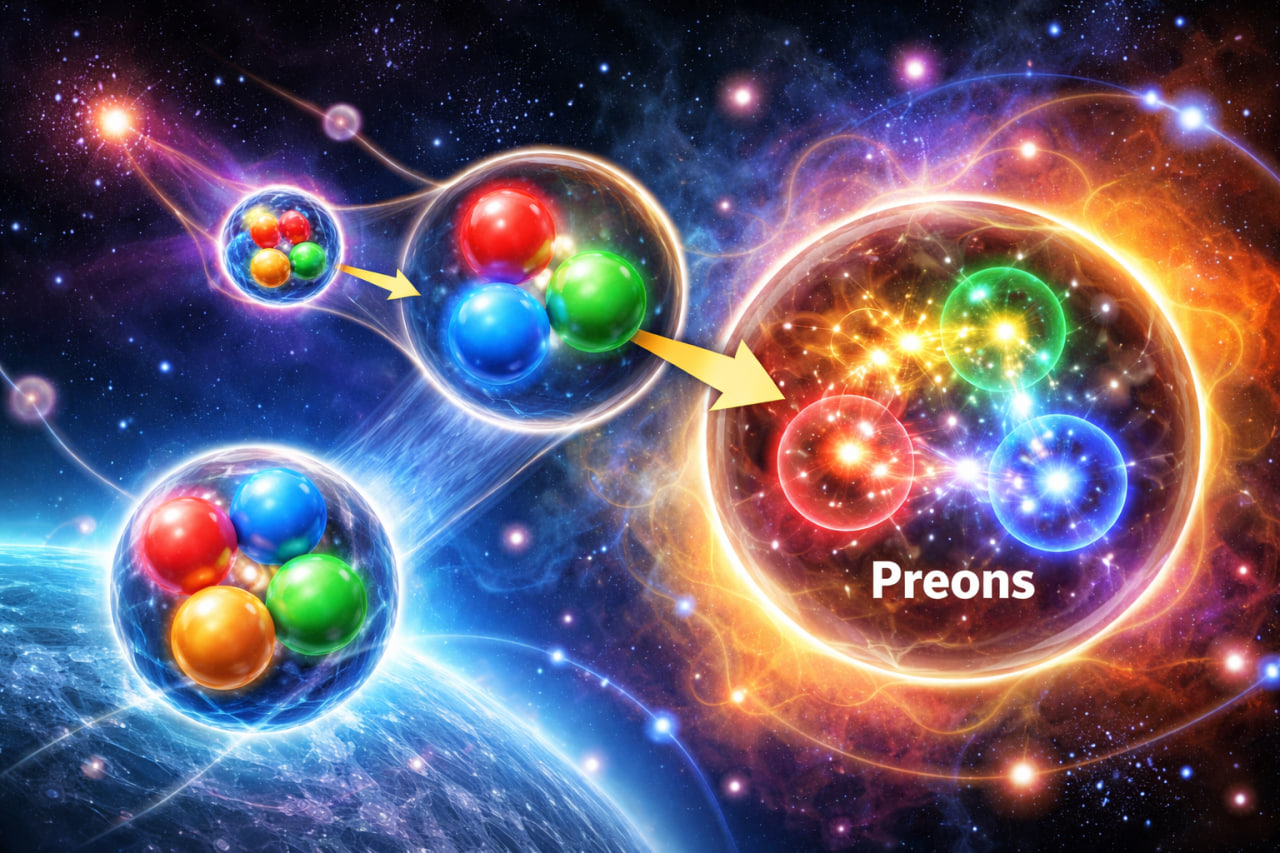
Modern physics describes the fundamental building blocks of matter using particles such as quarks and leptons, which are considered elementary particles—meaning they are not known to be made of anything smaller. However, the idea of preons challenges this assumption, suggesting that even quarks might have an internal structure. This concept arises from the desire to simplify and unify the growing number of particles observed in high-energy physics experiments. If preons exist, they could represent a deeper level of reality, revealing that what we consider “fundamental” is actually composed of even smaller entities. Despite decades of theoretical exploration, no direct experimental evidence for preons has been found. Understanding this idea helps scientists explore the limits of particle physics and the nature of matter itself.

Space-Based Solar Power: Science Fiction or the Near Future of Energy
Cosmic Innovations Hi-Tech New Discoveries

Space-Based Solar Power: Science Fiction or the Near Future of Energy

The idea of generating energy in space and transmitting it to Earth has long been associated with science fiction. However, in recent years, this concept—known as space-based solar power (SBSP)—has begun to move closer to reality. With rapid advances in satellite technology, wireless energy transmission, and materials science, scientists and engineers are seriously exploring whether energy from space could become a reliable and scalable source of clean power for the future.

What Is Bluetooth and How Does It Work?
Hi-Tech New Discoveries Be Smart

What Is Bluetooth and How Does It Work?

Bluetooth is a wireless communication technology that allows electronic devices to exchange data over short distances without using cables. It is widely used in everyday devices such as smartphones, headphones, laptops, smartwatches, and wireless speakers. Bluetooth operates using radio waves in a specific frequency band, enabling devices to connect quickly and transfer information efficiently. Since its introduction in the late 1990s, Bluetooth has become one of the most common technologies for connecting personal electronic devices. Its simplicity, low energy consumption, and compatibility with many types of hardware have made it an essential part of modern digital communication.

Electrolysis: Splitting Water to Power the Future
Science New Discoveries Inventions

Electrolysis: Splitting Water to Power the Future

Electrolysis is a fundamental scientific process that is gaining renewed attention in the global search for clean energy technologies. At its core, electrolysis uses electricity to split water into its basic elements—hydrogen and oxygen. Although the concept has been known for more than two centuries, modern engineering and renewable energy systems are giving this technology new importance. When powered by renewable electricity such as wind or solar energy, electrolysis can produce green hydrogen, a fuel that releases no carbon emissions when used. Because hydrogen can store and transport energy, electrolysis is increasingly seen as a bridge between renewable electricity and sectors that require dense, transportable fuels. Scientists, engineers, and energy planners are now studying how large-scale electrolysis systems could reshape global energy infrastructure in the coming decades.

Xenobots: Living Biological Constructs Built from Frog Cells
Neuro-Tech Hi-Tech Bioengineering

Xenobots: Living Biological Constructs Built from Frog Cells

Xenobots are a recent scientific development that blur the boundary between biology and robotics. They are not mechanical robots and not genetically modified animals. Instead, xenobots are microscopic biological constructs assembled from living cells of the African clawed frog (Xenopus laevis). These cells are arranged into specific shapes designed through computer modeling, allowing them to perform simple tasks such as movement and self-organization. Xenobots do not possess organs, brains, or reproductive systems. However, under controlled laboratory conditions, researchers observed a unique form of self-replication driven by physical movement. Their creation has opened new discussions about synthetic biology, cellular behavior, and the future of bioengineering.

Biocomputers Based on Neurons: Growing Brain Tissue in a Dish and Teaching It to Compute
Hi-Tech Bioengineering Smart Technology

Biocomputers Based on Neurons: Growing Brain Tissue in a Dish and Teaching It to Compute

In recent years, scientists have developed experimental systems sometimes described as “biocomputers” — networks of living neurons grown in laboratory conditions and connected to electronic interfaces. These biological neural cultures can process electrical signals, adapt to stimuli, and in limited tasks demonstrate forms of learning. Although headlines often claim that researchers have “grown a brain in a dish,” the reality is more nuanced. These systems do not possess consciousness, thoughts, or awareness. Instead, they consist of clusters of neurons capable of forming networks that respond to input signals. Their development represents a frontier in neuroscience, bioengineering, and computational research.

Age Engineering: Will Aging One Day Be Treated Like a Disease?
Bioengineering Science New Discoveries

Age Engineering: Will Aging One Day Be Treated Like a Disease?

For centuries, aging was considered an inevitable and untouchable part of human life. Today, advances in biotechnology, genetics, and cellular research are challenging that assumption. Scientists increasingly view aging not as a single process, but as a collection of biological mechanisms that might be slowed, modified, or partially reversed. The emerging field often referred to as age engineering focuses on understanding and targeting the cellular drivers of aging. While aging cannot currently be “cured,” researchers are exploring whether its underlying processes can be managed similarly to chronic conditions. The idea of treating aging like a routine medical issue remains speculative, but scientific progress continues to reshape expectations.

AlphaFold: How AI Solved a 50-Year-Old Scientific Problem
AI & Ethics AI New Discoveries

AlphaFold: How AI Solved a 50-Year-Old Scientific Problem

For decades, one of biology’s greatest challenges was understanding how proteins fold into their three-dimensional shapes. This problem, known as the protein folding problem, puzzled scientists for over 50 years because a protein’s function depends entirely on its structure. While researchers could determine amino acid sequences relatively easily, predicting the final folded structure from that sequence proved extraordinarily difficult. Traditional laboratory methods such as X-ray crystallography and cryo-electron microscopy were accurate but time-consuming and expensive. In 2020, the AI system AlphaFold, developed by DeepMind, dramatically advanced the field by predicting protein structures with remarkable accuracy. This breakthrough transformed structural biology and accelerated research in medicine, genetics, and drug discovery.

Light Sail Technology: How Spacecraft Can Travel Using Light
Cosmic Innovations Science New Discoveries

Light Sail Technology: How Spacecraft Can Travel Using Light

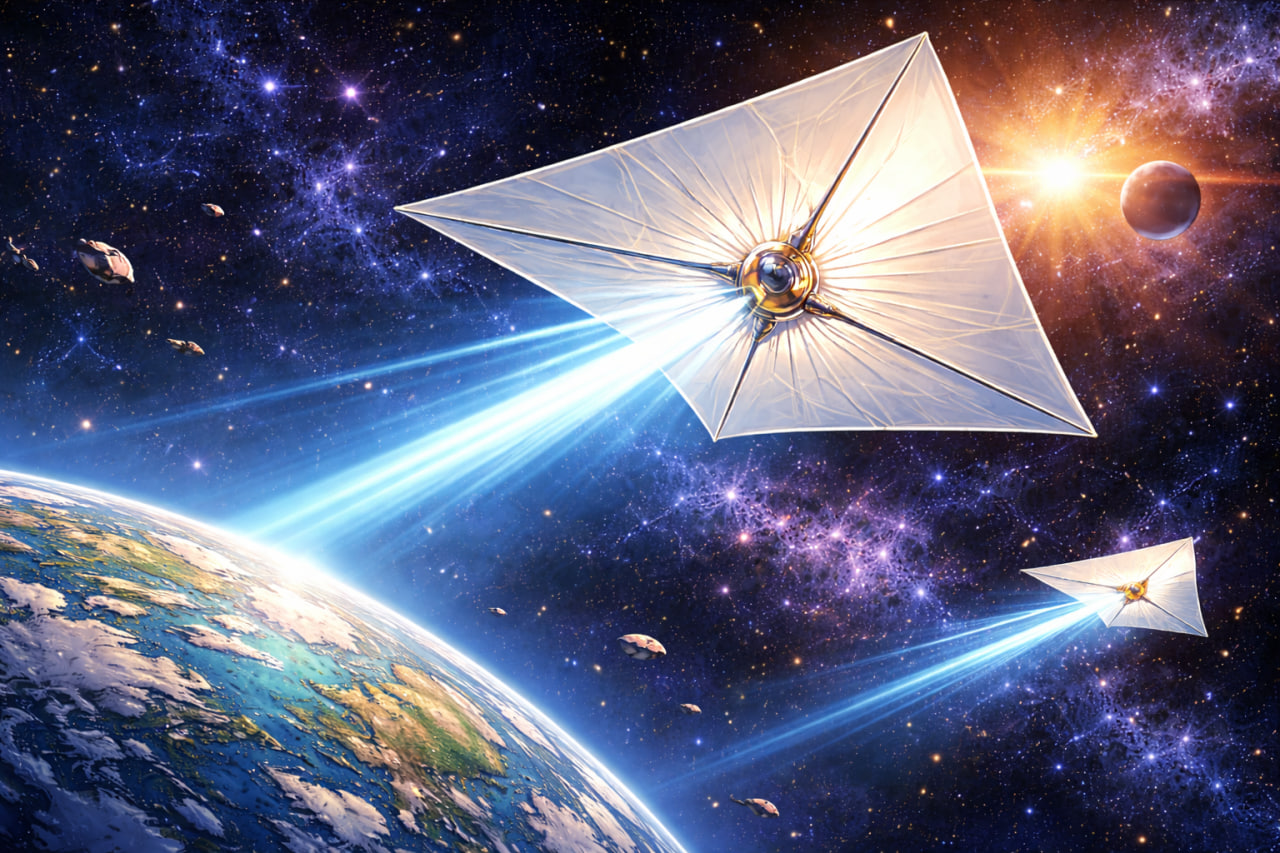
Light sail technology is one of the most innovative propulsion concepts in modern space exploration. Unlike traditional rockets that rely on fuel combustion, light sails use radiation pressure from photons—particles of light—to generate thrust. Although photons have no mass, they carry momentum, and when they strike a reflective surface, they exert a tiny but continuous force. Over time, this gentle push can accelerate a spacecraft to extremely high speeds without carrying heavy fuel. This concept dramatically reduces mass and opens new possibilities for deep-space missions. Light sail propulsion represents a shift from chemical energy to physics-based propulsion, relying on the fundamental properties of light itself.