New Discoveries

Vending Machines: How Automated Retail Changed Modern Society
Smart Technology New Discoveries Be Smart

Vending Machines: How Automated Retail Changed Modern Society

Vending machines became one of the most recognizable symbols of modern automated commerce. Found in: Airports Shopping centers Offices Train stations Schools Hospitals these machines allow people to purchase products quickly without interacting directly with a cashier. What began as a simple mechanical invention evolved into a highly advanced technological industry involving: Robotics Artificial intelligence Cashless payments Inventory tracking Smart retail systems Today vending machines sell far more than snacks and drinks. Around the world, automated machines now offer: Electronics Fresh meals Medicine Books Flowers Cosmetics Pizza Even luxury products The rise of vending technology reflects broader changes in: Consumer behavior Urban lifestyles Automation Digital commerce As cities become faster and more technologically connected, vending systems continue evolving into increasingly intelligent retail platforms.


The Mathematics of Music: Why Some Chords Sound Pleasant and Others Do Not
Science New Discoveries Be Smart

The Mathematics of Music: Why Some Chords Sound Pleasant and Others Do Not

Music has fascinated humanity for thousands of years. Across cultures and civilizations, people discovered that certain combinations of sounds feel harmonious, emotional, and satisfying, while others create tension, discomfort, or instability. But why does this happen? The answer lies partly in: Mathematics Physics Human biology Brain perception Acoustic patterns Music is deeply connected to numerical relationships between sound frequencies. Long before modern science existed, ancient thinkers noticed that musical harmony follows surprisingly precise mathematical structures. Today, scientists and musicians continue studying why some chords sound: Pleasant Stable Emotional Beautiful while others sound: Tense Dissonant Unresolved Chaotic The mathematics of music reveals that human hearing is closely connected to physical patterns hidden inside sound itself.

Scientific Innovations of 2026: Technologies That Are Changing Humanity
Hi-Tech Science New Discoveries

Scientific Innovations of 2026: Technologies That Are Changing Humanity

The year 2026 is becoming a remarkable period for science and technology. Advances once considered futuristic are rapidly entering real-world use. Artificial intelligence systems are transforming medicine and research, renewable energy technologies are becoming more efficient, robotics is entering daily life, and biotechnology is moving toward personalized healthcare on an unprecedented scale. Scientists today work in an era where discoveries spread globally almost instantly, accelerating innovation across nearly every field. Governments, universities, and private companies are investing billions into technologies that may reshape civilization during the next decades. The scientific innovations emerging in 2026 are not limited to laboratories anymore. Many are already influencing: Healthcare Transportation Energy systems Space exploration Agriculture Artificial intelligence Climate technologies Some experts believe humanity is entering one of the fastest periods of scientific transformation in history.

Digital Money: How It Appeared and Why It Is Changing the Global Economy
History Smart Technology New Discoveries

Digital Money: How It Appeared and Why It Is Changing the Global Economy

Money has evolved dramatically throughout human history. Ancient civilizations once relied on barter systems, then moved to metal coins, paper banknotes, and eventually electronic banking. Today, humanity is entering another major financial transformation — the era of digital money. Digital money is rapidly becoming a central part of modern economies. People increasingly pay using smartphones, bank apps, online transfers, cryptocurrencies, and contactless systems rather than physical cash. Governments, banks, and technology companies are investing billions into digital financial infrastructure, while economists debate how these technologies may reshape society. But what exactly is digital money, how did it emerge, and why do many experts believe it may become dominant in the future?

Cyber Weapons: How Critical Infrastructure Like Nuclear Plants and Water Systems Gets Hacked — and How Experts Defend Against It
AI & Ethics AI New Discoveries

Cyber Weapons: How Critical Infrastructure Like Nuclear Plants and Water Systems Gets Hacked — and How Experts Defend Against It

Modern civilization depends on invisible digital systems. Electricity grids, nuclear power plants, transportation networks, hospitals, water treatment facilities, and industrial factories increasingly rely on computers and internet-connected technologies. While this improves efficiency and automation, it also creates dangerous vulnerabilities. Today, cyberattacks are no longer limited to stealing passwords or damaging websites. Governments and cybersecurity experts warn that cyber weapons can target entire infrastructures capable of affecting millions of people. Attacks on power stations, pipelines, and water systems demonstrate that digital warfare has become one of the most serious security challenges of the 21st century.

Bathyscaphes: How Humans Explore the Deepest Parts of the Ocean
Hi-Tech Smart Technology New Discoveries

Bathyscaphes: How Humans Explore the Deepest Parts of the Ocean

The deep ocean is one of the most mysterious and extreme environments on Earth. Sunlight disappears within a few hundred meters below the surface, while pressure increases to crushing levels. To explore these dangerous depths, scientists and engineers developed special underwater vehicles called bathyscaphes. These remarkable machines allow humans to descend thousands of meters into the ocean and study places that were once completely inaccessible. Bathyscaphes demonstrate how advanced engineering can help humanity explore one of the least understood regions of our planet.

Kozyrev Mirrors: Exploring the Idea of Time, Consciousness, and Space
Smart Technology New Discoveries Inventions

Kozyrev Mirrors: Exploring the Idea of Time, Consciousness, and Space

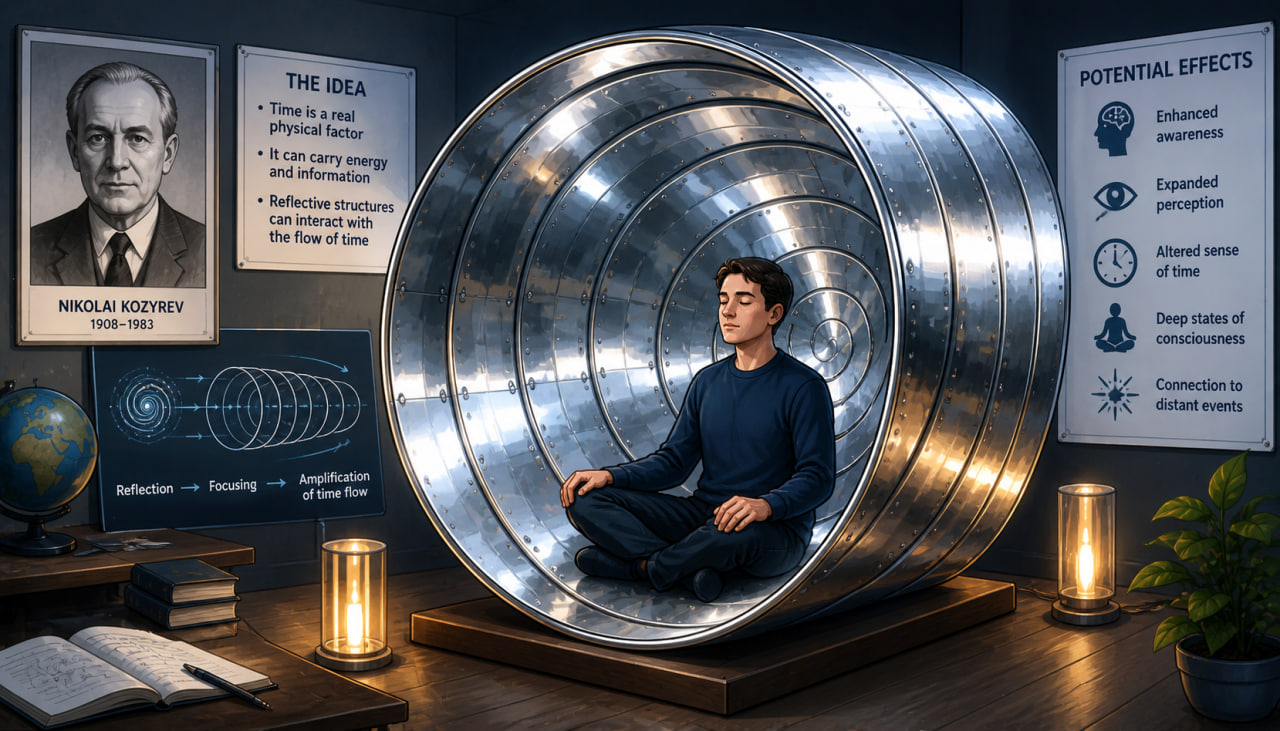
Kozyrev mirrors are one of the most mysterious and unconventional concepts associated with experimental physics and consciousness research. They are named after the Russian astrophysicist Nikolai Kozyrev, who proposed that time is not just a passive dimension but an active force that can influence physical processes. Supporters of this idea believe that specially designed reflective structures—called Kozyrev mirrors—can interact with this “flow of time” and potentially enhance human perception.

Bacterial Flagellar Motors: Nature’s Tiny Rotating Engines
Bioengineering New Discoveries Be Smart

Bacterial Flagellar Motors: Nature’s Tiny Rotating Engines

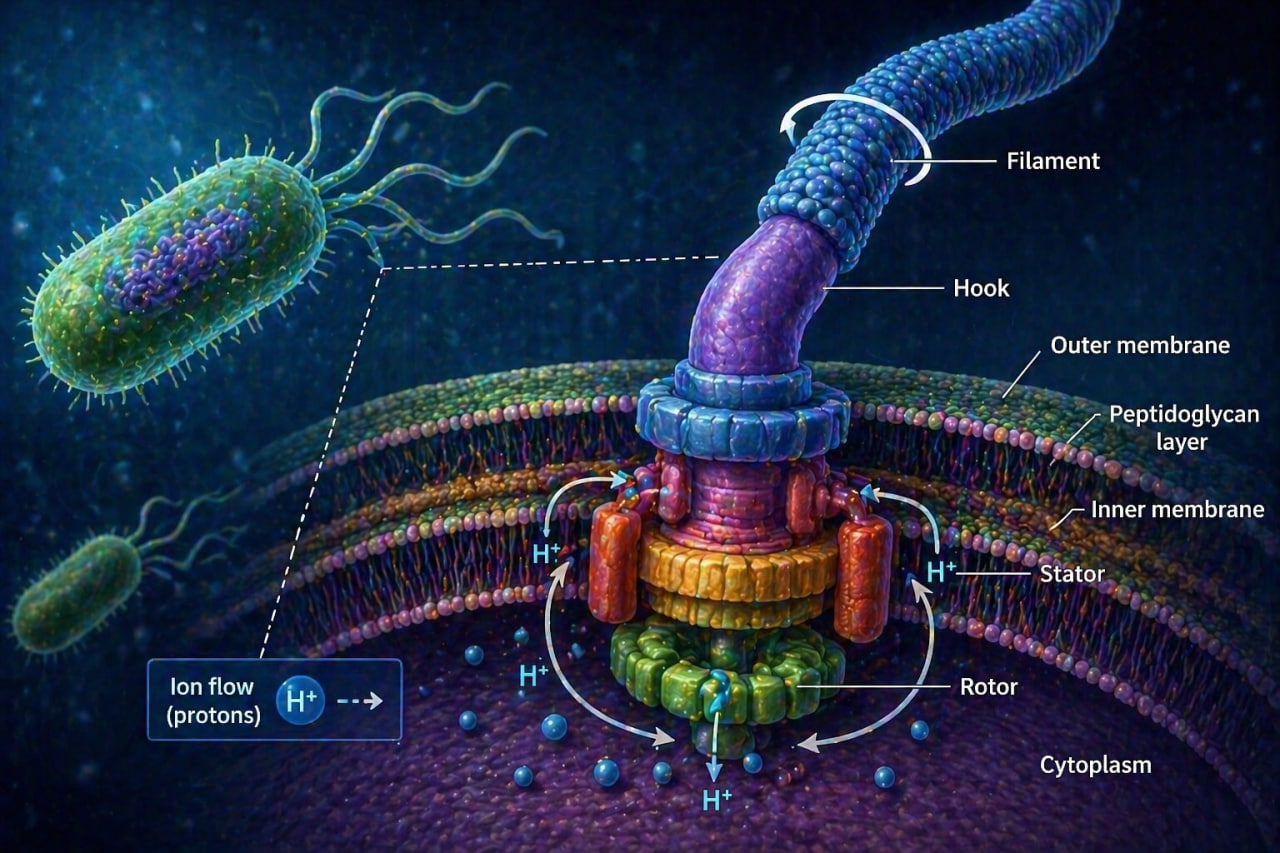
Among the most remarkable structures in biology is the flagellar motor of bacteria—a microscopic machine that allows single-celled organisms to move with incredible efficiency. These natural “engines” rotate like propellers, enabling bacteria to swim through liquids in search of nutrients or better environments. Despite their tiny size, flagellar motors are among the most sophisticated biological systems ever discovered.

Metallic Hydrogen: The Holy Grail of High-Pressure Physics
New Discoveries Inventions Physics

Metallic Hydrogen: The Holy Grail of High-Pressure Physics

Metallic hydrogen is one of the most fascinating and elusive goals in modern physics. For decades, scientists have pursued the idea that hydrogen—the simplest and most abundant element in the universe—can transform into a metal under extreme pressure. If confirmed and stabilized, metallic hydrogen could revolutionize energy, materials science, and our understanding of planetary interiors.

Atomic Force Microscopy: Seeing Atoms Through Touch
Smart Technology New Discoveries Inventions

Atomic Force Microscopy: Seeing Atoms Through Touch

Modern science has given humanity the ability to observe structures far smaller than what the human eye can perceive. Among the most remarkable tools is the atomic force microscope (AFM)—a device that allows scientists to “see” atoms not with light, but through physical interaction. In a sense, it lets researchers feel the surface of matter at the atomic scale. This revolutionary technology has transformed nanotechnology, materials science, biology, and physics by enabling direct exploration of the nanoscale world.