New Discoveries

Cosmic Rays: High-Energy Particles From Deep Space
Space Stories Universe New Discoveries

Cosmic Rays: High-Energy Particles From Deep Space

Cosmic rays are high-energy particles that travel through space at nearly the speed of light and constantly bombard Earth from all directions. Despite their name, they are not actually rays of light but mostly atomic nuclei and subatomic particles. These particles originate from powerful astrophysical events such as supernova explosions, active galactic nuclei, and possibly even more extreme cosmic phenomena. When cosmic rays reach Earth, most are deflected by the planet’s magnetic field or absorbed by the atmosphere. However, a small fraction interacts with atmospheric molecules, producing cascades of secondary particles. Studying cosmic rays helps scientists understand the most energetic processes in the universe.


What a Car Catalytic Converter Is, Why It Is Needed, and How It Works
New Discoveries Be Smart Inventions

What a Car Catalytic Converter Is, Why It Is Needed, and How It Works

A catalytic converter is a critical component of a modern car’s exhaust system, designed to reduce harmful emissions before they are released into the atmosphere. Although it works silently and is often unnoticed by drivers, this device plays a major role in protecting air quality and human health. As engines burn fuel, they produce toxic gases that would be extremely dangerous if released untreated. The catalytic converter transforms these substances into less harmful compounds through chemical reactions. Understanding how it works helps explain why it is essential for environmental protection and why its failure can lead to serious mechanical and legal problems.

Quantum Entanglement and Its Practical Applications
Hi-Tech Smart Technology Science

Quantum Entanglement and Its Practical Applications

Quantum entanglement is one of the most fascinating and counterintuitive phenomena in modern physics, challenging classical ideas about space, time, and causality. It describes a situation in which two or more particles become so deeply connected that the state of one instantly influences the state of the other, no matter how far apart they are. What once seemed like a purely theoretical curiosity has now become a cornerstone of emerging technologies. Today, quantum entanglement is not only a subject of philosophical debate but also a practical resource for communication, computing, and measurement. Understanding how entanglement works opens a window into the future of technology shaped by the laws of quantum mechanics.

Strange Matter: What Is It and Does It Exist in Neutron Stars?
Space Stories Universe New Discoveries

Strange Matter: What Is It and Does It Exist in Neutron Stars?

Strange matter is one of the most intriguing and speculative concepts in modern astrophysics and particle physics. It refers to a hypothetical form of ultra-dense matter that may exist under extreme pressures, far beyond anything achievable in laboratories on Earth. Scientists became interested in strange matter while studying the interiors of neutron stars, where gravity compresses matter to densities that challenge our understanding of physics. Under such conditions, familiar particles may break down into more exotic states, potentially forming entirely new phases of matter. If strange matter truly exists, it could fundamentally reshape how we understand neutron stars, cosmic evolution, and the behavior of matter at its most extreme limits.

Pulsars: Cosmic Beacons of the Universe
Space Stories Universe New Discoveries

Pulsars: Cosmic Beacons of the Universe

Pulsars are among the most extraordinary objects in the universe, acting like precise cosmic lighthouses that sweep beams of radiation across space. First discovered in 1967, these rapidly spinning remnants of massive stars challenged scientists’ understanding of matter, gravity, and time itself. What makes pulsars unique is their incredible regularity: some rotate hundreds of times per second, emitting signals so stable they rival atomic clocks. These objects are not only fascinating remnants of stellar death but also powerful tools for studying extreme physics. By observing pulsars, astronomers gain insight into the behavior of matter under conditions that cannot be reproduced on Earth.

Gravitational Lensing: Einstein’s Natural Cosmic Magnifying Glass
Space Stories Universe Science

Gravitational Lensing: Einstein’s Natural Cosmic Magnifying Glass

Gravitational lensing is one of the most elegant and visually striking predictions of modern physics, revealing how massive objects can bend light itself. First described by Albert Einstein in his theory of general relativity, this phenomenon shows that space and time are not rigid frameworks, but flexible structures shaped by mass and energy. When light from a distant galaxy passes near a massive object such as a galaxy cluster or black hole, its path curves, producing distorted, magnified, or even duplicated images. What appears at first glance to be a visual illusion is, in fact, a powerful scientific tool that allows astronomers to study objects far beyond the reach of conventional telescopes. Gravitational lensing has transformed how we explore the deep universe, turning gravity into a natural cosmic telescope.

Cosmic Microwave Background: The Baby Picture of the Universe
Space Stories Universe New Discoveries

Cosmic Microwave Background: The Baby Picture of the Universe

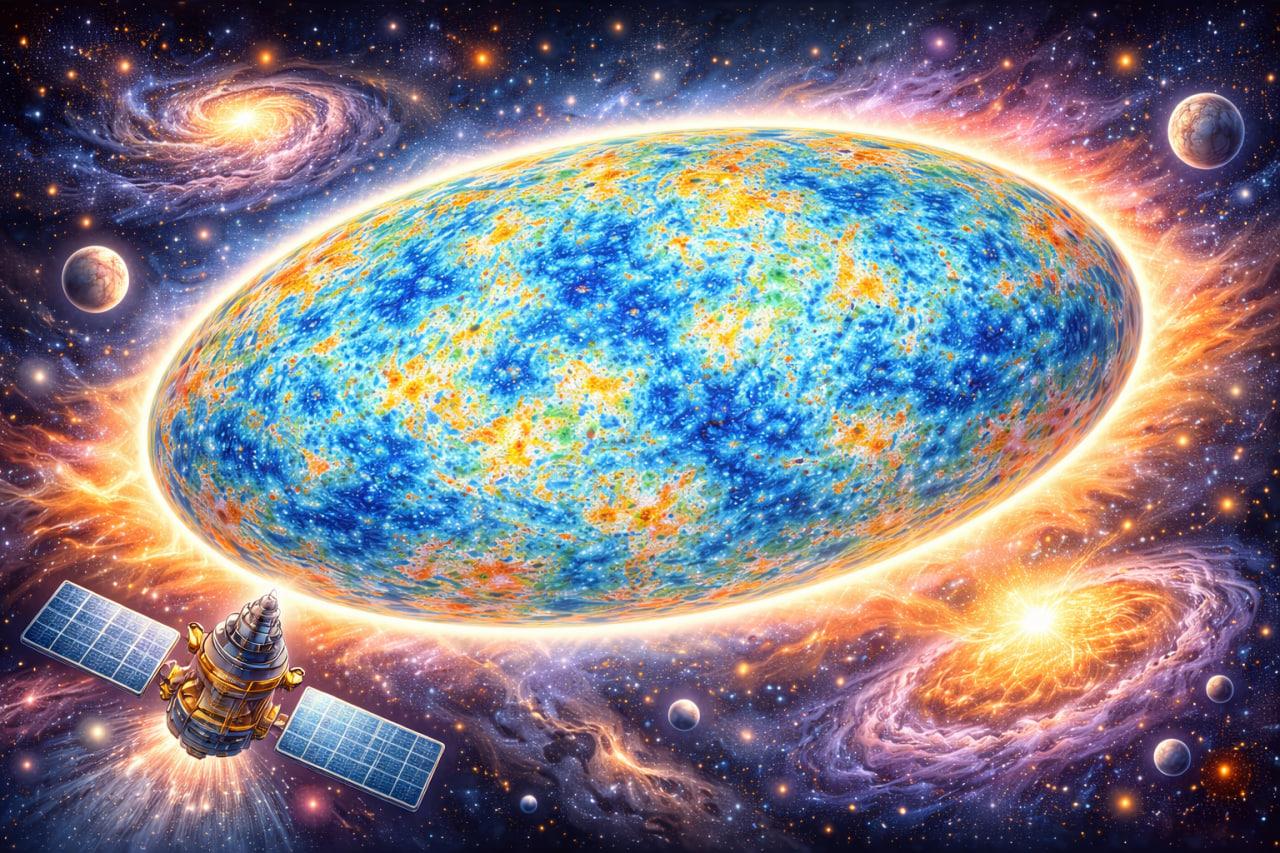
The cosmic microwave background (CMB) is one of the most important discoveries in modern cosmology. It is often described as the “baby photograph” of the Universe because it shows what the cosmos looked like shortly after its birth. This faint radiation fills all of space and comes from a time when the Universe was extremely young, hot, and dense. Although invisible to the naked eye, the CMB carries crucial information about the origin, structure, and evolution of the Universe. By studying it, scientists can look back almost to the moment when the Universe first became transparent.

Loop Quantum Gravity Theory
Science New Discoveries Be Smart

Loop Quantum Gravity Theory

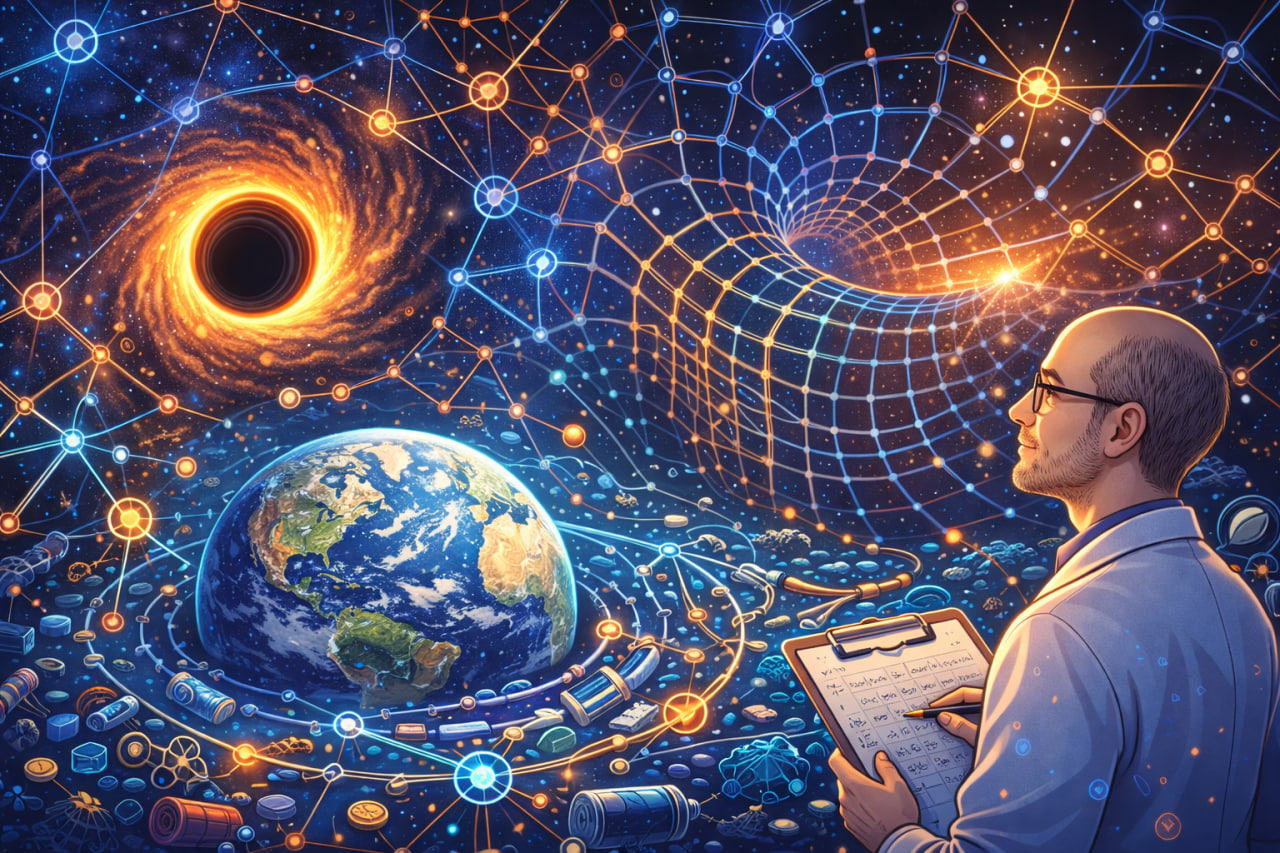
Loop quantum gravity is one of the leading theoretical attempts to unify quantum mechanics with general relativity. Unlike approaches that add extra dimensions or rely on unobserved entities, this theory focuses on quantizing spacetime itself. It proposes that space is not smooth and continuous, but instead has a discrete, granular structure at the smallest possible scales. These fundamental “loops” form a network that gives rise to geometry, distance, and volume. By rethinking the nature of space and time, loop quantum gravity challenges deeply rooted assumptions about the fabric of reality.

The Holographic Principle
Cosmic Innovations Universe Science

The Holographic Principle

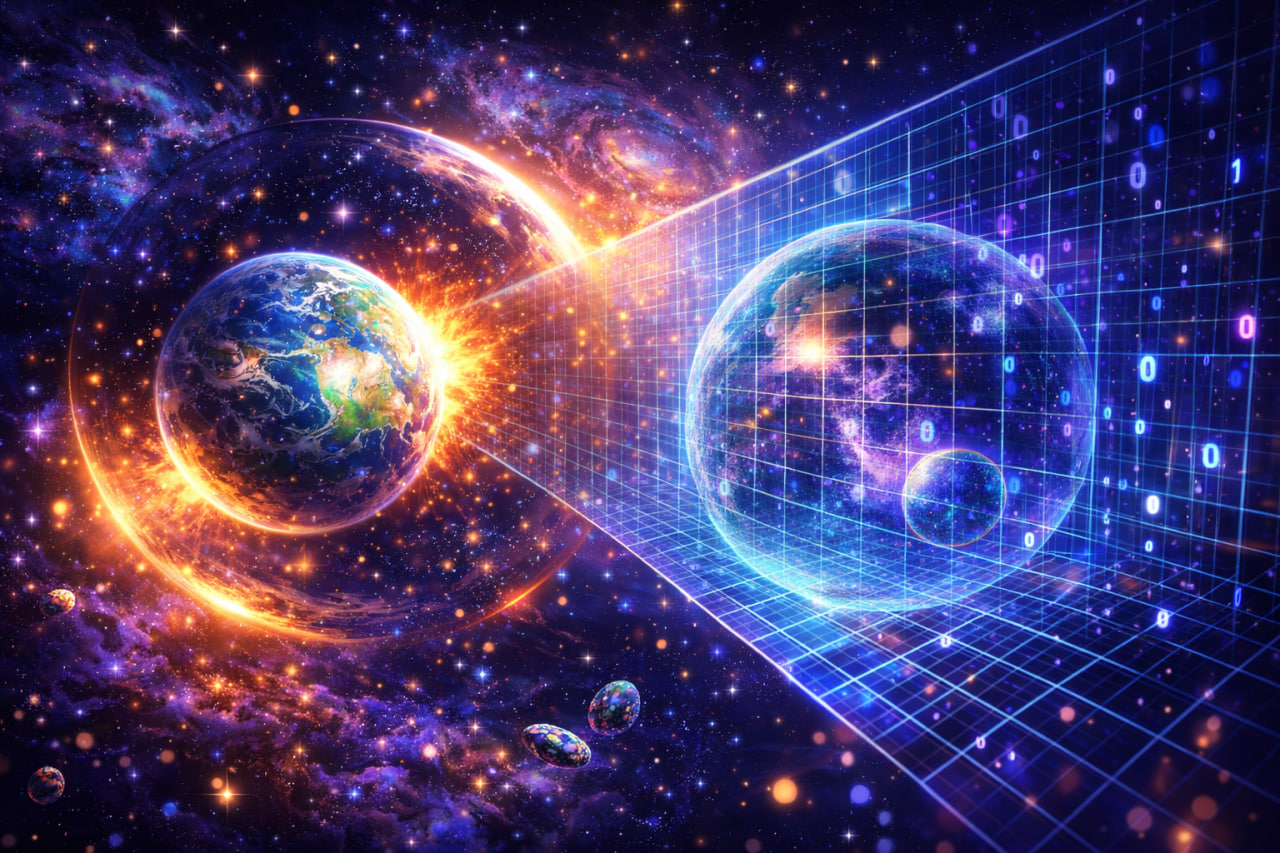
The holographic principle is one of the most radical ideas in modern theoretical physics, proposing that all the information contained within a volume of space can be fully described by data encoded on its boundary. In simple terms, this means that a three-dimensional reality may emerge from information stored on a two-dimensional surface. What sounds like science fiction arises directly from attempts to reconcile gravity, quantum mechanics, and thermodynamics. The principle challenges everyday intuition about space, depth, and locality, forcing physicists to rethink what “inside” and “outside” truly mean. Over the past decades, the holographic principle has become a powerful conceptual tool in the search for a unified description of nature. Understanding it offers a glimpse into how reality itself may be structured at the deepest level.

Photographing Black Holes
Space Stories Universe New Discoveries

Photographing Black Holes

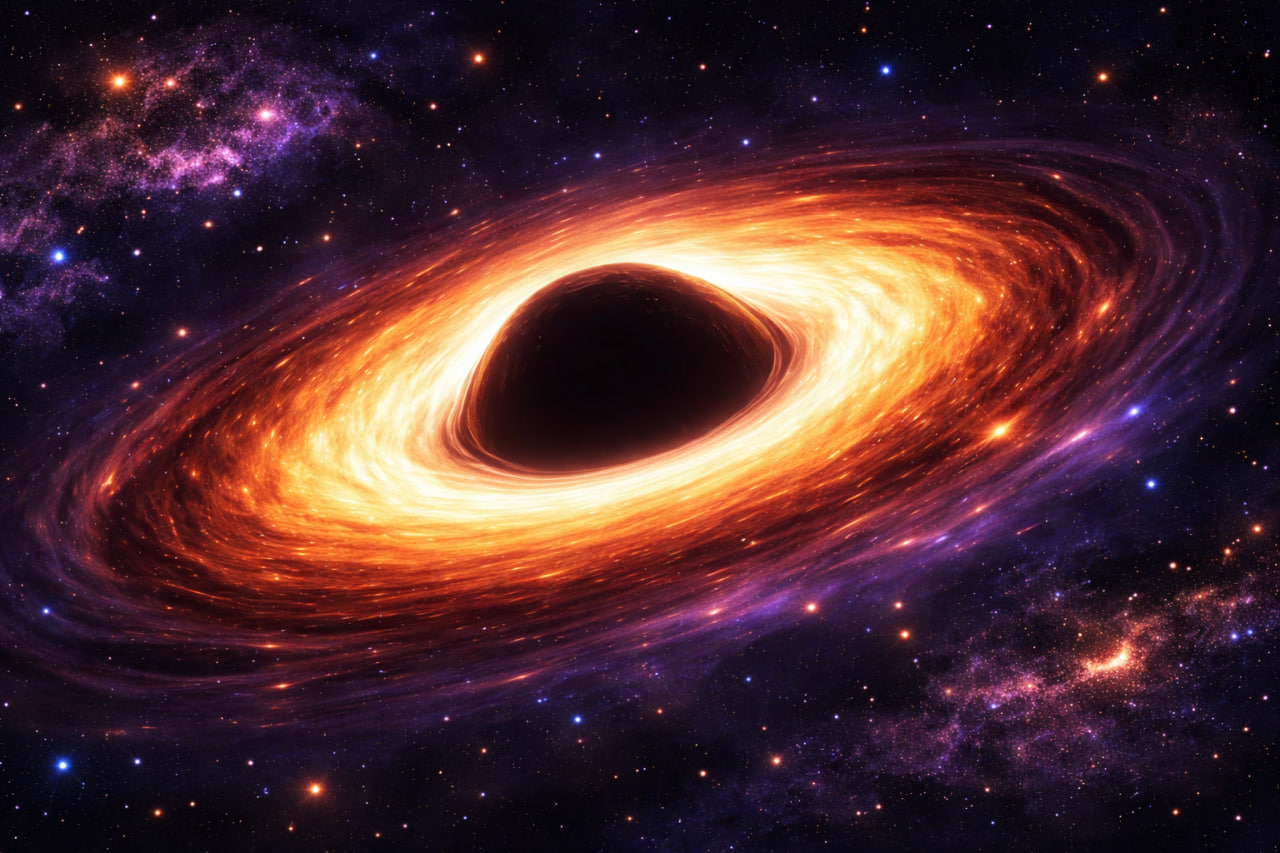
For decades, black holes were considered fundamentally unobservable objects, detectable only through indirect effects on surrounding matter and light. The idea of actually photographing a black hole once belonged more to science fiction than to real science. However, advances in radio astronomy, data processing, and global scientific collaboration made what seemed impossible a reality. The first images of black holes did not capture the object itself, but rather the shadow it casts against glowing material around it. These photographs marked a historic moment, confirming predictions made by Einstein’s theory of general relativity over a century ago. Understanding how black holes are photographed reveals both the limits of human technology and the extraordinary ingenuity used to overcome them.