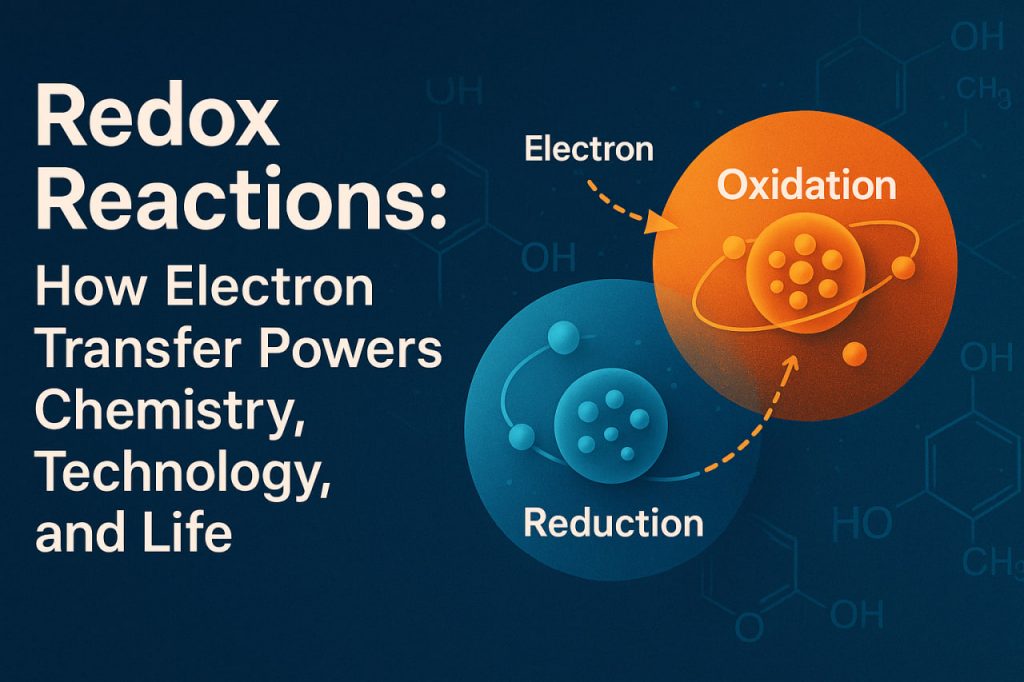
The electron is one of the most fundamental particles in physics. Discovered in 1897 by J.J. Thomson, it is a key building block of matter and a vital component of…
The neutron is a fundamental subatomic particle found in the nucleus of atoms. Discovered in 1932 by James Chadwick, neutrons, together with protons, form the atomic nucleus. Unlike protons and…
The proton is a fundamental subatomic particle that, together with neutrons and electrons, makes up atoms — the building blocks of all matter. Discovered in 1917 by Ernest Rutherford, the…
Atoms are the fundamental building blocks of matter, making up everything around us — from stars and planets to living organisms. Despite their importance, atoms are mostly empty space, which…
Astrophysics is the branch of astronomy that studies the physical nature of celestial objects and the processes that govern the universe. It combines principles of physics, mathematics, and astronomy to…
Cosmology is the branch of astronomy that studies the origin, structure, evolution, and ultimate fate of the universe. It seeks to answer some of humanity’s oldest and deepest questions: Where…
Earth behaves like a giant magnet, creating a magnetic field that extends far into space. This invisible shield, known as the magnetosphere, protects life from harmful cosmic and solar radiation.…
The ionosphere is a special region of Earth’s upper atmosphere, located roughly between 60 and 1,000 kilometers above the surface. It is filled with charged particles (ions and electrons), created…
Astrobiology is the scientific field that studies the origin, evolution, distribution, and future of life in the universe. It combines knowledge from astronomy, biology, chemistry, geology, and physics to answer…
Albedo is a scientific term that describes how much sunlight a surface reflects compared to how much it absorbs. It plays a key role in Earth’s climate system, as different…